What Is a Bulkhead Light? 11 Must Know Benefits for Tough Spaces
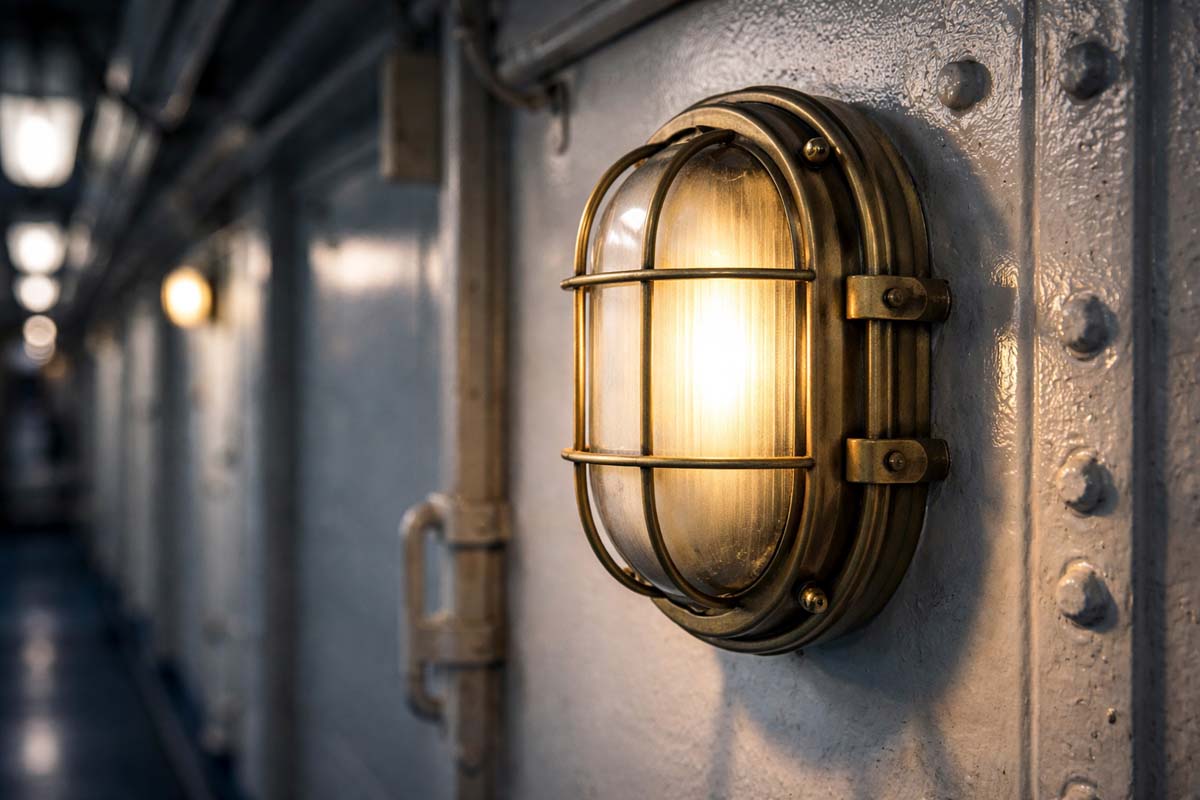
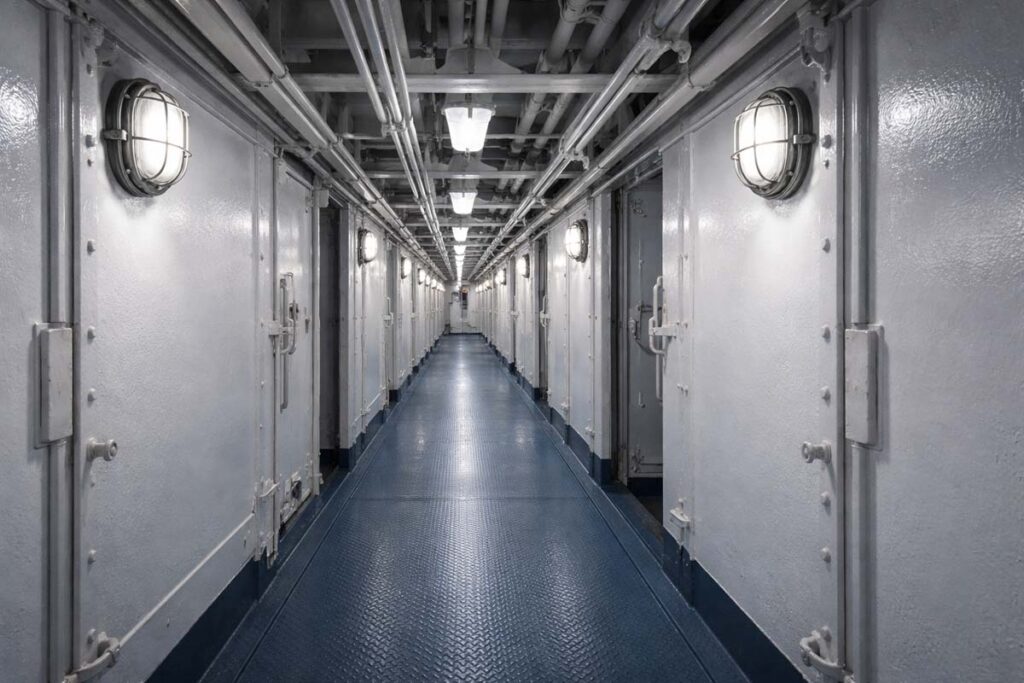
A bulkhead light is a rugged, wall- or ceiling-mounted fixture designed to deliver reliable illumination in harsh, high-traffic areas—especially on ships and in industrial spaces. In maritime use, bulkhead lights are installed on bulkheads (ship walls) and overhead structures to light passageways, stairwells, engine rooms, deck access points, cabins, and service corridors where moisture, vibration, salt air, and impact are constant realities.
Unlike decorative wall sconces, a true bulkhead light is purpose-built: sealed or gasketed, corrosion-resistant, and often protected by a cage or guard to prevent damage.
Bulkhead Light Meaning (Simple Definition)
Bulkhead light = a durable utility light made to mount on a wall (bulkhead) or ceiling, typically with a protective housing and weather-resistant sealing.
On ships, “bulkhead” refers to the vertical partition walls. That’s why you’ll also hear bulkhead lights described as:
- Marine wall lights
- Nautical passageway lights
- Industrial caged lights
- Vapor-proof / weatherproof lights (when sealed for moisture and dust)
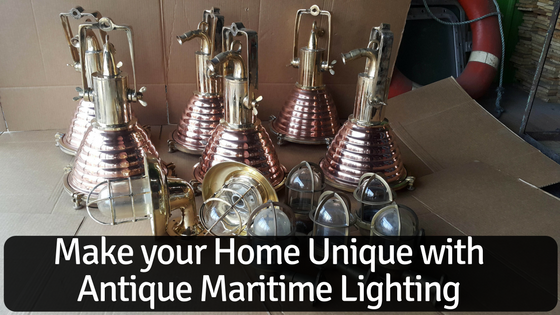
If you’re still deciding on the right style, take a quick look at our salvaged ship lighting fixtures to compare bulkhead, deck, and passageway options in one place.
Why Bulkhead Lights Exist: What They’re Designed to Handle
Bulkhead lights are commonly chosen because standard indoor fixtures fail quickly in marine and industrial settings. A proper bulkhead fixture is engineered to withstand:
- Salt air and corrosion
- Spray, humidity, and heavy condensation
- Vibration from engines and machinery
- Impacts and abrasion in narrow corridors and work zones
- Temperature changes and long duty cycles
That “overbuilt” design is exactly why bulkhead lights have become popular not just on ships—but also in warehouses, workshops, coastal homes, restaurants, and nautical-themed interiors.
Where Bulkhead Lights Are Used (Marine + Industrial + Décor)
On ships and offshore platforms
- Passageways and companionways
- Engine rooms and pump rooms
- Stairwells and ladders
- Deck access points and exterior bulkheads
- Utility rooms and service corridors
On land (industrial and architectural)
- Warehouses, factories, workshops
- Parking structures and stair towers
- Hotels and coastal properties
- Patio walls, docks, and boathouses
- Nautical décor projects (bars, cafés, themed retail)
Key Parts of a Bulkhead Light (And What Each Does)
Most bulkhead lights share the same functional anatomy:
- Housing/body: Cast metal (often brass, aluminum, or steel) that protects internal wiring and supports mounting.
- Lens/globe: Glass or polycarbonate that diffuses and shields the light source.
- Gasket/seal: Rubber or silicone ring that helps keep water and dust out (critical in marine environments).
- Guard/cage (optional): Metal grille that protects the lens from impact.
- Mounting base: Back plate or bracket that anchors to the bulkhead/ceiling.
- Lamp holder / LED module: Traditional E27/E26 lamp holders in older styles, or integrated LED in modern units.
Common Bulkhead Light Types
1) Oval bulkhead lights (classic “ship light” look)
Often seen in passageways and engine spaces. The oval shape spreads light along corridors and looks distinctly nautical.
2) Round bulkhead lights
Compact, symmetrical, and common in industrial buildings and ships alike.
3) Caged bulkhead lights
Feature a protective grille—ideal where impact is likely (stairs, loading areas, narrow corridors).
4) Weatherproof / vapor-proof bulkheads
Sealed designs intended for moisture, spray, and dust. These are the practical choice for exterior walls and wet interiors.
5) Explosion-proof or hazardous-area lights (specialized)
Used only where flammable gases/dust may exist. These require specific certification and should never be assumed—always verify compliance for the intended area.
Materials: Why Brass, Aluminum, and Steel Matter
Bulkhead lights are often judged by their material because it directly affects longevity and maintenance.
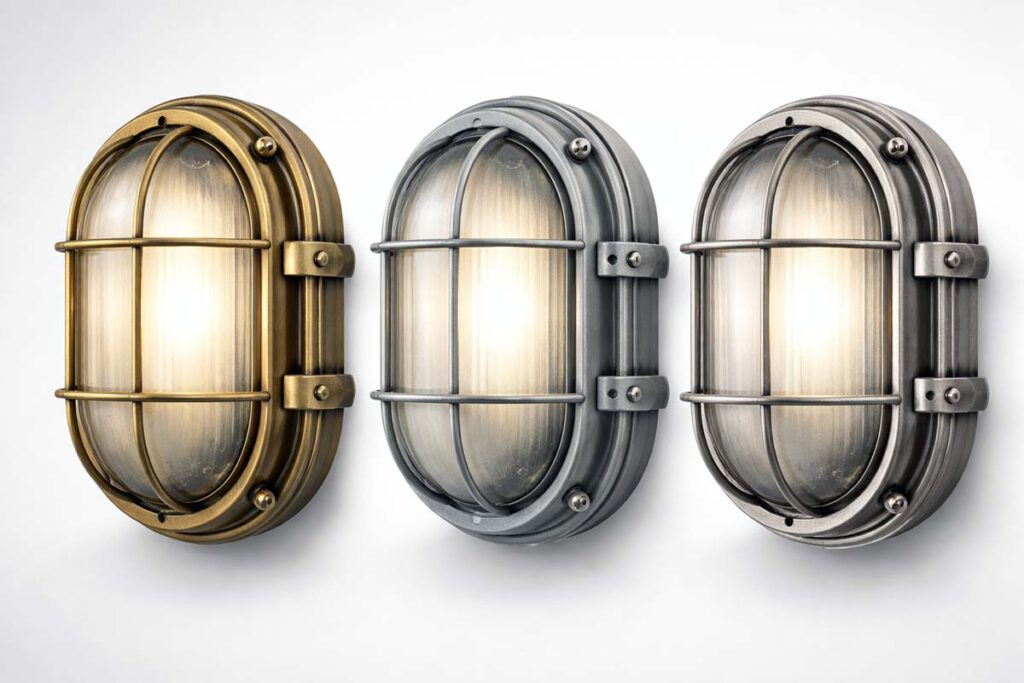
- Brass: Highly corrosion-resistant; develops a natural patina; popular for premium nautical interiors and authentic ship salvage fixtures.
- Aluminum: Lightweight and corrosion-resistant; widely used for marine-grade fixtures when properly coated.
- Stainless steel: Strong and corrosion-resistant; common in modern marine and architectural installations.
- Mild steel / cast iron: Tough, but needs proper coating/paint to prevent rust—often found in older industrial fixtures.
For reclaimed ship lights, material also helps establish authenticity and era (brass and heavy cast construction are common in older maritime fittings).
Bulkhead Light vs. Other Marine Lights
Bulkhead light vs. deck light
- Bulkhead lights mount on walls/partitions (or sometimes ceilings).
- Deck lights are typically positioned to illuminate working deck areas and may be more directional or higher output.
Bulkhead light vs. navigation light
- Navigation lights (port/starboard/stern/masthead) are regulated signaling lights.
- Bulkhead lights are general illumination fixtures—not for signaling.
Bulkhead light vs. floodlight
- Floodlights are directional and wide-throw.
- Bulkhead lights are usually more contained, glare-controlled, and suited to close-range pathways.
What to Look for When Buying a Bulkhead Light
If you’re sourcing for a ship project, facility upgrade, or resale, these checkpoints prevent costly mistakes:
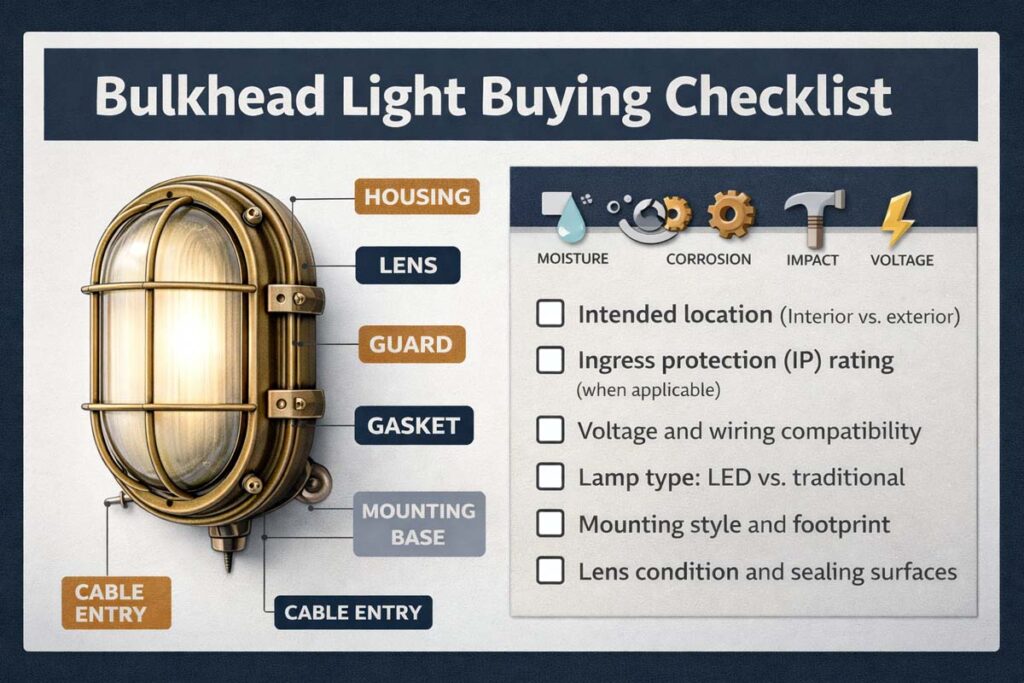
1) Intended location (interior vs. exterior)
- Exterior installations typically need stronger sealing and corrosion resistance.
2) Ingress protection (IP) rating (when applicable)
- IP ratings indicate dust/water resistance. If you need a specific rating, confirm it with the fixture’s documentation—not assumptions.
3) Voltage and wiring compatibility
- Ships may use different voltage standards than buildings. Verify the supply and the fixture’s rating before installation.
4) Lamp type: LED vs. traditional
- LED upgrades reduce heat and maintenance, but confirm driver compatibility and space inside the housing.
5) Mounting style and footprint
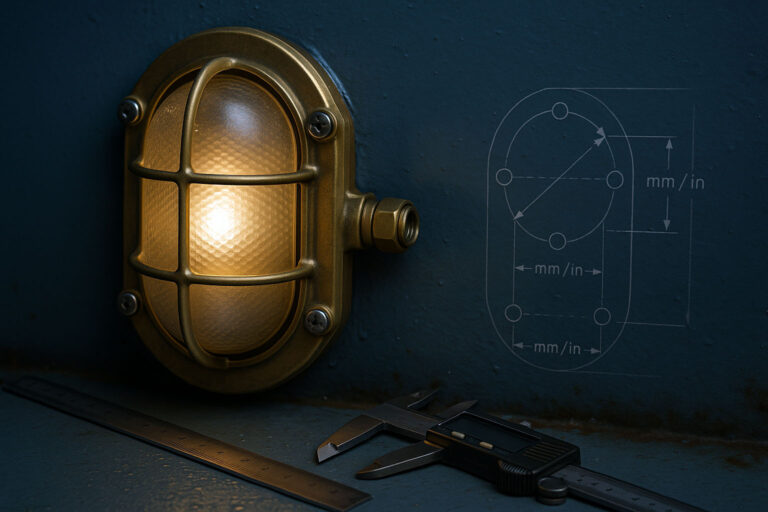
- Salvage fixtures vary; measure back plate dimensions, bolt spacing, and cable entry points.
6) Lens condition and sealing surfaces
- On reclaimed lights, check lens clarity, cracks, gasket condition, and the seating edge where sealing occurs.
Restoring Salvage Bulkhead Lights (What’s Worth Doing)
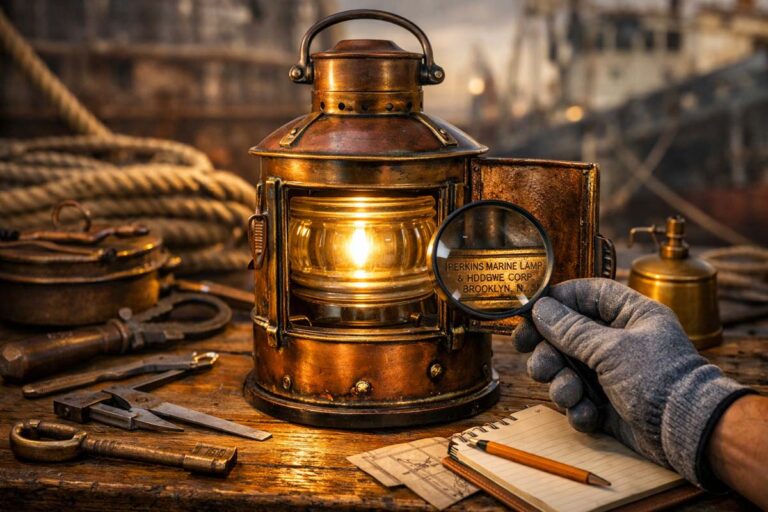
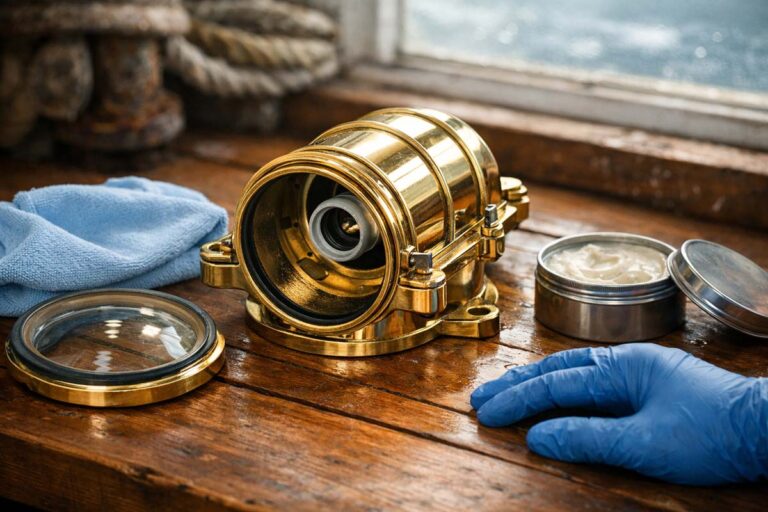
Authentic ship bulkhead lights—especially reclaimed brass or heavy cast units—are often restored for resale, décor, or functional reuse. Typical restoration steps include:
- Cleaning and de-salting (removing salt residue is essential)
- Rust treatment (if steel/iron)
- Polishing brass or leaving natural patina (depending on desired finish)
- Replacing gaskets to improve sealing
- Upgrading lampholders and internal wiring for safety
- LED conversion (when appropriate for the use case)
Restoration should always prioritize safe electrical integrity. For buyers, it’s reasonable to request: internal photos, wiring status, gasket condition, and any upgrade details.
Compliance and Safety Notes (Important)
Bulkhead lights may be installed in demanding environments, so compliance isn’t a “nice-to-have.”
- For marine or commercial installations, confirm relevant requirements with your ship engineer, electrician, or local authority.
- If the site is a hazardous area, only use fixtures with the appropriate hazardous-location certification for that zone.
- For reclaimed fixtures, treat them as hardware bodies unless they’ve been professionally rewired/tested and documented.
(These checks protect people, property, and inspections—especially on international projects.)
Bulkhead Lights in Nautical Interior Design
Bulkhead lights have a strong presence in design because they combine authenticity with utility. Popular décor uses include:
- Hallways and stairwells (adds maritime character and durable light)
- Bathroom vanity side lighting (caged versions look industrial-coastal)
- Outdoor patios and entryways (weather-resistant aesthetic)
- Restaurants and bars (heritage shipyard look)
A reclaimed ship bulkhead light—complete with casting marks, aged brass, or original guard—often becomes a focal point because it’s not “nautical themed,” it’s nautical real.
FAQs about Bulkhead Lights
Are bulkhead lights only used on ships?
No. They’re common in industrial buildings and increasingly popular in architectural and coastal interiors because they’re durable and visually distinctive.
Can a bulkhead light be mounted on a ceiling?
Yes. Many bulkhead fixtures are suitable for wall or ceiling mounting, depending on cable entry and mounting design.
Are all bulkhead lights waterproof?
Not automatically. Some are sealed/weatherproof; others are basic utility fixtures. If water resistance matters, confirm sealing design and any applicable IP rating from documentation.
What’s the difference between antique and modern bulkhead lights?
Antique/salvage units often feature heavier cast bodies and traditional lampholders, while modern versions commonly use stainless or aluminum housings and integrated LED modules.
Bottom Line
A bulkhead light is a tough, purpose-built wall (or ceiling) fixture designed for reliable lighting in harsh environments—especially at sea. Whether you’re outfitting a vessel, upgrading an industrial facility, or building a nautical interior, bulkhead lights offer a unique mix of durability, safety-minded construction, and timeless maritime style.