How to Style Your Home with Vintage Ship Wall Lights
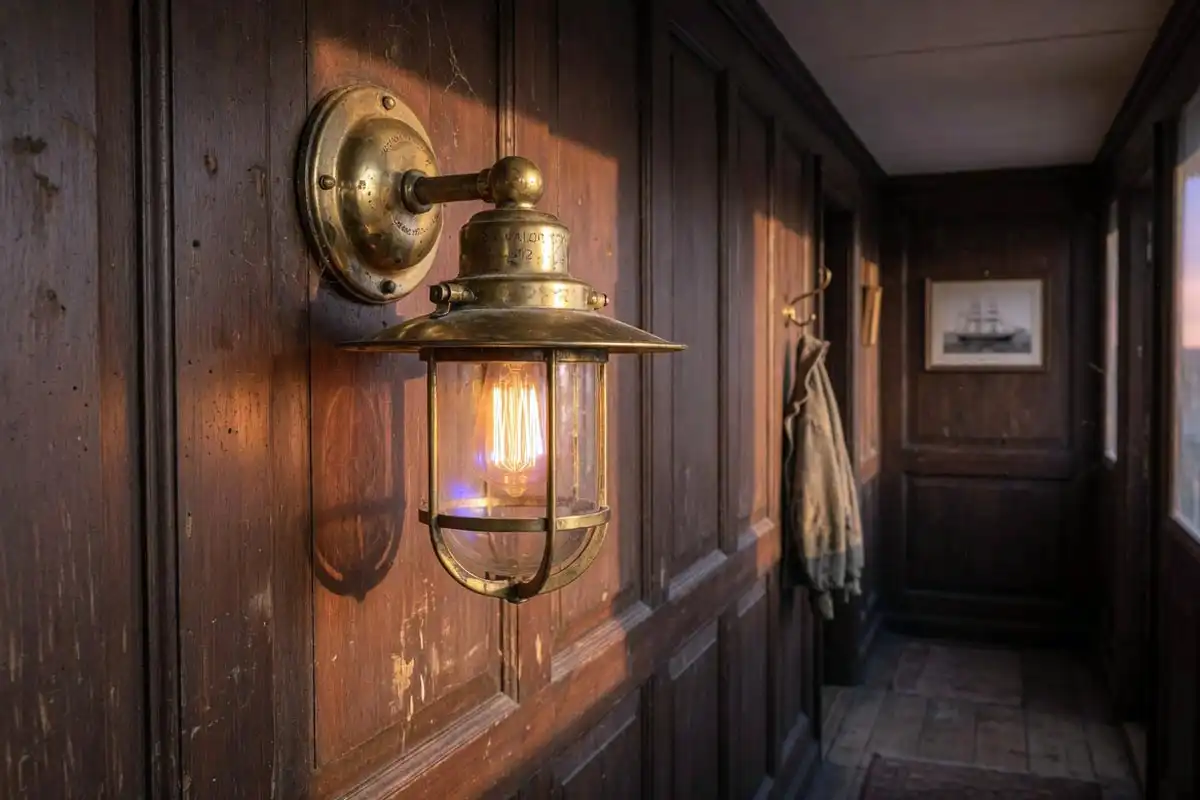
Last spring a customer in Maine sent me a photo of her new hallway. She had three of my old brass sconces lined up beside her staircase. I stared at that picture for a long time. Salt-aged fixtures from a Bangladeshi shipbreaking yard, glowing softly in a 1920s farmhouse.
Vintage ship wall lights work best mounted at eye level in hallways, kitchens, bathrooms, and entryways. Pick fixtures that match your wall color and existing hardware finishes. Pair them with warm Edison bulbs around 2700K for a softer marine glow.
Pick the Right Room First
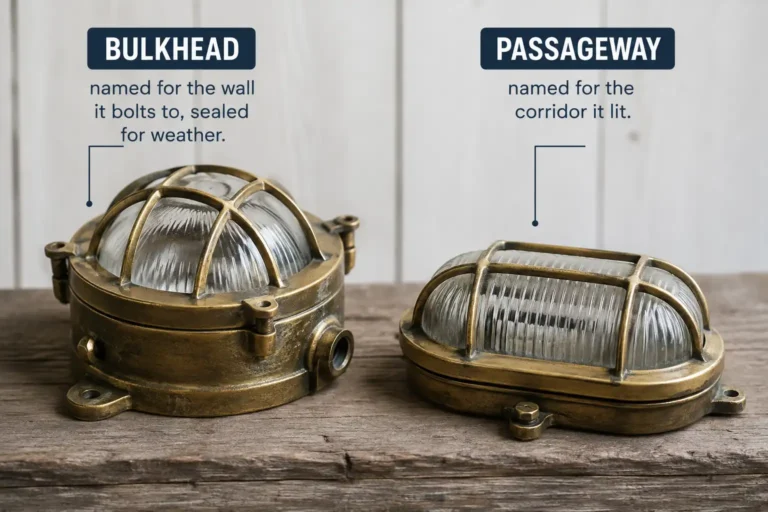
Not every room suits a ship sconce. The fixture has weight, both visual and literal. A small bulkhead light can vanish on a tall living room wall, but the same piece feels perfect in a tight hallway.
I tell customers to start with three rooms. Foyers, narrow hallways, and powder rooms. These spaces have low ceilings and short sight lines. A 9-inch brass sconce reads as a feature, not a footnote.
Kitchens come next. If you want ideas for using authentic ship lighting in the kitchen, the placement above a stove range or flanking a window works almost every time.
Match the Metal to Your Walls
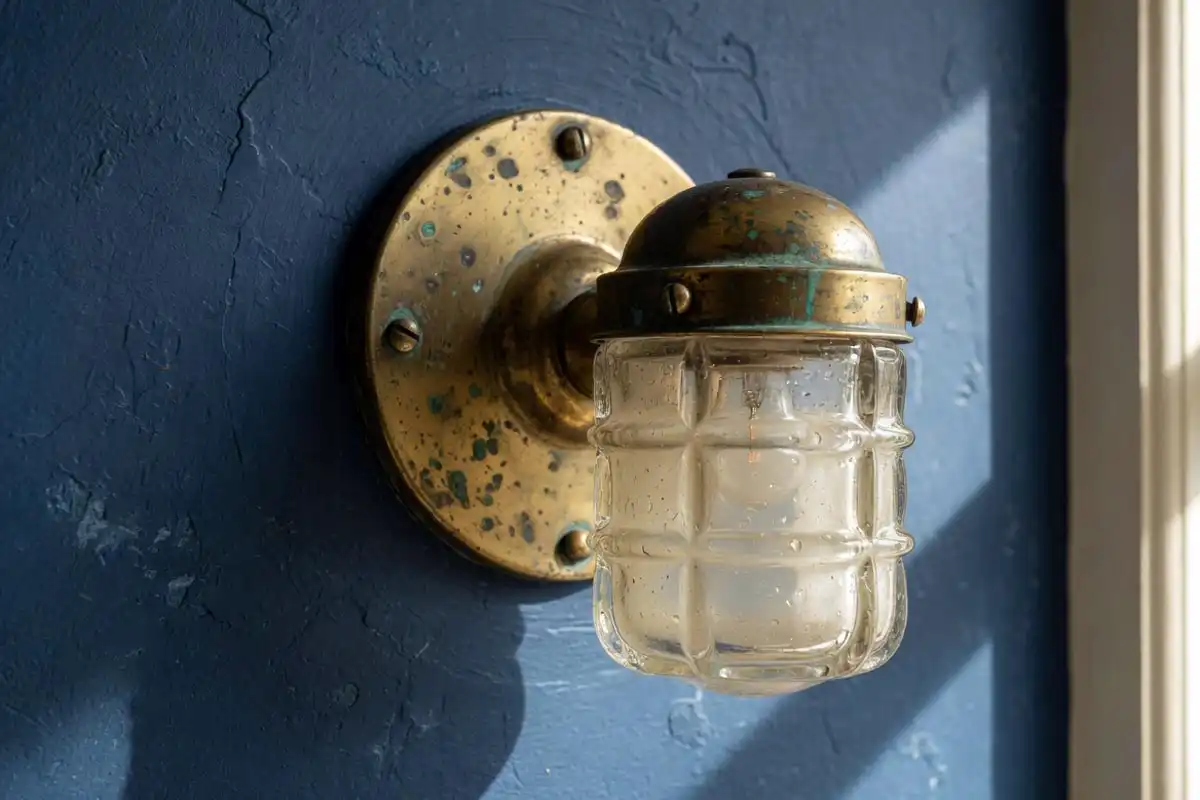
Wall color matters more than people think. Brass pops against deep navy, hunter green, and warm whites. Aluminum looks washed out on white walls but stunning on slate gray. Bronze sits well on cream and beige.
I keep a small swatch of each metal at my shop. Customers hold the swatch to their phone photos before they commit. It saves heartache.
A guide on brass versus bronze versus aluminum fixtures helps if you are choosing between finishes for a coastal home.
Mount Vintage Ship Wall Lights at Eye Level
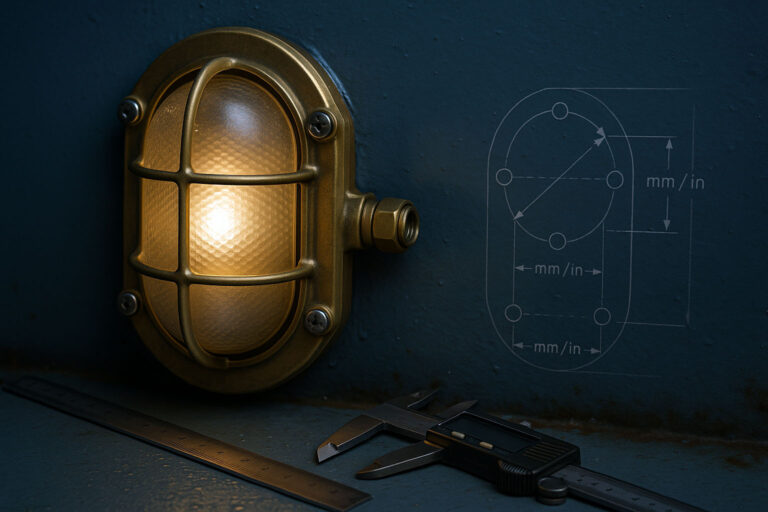
Eye level is roughly 60 to 66 inches from the floor. That places the glass bulkhead at your line of sight when you walk past. Too high and the light glares down on guests. Too low and people clip their shoulders.
For staircases, follow the slope. Mount each fixture the same distance above each landing or step group. Three sconces climbing a staircase look intentional. Random heights look careless.
In bathrooms, flank the mirror at 66 inches. Light falls flat on the face, not in shadow.
Mix Old and New
A common mistake is going full ship. Brass everywhere, rope details on every shelf, a captain’s wheel above the sofa. It tips into theme park territory fast.
I always pair vintage ship wall lights with clean modern furniture. A leather chair, a linen sofa, a plain plaster wall. The fixture becomes the story. Everything else stays quiet.
If you want a fuller approach to antique maritime lighting throughout the home, balance is the rule. One statement piece per room. Maybe two in a long hallway.
Wiring and Safety
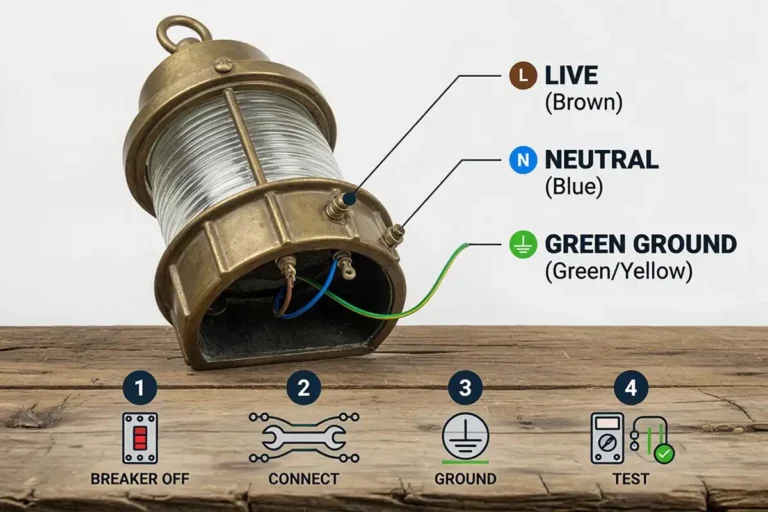
Most original ship lights came hardwired with cloth-covered cables. That wiring is unsafe today. I rewire every fixture in my shop before shipping. New cable, new ceramic socket, new ground.
If you buy elsewhere, ask the seller directly. Has the fixture been rewired to current code? Does it carry a UL or CE mark? If they hesitate, walk away.
A licensed electrician should install any ship sconce. Junction boxes need to handle the weight, sometimes five to fifteen pounds of solid brass. A drywall anchor will not hold.
Bulbs Make or Break the Look
A cool LED bulb ruins a brass fixture. Use warm white at 2200K to 2700K. Edison-style filament bulbs match the era. Globe shapes fit inside the glass cages best.
Dimmers help. A bulkhead light at full brightness can feel harsh. At 40 percent, it glows like an oil lamp.
Care and Patina
Vintage brass develops a soft brown patina over decades at sea. Some buyers love it. Some want it polished bright. Both choices are valid.
If you want shine, my short guide on polishing tarnished brass fixtures walks through the process. If you want patina, leave the fixture alone and dust it monthly with a dry cloth. No water, no chemicals.
For collectors worried about authenticity, telling a real vintage lantern from a reproduction takes a careful eye. Look for casting marks, uneven seams, and small dings near the dogs and hinges.
Final Thought
Vintage ship wall lights are not decorations. They are working parts of working ships, given a second life in a home. Hang them with care. Wire them safely. Let them age a little more.
Good luck with your project.