When Were Nautical Lights First Used? A Short History
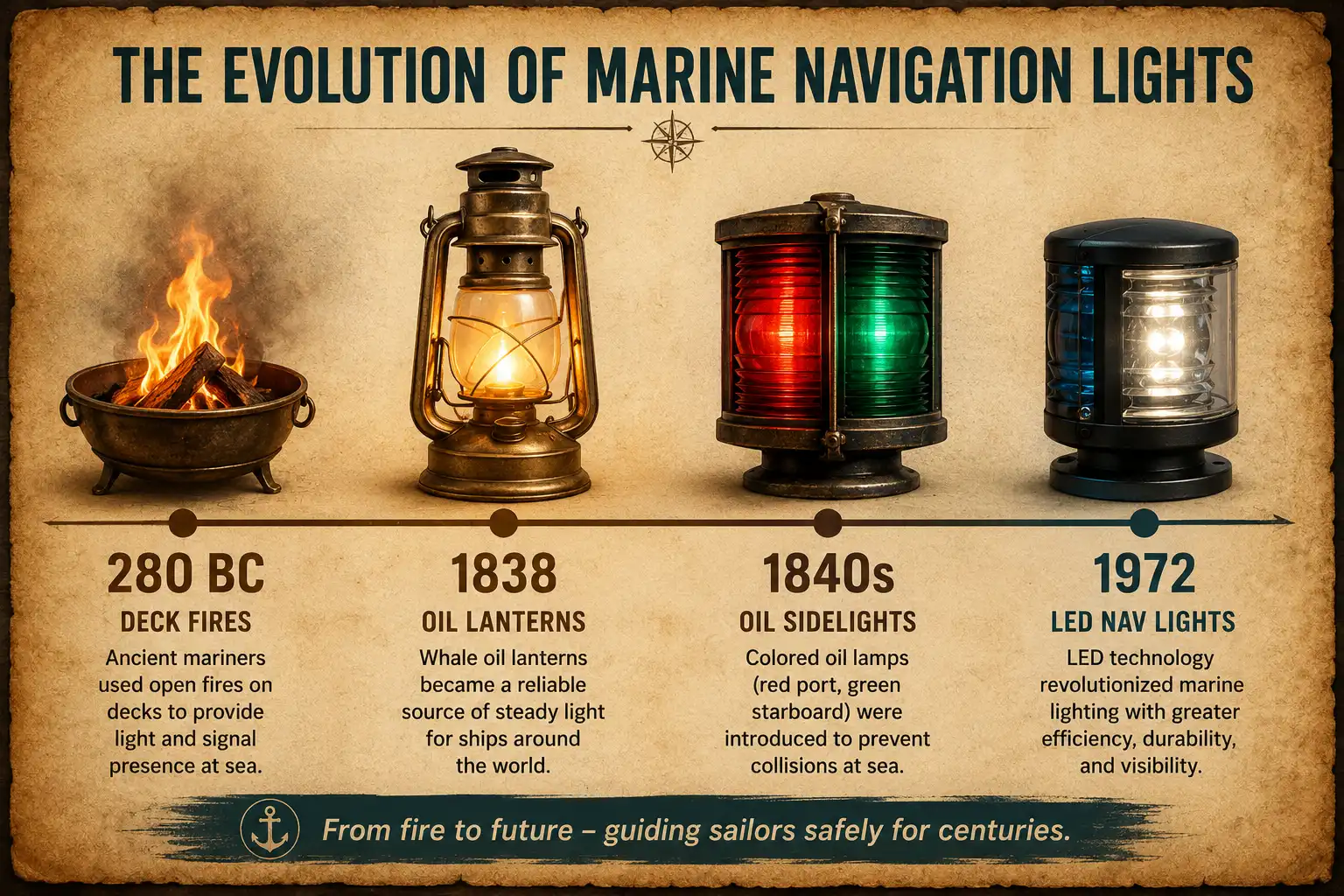
Most of the ship lights I sell are brass, made in the early 1900s. People assume that’s where the story starts. It isn’t. Not even close. Light at sea is ancient. I wanted a clear timeline, so I sorted the dates out one by one.
People have used light at sea for thousands of years, first as open fire and oil lanterns. But the first formal nautical light law came in 1838, when the United States made steamboats carry signal lights after dark. The red and green sidelights we still use were fixed by the British in the late 1840s.
The first ship lights were just fire
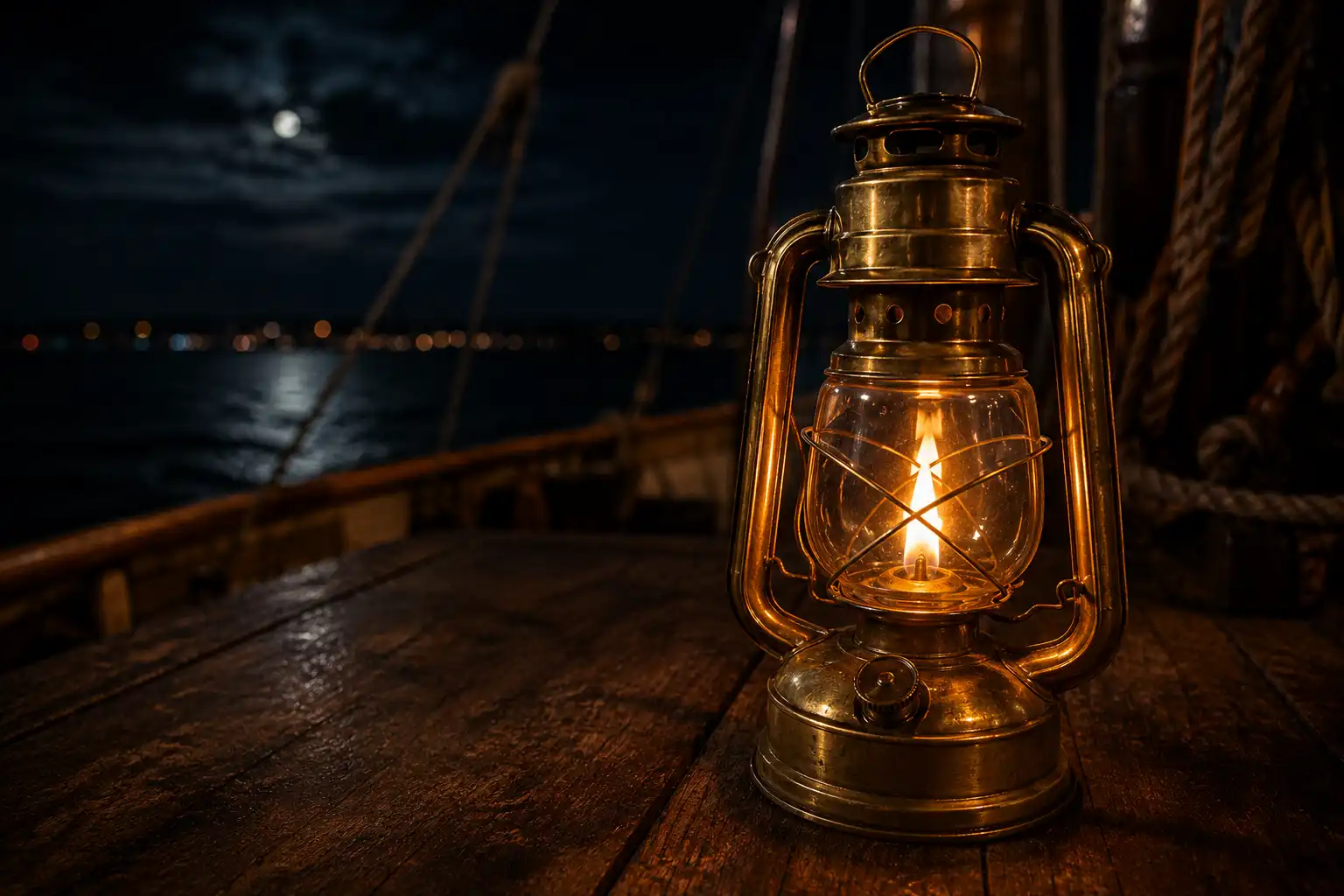
Long before rules, sailors knew dark water was dangerous. They burned torches and small fires on deck. Later came oil lamps and hand lanterns.
None of it was organized. A light meant “someone is here,” and for a long time that was enough. If you want the plain rundown of how these ship lights are grouped today, I cover that separately.
Shore lights showed up early too. The Pharos of Alexandria, built around 280 BC, guided ships to harbor with a fire at its top. That was a light for ships, not a light carried on one. Worth keeping the two ideas apart.
Some ancient sea codes, like the Rhodian Sea Law, are said to have called for lights on anchored ships. The records are thin, so I won’t oversell it. Still, the instinct was there from the start.
When were nautical lights first used under maritime law?
The first clear law came in 1838. The United States passed an act making steamboats carry one or more signal lights between sunset and sunrise. It did not say what color, how bright, or where to mount them. A start, not a system.
Steamboats were the reason. They moved fast and often ran at night. Two boats closing in the dark had no way to read each other. Something had to give.
Why ships settled on red and green
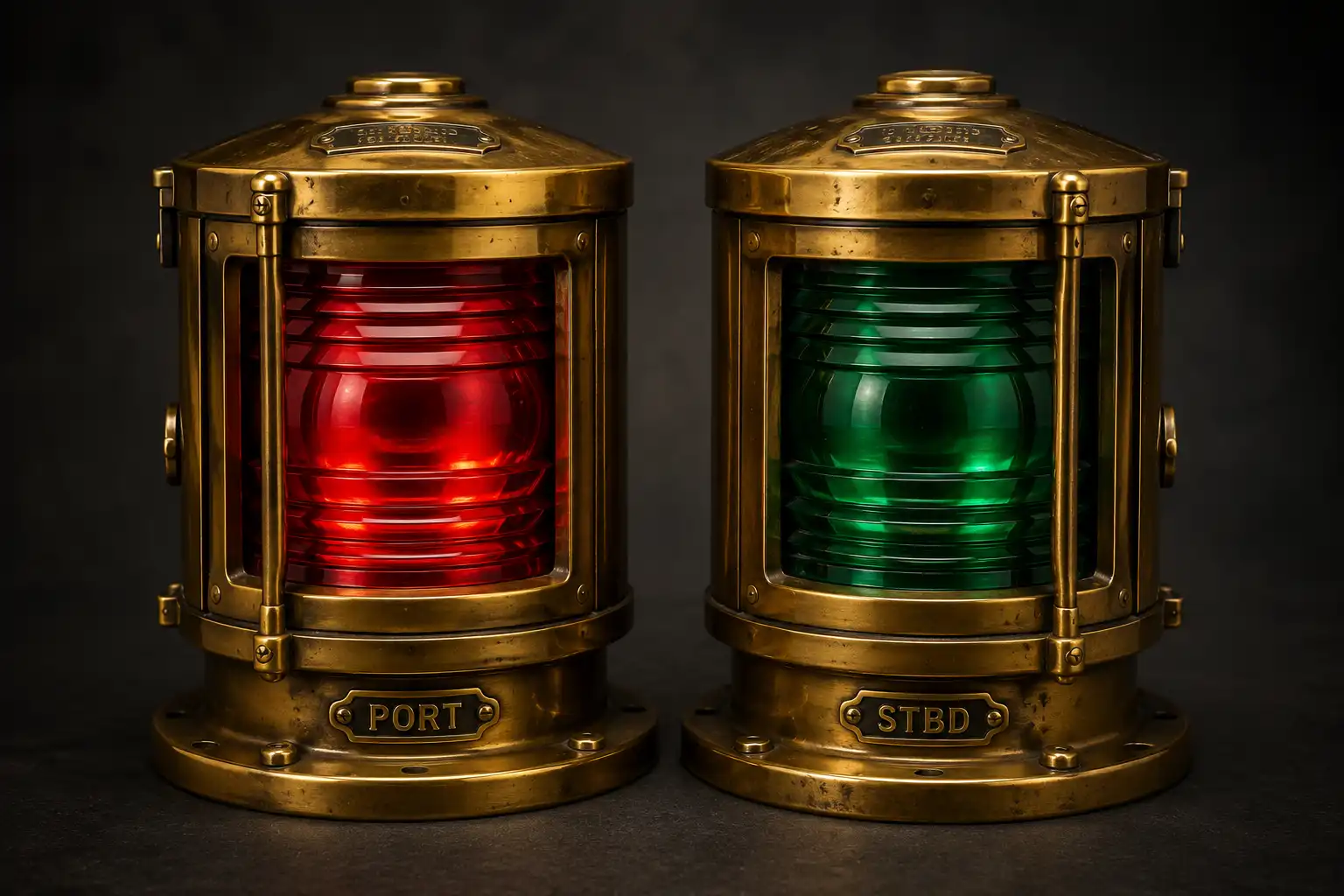
The British sorted the colors out. In 1846 the Steam Navigation Act let the Admiralty write lighting rules. By the late 1840s those rules were clear. Green on the right, red on the left, white up on the mast.
Green marks the starboard side. Red marks the port side. The old story ties it to the steering oar, which sat on the right. A helmsman could see you coming from that side, so it was the safe one. The left was his blind side, so it got the warning color.
The United States added sailing vessels to the rules in 1849. Over in England, Trinity House pushed similar signals, borrowed partly from railways. Red for stop, green for go.
One set of rules for the whole world
National rules were a mess. A light meant one thing in one country and something else next door. So in 1889 the first International Maritime Conference met in Washington to fix it. Those rules took effect worldwide in 1897.
The system kept tightening. The US made Fresnel lenses mandatory for navigation lights in 1910, which threw the beam much farther. The modern rulebook, the COLREGs, arrived in 1972 and still sets navigation light requirements at sea today. For the version big ships follow now, I break down the navigation light rules big cargo ships still follow in another post.
From oil flame to electric bulb
For most of the 1800s, these lights burned oil. Crews trimmed wicks and wiped soot every single day. Hard, greasy work. Brass took the abuse well, which is part of why brass held up better than aluminum on deck.
Electric bulbs reached ships late in the 1800s and slowly took over. Today it is LED. The shapes barely changed, though. A modern unit and a 1900 one often look like cousins, which is exactly why collectors chase the old ones. If you ever buy one, learn to tell a real vintage ship lantern from a copy first.
Final Thought
So when were nautical lights first used? In spirit, thousands of years back with fire. In law, 1838. In the red-and-green form we still use, the late 1840s. Not bad for a shelf ornament.
If the history hooks you, the best part is holding the real thing. Some folks even end up putting antique maritime lighting in a modern room. That is my whole job, and I love it. Enjoy the rabbit hole.
— Mokter