What Color Are Nautical Lights? A Simple Guide From the Docks
Last month a buyer stood in my yard holding two salvaged ship lights. One had red glass. One had green. He asked me which color was the correct one. The answer caught him off guard. Both were.
The color of a ship light is never random. Each one carries a message. Red, green, and white keep vessels from hitting each other after dark. Once you learn the code, a busy harbor at night starts to make sense.
Nautical lights come in five colors: red, green, white, yellow, and blue. Red marks a vessel’s port (left) side and green marks the starboard (right) side, while white is used for the stern, masthead, and anchor lights. Yellow and blue are reserved for special vessels such as tugs and law enforcement boats.
The Three Colors You See on Almost Every Boat
Most nautical lights on the water are red, green, or white. These three do the heavy lifting.
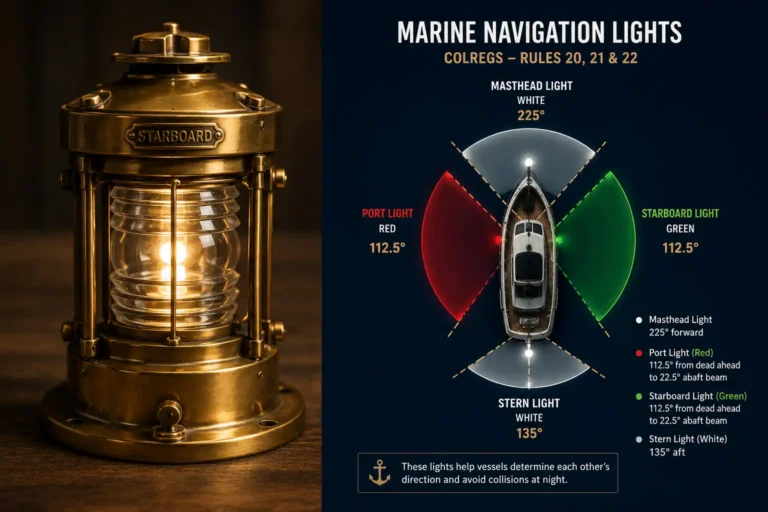
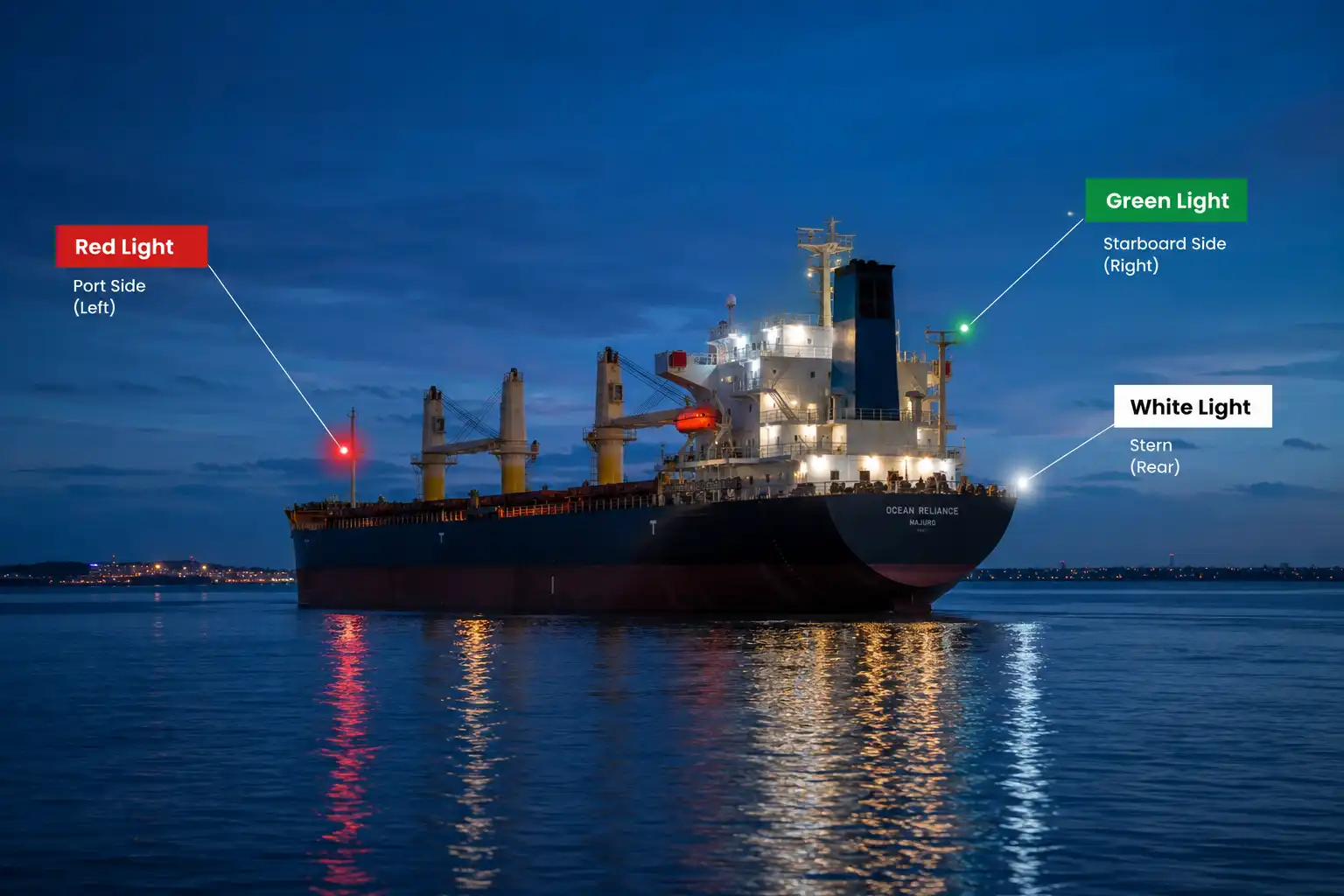
Red and green are called sidelights. A green light sits on the starboard side and a red light on the port side. Each shows a steady arc of 112.5 degrees. White lights sit at the stern and up on the masthead. If you want the full range of lights used aboard a ship, I break them down elsewhere on the site.
Red = Port (Left)
A steady red light marks the left side of a vessel. See red, and you are looking at another boat’s port side.
Green = Starboard (Right)
A steady green light marks the right side. Green means you are seeing the starboard side.
White = Stern and Masthead
A white stern light shines over a 135 degree arc at the back. A white masthead light shines over a 225 degree arc across the front.
Why Red Sits on the Left and Green on the Right
The colors set a simple rule for who yields. Think of a road at a junction. Red means caution, green means go.
If another boat’s red light crosses ahead of you, it usually has the right of way. You slow or turn. If you see its green light, you likely hold your course. This system has kept crews safe for well over a century.
Read next: How Do Nautical Lights Work? Colors, Arcs, and Lenses
What the White Lights Actually Mean
White is the busiest color on any ship. It shows up in more than one place.
A masthead light shines forward and to the sides. A stern light shines behind. Together they form a full circle. On power boats under 39.4 feet, these two can combine into a single all-round white light mounted above the sidelights. When a vessel anchors for the night, a white all-round light becomes its anchor light. Many of the salvaged brass anchor lanterns I restore once did exactly that job.
The Colors Most People Miss: Yellow and Blue
Yellow and blue are rare, but they matter. They signal something out of the ordinary.
A yellow towing light has the same shape as a stern light and marks a vessel pulling a tow. You see it on tugboats moving barges. A flashing blue light means a law enforcement vessel, so stay clear and keep out of its path. A fast flashing yellow light can also mark a hovercraft running in non-displacement mode.
Light Combinations That Tell a Story
Stacked lights on a mast read like a sentence. The order and color reveal what a vessel is doing.
Red over green means a vessel under sail. Red over red means a vessel not under command. Red over white means commercial fishing, and green over white means active trawling. White over red marks a harbor pilot. You do not have to memorize them all. Larger ships carry even more, and the navigation light rules cargo ships must follow spell out every case.
What Color Are the Antique Ship Lights I Sell?
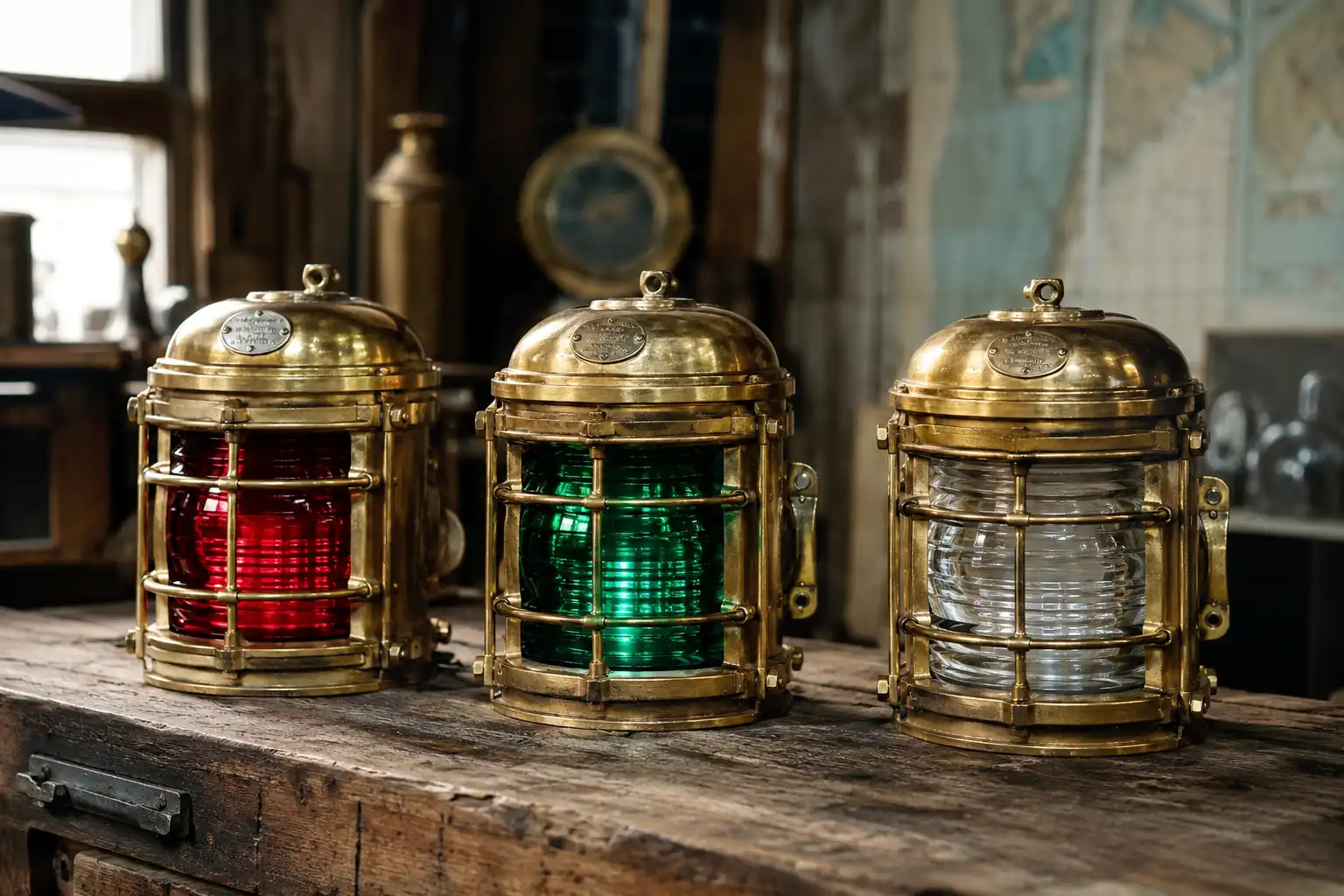
The antique ship lights I sell come in brass, copper, and aluminum, fitted with red, green, or clear glass lenses. They carry the same color code once used at sea.
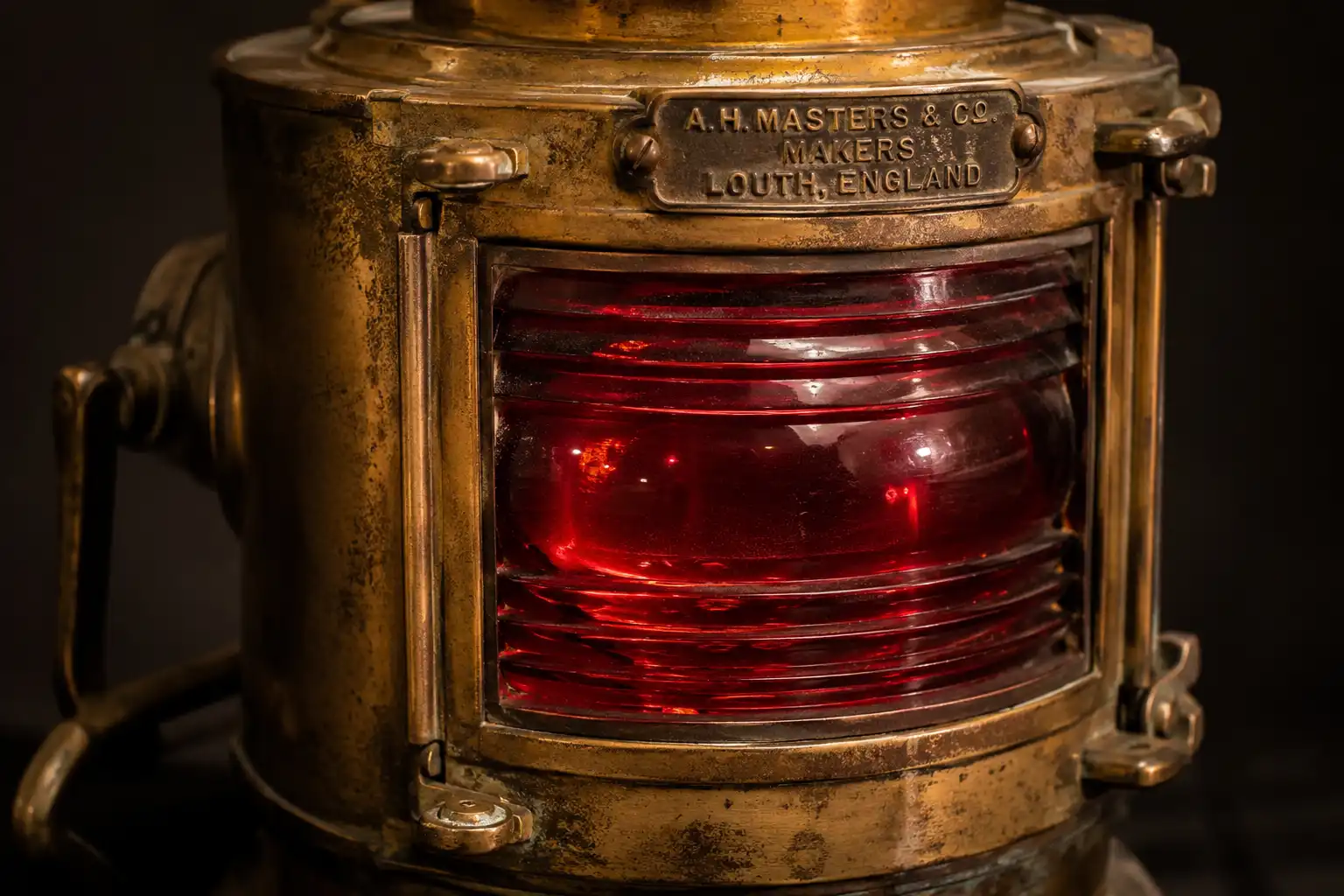
Port lights hold a red lens. Starboard lights hold a green one. Anchor lanterns use clear glass. When buyers ask which metal lasts longest by the water, I walk them through how brass, bronze, and aluminum handle salt air. If you want to be sure a piece is genuine, learning how to spot an authentic vintage ship lantern will save you money.
Final Thoughts
Color on the water is a language. Red, green, and white say the most, while yellow and blue fill in the rest. Learn it once, and every ship light you own carries a little history with it. That is the part I still love after all these years.
Good luck out there, and enjoy the hunt.
— Mokter