How Do Nautical Lights Work? Colors, Arcs, and Lenses
Last month a customer held one of my brass ship lights up to her window. She turned the green glass toward the daylight and asked why it wasn’t red. Fair question. That colored glass is the whole reason the light works the way it does. I have pulled hundreds of these off scrapped ships here in Bangladesh. Each one had a single job at sea: tell another vessel where you are and which way you point. Let me show you how.
Nautical lights work by showing fixed colors at set angles, so other ships can read your position in the dark. Red marks the port side, green marks starboard, and white covers the stern and masthead. A colored glass lens shapes each beam into a precise arc.
The Color Code Does the Talking
The colors are not decoration. Each one carries a message.
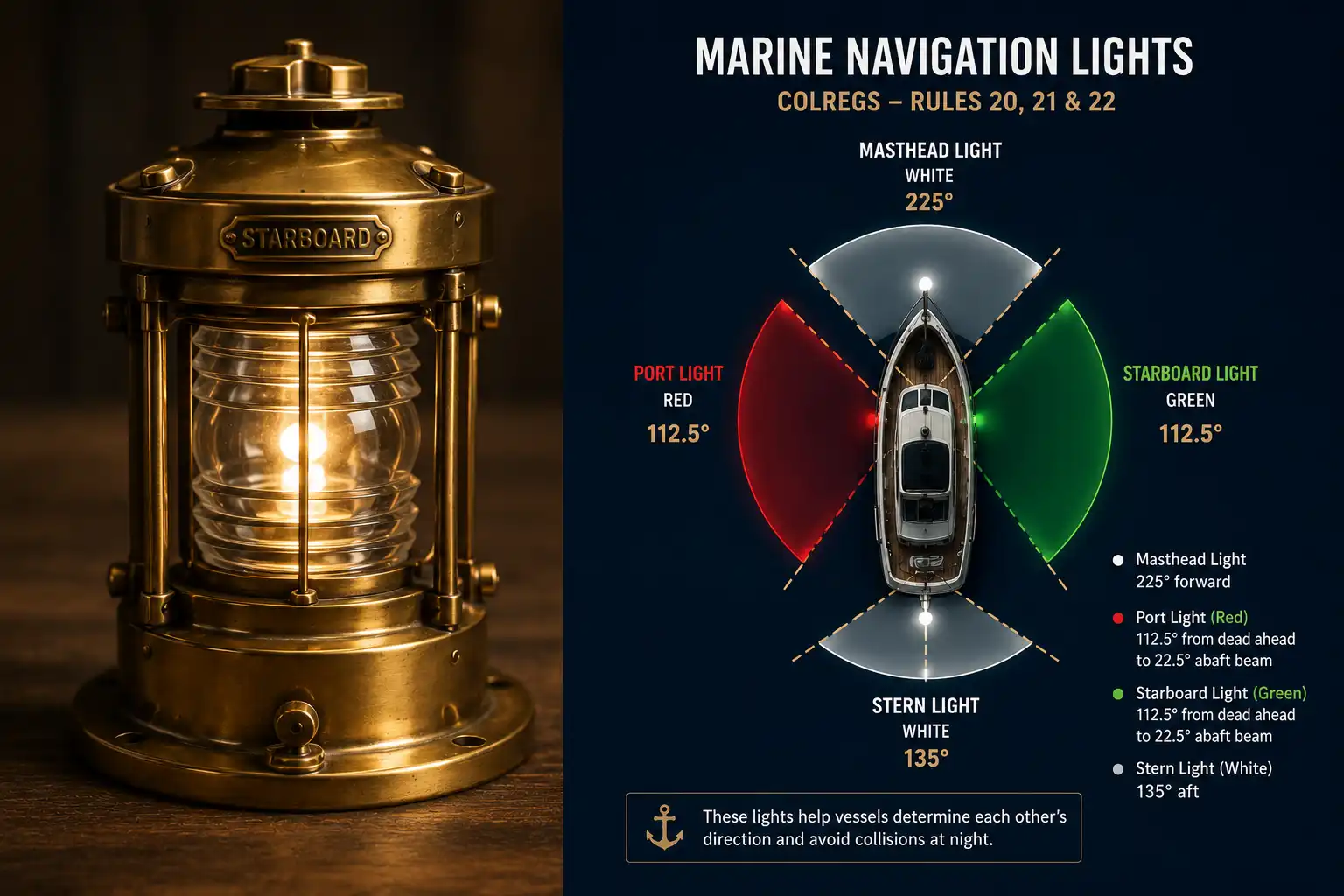
Red always sits on the port (left) side. Green always sits on the starboard (right) side. White shows at the stern and up on the masthead. These colors follow the international rules of the road at sea, so every ship reads them the same way.
Spot another boat at night and the colors give you its heading. See red and green together and it faces you head on. See only green and you are looking at its right side. If you want the full picture of the main kinds of ship lighting, that is a good place to start.
What Each Light Means
The masthead light is white and faces forward. The stern light is white and faces back. The two sidelights, red and green, cover the front corners. Together they wrap the vessel in signals.
Arcs Are the Clever Part
Here is what most people miss. Each light shines over a fixed arc, not a full circle.
Sidelights cover 112.5 degrees each, from dead ahead to just behind the beam. The stern light covers 135 degrees to the rear. The masthead light covers 225 degrees across the front.
Add those arcs up and they seal the whole horizon. No gaps, no overlap. That is why you never see the wrong color from the wrong angle. The metal housing itself blocks the light outside its arc.
Range matters too. On a large ship the masthead light must show for six nautical miles. The sidelights and stern light must show for three. The rules larger cargo ships follow get stricter as the vessel grows.
What Is Actually Inside the Light
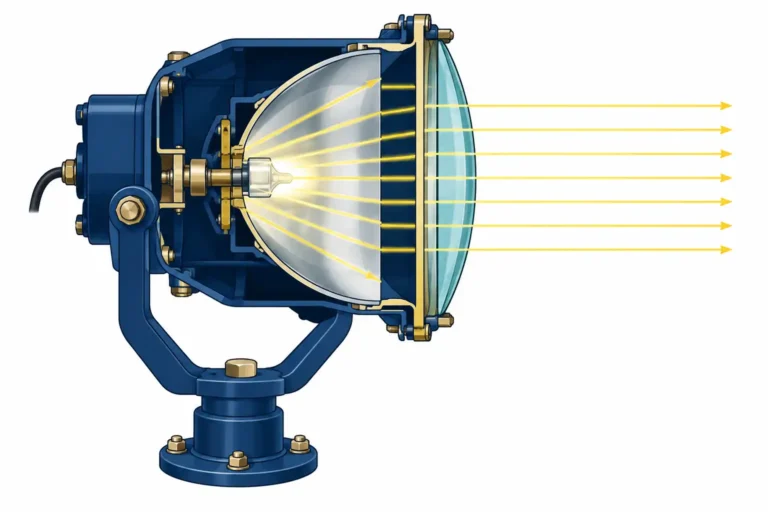
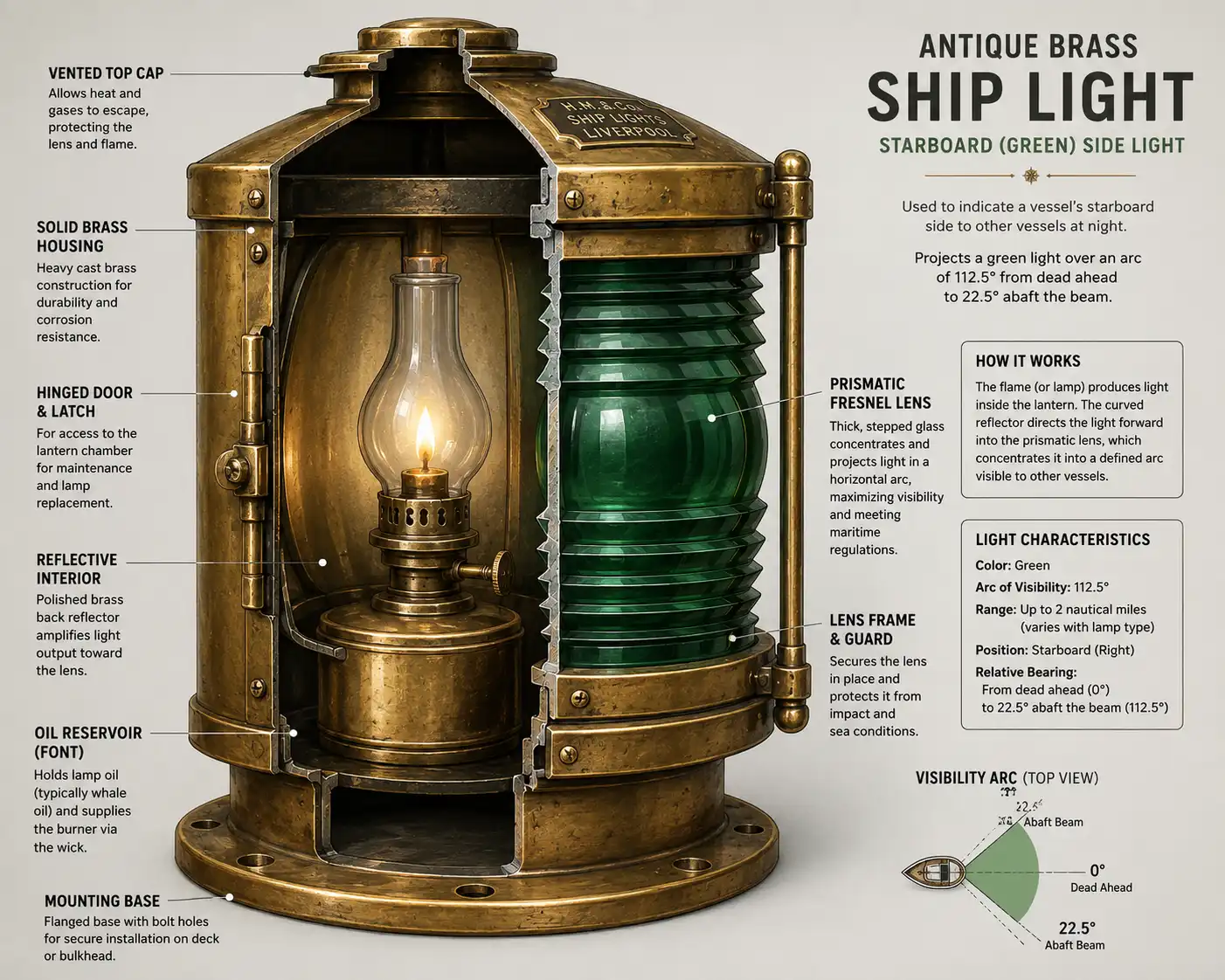
Open one up and the parts are simple. A bulb sits in the center. A thick glass lens surrounds it. A metal housing holds everything and keeps water out. That sealing matters, and keeping water out of a vintage deck lamp is half the battle with old fixtures.
The lens is the working heart. Old ship lights use a prismatic, Fresnel-style glass that bends the light into a strong, level beam. That is the same trick a lighthouse uses, just smaller.
How the Color Is Made
The color comes from the glass, not the bulb. Builders use colored glass or a colored filter over a plain bulb. A red or green bulb is easy to fit wrong during a swap. Colored glass removes that risk. The bulb stays clear and cheap.
Oil Then, Electric Now
The oldest ship lights burned oil. A wick and a colored globe did the whole job. Sailors trimmed the wick and topped the fuel every night.
Electric bulbs replaced the flame by the early twentieth century. Wiring ran to a filament lamp behind the same colored glass.
Today most working lights use LED. They draw little power, run cool, and last for years. The body is usually brass or aluminum, and how brass and aluminum compare still shapes what sailors trust.
How a Salvaged Ship Light Works in a Home
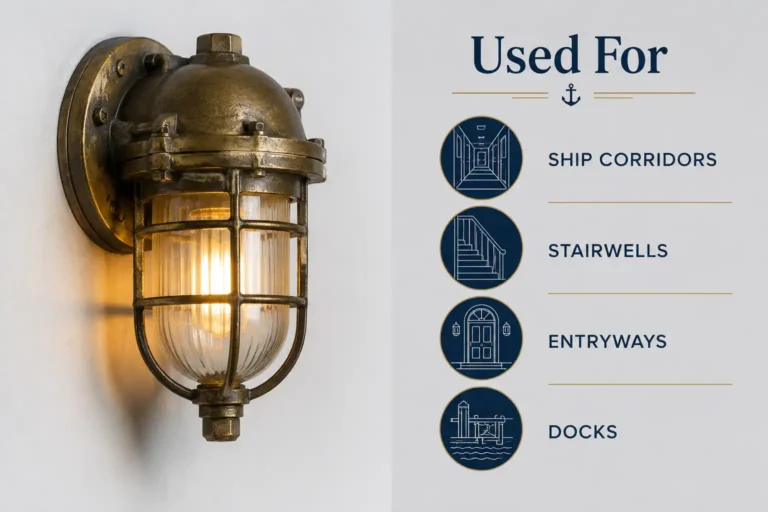
This is the part my customers care about. A genuine ship light was built for salt, wind, and water. That makes it perfect indoors or on a porch.
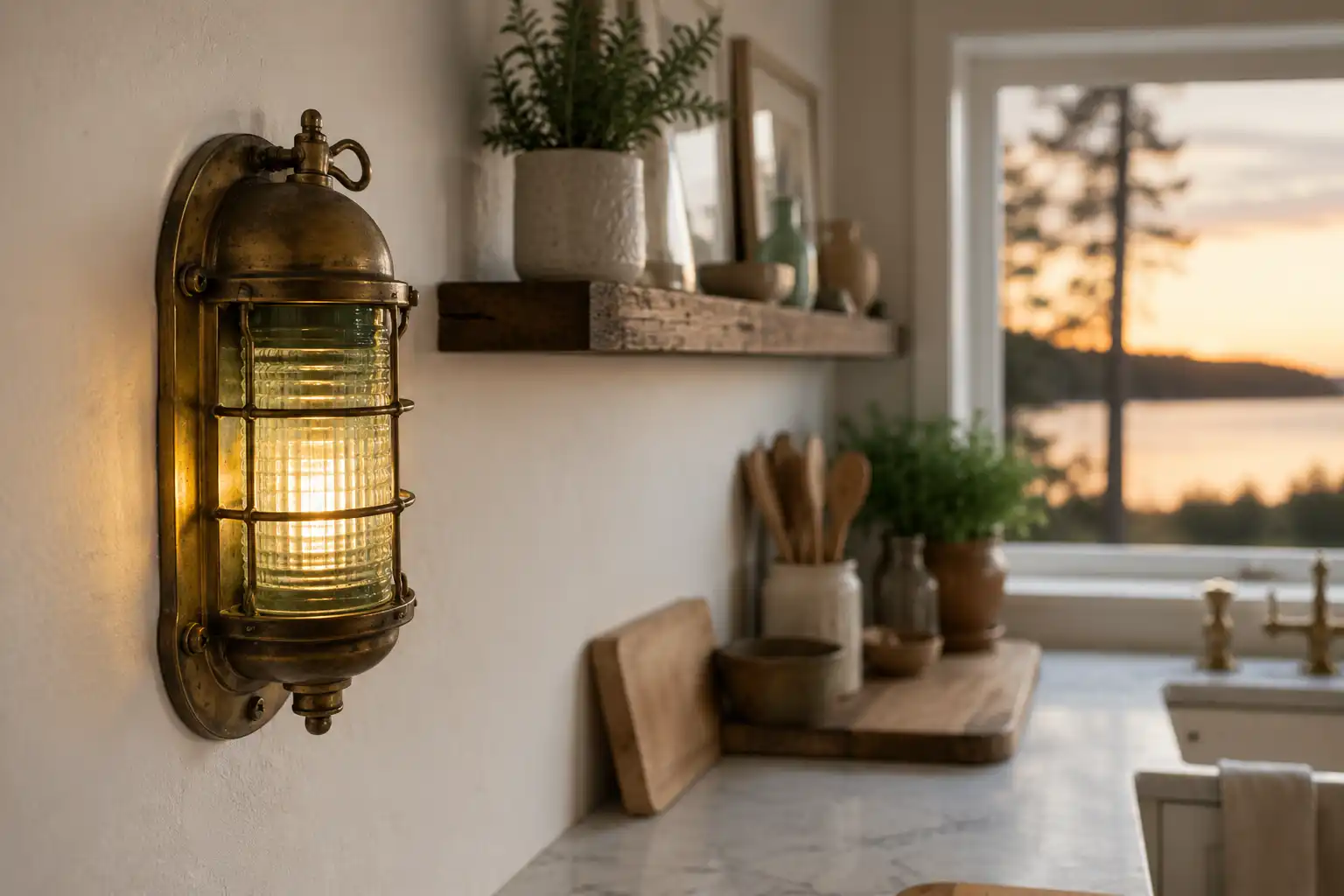
We rewire each fixture for household current and fit a modern bulb. The colored glass, the brass body, and the heavy lens stay original. You get real maritime hardware that switches on like any lamp. If that idea appeals, here is more on bringing antique maritime lighting home.
The thick glass still throws that warm, focused glow. A green sidelight over a kitchen counter looks like nothing you can buy new.
Final Thought
Nautical lights work through three simple ideas: fixed colors, fixed arcs, and a lens that shapes the beam. Once you know that, an old ship light stops being a puzzle and starts being a story.
Find a genuine one, wire it up, and you own a working piece of the sea. Enjoy it.
— Mokter