How to Choose the Right Marine Bulkhead Light for Your Vessel
Last week a buyer from Maine called me about lighting his lobster boat. He had three bulkhead lights in his cart and no idea which one would survive the salt spray. We talked for an hour. By the end, he picked one and felt good about it.
That’s the thing with these fixtures. They look similar online. They behave very differently on a working vessel.
The right marine bulkhead light matches your mounting location, weather exposure, and vessel size. Pick brass or bronze for saltwater, aluminum for budget builds. Choose a sealed wet-rated fixture for exterior decks and a vented option for interior cabins.
Match Your Marine Bulkhead Light to the Mounting Spot
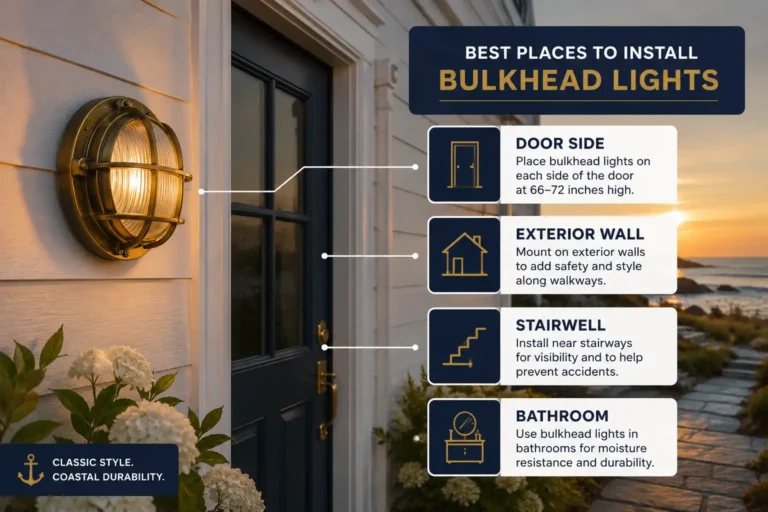
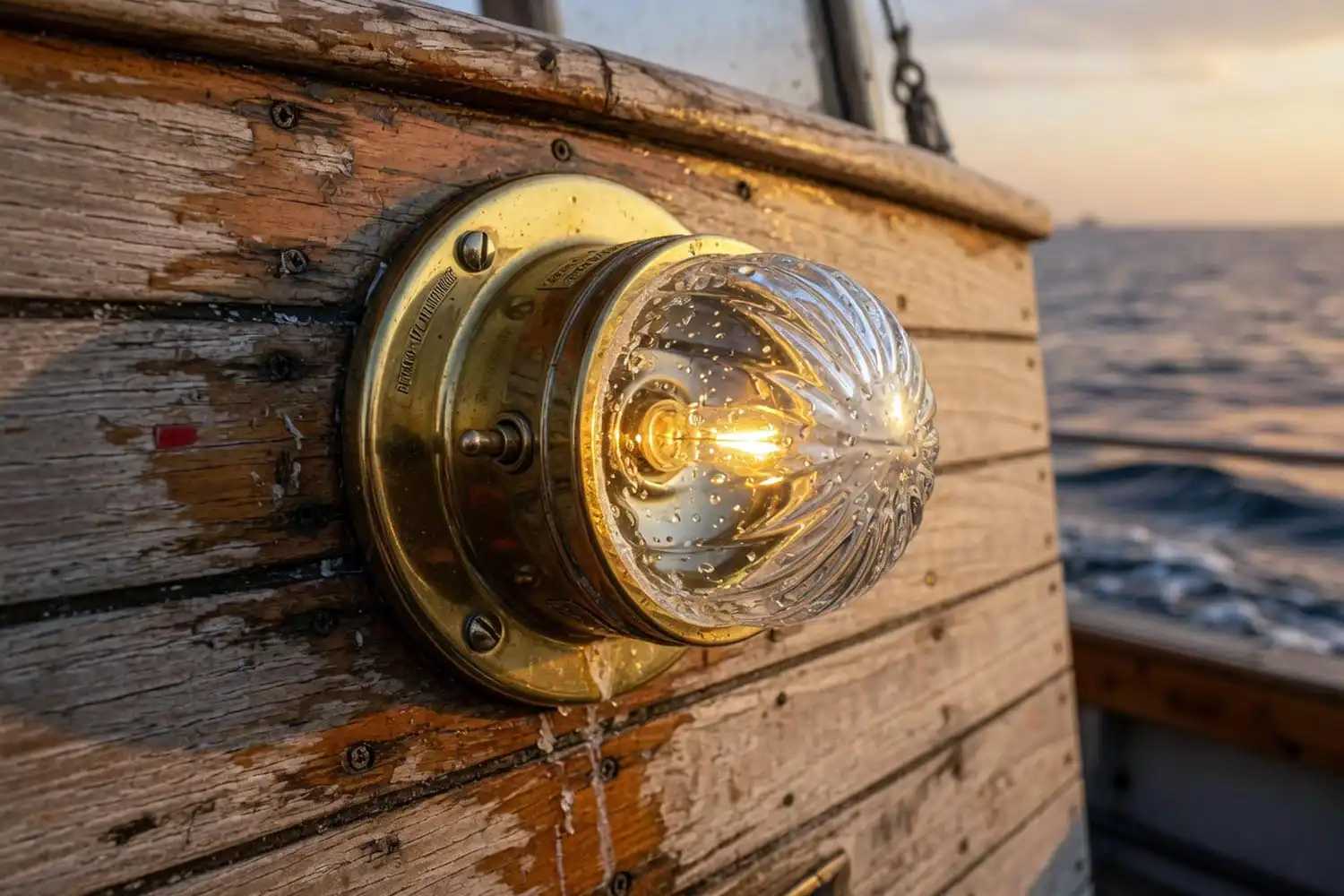
Mounting location decides almost everything. An engine room light deals with heat and oil mist. A bow deck light fights spray and UV. A galley fixture stays mostly dry but gets greasy.
Walk your vessel before you buy. Note each spot. Measure the flat area you have for the backplate.
A small fixture on a 30 inch wall looks lost. A heavy 9 inch fixture on a thin cabin partition will pull screws loose in a season.
Pick the Material That Fits Your Water
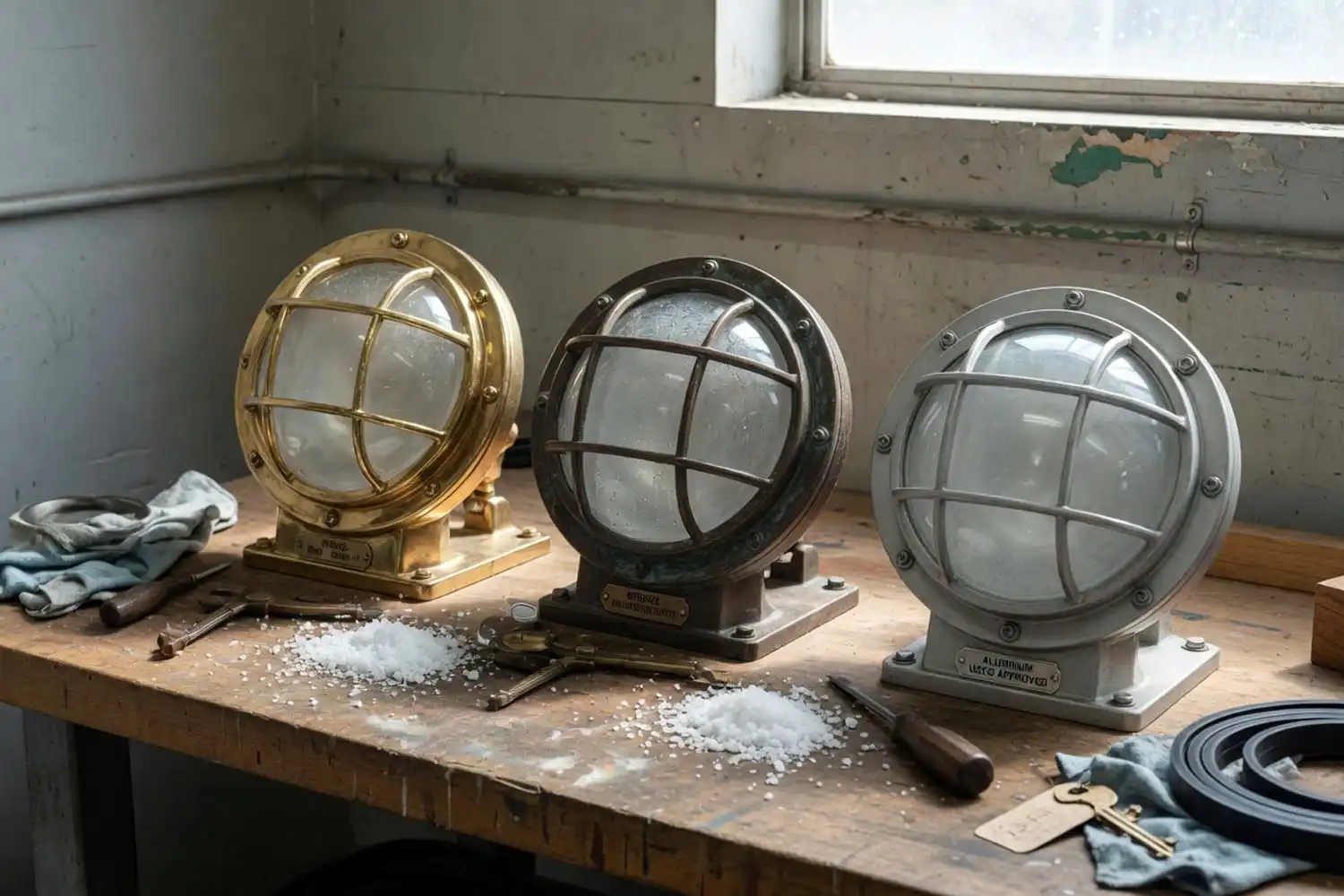
Brass holds up well in saltwater when you keep it clean. Bronze costs more but lasts longer in heavy marine service. Aluminum stays light and cheap but pits fast near salt air.
For yachts and commercial fishing boats, I push buyers toward bronze. For inland boats and houseboats, brass is plenty. If you want a deeper comparison of metals for coastal use, my notes on choosing between brass, bronze, and aluminum for coastal homes lay it out clearly.
Size and Backplate Patterns Matter
Bulkhead fixtures come in roughly four sizes: small (6 to 7 inch), medium (8 to 9 inch), large (10 to 11 inch), and oversized (12 inch and up). The backplate hole pattern decides whether the fixture mounts cleanly.
Some old British lights use 3-hole patterns. American lights often use 4-hole. Mismatched holes mean drilling new ones and patching old. A breakdown of bulkhead light sizes and backplate mounting patterns saves a lot of guesswork.
Wet Location vs Dry Location
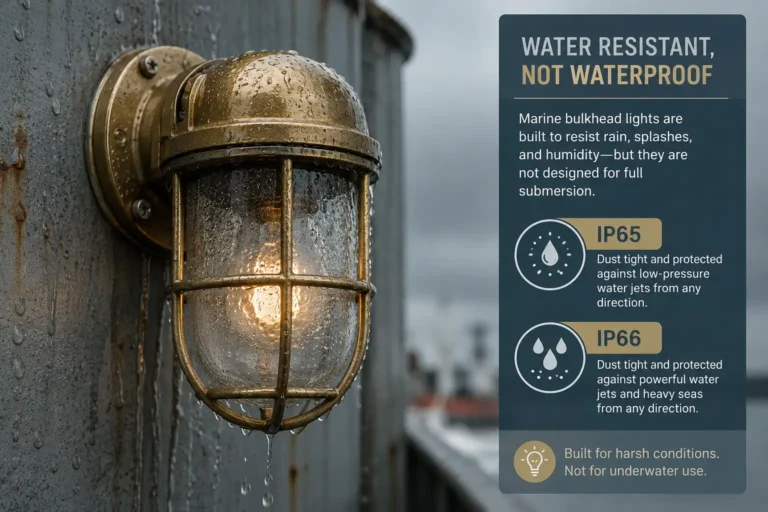
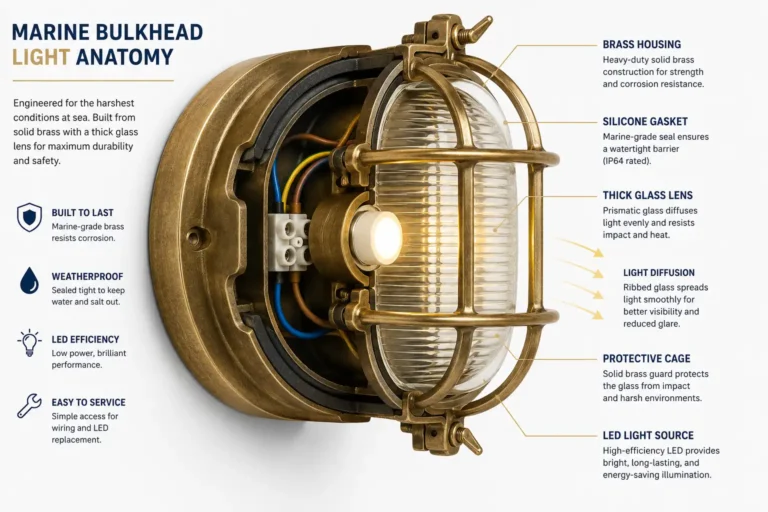
Exterior mounting needs a wet-rated, gasketed marine bulkhead light with a glass globe and protective guard. Interior cabin or engine room use can run a simpler unit with a vented backplate.
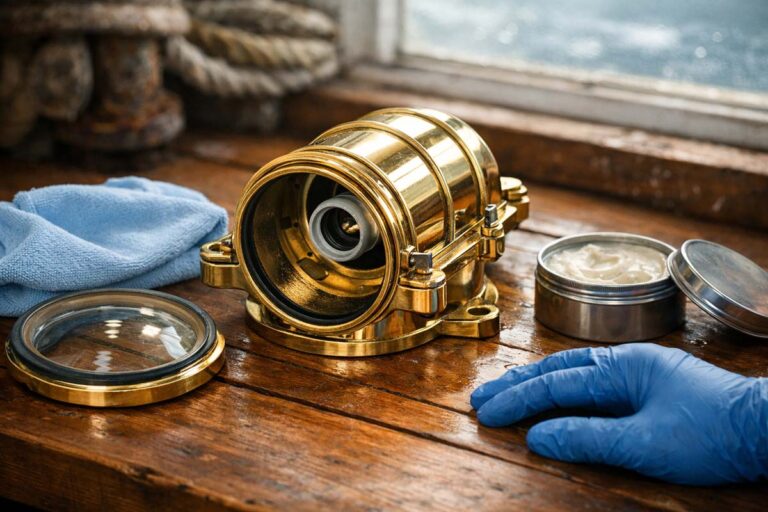
If the light sits where rain or spray hits, the gasket between the globe and base is the only thing keeping water out. Check it before you install. Old gaskets crack. New ones cost a few dollars.
For vintage units, water ingress is the most common failure I see. My notes on troubleshooting water leaks in old deck lamps cover the fix.
Glass, Guard, and Bulb
Thick prismatic glass scatters light better than clear glass. A brass cage guard protects the globe from rope, gear, and bumps in tight spaces.
For bulbs, LED retrofit bulbs in E26 or E27 sockets work in most antique fixtures. They cut heat and pull less current. Original wiring on vintage lights handled hot incandescent bulbs. LEDs run cool. Your old wiring will thank you.
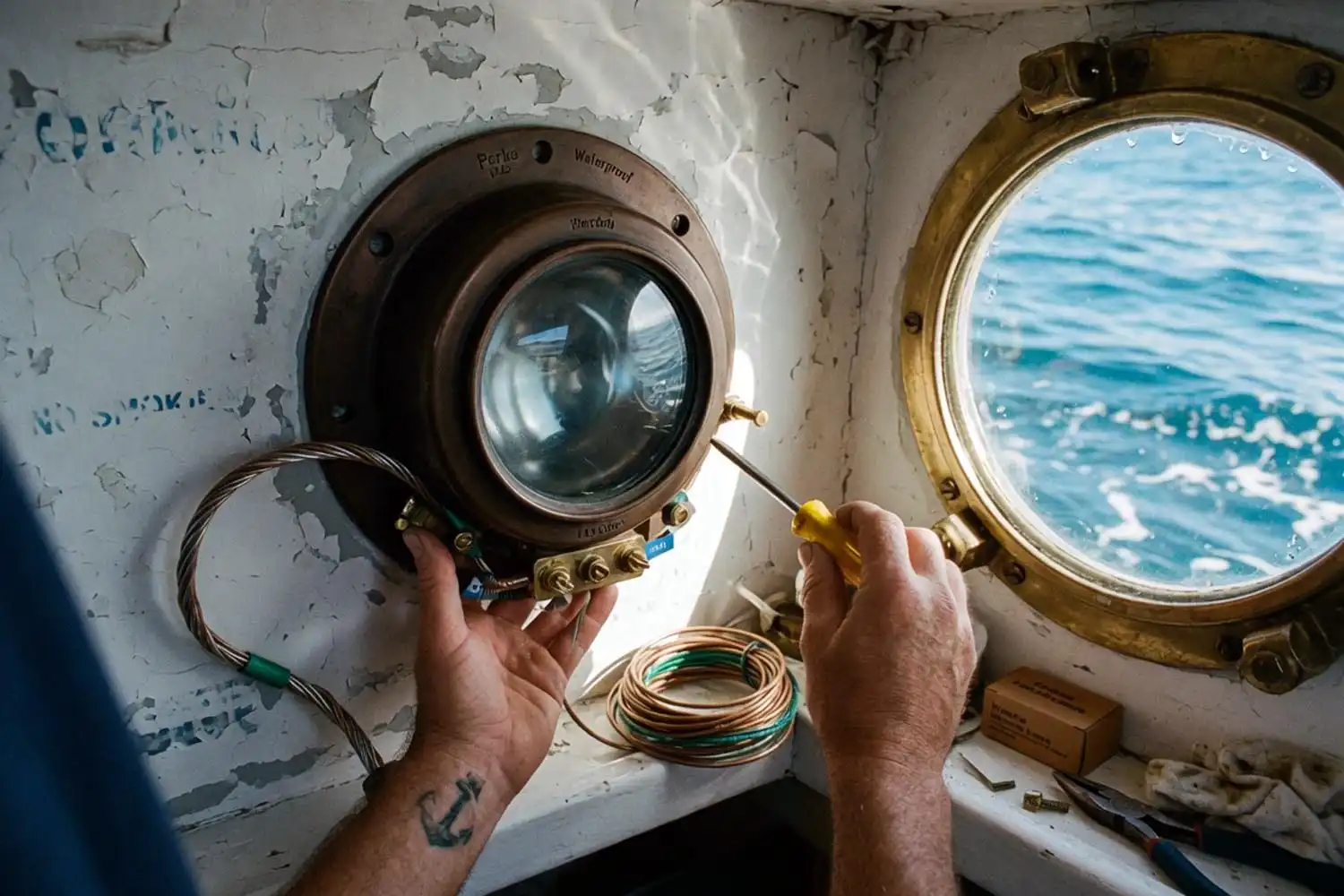
Power Source and Wiring
Check your vessel’s voltage before you buy. Most boats run 12V or 24V DC. Some yachts and shore-power setups run 110V or 220V AC.
A 110V fixture wired into a 12V system will dimly glow and die. A 12V light on shore power will burn out instantly. Match the voltage on the fixture’s label to your circuit.
If the light has no label, assume it needs rewiring. Marine-grade tinned copper wire is the only wire I trust on a boat.
New, Vintage, or Reproduction
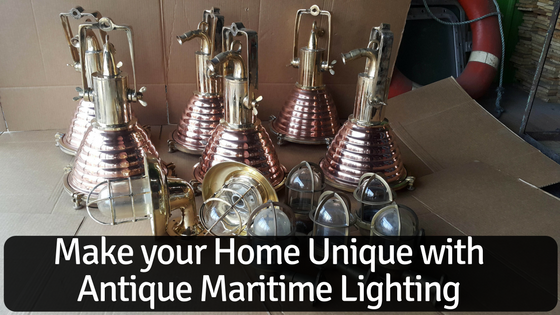
New lights come with warranties and standard hardware. Vintage salvaged fixtures carry history, patina, and character. Reproductions sit in the middle: new build with classic looks.
For a working commercial vessel, I lean toward new or reproduction. Parts are easier. For a yacht refit or a restored classic, vintage wins on charm. If you’re hunting for the real thing, knowing how to spot an authentic vintage ship lantern helps you avoid fakes.
Match the Fixture to the Job
A passageway light differs from a true bulkhead light. Same with companionway and deckhouse fixtures. They look alike but serve different spots. A short read on the differences between bulkhead and passageway lights clears it up.
For commercial vessels, also check that any visible exterior lights meet your flag state’s rules. Coast Guard and SOLAS rules on navigation lighting for cargo ships cover what you can and can’t use on deck near nav lights.
Final Thoughts
Buying a marine bulkhead light is small in dollars but big in headaches if you get it wrong. Measure twice. Check the voltage. Match the metal to your water. Ask questions before you click buy.
If you’re not sure, send me a photo of the spot. I’ll tell you what fits.
Good luck with the refit.