Brass vs. Stainless Steel Bulkhead Lights: Which is Better
A customer from Florida called me twice last week. He kept flipping between brass and stainless steel bulkhead lights for his beach house porch. I told him what I tell everyone who asks. The answer comes down to three things: salt exposure, how much cleaning you want to do, and the look you actually want to live with. Both metals work. Both have served ships for over a century. But they age very differently.
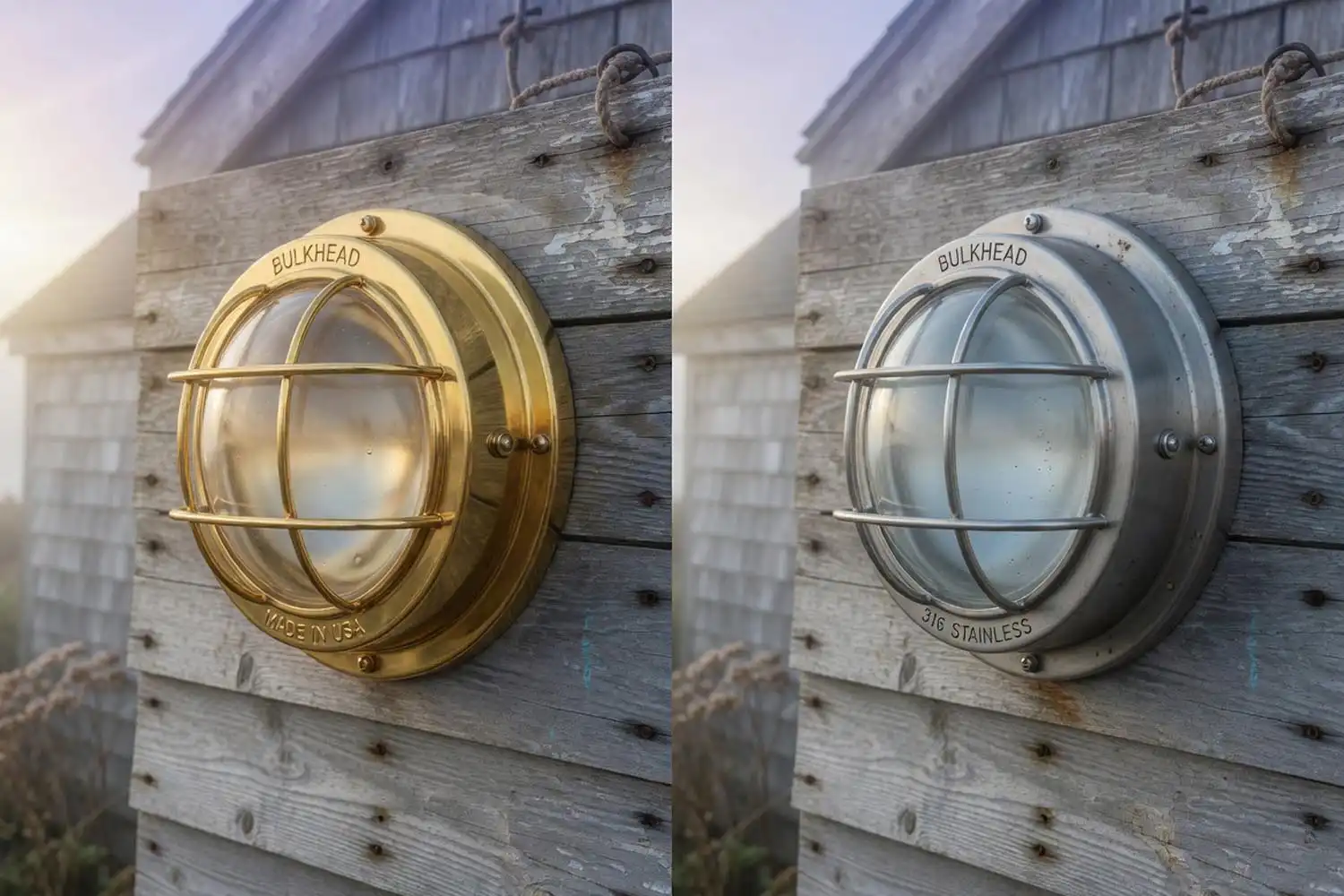
Brass bulkhead lights give you warmth, patina, and a true vintage feel, but need polishing if you want them shiny. Stainless steel bulkhead lights stay bright with almost no upkeep and resist salt slightly better, though they look more modern. For authentic ship character, choose brass. For low maintenance in harsh coastal spots, choose stainless steel.
What These Lights Were Built For
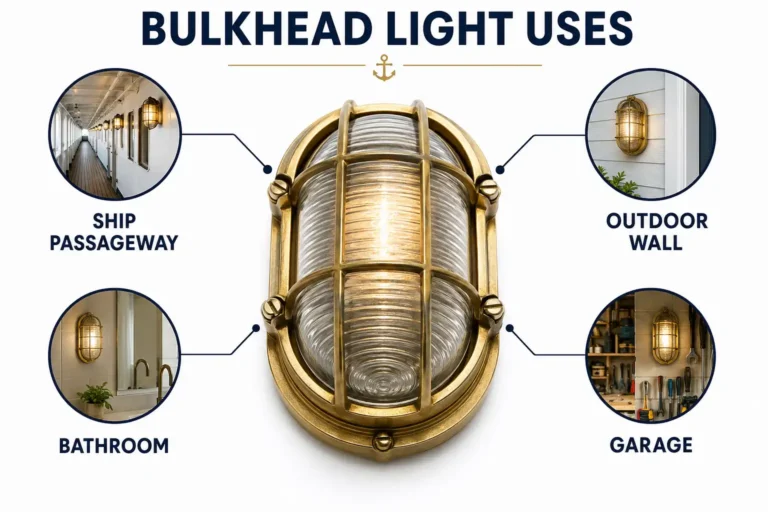
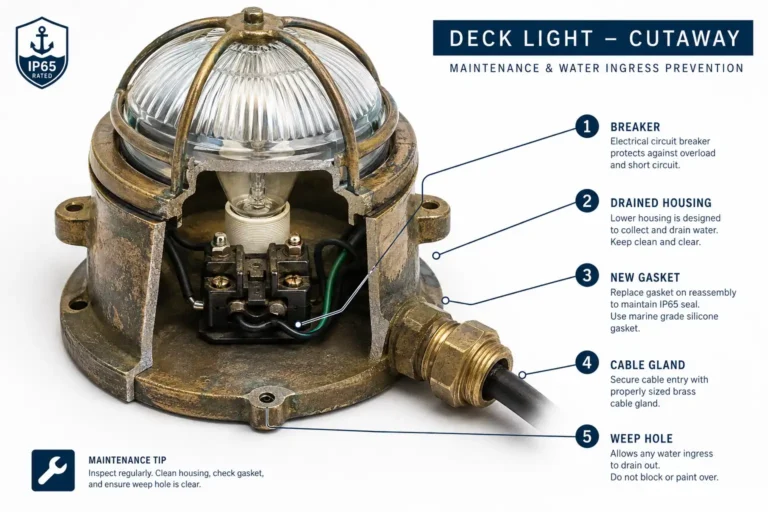
Bulkhead lights were originally fitted on ship walls to light passageways, decks, and engine rooms. The cast metal body, thick glass globe, and wire cage were designed for one job: surviving the sea. Salt, vibration, heat, and constant moisture wreck most fixtures. These do not.
You’ll find both materials on old merchant vessels and naval ships. Brass dominated older builds. Stainless steel came up strong from the mid-20th century onward.
If you’re new to these fixtures, my guide on what a bulkhead light actually does covers the basics in plain language.
Brass Bulkhead Lights: The Warm Classic
Brass is a copper and zinc alloy. It’s been used on ships for hundreds of years. The metal has a golden tone that deepens with time.
Pros of Brass
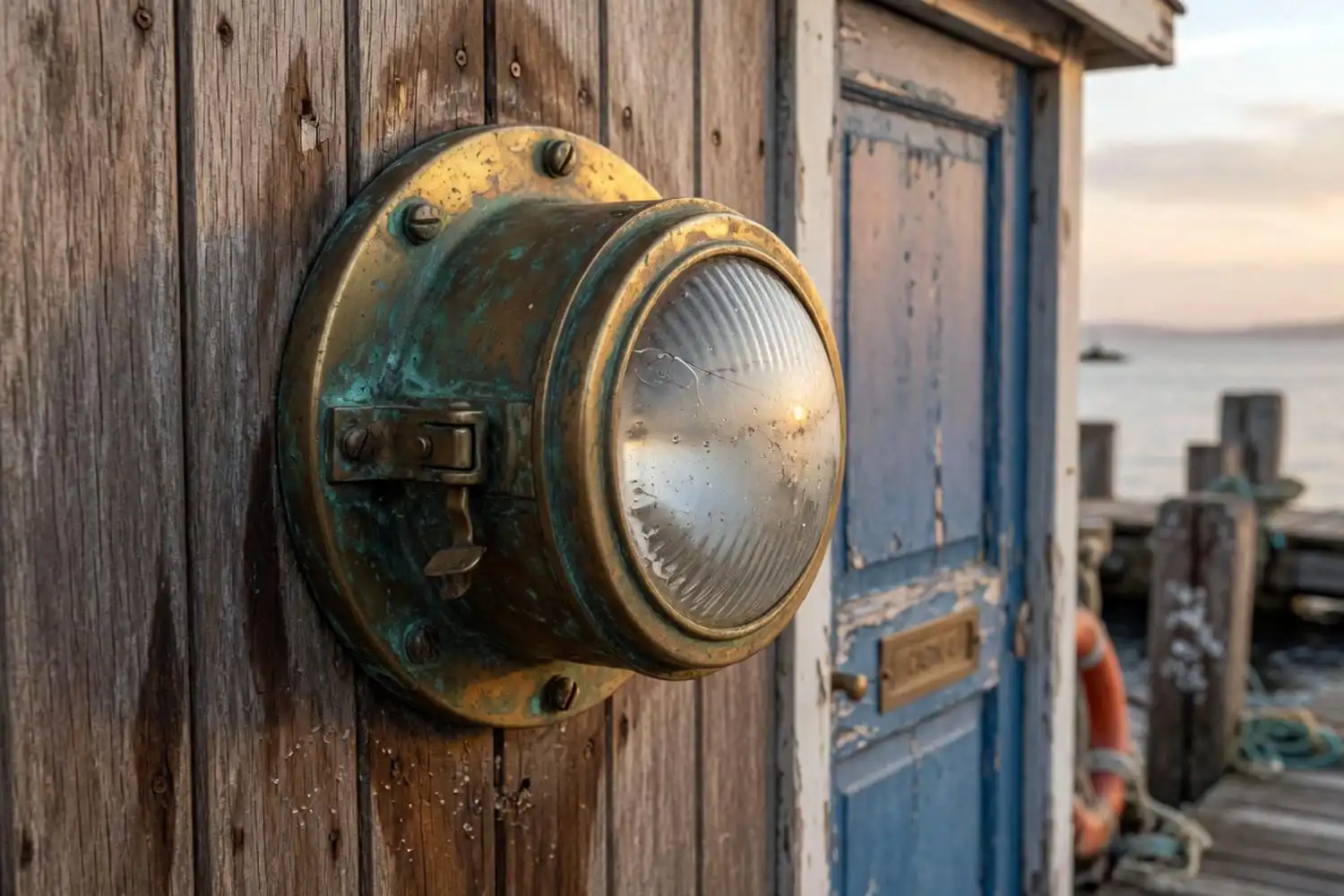
Brass develops a patina (a soft brown or green film) that many collectors love. It feels heavy in the hand. Real brass fixtures have weight, character, and a hand-cast quality you can’t fake. They look right at home in restored coastal cottages, restaurants, and old farmhouses.
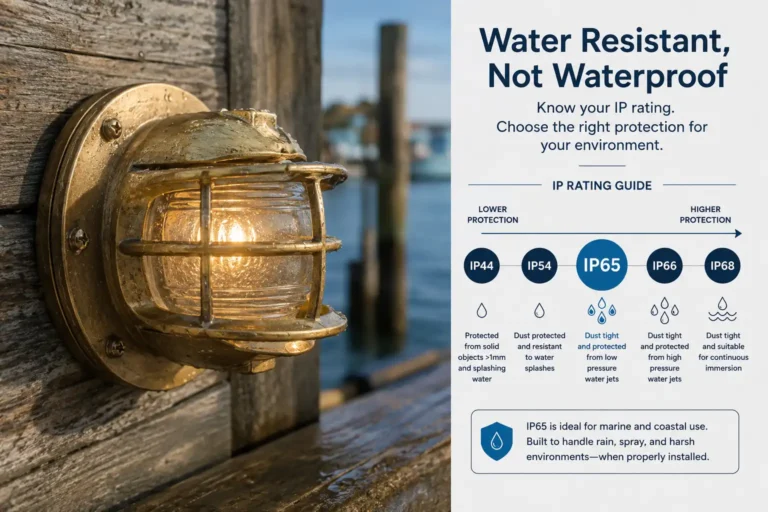
Brass also resists corrosion well in marine settings. Not as well as stainless against pitting, but it doesn’t rust. Ever.
Cons of Brass
Brass tarnishes. If you want that bright polished gold finish, you’ll have to clean it every few months. My write-up on safely polishing antique brass ship fixtures walks through what works without damage.
Brass is softer than steel, so deep scratches show up faster. The price runs higher too, especially for solid cast pieces.
Stainless Steel Bulkhead Lights: The Tough Modern Choice
Stainless steel is an iron, chromium, and nickel alloy. Marine-grade 316 stainless is the standard for coastal fixtures. It handles salt spray better than almost any common metal.
Pros of Stainless Steel
Low upkeep is the big one. A wipe with a damp cloth keeps it looking new. No polishing. No patina. No discoloration over years of exposure.
Stainless steel resists pitting from chlorides, which is exactly what kills cheaper fixtures near the ocean. It’s also harder, so scuffs and bumps don’t dent the surface.
The cost is usually lower than solid cast brass.
Cons of Stainless Steel
Stainless looks more industrial. It lacks the warm, lived-in feel of brass. For people chasing a true vintage ship look, it can feel a bit cold or generic.
Not all stainless is equal either. 304 grade rusts faster near saltwater. Always check for 316 if you live close to the coast.
Side by Side: Brass vs. Stainless Steel Bulkhead Lights
Weight: Brass wins. It feels solid and old. Maintenance: Stainless wins, hands down. Salt resistance: Stainless edges out brass slightly. Looks: Personal call. Warm vs. clean. Price: Stainless usually costs less for new pieces. Vintage brass can run high. Lifespan: Both last decades when cared for.
For more on how brass holds up against other common ship metals, my comparison of brass and aluminum ship fixtures might help round out the picture.
Which One Fits Your Space?
Pick brass if your home leans rustic, traditional, or maritime vintage. It suits cottages, pubs, boutique hotels, and anywhere character matters more than easy upkeep. Restored ship lanterns and original passageway fixtures almost always show up in brass.
Pick stainless if you live close to open ocean, hate cleaning, or want a cleaner contemporary look. It works well on modern decks, pool houses, garages, and outdoor kitchens.
A simple test: walk into your space and ask if it should feel like a 1940s freighter or a new yacht. That answer makes the call for you.
If you’re still weighing metals broadly, my piece comparing brass, bronze, and aluminum for coastal homes covers more ground.
What I Sell and Why
Most of what I salvage from old ships in Bangladesh is brass and copper. Original fixtures from vessels built between the 1950s and 1980s. That’s where the real character is. Stainless options I stock are newer reproductions, still well made, but not antiques.
If authenticity matters most, brass is the path. If practicality wins, stainless is fine.
Final Thoughts
There’s no wrong answer here. Brass and stainless steel bulkhead lights both have a place. One ages with grace and asks for attention. The other shrugs off salt and keeps quiet. Match the metal to your space and your patience level, and you’ll be happy for years.
Good luck with the build.