Vintage Bulkhead Lights History: From Ship Decks to Your Walls
I grew up around old ships. Here in Chittagong, the breaking yards stretch for miles along the coast. Every week, another vessel comes in for scrap. The first time I pulled a brass bulkhead light off a rusted passageway wall, I was maybe twelve. The thing weighed more than I expected. It also outlived the ship by a good fifty years. That’s the part most people miss. These lights were built to last longer than the boats they served on.
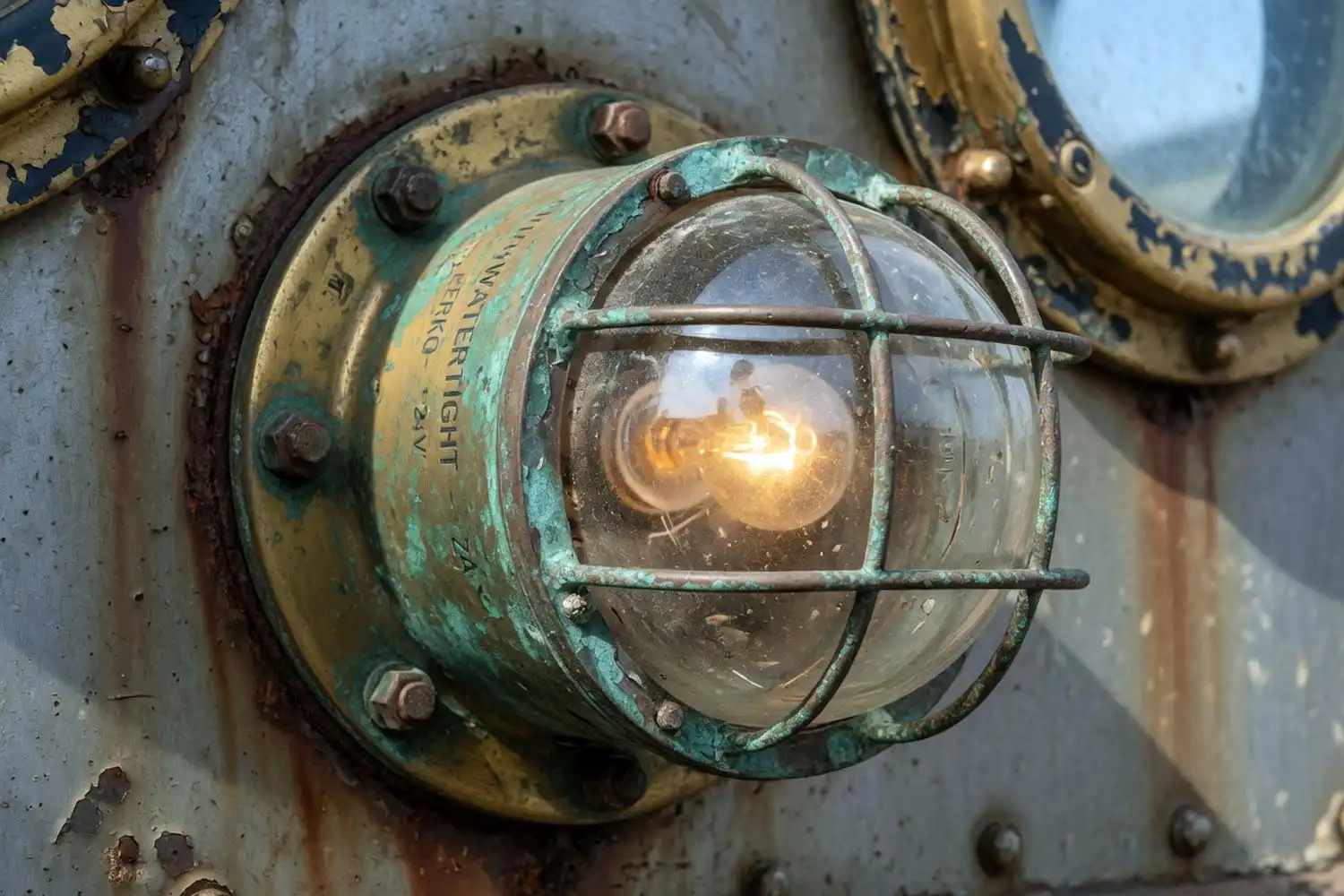
Vintage bulkhead lights date back to the late 1800s, when British shipyards started fitting cast brass and bronze fixtures inside steam-powered vessels. They became standard on Royal Navy ships, merchant fleets, and WWII Liberty ships. Most surviving pieces today come from vessels broken between 1940 and 1990.
Early Vintage Bulkhead Lights History
The story really begins with the steam era. Sailing ships used oil lanterns and candles below deck. That worked fine until iron hulls and steam engines changed everything. Suddenly, ships needed permanent fixtures that could handle heat, salt, and constant vibration.
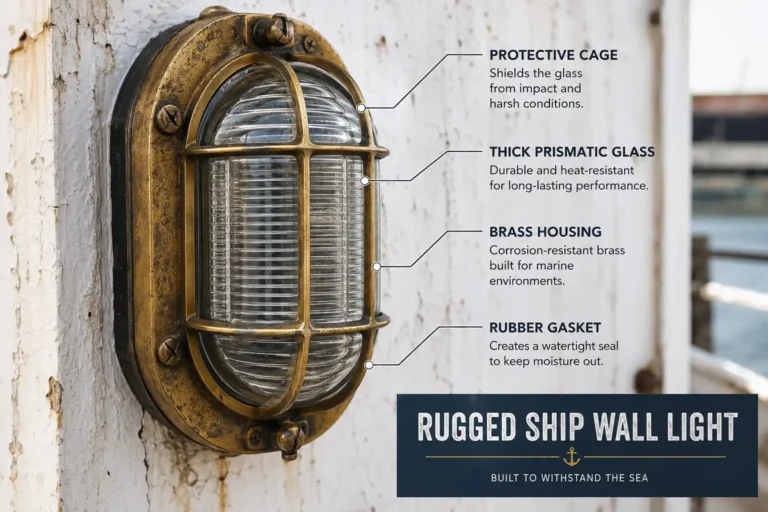
British foundries led the early work. Companies in Glasgow, Liverpool, and Birmingham started casting solid brass housings around the 1880s. The design was simple. A round backplate, a thick glass globe, and a cage guard to protect the bulb from being smashed by a careless boot.
That basic shape has barely changed in 140 years.
The Real Workhorse Years
Steam gave way to diesel, and naval power grew. Between 1900 and 1945, bulkhead lights became one of the most produced fixtures at sea. Every passageway, engine room, and crew cabin needed one. The British Admiralty had strict specs. So did the US Navy.
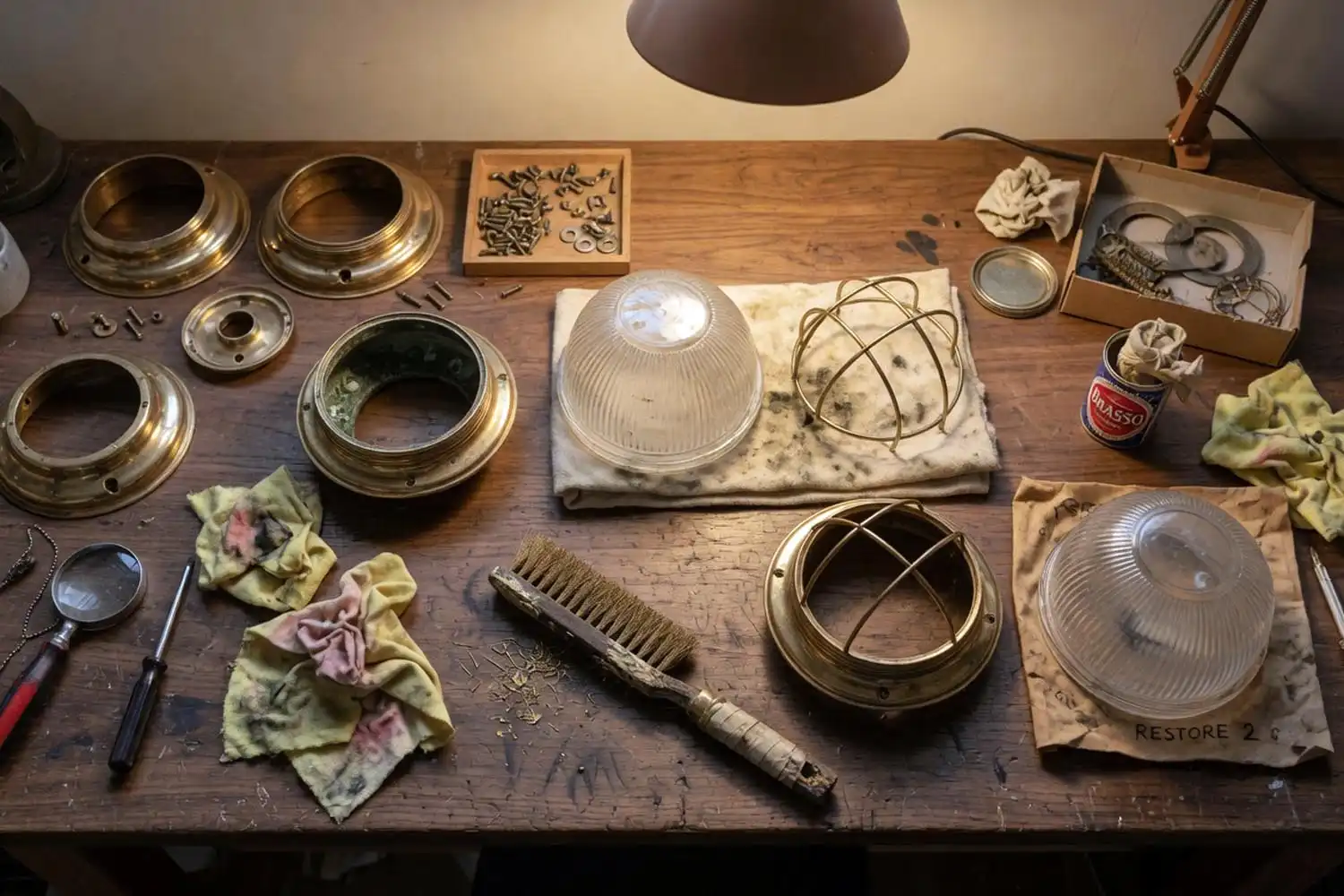
I’ve handled lights from this era stamped with maker’s marks from Wiska, Pauluhn, Perkins, and Daniel O’Connell. Each one feels different in the hand. The wartime pieces are usually heavier, with thicker brass and rougher casting marks. Shipyards weren’t worried about pretty back then. They needed pieces that could survive a depth charge.
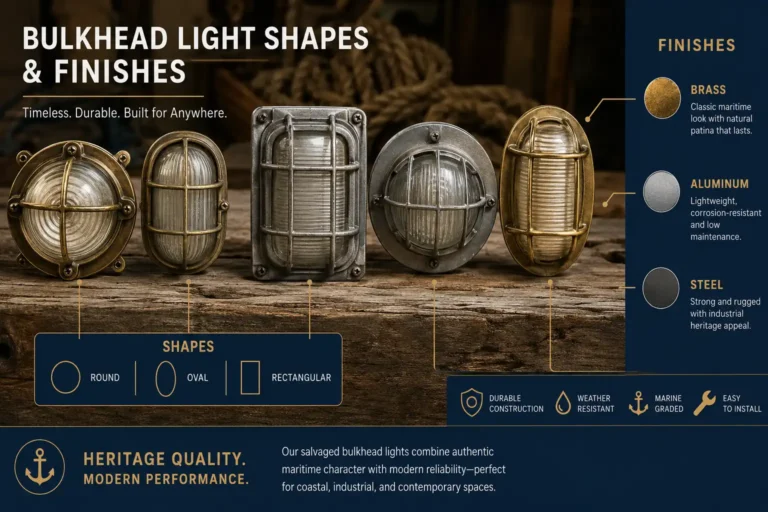
If you want to understand what separates these eras, my breakdown of the most common bulkhead light variations covers the main shapes and how to read them.
World War II Changed Everything
WWII production was massive. Liberty ships alone needed hundreds of bulkhead fixtures per vessel. American shipyards in Baltimore, Portland, and San Francisco produced lights by the truckload. Most were cast brass. Some used aluminum to save weight and conserve copper for ammunition.
That aluminum versus brass split still matters today for collectors. I wrote a separate piece on how brass holds up against aluminum in marine ship lights, and the patina difference alone tells you a lot about the era.
The Decline and the Comeback
After the 1960s, things changed fast. Fluorescent tubes replaced incandescent bulbs on commercial ships. Plastic housings replaced brass. By the 1980s, almost no new vessel was being built with traditional brass bulkhead lights.
That’s when the salvage trade picked up. As old freighters and warships came in for scrap, the lights came off first. Collectors in Europe and the US started snapping them up in the 1990s. Today, the vintage market is bigger than it’s ever been.
What Makes the Old Ones Special
Three things separate genuine vintage bulkhead lights from new reproductions.
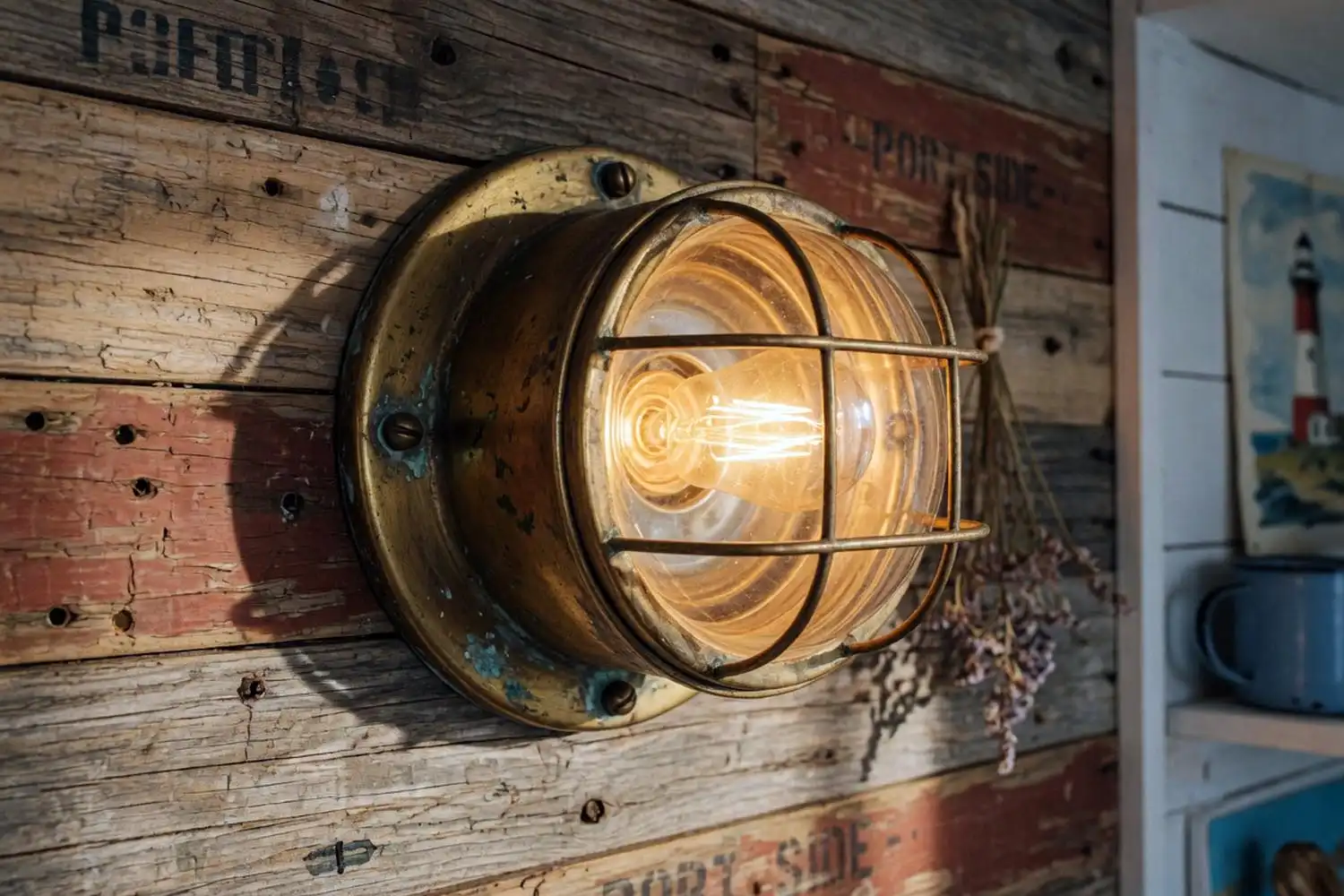
First, the weight. A real brass light from 1950 feels like a small barbell. Modern cast pieces are often hollow or made from thinner stock.
Second, the patina. Salt air, engine grease, and decades of polish create a finish nobody can fake convincingly. If you’re new to this, learning how to identify authentic vintage maritime fixtures will save you from a lot of bad purchases.
Third, the marks. Most genuine pieces carry a foundry stamp, a date, or a navy code somewhere on the backplate. Reproductions almost never have these. They might have stickers or modern engraving, but never the worn metal stamps you see on the real thing.
Why Collectors Care Today
Honestly, I think people love these lights because they carry a story. The brass cage on your kitchen wall might have lit a cabin on a North Sea oil tanker in 1962. The dents and scratches are real. The bulb socket was wired by a sailor who’s probably long gone.
That history is hard to find in modern lighting. New brass fixtures look great, but they don’t carry forty years of saltwater memory.
Final Thoughts
Vintage bulkhead lights aren’t fancy. They were built to do a hard job in a harsh place. That’s exactly why they last. Every piece I pull from a ship in Chittagong has a backstory, and I try to pass that along when I sell one. If you’re thinking about adding one to your home, start with the smaller passageway light models and work up from there. Good luck finding yours.