What Are Nautical Wall Lights? A Ship Salvage Guide
Last week I pulled a brass fixture off a cabin wall in a Chattogram breaking yard. Salt had crusted the glass. The dogs were seized tight. But under the grime, the metal still shined. That fixture spent decades bolted to a ship. Now it will light someone’s porch.
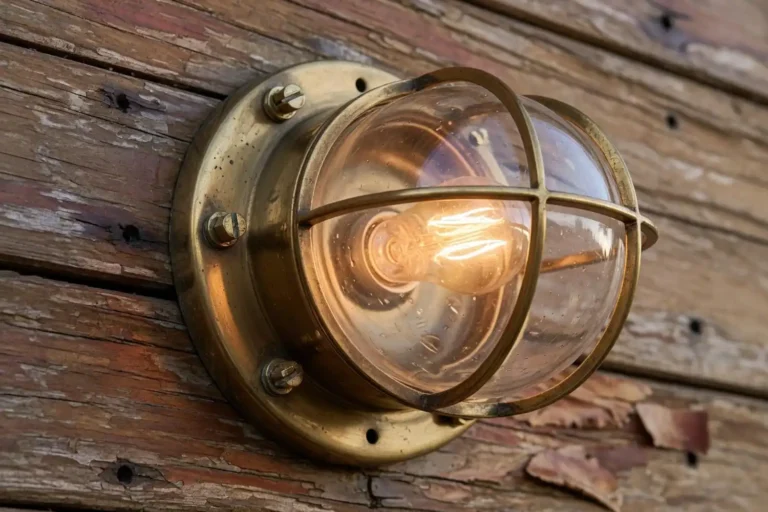
Nautical wall lights are marine light fixtures made to mount flat on a wall. They come off ships, or they copy the shipboard style. Most use brass, bronze, aluminum, or copper, with a thick glass lens and a protective cage. They were built to survive salt, water, and constant vibration at sea.
What Makes a Wall Light “Nautical”?
A nautical wall light is defined by its build, not just its look. Real ones were made for hard duty at sea.
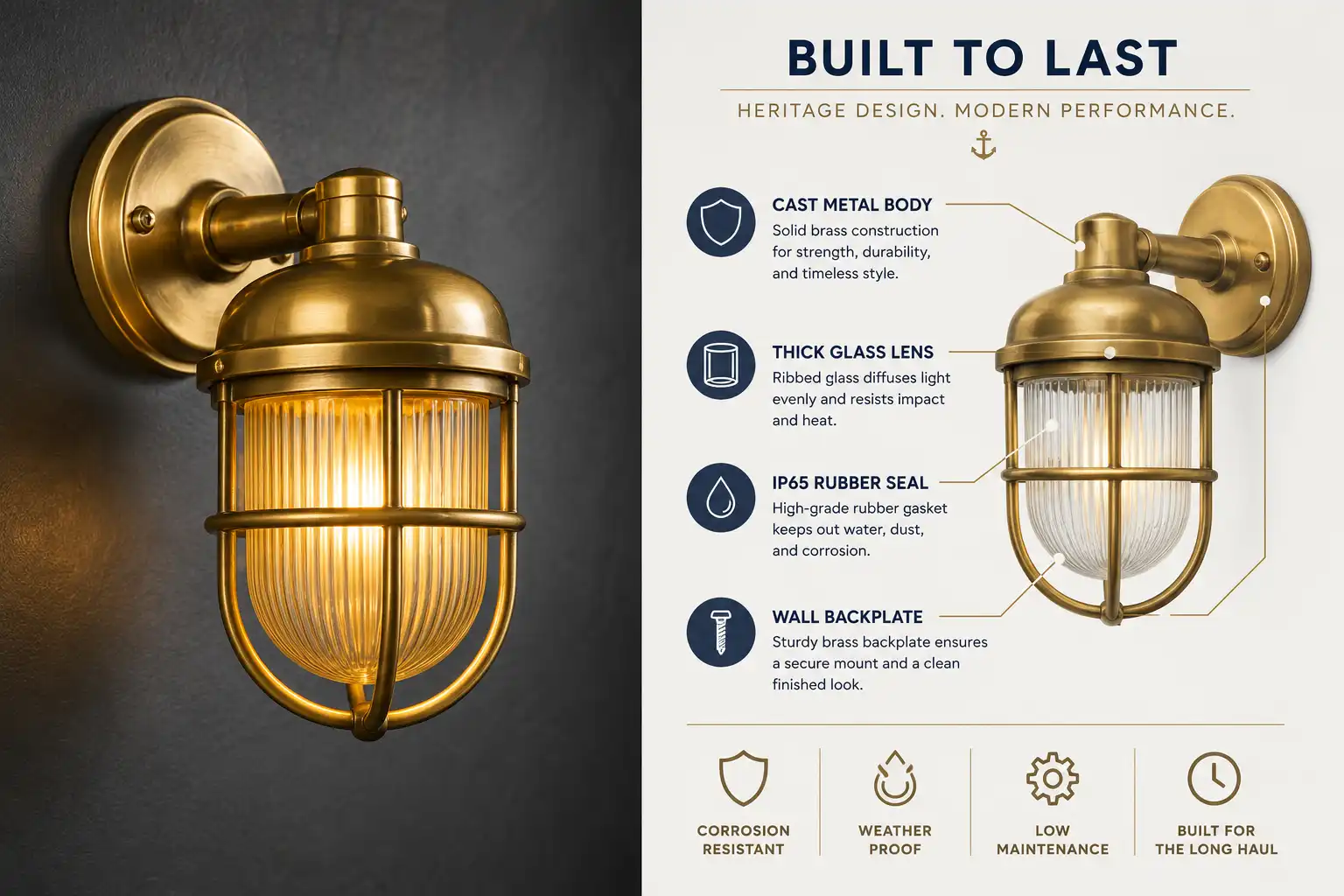
The body is cast metal. Brass and bronze fight corrosion for decades. Aluminum keeps the weight down. Copper ages into a soft patina.
The lens is thick glass, not plastic. A metal cage guards it from knocks. A rubber gasket seals out water. That seal is why these fixtures carry ratings like IP65, which means dust tight and safe against water jets.
If you want to see which metals survive salty coastal air, I broke that down in a separate guide.
Learn more: Where to Place Bulkhead Lights, Inside and Out
Where Do Nautical Wall Lights Come From?
Most nautical wall lights start life inside a ship. They are workhorses, not ornaments.
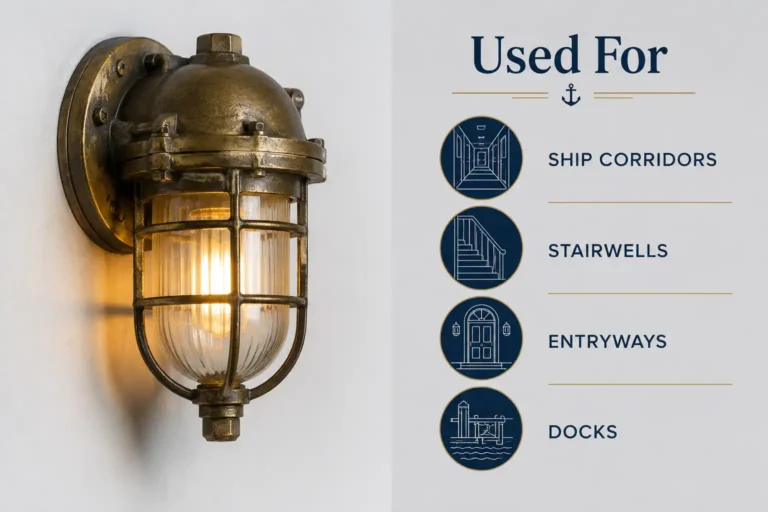
On a vessel, they light corridors, cabins, engine rooms, and open decks. You have seen them as the round guarded fixtures off ship cabins, bolted flat to steel walls. The longer, angled lights made for ship corridors did the same job overhead.
When a ship is scrapped, we recover these fixtures. Here in Bangladesh, the breaking yards feed a steady supply. We clean them, rewire them to modern code, and send them out for a second life.

Common Types and Styles
Nautical wall lights come in a few clear shapes. Each one traces back to a job it did on the ship.
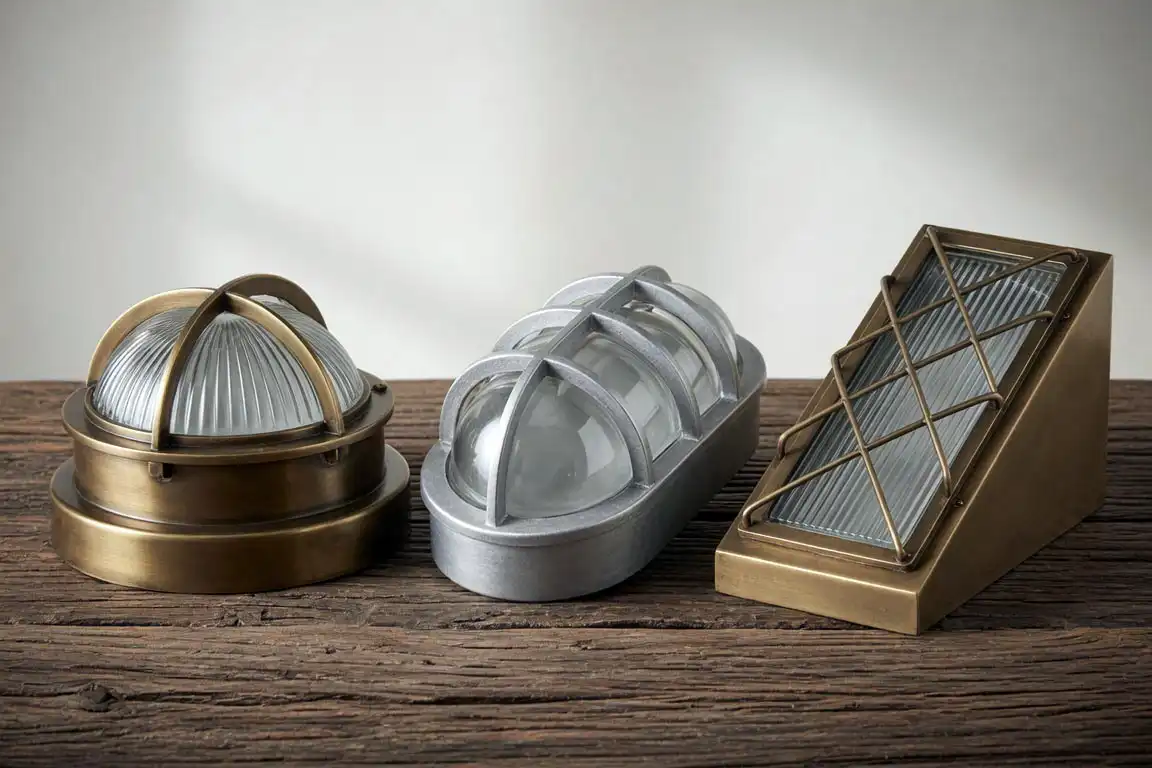
Round bulkhead lights are the classic. A domed glass lens sits inside a cage on a round backplate. Oval versions do the same job in a wider frame.
Passageway lights are longer and often angled. Deck and dock styles are heavier, built for open weather.
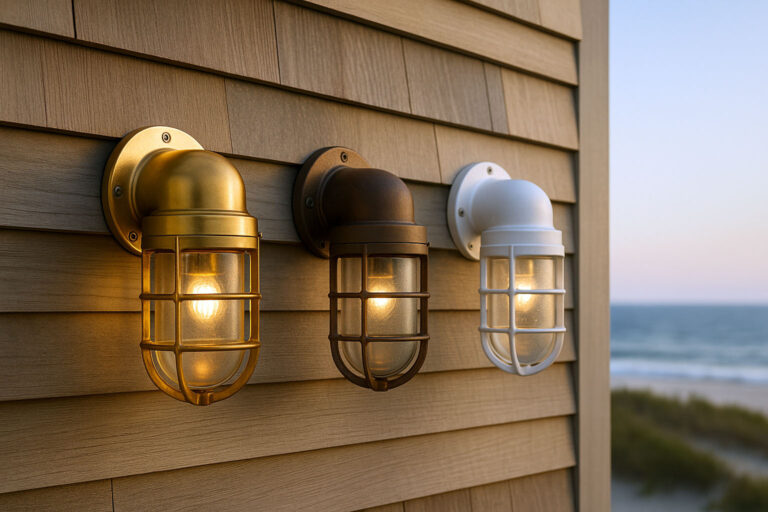
The finish tells you the metal. Polished brass glows gold. Bronze reads darker and warmer. Aluminum and galvanized steel look industrial and grey.
Indoor or Outdoor? Both
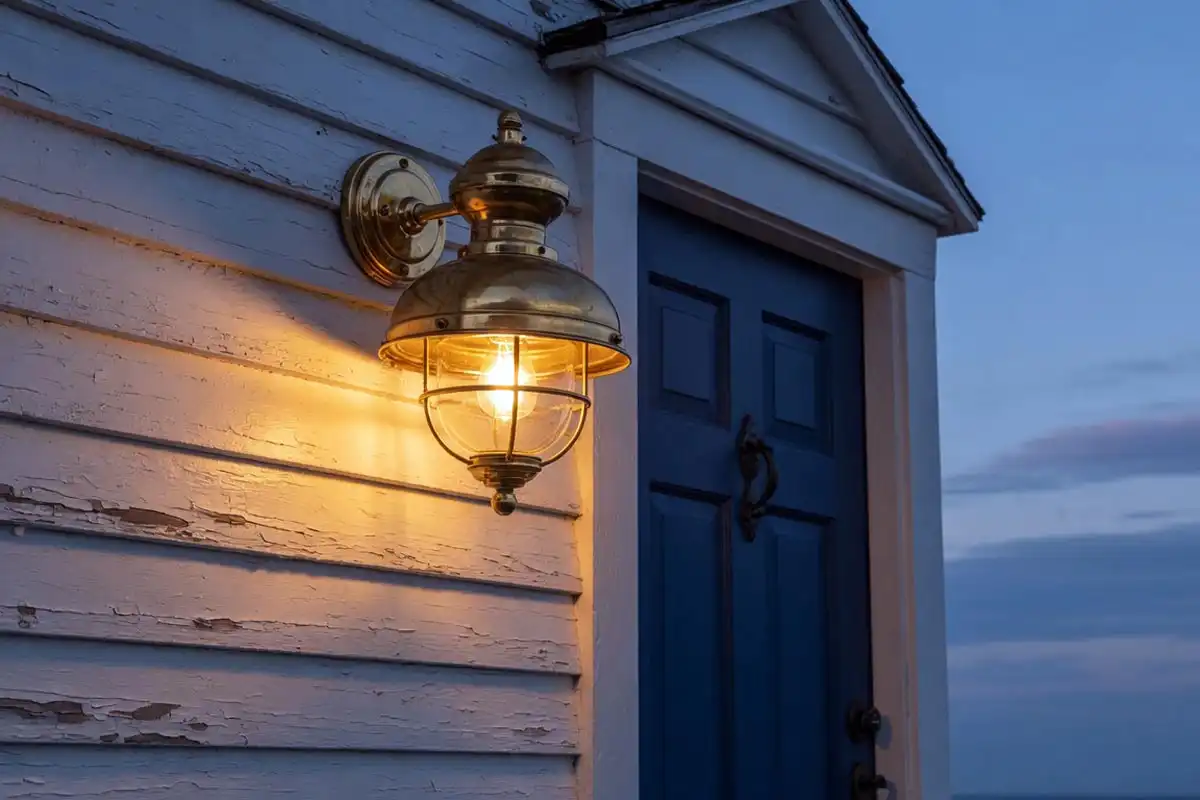
Most nautical wall lights work indoors and outdoors, and that is their charm. They were sealed for the ocean, so a patio is easy duty.
Outside, they handle rain, wind, and sea spray. People fit them beside doors, on garden walls, and along piers. Inside, they suit bathrooms, kitchens, bars, and hallways. There are plenty of clever ways to work these fixtures into a room if you want ideas.
Check the wiring before you mount one outdoors. A rewired fixture with a fresh gasket is ready for wet spots. An untouched antique may need work first.
What to Check Before You Buy
Authenticity is the first thing I check, and you should too. A real salvaged light shows honest wear.
Look for casting seams, old bolt holes, and maker stamps. Feel the weight. Solid brass and bronze are heavy. Thin, light metal often means a modern copy.
Ask if the light was rewired. Ask about the bulb base, usually an E27 or E26 screw fitting. And keep the brass bright with a quick polish now and then, which I walk through in my cleaning notes.
Final Thoughts
Nautical wall lights are simple things with a long past. They lit ships for decades, and they still have plenty of life left. I like knowing a fixture on your wall once crossed oceans.
If you want to see more of our restored ship lighting, it is all in one place. But buy one because the story pulls you in. That part you cannot fake. Enjoy the hunt.