How to Hang Nautical Pendant Lights So They Sit Right
A buyer in Portland sent me a photo of a brass ship pendant hanging over his island last spring. The fixture looked great. It also hung about eight inches too low, and he had already knocked his head on it twice.
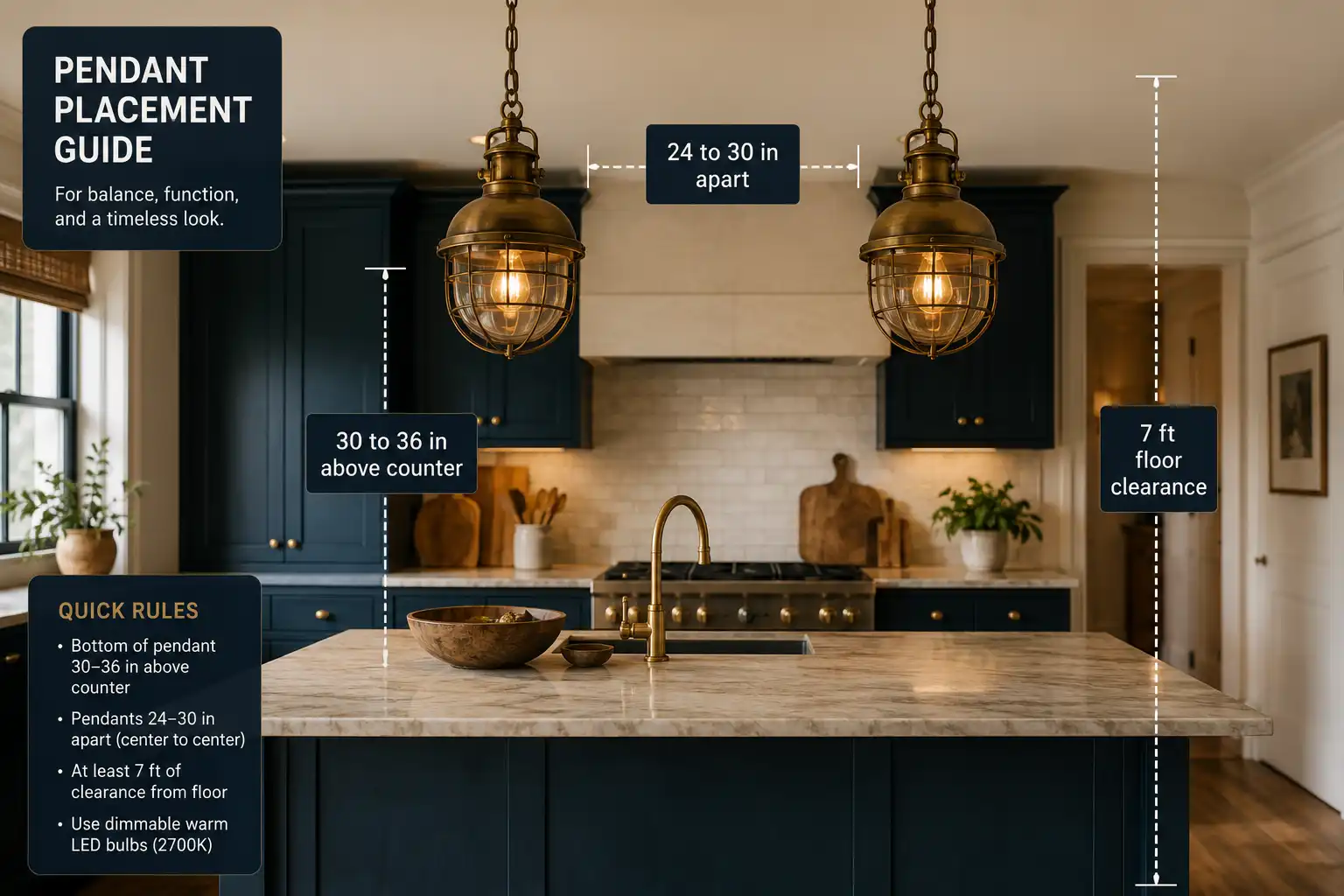
Weigh the fixture, then mount it to a ceiling box marked for fixture support or straight into a joist. Hang the bottom of the pendant 30 to 36 inches above a counter or table. Keep at least 7 feet of clearance over any walkway. Space multiple pendants 24 to 30 inches apart, center to center.
Weigh the Fixture First
A salvaged pendant is not a hardware store pendant. Cast brass and bronze fixtures off old cargo ships run heavy. I have pulled small passageway pendants at 6 pounds and cast cage lights that push past 25.
Put yours on a kitchen scale before you plan anything else. The National Electrical Code lets a ceiling outlet box support a luminaire of 50 pounds or less. Anything heavier needs support independent of the box, unless that box is listed for the weight.
Most pieces I ship sit well under 50 pounds. Weight still decides your box and your anchors. If you are still choosing a piece, it helps to know how brass, bronze, and aluminum compare in weight and upkeep before it ships.
Get the Ceiling Support Right
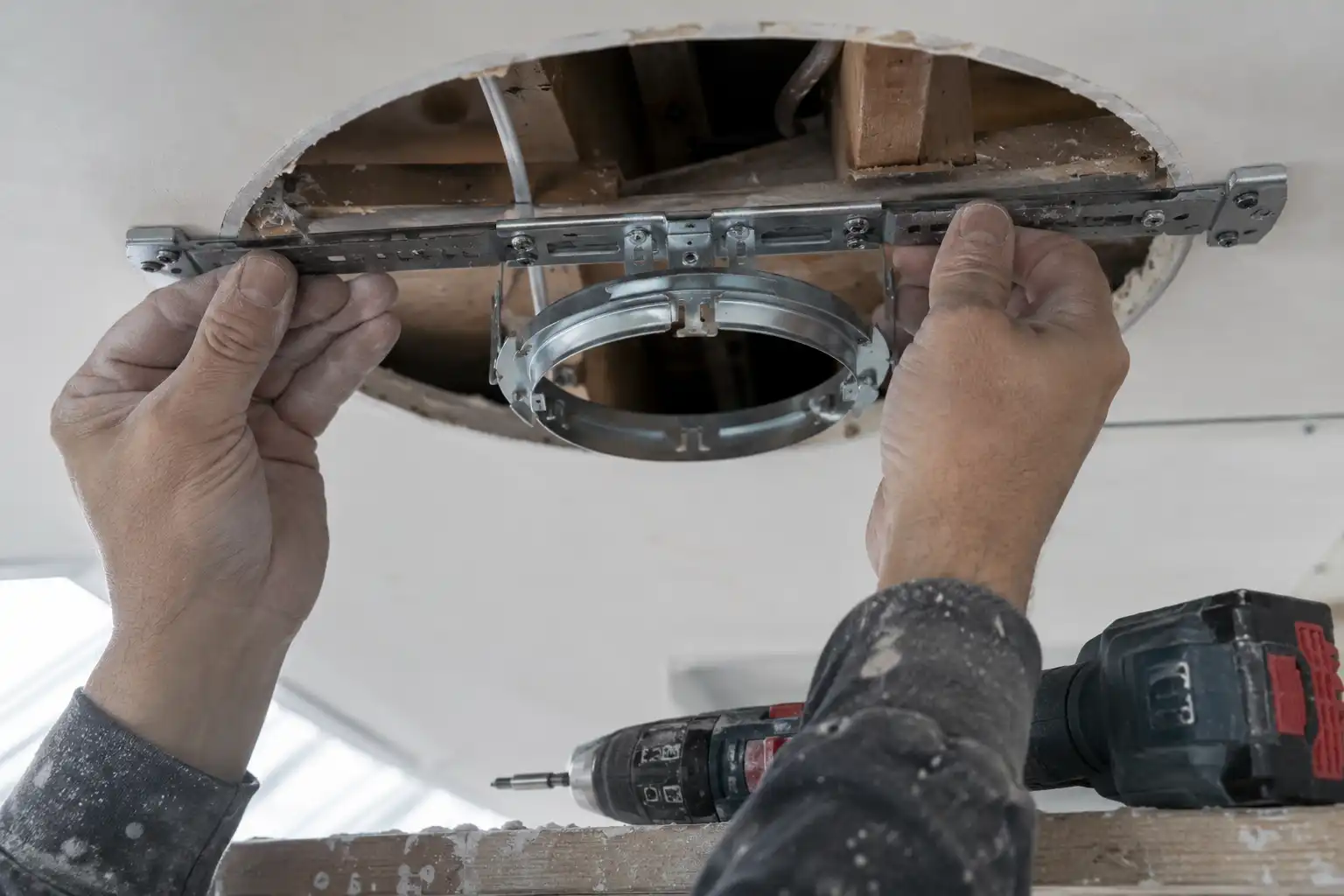
Check the box you already have. Boxes rated for fixture support say so on the carton or inside the box, and they take 8-32 screws. Shallow pancake boxes and thin plastic boxes were often set for a smoke alarm or a light shade. Neither one belongs under 20 pounds of brass.
If a joist sits behind the box, use it. If the box floats in open drywall, feed an adjustable brace bar through the opening and hang the box from that. The bar spans two joists and carries the load.
Drywall anchors alone hold nothing over time. I have seen a bronze light come down at two in the morning because someone trusted a pair of plastic toggles.
Fit the strap, thread your nipple or hickey, and land the ground wire first. Old ship fixtures usually need a new socket and cord too, so rewire the piece on a bench before it goes overhead. My guide to rewiring reclaimed marine fixtures safely covers that part.
Hanging Height That Actually Works
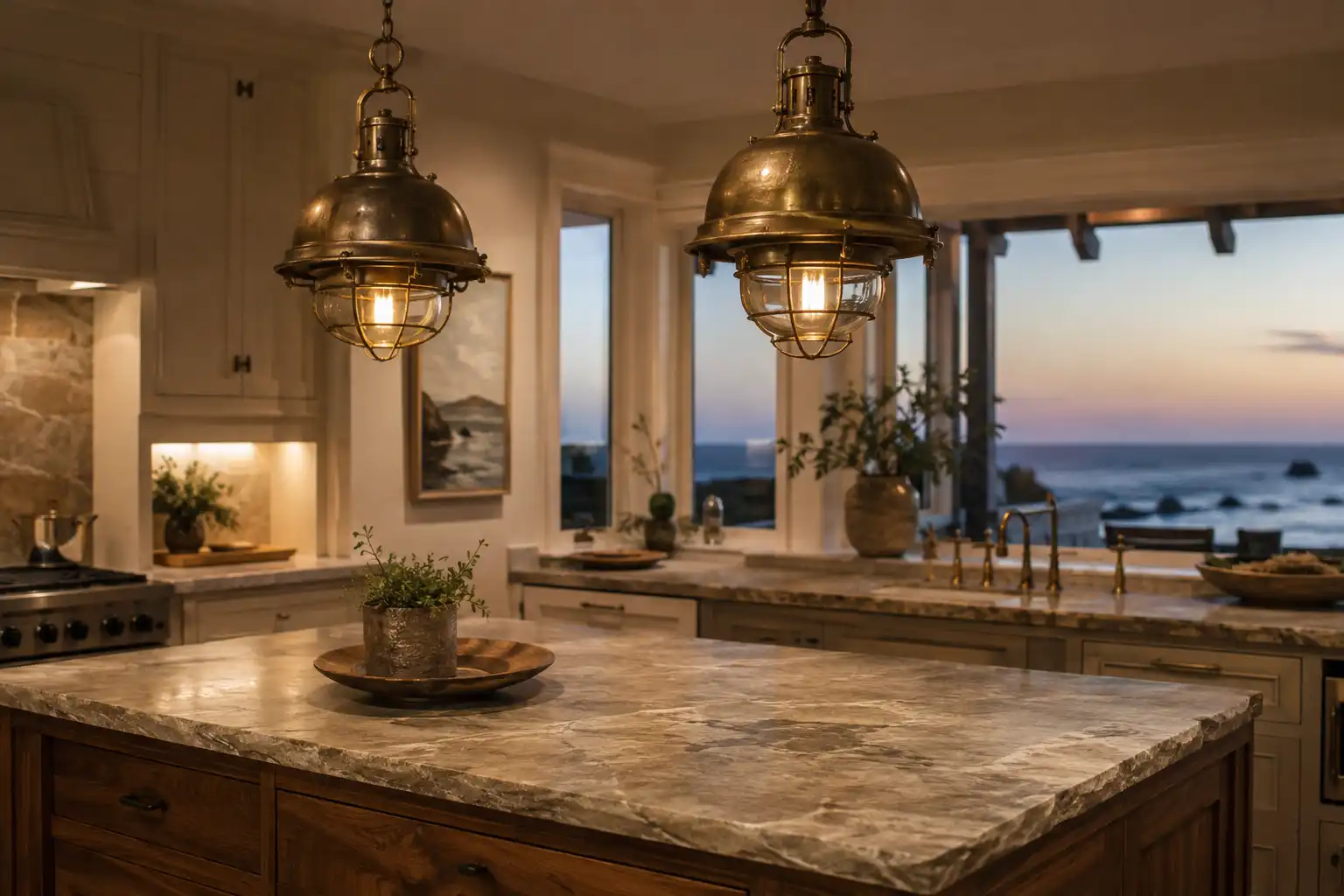
Measure up from the surface, never down from the ceiling. Over a kitchen island or a dining table, the bottom of the pendant belongs 30 to 36 inches above the top.
Tall ceilings change the math. Add roughly 3 inches of height for every foot of ceiling above 8 feet. A 10 foot ceiling puts that same pendant closer to 36 to 42 inches above the counter.
Over a sink, go a bit higher, around 36 to 40 inches. That keeps the shade out of your sightline to the window.
Anywhere people walk underneath, the bottom of the fixture needs at least 7 feet of clearance from the floor. Entryways, hallways, and covered porches all follow that rule. If a spot fails the 7 foot test, move the light rather than shortening the chain.
Spacing Two or Three Pendants
Keep 24 to 30 inches between pendant centers over an island. Hold the outer fixtures at least 6 inches in from the island ends.
Two pendants suit a 5 or 6 foot island. Three fits past 7 feet. Mark the centers with painter’s tape and stand back before you drill anything.
Chain, Cord, or Rod
Chain gives you the most control with old fixtures. Open a link with two pliers, pull what you don’t need, and keep the spare links in a bag. Someone will want that height back one day.
Never let the wire carry the weight. The chain takes the load, and the conductor weaves loosely through the links with slack at the canopy.
Sometimes the box sits in the wrong spot. A swag hook driven into a joist lets you shift the fixture sideways, then run the chain back to the canopy. The rest of the mounting steps for salvaged shipboard lighting stay the same.
Porches and Damp Spots
A covered porch calls for a fixture rated for damp locations. Anything open to rain needs a wet location rating. Marine lights were built for salt spray, but the gasket in a 40 year old fixture is usually hard and cracked.
Replace the gasket and check the glass seat before you hang one outdoors. It also pays to understand how weathertight these old ship fixtures actually are once they leave the water.
Last Checks Before You Patch the Ceiling
Hold a level against the canopy and the shade. Old pieces rarely hang true on the first try, and a bent chain link is usually why.
Polish the brass while the fixture is still on the table, because scrubbing decades of grime off brass overhead is miserable work. Then test the switch and the dimmer with the bulb you plan to keep in it.
Final Thought
Support and height carry this whole job. Get those two right, and a 60 year old light hangs over your island for another 60 years. Most of the reclaimed pendant fixtures pulled from shipbreaking yards have already outlived the vessels they lit. Good luck with yours.
— Mokter