Are Nautical Lights Waterproof? What Really Keeps Water Out
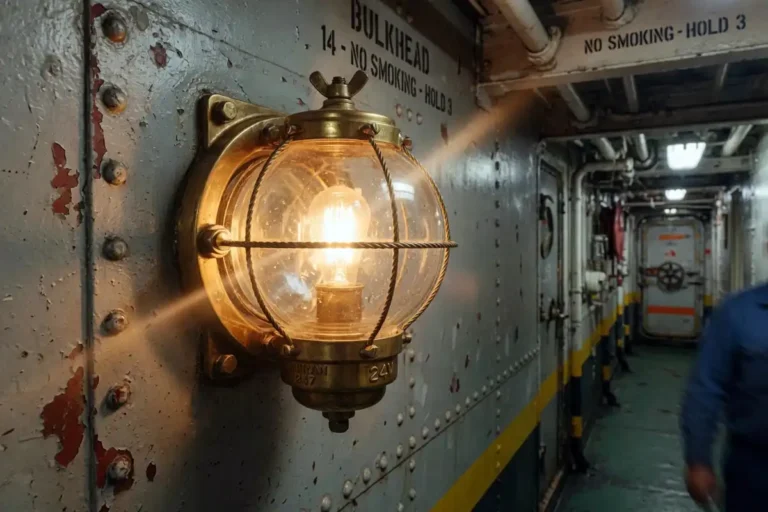
Last week I pulled a brass deck light off a scrapped bulk carrier here in Chattogram. The glass was fogged. Water sat inside the housing like a little pond. That fixture spent forty years at sea, yet moisture still found a way in.
Most nautical lights are water resistant, not fully waterproof. They shrug off rain, spray, and deck washdowns thanks to sealed housings and marine grade metal. True waterproofing needs an IP67 or IP68 rating, which allows real submersion. Very few fixtures reach that level.
What “Waterproof” Actually Means
Waterproof is a loose word. Lighting makers rarely use it in a strict sense. The honest measure is the IP rating.
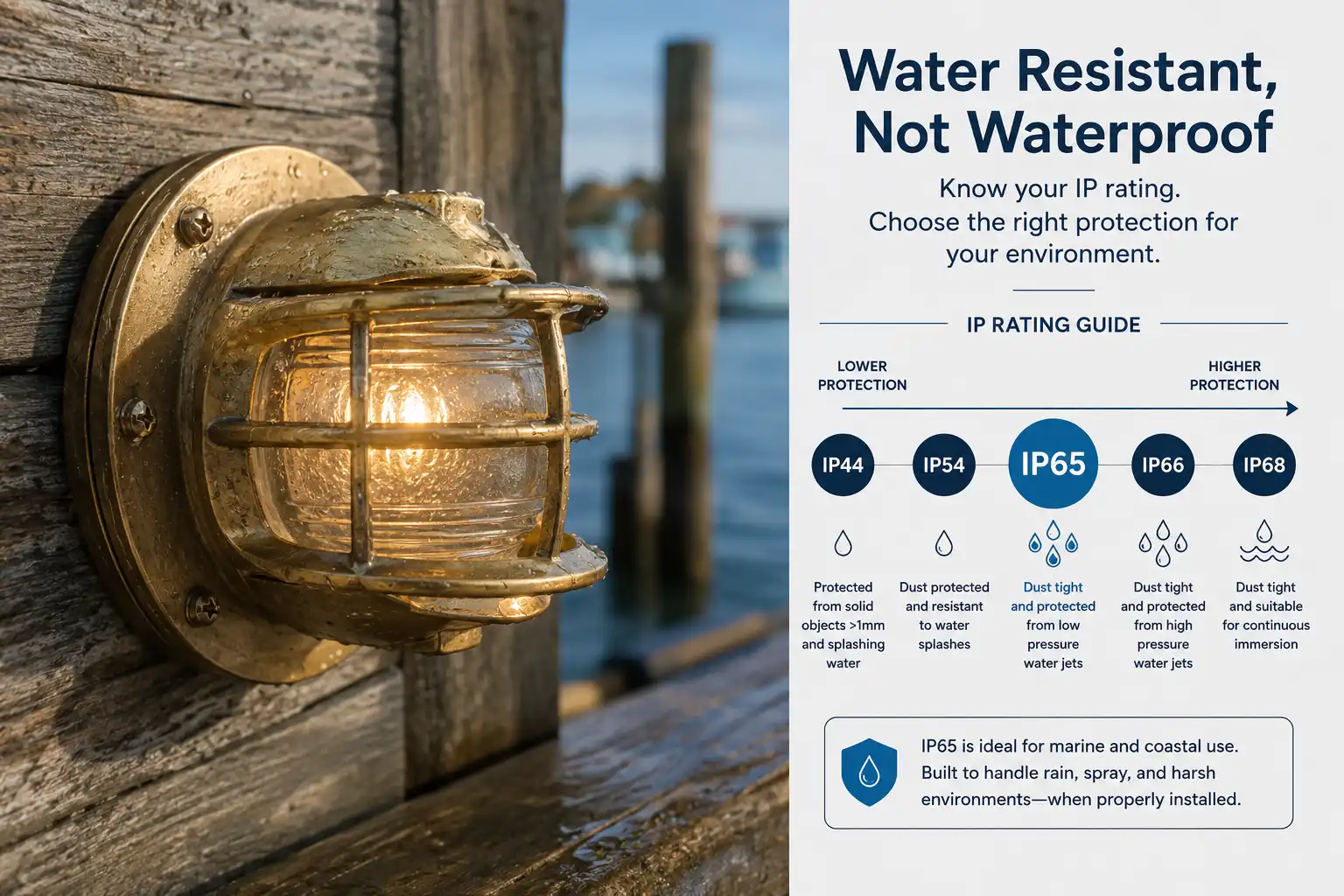
IP stands for Ingress Protection. It comes from an international standard called IEC 60529. The code has two numbers. The first is dust protection. The second is water protection.
Here is how the water number reads for lights.
IP65
Protected against low pressure water jets. Handles rain and hose spray. Not made for sitting in water.
IP66
Protected against powerful water jets. Good for heavy washdowns and wind driven rain.
IP67
Dust tight and safe under short submersion, about one meter for thirty minutes.
IP68
Built for continuous submersion. This is the underwater and below waterline class.
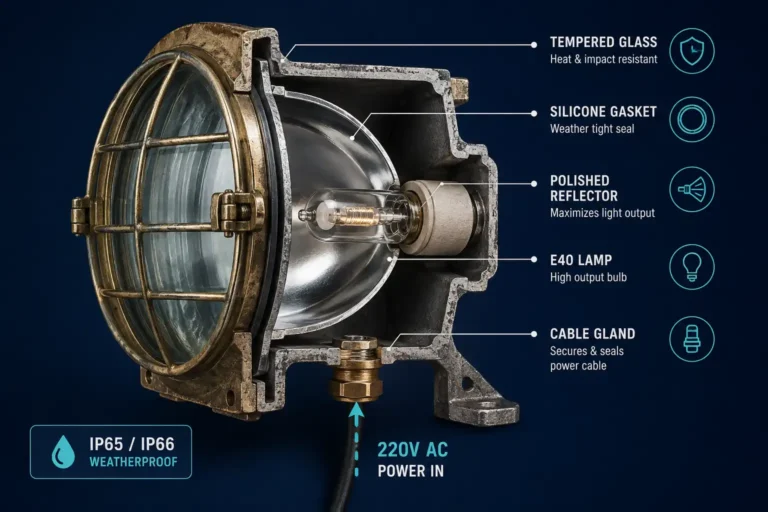
Most deck and bulkhead fixtures land at IP65 or IP66. That covers coastal life well. Only special fittings hit IP67 or IP68.
Why Ship Lights Resist Water So Well
Real marine lights earn their name. Two things do the work.
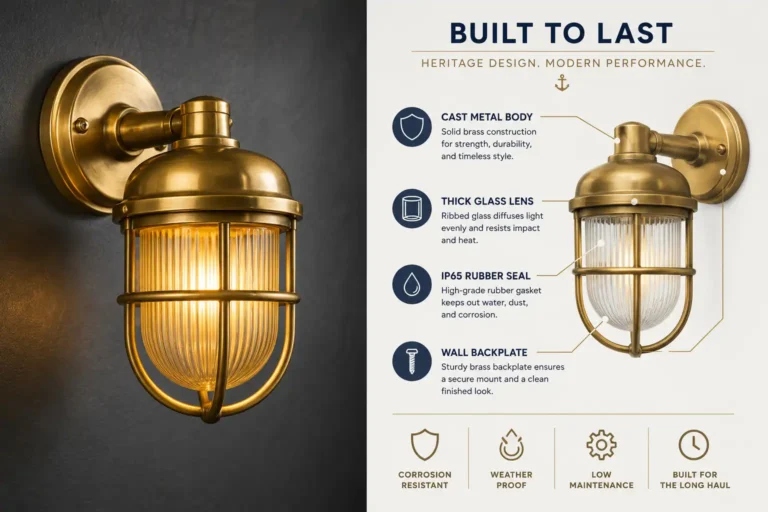
First, the metal. Solid brass and bronze fight salt corrosion for decades. Marine grade aluminum holds up too, though it needs a good coat. You can read more about how brass, bronze, and aluminum hold up in coastal air on the site.
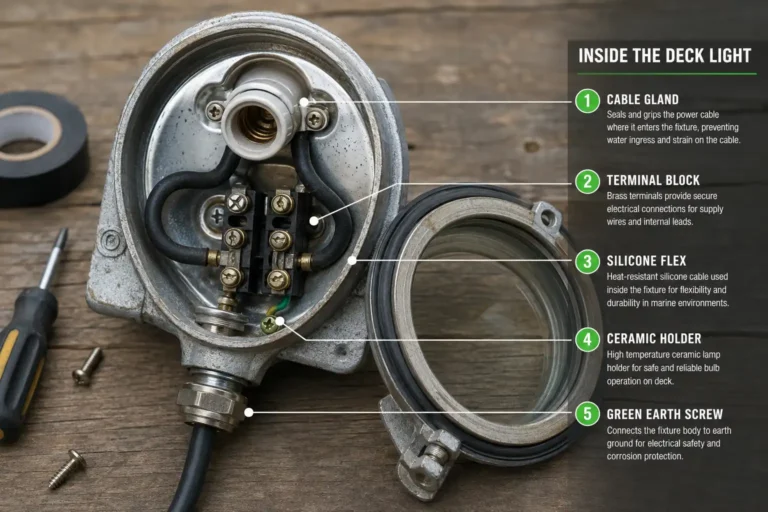
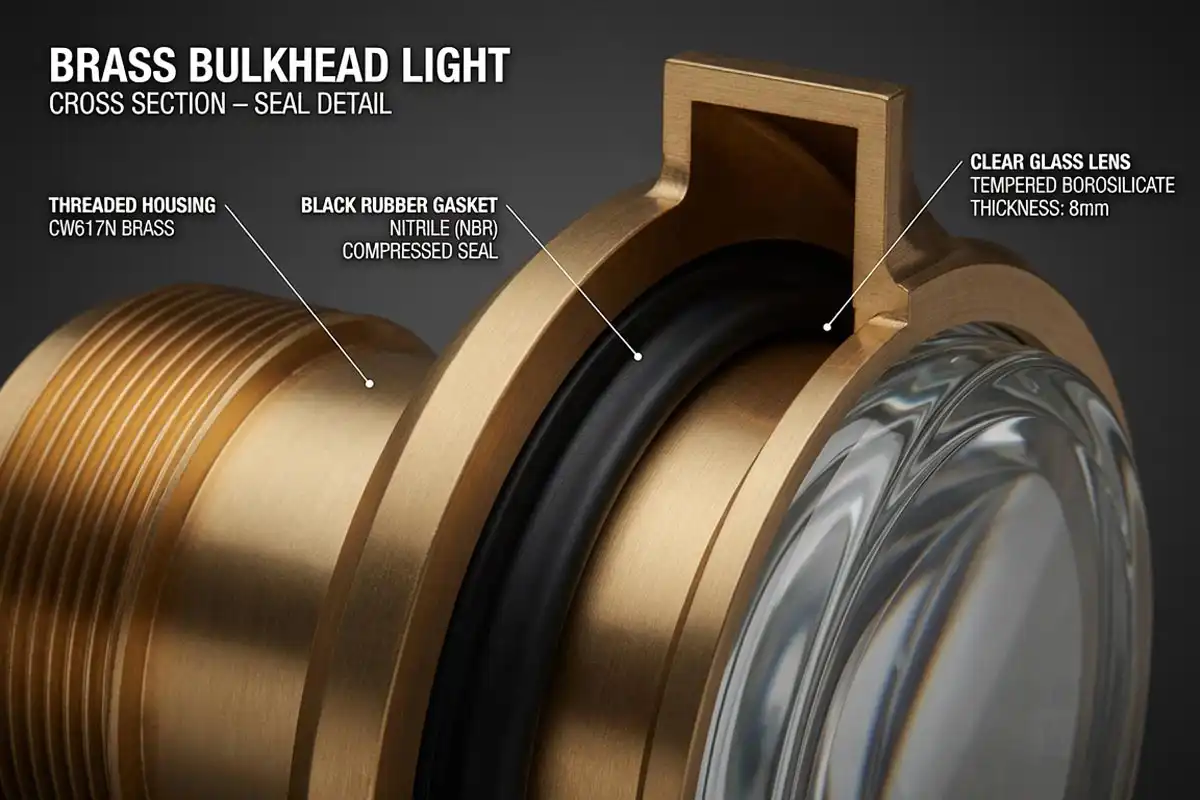
Second, the seal. A rubber gasket sits between the glass and the housing. That gasket, plus a thick glass lens, keeps water out. Understanding the way these fixtures actually run makes it easier to trust them.
The Catch With Vintage Salvaged Lights
Here is where I stay honest. A fifty year old light is not the same as a new one.
The metal usually survives fine. Brass and bronze age with grace. The seals do not. Old rubber gaskets harden, crack, and shrink. The waterproof rating a light had in 1975 is long gone.
So a genuine salvaged fixture looks tough and its shell is tough, but the seal may leak. I tell every buyer this. If water gets inside, the wiring rusts and shorts. Chasing down water leaks in old deck lamps is a repair I do often.
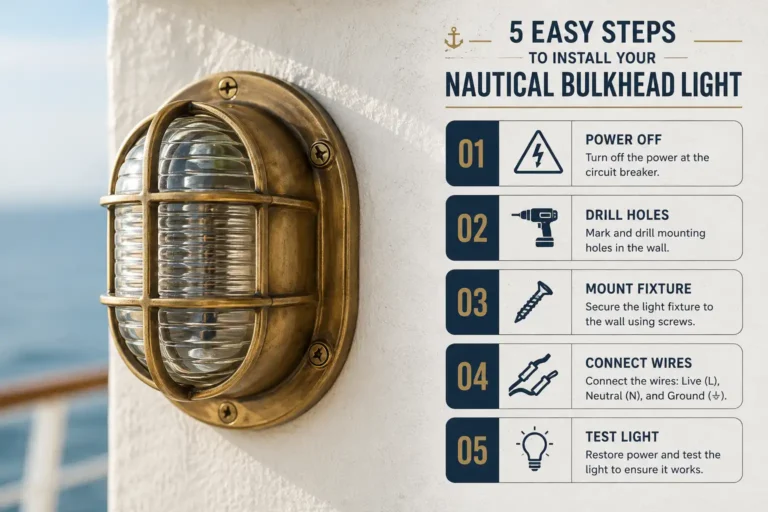
Before outdoor use, I rewire each light and fit a fresh gasket. That brings the water resistance back. It still does not make the light submersible.
Where You Can Use Them Safely
Most people want these for honest spots. Good news. Water resistant is plenty for nearly all of them.
Porches, patios, and covered decks are perfect for the outdoor fixtures I restore. Bathrooms and outdoor showers work fine with a fresh seal. Garden walls and dock posts hold up well. Knowing where these belong indoors versus outside saves you a lot of trouble.
What to skip? Direct submersion. Do not drop a bulkhead light in a pool or pond unless it carries an IP68 rating. Old ship lights almost never do.
Keeping Them Watertight
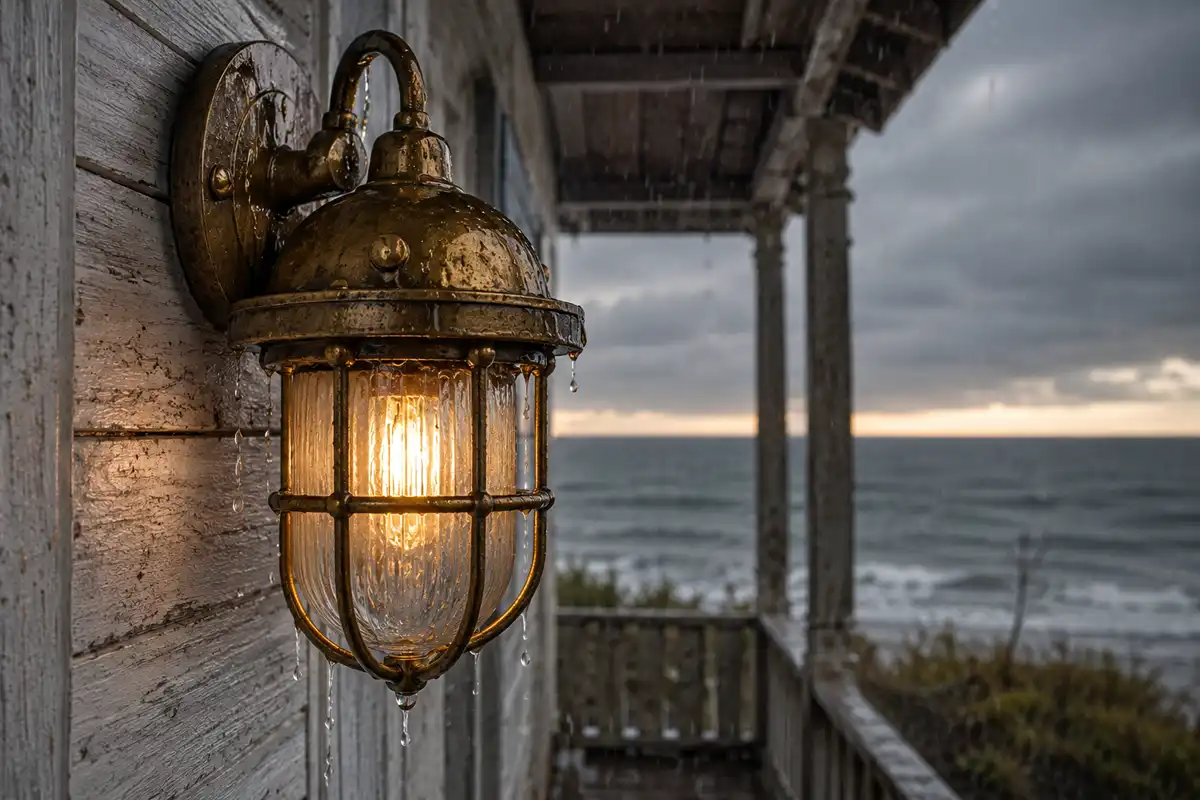
A little care goes a long way. Check the gasket once a year. Replace it if it feels stiff or brittle. Seat the glass firmly against a clean rim. Keep the brass clean and bright so you spot any pitting early.
Mount the fixture with the cable gland pointing down. Water then runs off instead of pooling in. Small habit, big payoff.
Final Thoughts
So are these lights waterproof? Water resistant, yes. Fully waterproof, only a rare few. For a porch, a deck, or a coastal wall, that is all you ever need. Just respect the seal and give the old girl a new gasket before she goes back to work.
Enjoy the light and the story it carries.