How Passageway Lights Are Used on Commercial Ships
The first time I walked through a working cargo ship’s interior, I noticed the lights before anything else. Small. Heavy. Bolted right into the steel. I was 19, helping my uncle inspect a vessel headed for the scrapyard in Chattogram. He pointed at one and said, “That brass shell has seen more sea than you’ll ever see.”
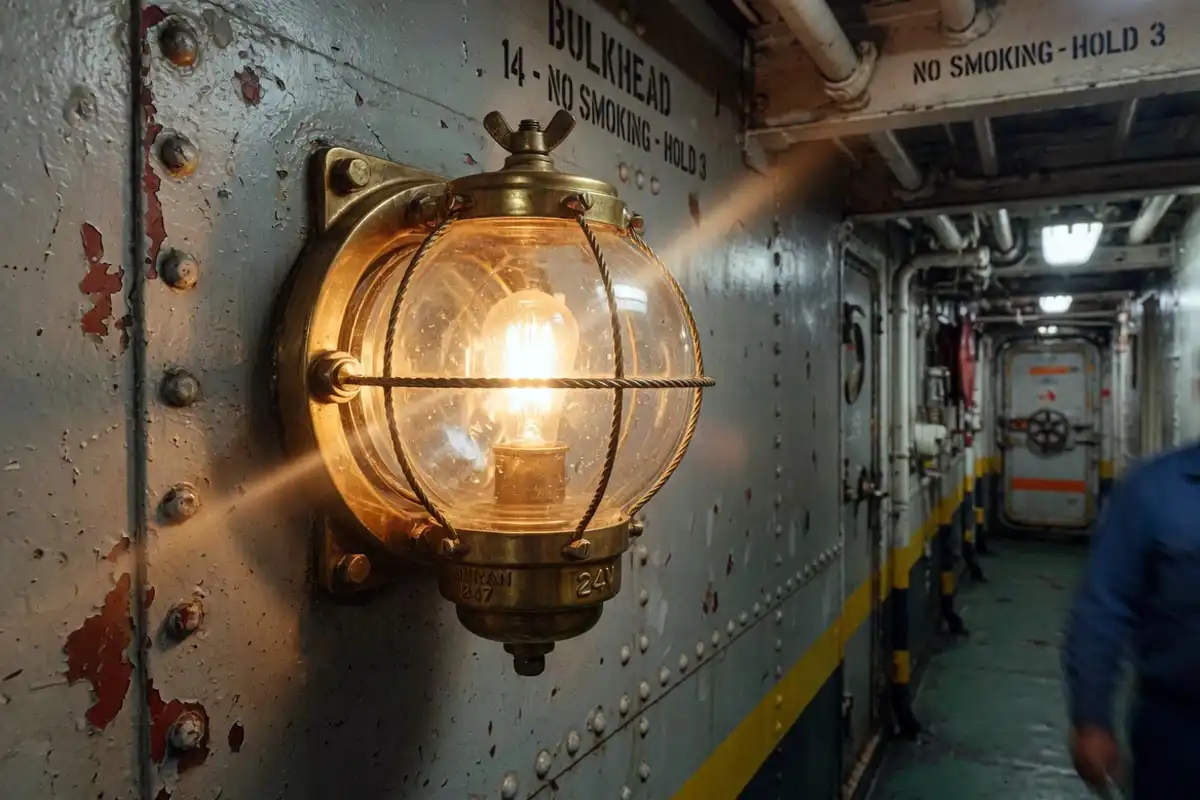
Passageway lights illuminate the narrow corridors, stairwells, and crew walkways inside commercial ships. They mount flush to steel bulkheads, survive constant vibration and humidity, and run on the ship’s low-voltage system. Brass and bronze are the most common materials because they resist saltwater corrosion for decades.
What a Passageway Light Actually Does
A passageway light gives the crew safe footing in the corridors below deck. Cargo ships, tankers, and bulk carriers have miles of internal walkways. Without these lights, the crew is walking through pitch-black steel tubes.
I have seen ships with 300 to 500 of them installed. Engine room corridors. Crew quarter hallways. Stairwells between decks. Each one has a job.
The fixtures stay on around the clock. Day shift, night shift, in port, at sea. They never really get a break. That is why builders made them so tough.
Where Passageway Lights Mount on Commercial Ships
Here are the spots where I usually find them when I salvage a vessel.
- Crew accommodation corridors. The long hallways outside cabins. Usually one light every 6 to 10 feet.
- Engine room access ways. These run hot and oily. The lights here often have heavier glass globes and thicker cages.
- Stairwell landings. Between decks, where a slip means broken ribs at best.
- Mess hall passages. The corridors leading to the galley and dining area.
- Bridge approach hallways. Just outside the navigation bridge, where officers need clear vision before stepping into the dark.
If you want to tell a passageway light from a companionway version, the mounting depth and globe shape usually give it away.
Why Brass and Bronze Win Down There
Saltwater kills cheap metal. I have pulled aluminum fixtures off old ships that crumbled in my hand. Brass and bronze just keep going.
A solid brass fixture from the 1960s often still works today. The metal develops a patina, but the structure holds. That is why every working ship I have boarded uses brass for high-humidity areas like engine room passages.
Some newer ships do use aluminum to save weight. If you are curious how brass and aluminum compare side by side, the trade-offs are real. Aluminum costs less. Brass lasts three times longer.
The Glass, the Cage, the Gasket
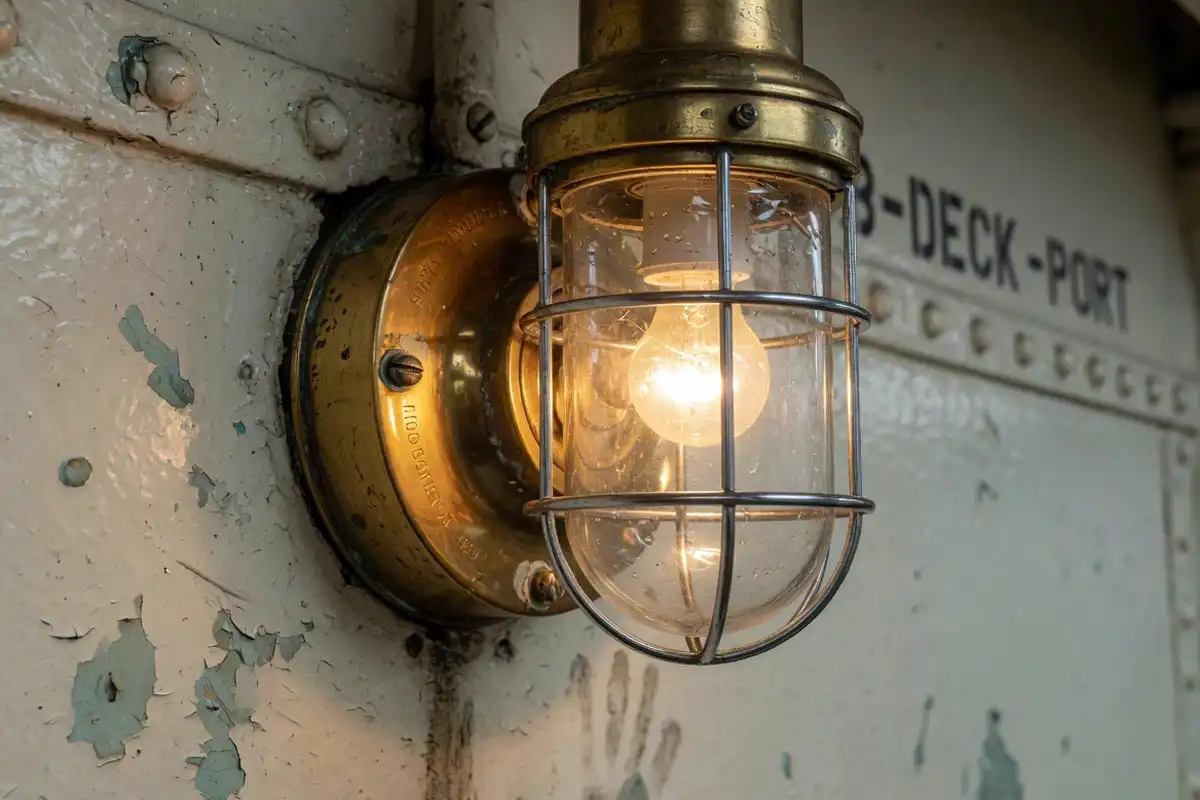
A real passageway fixture has three working parts beyond the bulb.
The glass globe sits inside the body. It is thick borosilicate or pressed glass, made to handle hot bulbs and cold spray.
The wire cage wraps around the glass. This protects it from elbows, toolboxes, and the constant bumps of crew traffic.
The rubber gasket seals the door against the body. This is where the IP rating comes from. Most marine passageway lights hit IP54 or higher.
When I restore one, the gasket is almost always the part that needs replacing. Everything else just needs cleaning.
How They Connect to Ship Power
Commercial ships run on 110V or 220V AC depending on the build country. Some lights run on 24V DC for emergency circuits.
The wiring enters through the back of the fixture, through a sealed gland. The conduit is usually metal. The whole system is grounded to the ship’s hull.
This setup matters because interior lighting falls under reliability codes similar to the navigation light rules cargo ships follow under SOLAS. The standards exist for one reason. Lights save lives.
What Makes Them Different From House Lights
A regular wall sconce would last about three weeks on a cargo ship. Here is why marine versions survive.
Salt air corrodes every exposed metal joint. Marine fixtures use brass, bronze, or marine-grade aluminum to resist this. Vibration from engines and waves shakes screws loose. Marine fixtures use lock washers and thicker mounting plates. Humidity gets into everything. Marine fixtures use gaskets and sealed housings.
A house light has none of this protection. It is built for a calm living room, not a steel hallway crossing the Atlantic. If you want a deeper read on how bulkhead and passageway fixtures differ in build, that comparison goes even further into the specs.
Why Old Ones Are Worth Saving
When a ship comes to the breaking yards in Chattogram, most of the steel goes to mills. The lights, though, often still work. I rescue what I can.
These fixtures have stories. Some have crossed every ocean. Some came off vessels built in the 1950s. The brass has a depth no new manufacturer matches today. Even the original glass has a faint blue tint from decades of UV exposure.
If you are restoring one for your home, learning to keep brass fixtures clean without stripping the patina makes a real difference in how it ages on your wall.
Final Thought
Passageway lights are the quiet workers of a commercial ship. They light the walkways nobody photographs. They never make it into brochures. But the crew counts on them every single shift.
When I pull one off a scrapped vessel, I think about that. Every scratch on the brass came from a hand that needed to see. That history is worth preserving.
Good luck with your salvage hunt.