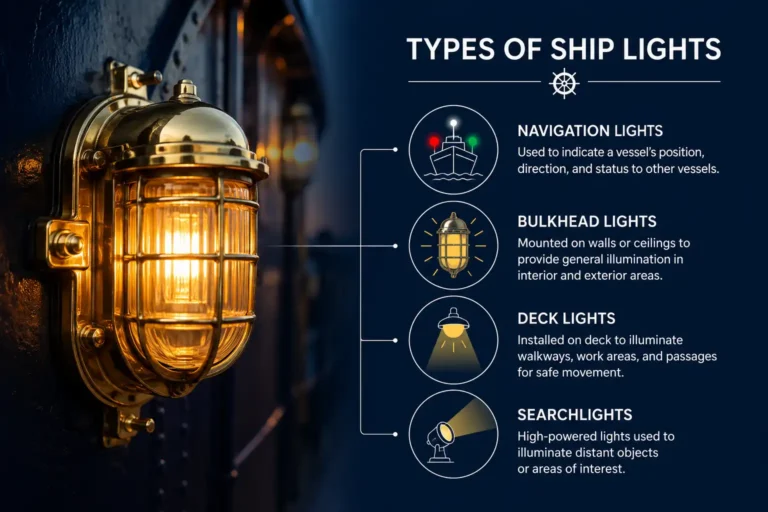
Difference Between Bulkhead and Passageway Lights on Ships
Last month I pulled two brass fixtures off the same bulk carrier here in Chattogram. One came off an exposed deck wall near the accommodation block. The other came out of a corridor three decks below. Both are round. Both are brass. Both bolt flat to steel.
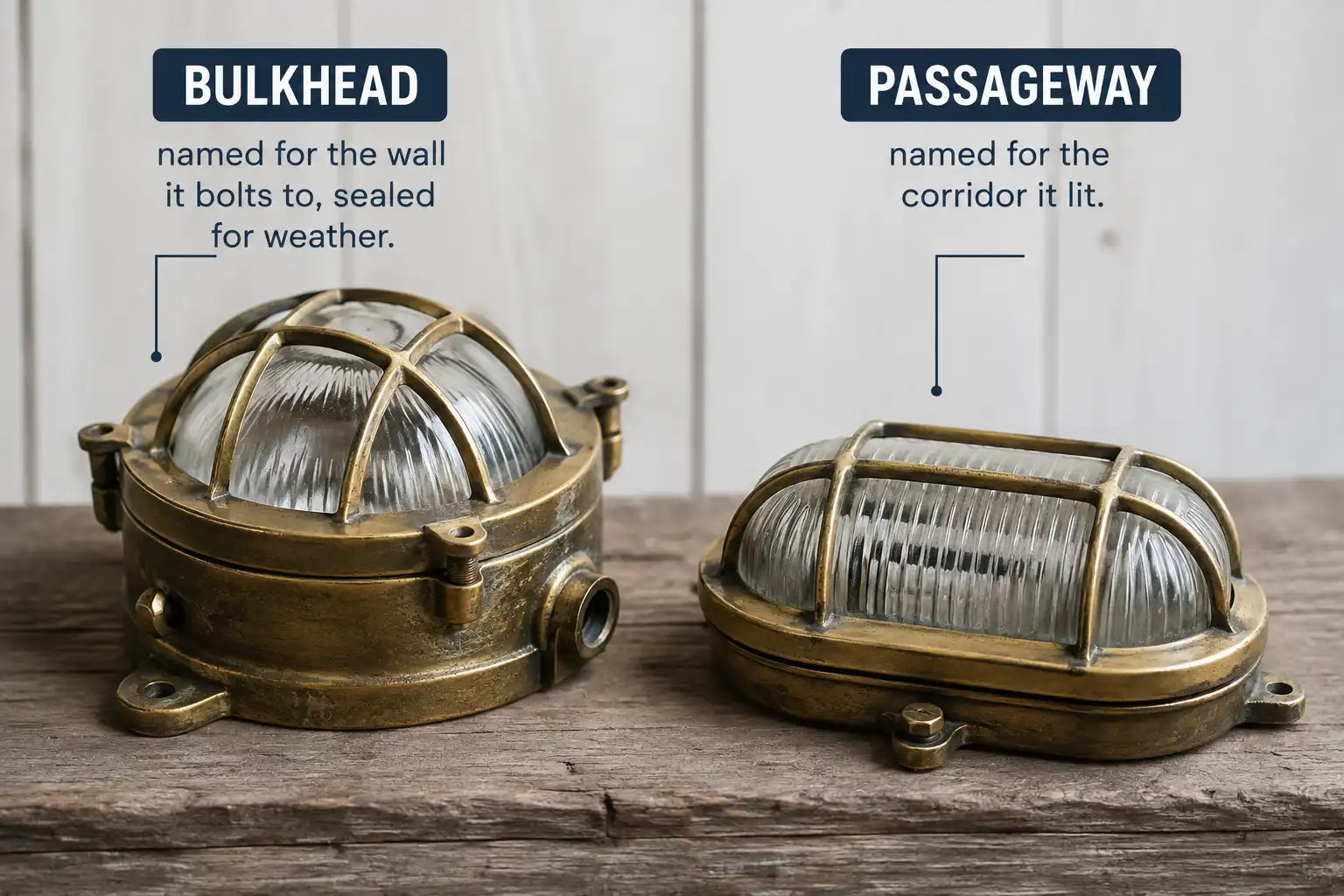
A bulkhead light is named for how it mounts. It bolts flat to a bulkhead, which is the vertical partition wall of a ship. A passageway light is named for the job it did, which is lighting the interior corridors. Most passageway lights are bulkhead mounted, so the two categories overlap. The real split shows up in sealing, body depth, and light spread.
Bulkhead Lights Are Named for the Wall They Bolt To
On a ship, a bulkhead is a structural partition. Any sealed fixture bolted to that partition earns the name.
These are the heavy ones. Cast body, rubber gasket, thick glass globe, and usually a metal cage over the glass. Shipyards put them where a fixture takes abuse. Exposed deck walls. Engine room boundaries. Machinery spaces. Outside stairwell landings.
That is why cast wall fixtures built for ships look overbuilt next to household lighting. Shapes vary too, and the round, oval, and caged body styles each suit a different spot.
Passageway Lights Are Named for the Job They Did
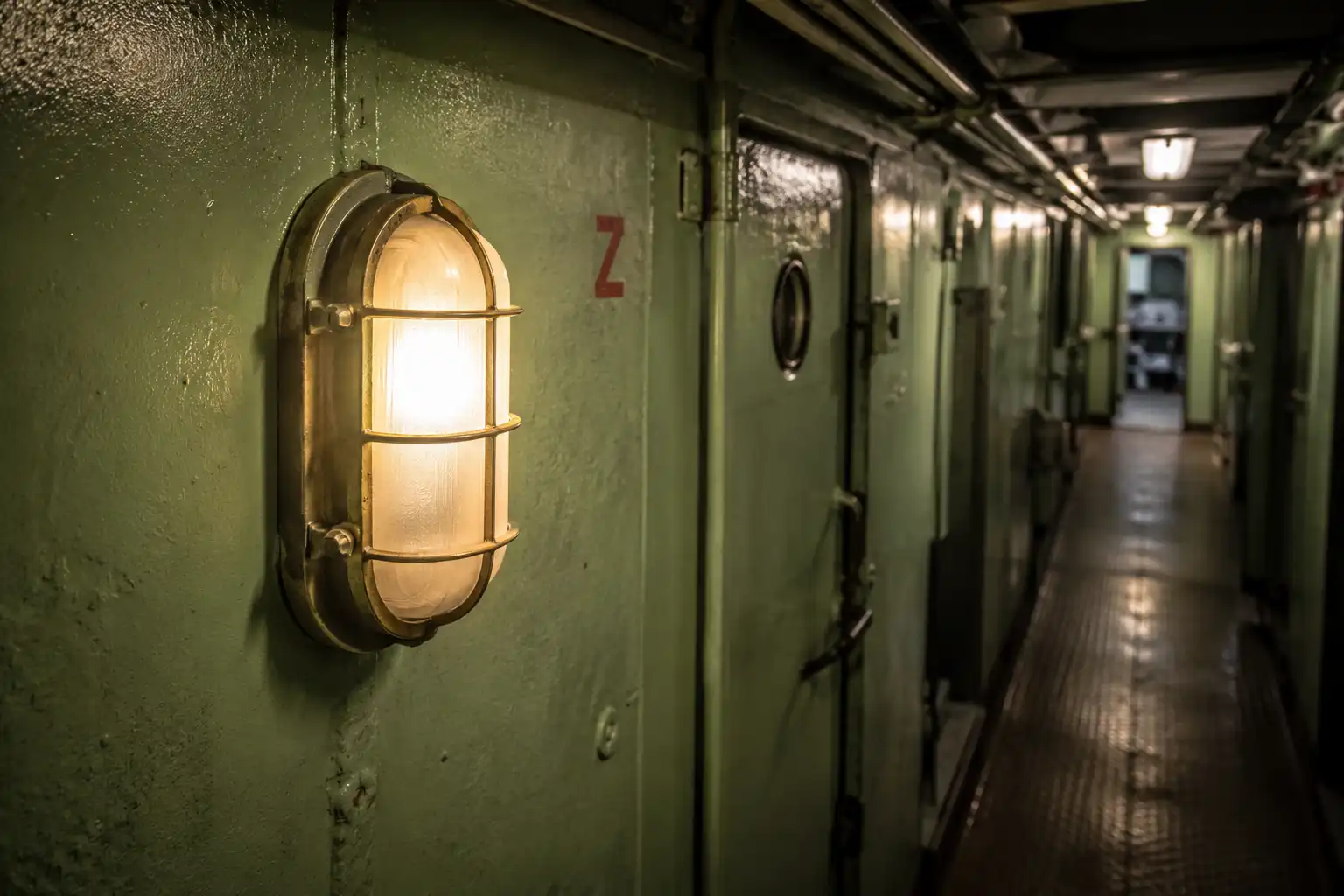
Passageways are the interior corridors linking cabins, mess rooms, stores, and engine spaces. Crews call them alleyways.
A corridor fixture has one hard constraint. It cannot stick out. Alleyways on a cargo ship run narrow. A crew member in a boiler suit does not need a brass globe at shoulder height. So the body sits shallow and tight to the wall.
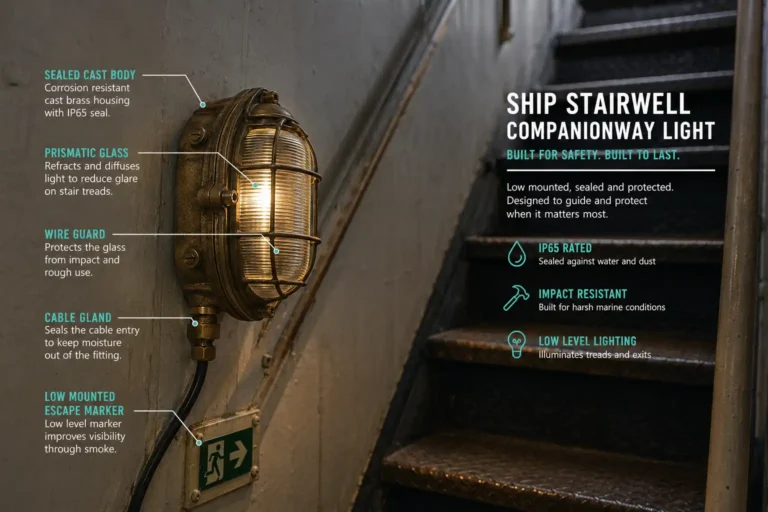
Light spread matters just as much. A corridor needs an even wash along its length, not a bright pool under each lamp. That is why corridor fixtures pulled from merchant ships so often carry frosted or prismatic glass. Oval bodies show up in that role again and again.

Five Places the Two Fixtures Split Apart
Sealing. Interior corridor fixtures often sit around IP20 to IP44. Weather facing bulkhead fixtures run IP56 and higher. IEC 60529 defines that code. IEC 60092-306 covers shipboard luminaires and expects outdoor housings to be metal rather than plastic.
Depth. A passageway fixture usually projects four to six inches from the wall. A deck bulkhead fixture projects further and weighs more.
Glass. Exposed fixtures use thick clear globes for maximum output. Corridor fixtures lean on frosted or ribbed glass to soften glare in a tight space.
Cage. Both wear guards. On a corridor fixture the cage stops knocks from passing crew. On a deck fixture it stops boarding seas, cargo gear, and dropped tools.
Shape. Oval bodies push light along a corridor. Round bodies throw an even circle and suit open walls.
What Both Fixtures Share
More than most buyers expect. Cast brass, bronze, or aluminum bodies. A backplate that carries the wiring. A gasket seated under the glass ring. A cage that unscrews for bulb changes.
They share builders too. Daeyang, Wiska, Pauluhn, Oceanic, and Shengan stamped both types. The gasket does the same work in each, so how much water a sealed fixture really keeps out depends on condition, not on the name.
The Safety Role Only One of Them Carried
Corridor fixtures often sat on the emergency circuit. SOLAS calls for supplementary electric lighting in passenger public spaces and alleyways. It has to run three hours so the way to an escape route stays visible.
One point is worth clearing up. The glowing escape marking near the floor is not a passageway light. Low location lighting is a separate system, fitted no more than 300 mm above the deck under IMO Resolution A.752(18) and ISO 15370. A deck bulkhead fixture almost never carried that duty.
Which One Belongs on Your Wall
Buy on exposure, not on the label.
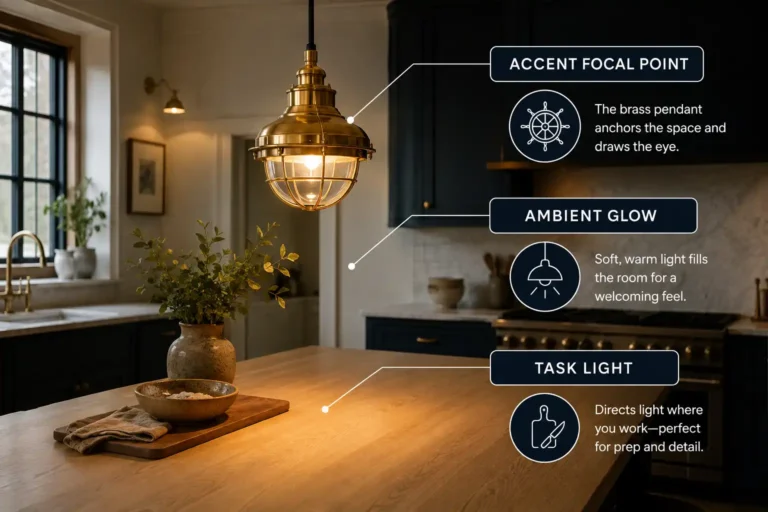
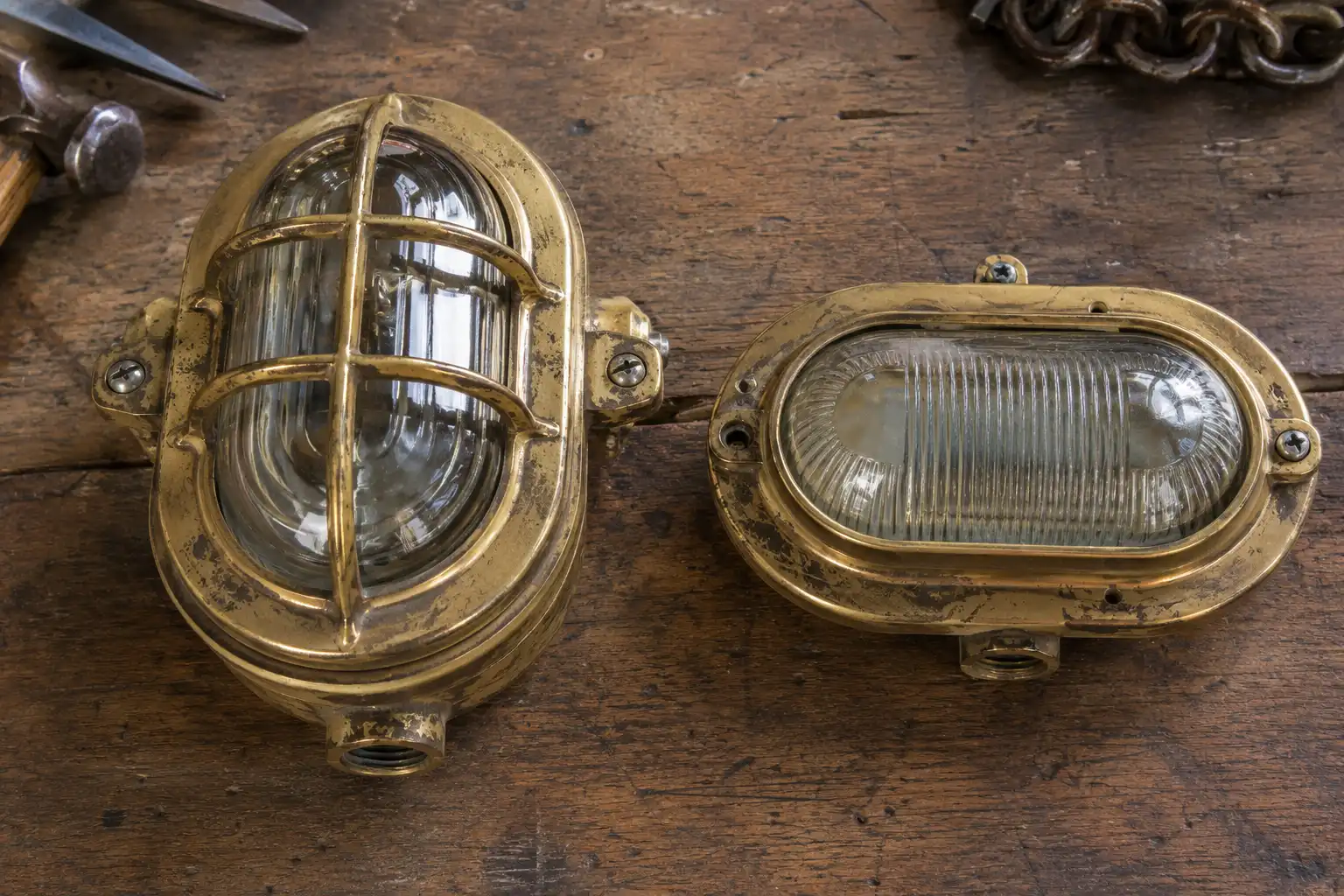
Pick a bulkhead fixture for porches, garage walls, coastal exteriors, and anywhere rain reaches. Pick a passageway fixture for hallways, tight landings, and above kitchen counters where a deep body gets in the way.
Two things decide the result more than the category does. First, the right mounting height for a wall fixture. Second, honest condition of the gasket and threads. If the space is a stairwell, read up on how corridor and stairwell fixtures differ first. That is a third category people fold into the same pile.
Final Thoughts
The two names answer two different questions. One tells you where the fixture bolts. The other tells you what it lit. Stop treating them as rival categories and the choice gets simple.