What Is an Anchor Light Lantern? Rules, History, and Spotting One
Last month I pulled a squat copper lantern out of a 1978 Japanese bulk carrier being cut up here in Chattogram. It had a clear ribbed lens, a brass hoisting bail, and an oil font that still smelled faintly of kerosene. The cutter handed it over and called it a deck lamp. It was not a deck lamp. It was an anchor light lantern, and I have handled a few hundred of them by now. Buyers ask me what separates one from every other round brass light on a ship, so here is the full picture.
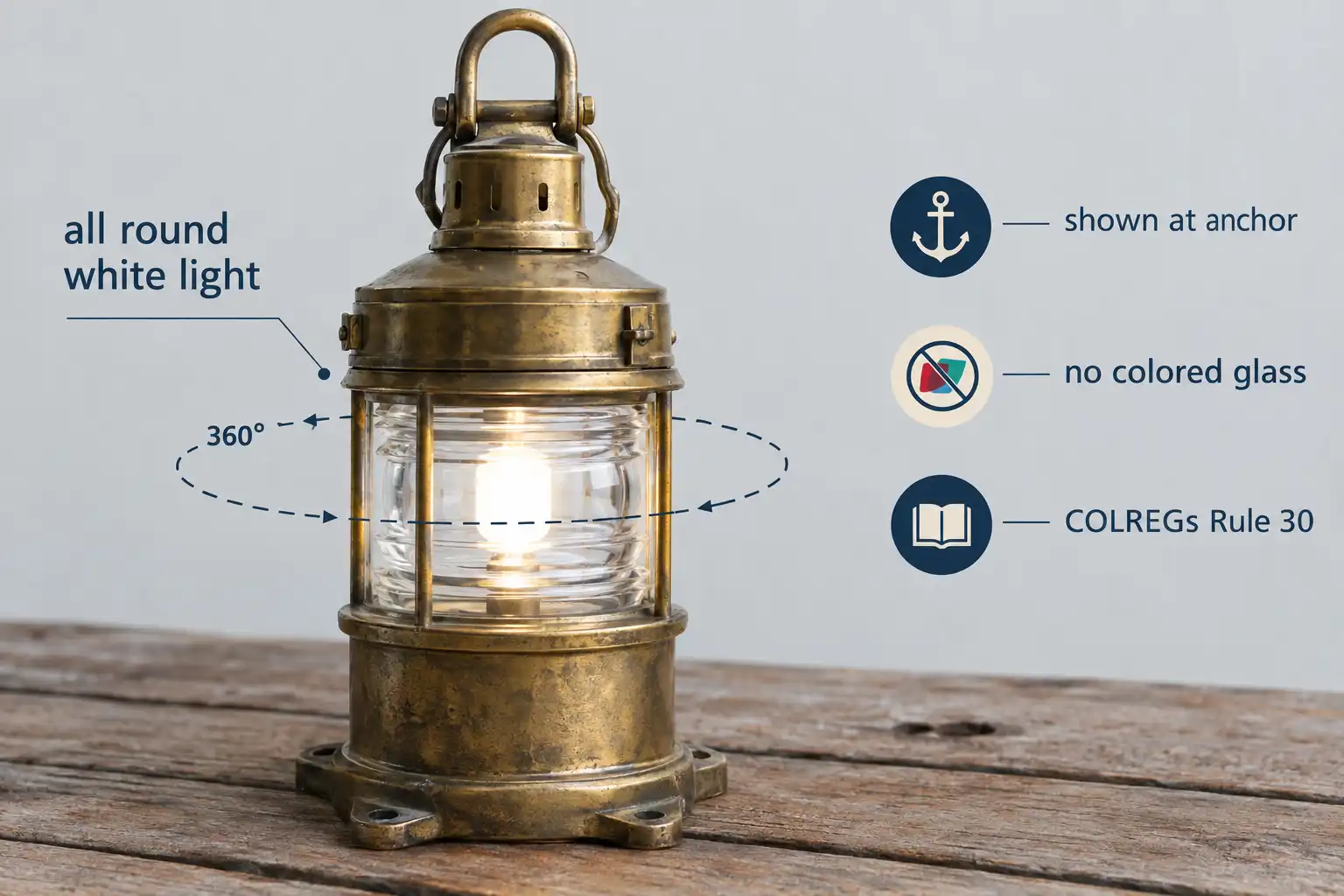
An anchor light lantern is the all-round white light a vessel shows at night while anchored, so other crews see it and keep clear. It sends light through a full 360 degrees and carries no colored glass. Older ones burned oil and hoisted up a stay, while modern versions are electric fixtures.
What an Anchor Light Lantern Tells Other Ships
It carries one message. This vessel is anchored and is not moving under her own power.
Under COLREGs, the collision rules the IMO maintains, an all-round light shows unbroken light across 360 degrees of the horizon. That full circle is the point. A ship approaching from any bearing sees the same steady white glow, so her crew knows to give the anchored hull room.
Colored glass would change the meaning completely. Sidelights exist to show heading and turn direction on a moving vessel, which is the reason sidelights use red and green glass. An anchor lantern says nothing about heading. It marks a position. Old sailors called it a riding light, and plenty of glossaries still list that name.
The Rules Behind the Light
Rule 30 of COLREGs covers anchored vessels. The requirements scale with hull length.
How Many Lights a Ship Shows
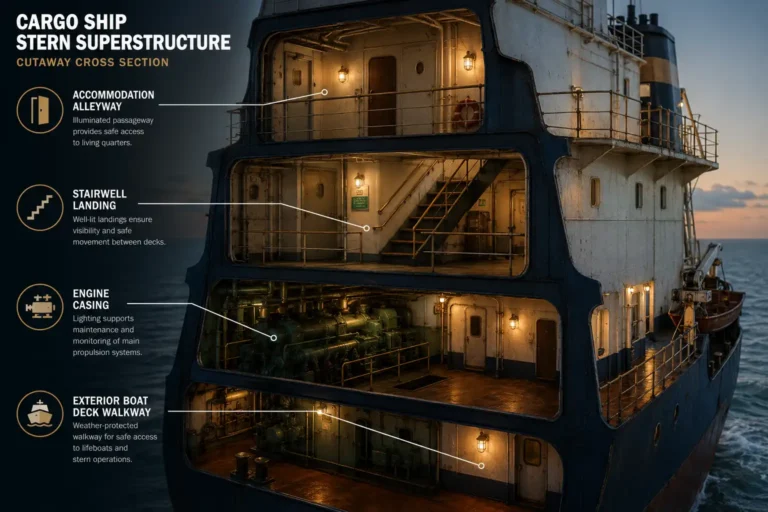
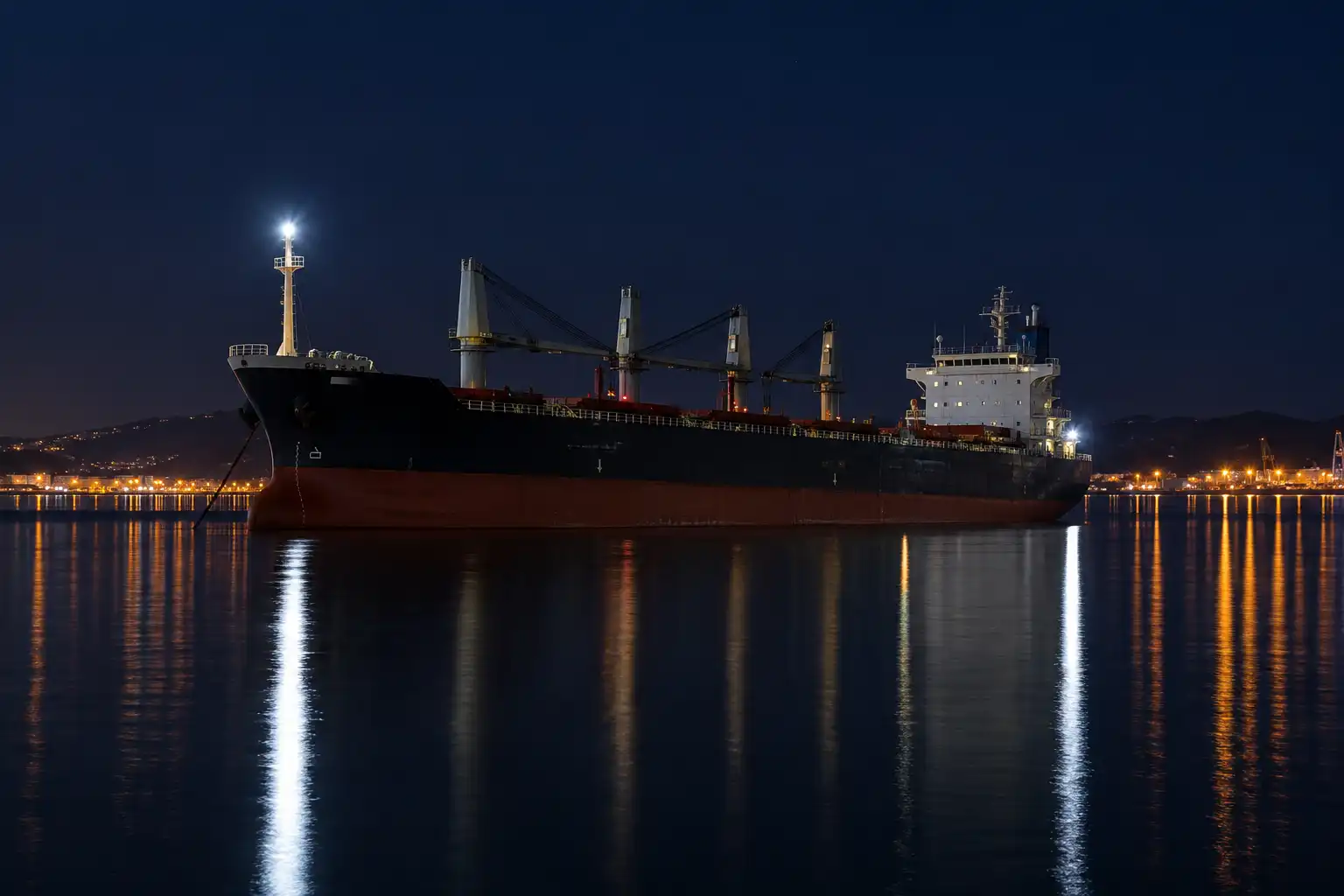
A vessel under 50 meters may show a single all-round white light where it is best seen. A vessel of 50 meters or more shows two. One goes in the fore part, and a second sits at or near the stern at a lower level. Ships of 100 meters and up must also use working lights to illuminate their decks. This all sits inside the same family of light requirements cargo ships follow at sea.
How Far the Light Must Carry
Rule 22 sets minimum ranges. On vessels of 50 meters or more, an all-round white light must be visible for 3 nautical miles. On anything under 50 meters, the required range is 2 miles.
How High It Must Sit
Annex I gets specific. When two anchor lights are carried, the forward one sits at least 4.5 meters above the after one. On a hull of 50 meters or more, that forward light goes no less than 6 meters above the deck. Annex I also grants relief here, since anchor lights need not be placed at an impracticable height.
One exemption exists. A vessel under 7 meters at anchor, clear of a channel, fairway, anchorage, or traffic, need not show the light. Most sensible skippers show it anyway.
How I Tell a Real One From Other Ship Lamps
Four details give it away.
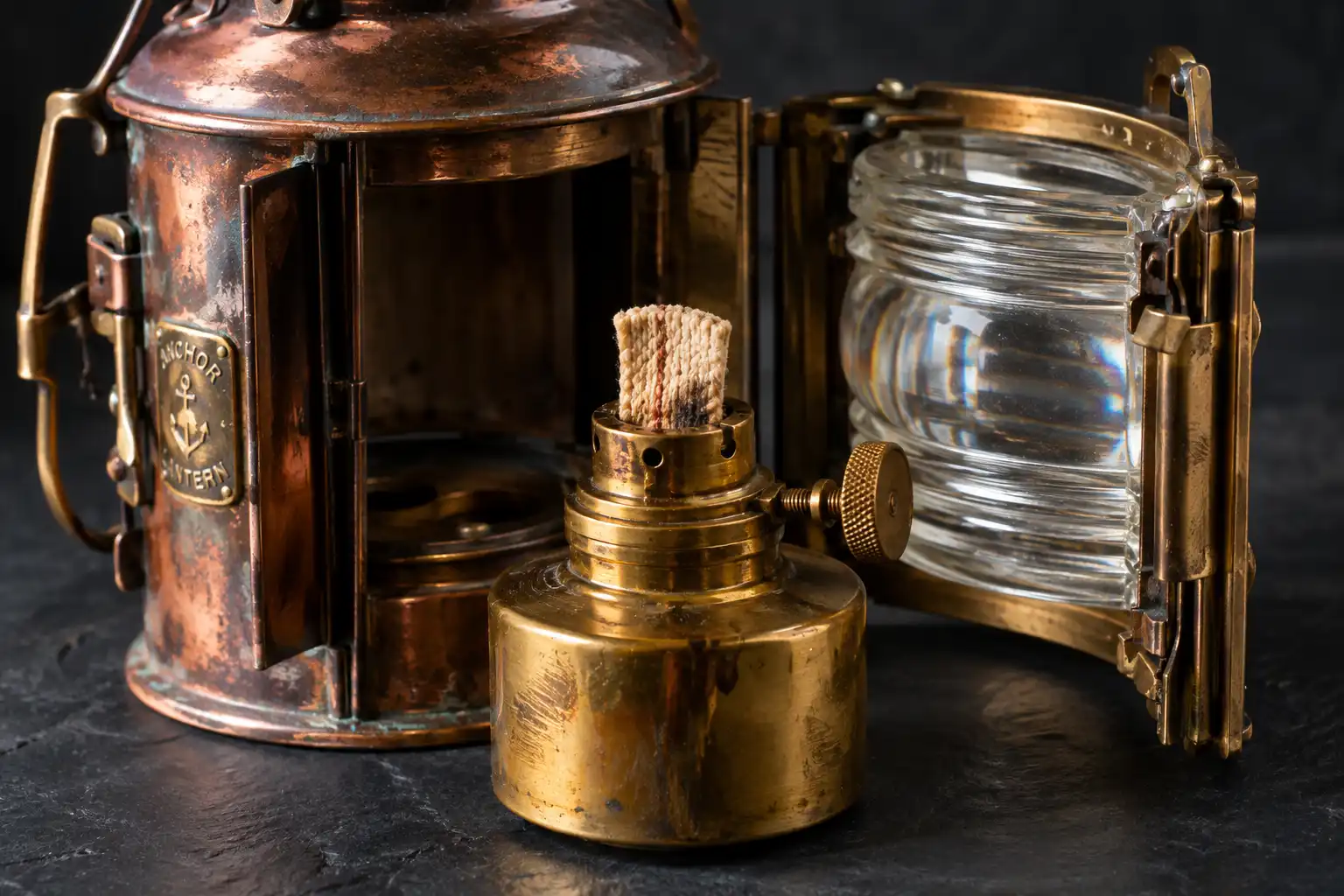
The lens is clear and wraps the whole way around, usually with Fresnel style ribs pressed into the glass. The top carries a hoisting bail, plus small guide rings so a rope could steady it while the ship rolled. Inside sits a removable font with a wick burner and a thumbwheel for flame height. The cap is vented and hinged so a sailor could reach that flame.
Bodies are copper, brass, or galvanized steel, and the weight tells you plenty. Reproductions feel thin and their glass is smooth. For the longer checks, I have written about telling a genuine salvaged lantern from a reproduction.
Oil First, Then Electric
Sailing ships hoisted oil anchor lanterns for centuries. The Fresnel lens, developed by Augustin-Jean Fresnel in the early 1800s, pushed far more usable light out of one small flame. Kerosene later replaced whale oil, and the design settled into the shape collectors know today.
Electric anchor lights took over through the twentieth century. Even so, many ships kept an oil lantern in a locker as backup against generator failure. That is why I still find them aboard hulls built in the 1960s and 1970s. The copper and brass examples go straight onto our shelves of salvaged marine lanterns.
Living With One at Home
Most anchor light lanterns I sell end up in houses, not on boats. They hang well over a kitchen island or beside a front door, and that 360 degree lens spreads light in every direction.
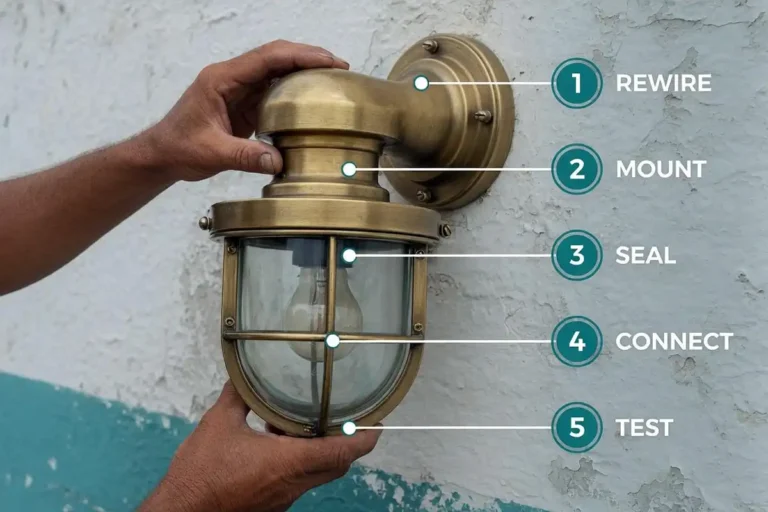
Two practical notes. Old brass carries a patina worth keeping, so work gently, and my method for cleaning old brass without stripping its patina suits these well. If you want electric light instead of a flame, have the conversion done properly. The same care in wiring a salvaged fixture for household current applies here.
One warning. A decorative lantern is not certified marine equipment. If you anchor a boat overnight, fit a compliant light.
Final Thought
An anchor lantern is one of the simplest honest objects on a ship. White light, all the way around, saying I am here and I am not moving. Hold one in your hands and you feel how much thought went into a tool that simply had to work in the dark.
If you find one with its font and burner still intact, keep it. Those are getting harder to pull out of the yards every year.