Why Are Nautical Lights Red and Green? A Simple Guide
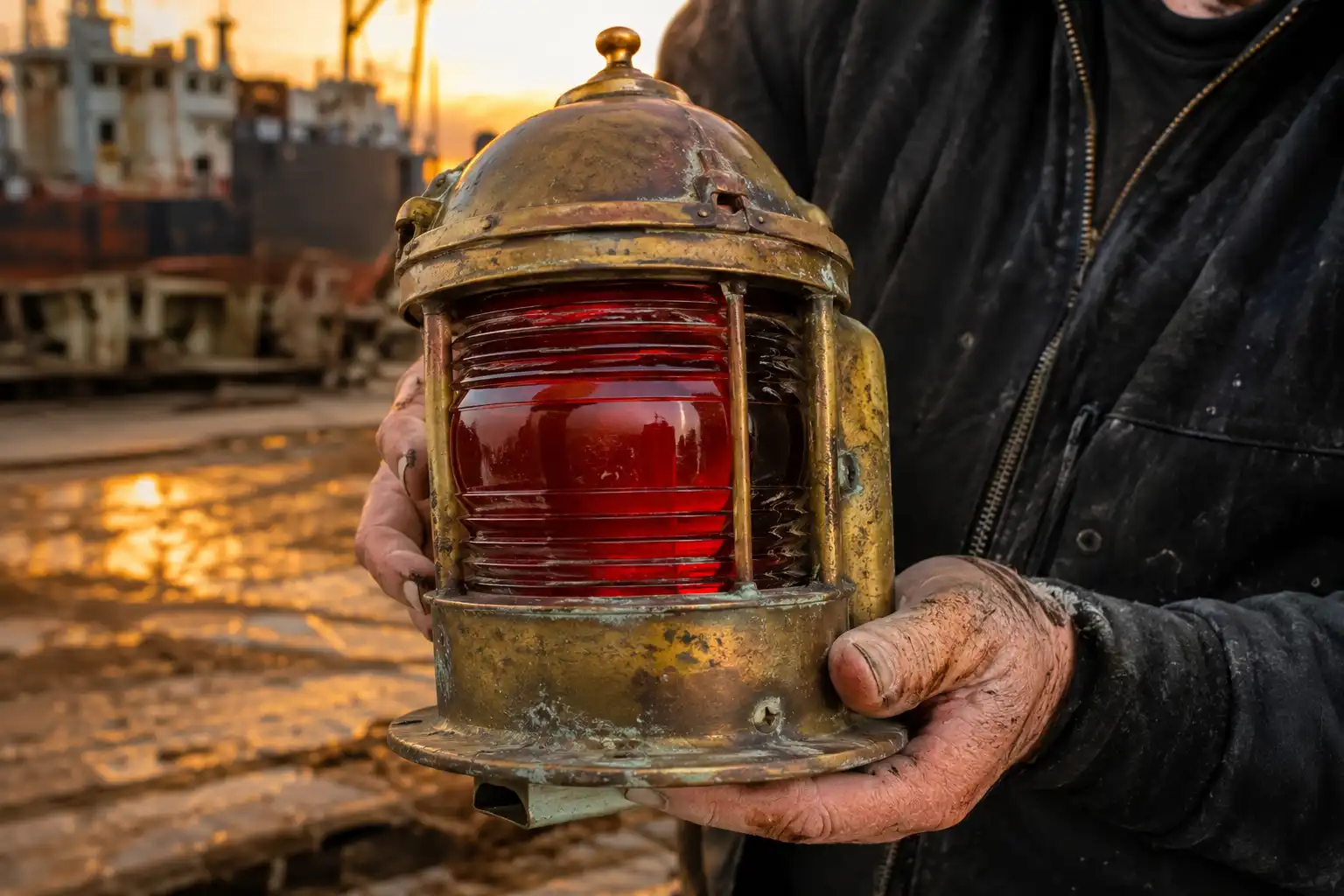
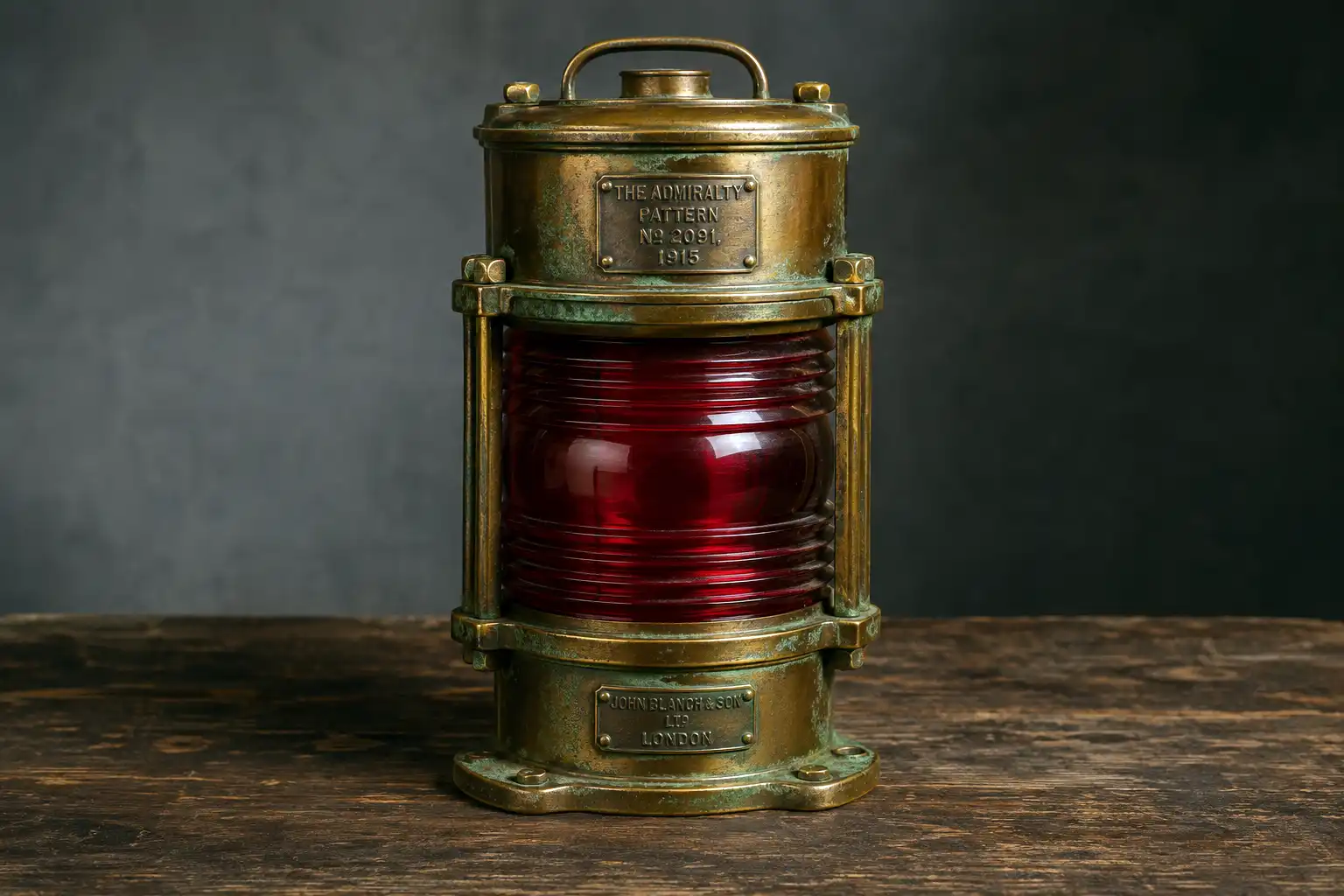
The first sidelight I ever pulled off a scrapped cargo ship still had its red glass intact. I held it up to the yard lamps and it glowed like a ruby. That glass had a job once. It told other ships which way that vessel pointed in the dark.
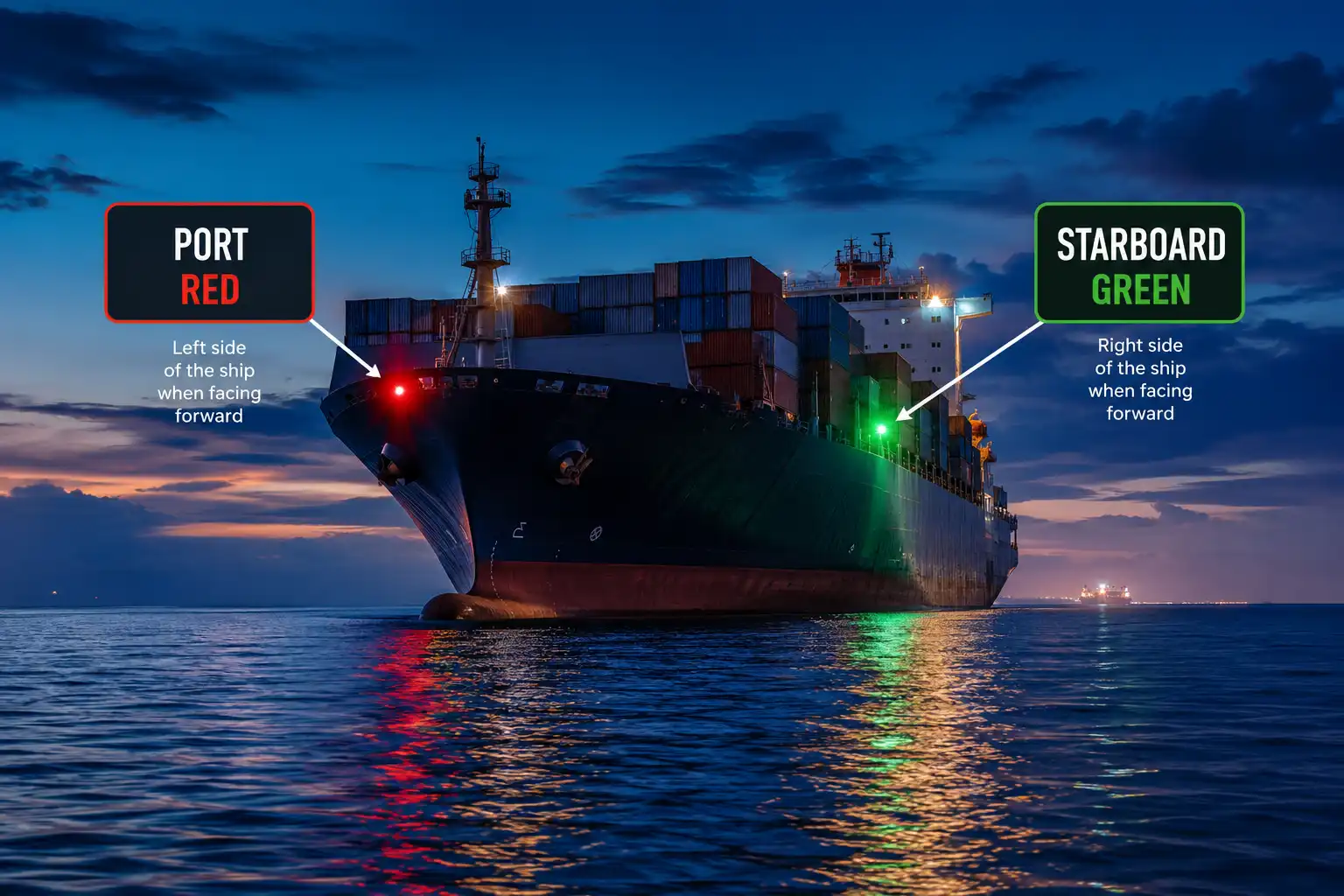
Nautical lights are red and green so other boats can tell your direction at night. Red marks the port (left) side and green marks the starboard (right) side. See both colors at once and a vessel is heading straight toward you.
Red Means Port, Green Means Starboard
This rule is fixed on every ship in the world. The red light sits on the port side, the left when you face the bow. The green light sits on the starboard side, the right.
These two lamps are called sidelights. Each one shines across an arc of 112.5 degrees. That covers from dead ahead to just behind the widest part of the hull. A small metal screen blocks each color from showing on the wrong side.
They sit alongside the other running lights fitted on a ship, each with its own job. A white stern light points backward. A white masthead light shines forward. Most old sidelights I handle are cast in heavy brass, though later ones used aluminum, and there is a real gap in how brass or aluminum holds up in salt air.
So Why Are Nautical Lights Red and Green?
So why are nautical lights red and green, and not blue or yellow? Two reasons sit behind it, one practical and one from history. Red carries the longest wavelength of visible light. It travels farther and reads as a warning. Green sits high on the brightness scale, so it stands out clearly over a dark sea.
The tradition is older than the science. Starboard was the steering side on old ships, back when a steer-board hung off the right. A helmsman could see boats coming from that side. So green marked the safer approach. His view to port was blocked, so red flagged the riskier side.
Read next: What Color Are Nautical Lights? A Simple Guide From the Docks
A Short History of the Colors
Britain set the standard first. In 1848 the Admiralty ordered steam vessels to carry red and green sidelights plus a white masthead light. The U.S. added sailing vessels in 1849.
The world agreed on one system at the 1889 conference in Washington. Those rules took effect internationally in 1897. In 1972 the modern COLREGs set out 41 rules covering the type, color, and placement of every light. Little has changed since.
How to Read Another Boat at Night
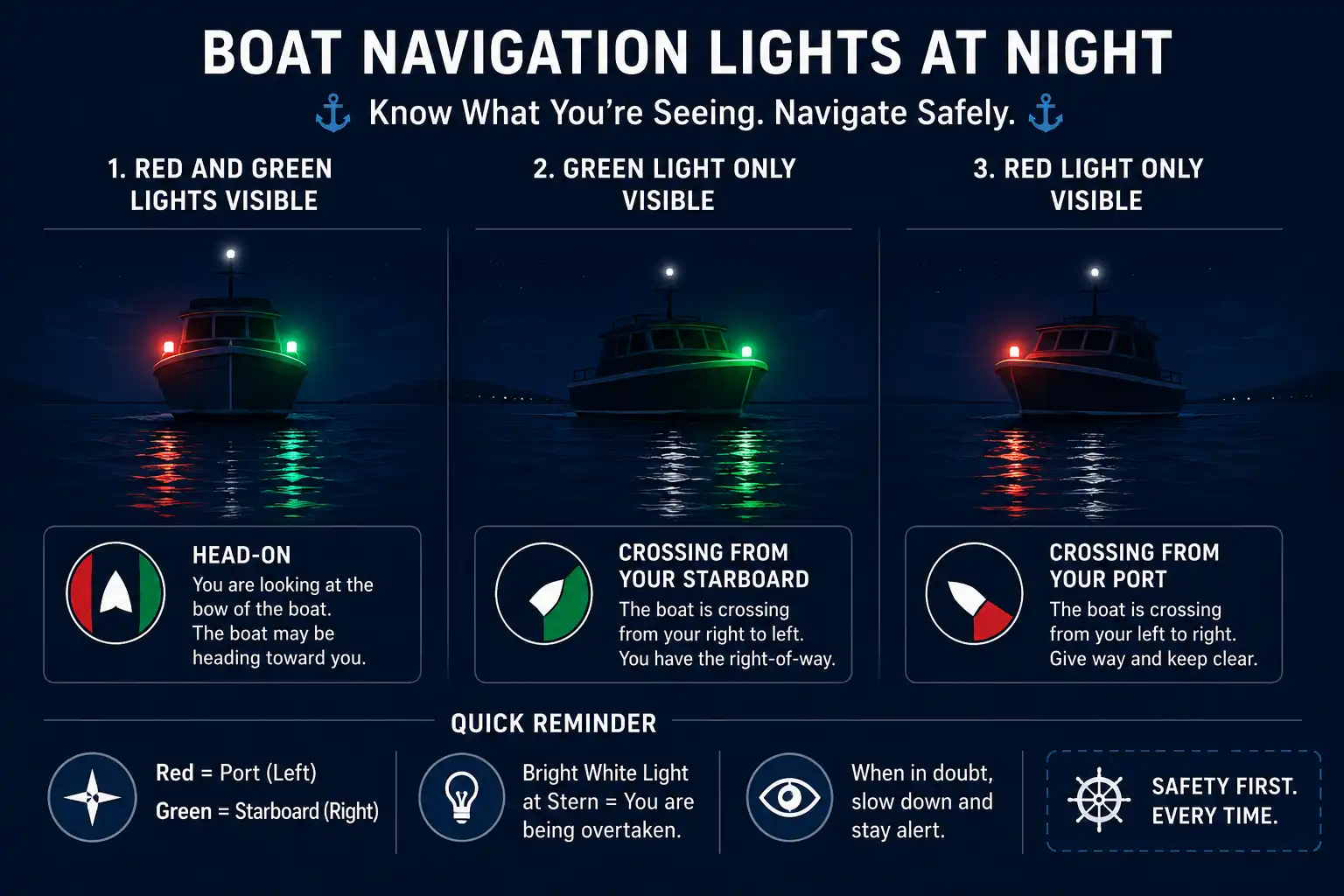
The colors tell you exactly what a distant vessel is doing. Here is the quick version.
- See both red and green: it faces you head-on.
- See only green: you are looking at its starboard side, crossing left to right.
- See only red: you see its port side, crossing right to left.
- See only white: you sit behind it.
When two boats meet head-on, both turn to starboard. They pass port to port, left side to left side. If a green light crosses in front of you, hold your course. If a red light crosses your bow, give way.
These Colors Are the Law
Every vessel must show these lights from sunset to sunrise. The same rule applies in fog, rain, or any poor visibility. It covers everything from a kayak to a cruise ship, under both U.S. Coast Guard and international COLREGs rules. Big ships carry extra lights, and the rules cargo ships have to follow get more detailed.
One thing trips people up. Channel buoys use red and green too, but the meaning flips. “Red right returning” means you keep the red buoy on your right coming in from sea. That is buoyage, not ship lights.
Final Thought
The red and green never felt like trivia to me. Every one of the salvaged ship lights in my yard once stood watch on a real vessel. It kept a crew safe through countless dark nights.
If you ever come across a genuine one, learn the trick to telling a real one from a reproduction first. Then hold it up to the light. You will see exactly what I mean. Enjoy the hunt.
— Mokter