What Are Nautical Pendant Lights, and Are They Worth It?
Last month I pulled a caged ceiling light out of the engine room of a bulk carrier here in Chattogram. Cast brass shell, thick glass dome, four coats of gray paint over the original finish. A buyer in Oregon hung it above her kitchen sink and called it a nautical pendant light. On the ship, nobody called it that. It was the light over the workbench.
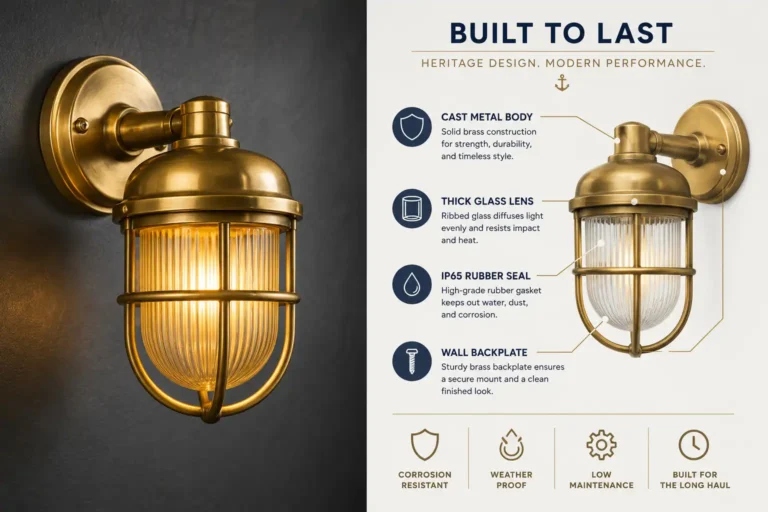
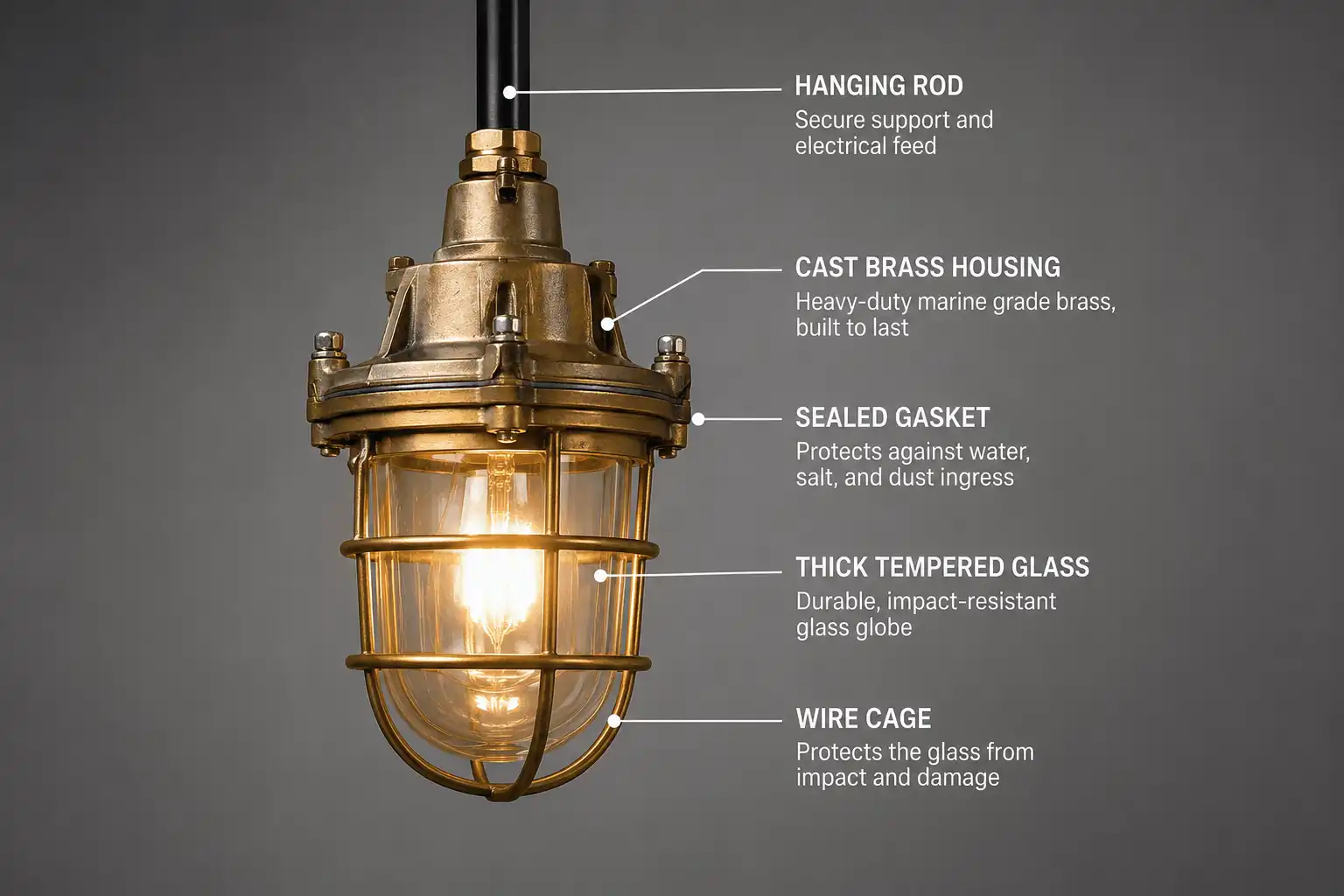
Nautical pendant lights are ceiling fixtures that hang from a rod, chain, or cord. They use shipboard construction: a cast metal body, thick tempered glass, a protective cage, and a sealed gasket. Some are genuine fixtures salvaged off working vessels. Others are new lights built to copy that look.
What Makes Nautical Pendant Lights Different
The answer is engineering, not decoration. A ship fixture gets built for vibration, salt air, engine heat, and deck washdown.
Look at the parts. The housing is cast brass, bronze, or marine grade aluminum instead of stamped sheet metal. The glass is thick, often ribbed or domed. A rubber gasket sits in a machined groove. A threaded ring clamps that glass down instead of three small screws.
Shipboard lighting follows IEC 60092-306, the international standard for luminaires on ships. It calls for metal housings on fixtures installed outdoors. That is why one of these weighs five to fifteen pounds while a hardware store pendant weighs two.
Where These Fixtures Come From on a Ship
Most hanging fixtures come from spaces below deck. Engine rooms, cargo holds, steering gear compartments, workshops, and mess rooms all use overhead lights on short pipe stems.
Open decks work differently. A loaded ship rolls hard, so deck lighting bolts flat against the deckhead or a bracket. Nothing swings.
That means plenty of stock sold as a pendant started life as a deckhead or bulkhead fitting. My workshop adds a stem, chain, or cord and a new canopy. Converting a fixture is normal work in this trade. A seller just has to say so, and I do. If you want a fixture that hung as a pendant on the ship, ask me for engine room or cargo hold stock.
Materials, and How They Age
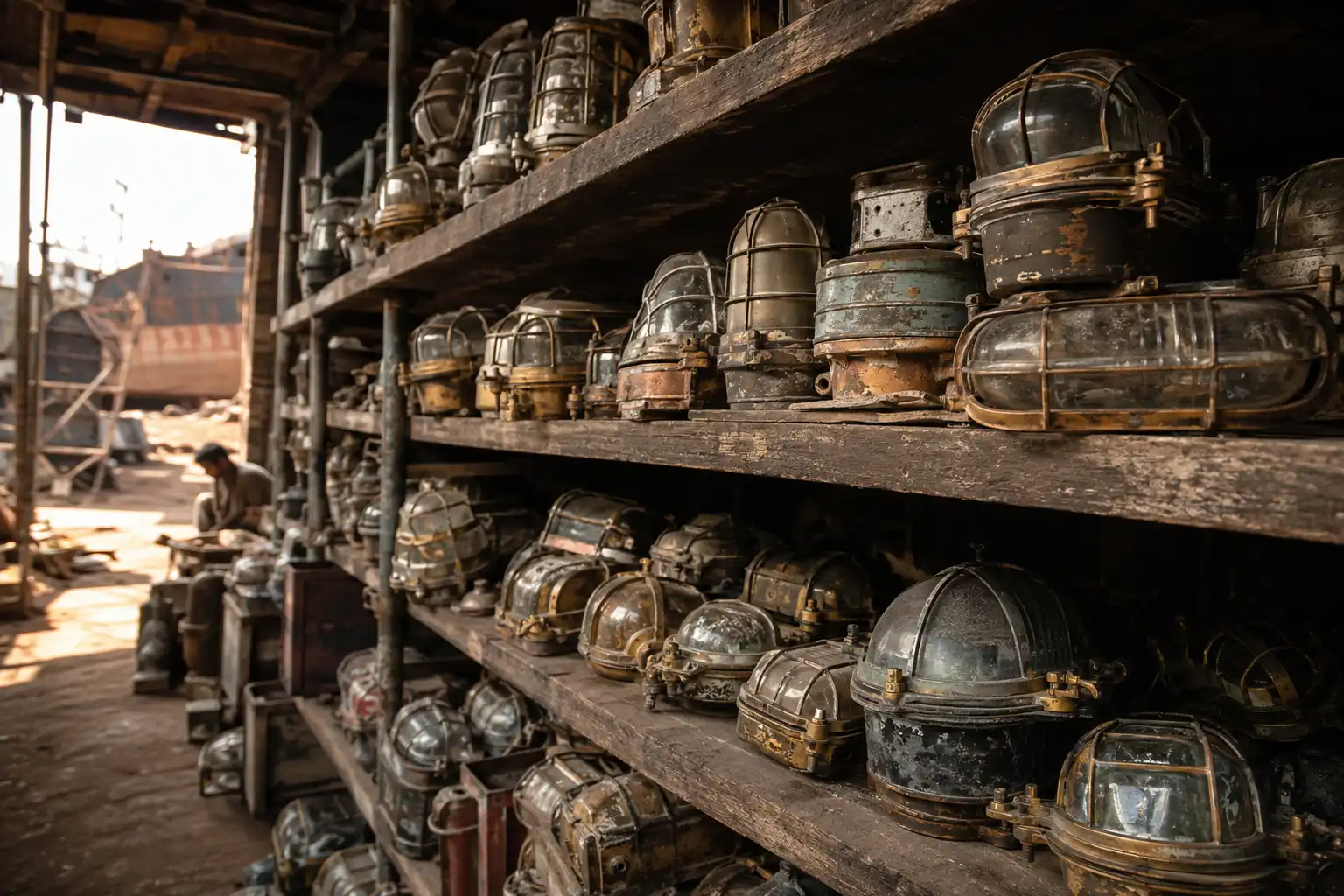
Brass and bronze fill most of my shelves. Both build a brown or green patina and handle coastal air well.
Cast aluminum shows up on newer ships because it saves weight. Galvanized steel comes off working boats and rusts at the seams once the coating wears through. Copper is rare and priced that way. How brass, bronze, and aluminum age near salt water decides which metal belongs on an exposed porch.
Weight tells you plenty on its own. Thin, light metal usually means a reproduction.
How to Spot Genuine Salvage
Check for a maker plate first. Wiska, Daeyang, Kokosha, Shengan, and Oceanic turn up constantly in Chattogram yards.
Then look for wear nobody fakes cheaply. Layered paint in the casting corners. Pitting around the cable gland. A gasket groove worn oval. Thread wear on the lens ring. Telling an old shipboard fitting from a copy comes down to those small signs of use.
Ratings, Wiring, and Your Electrician
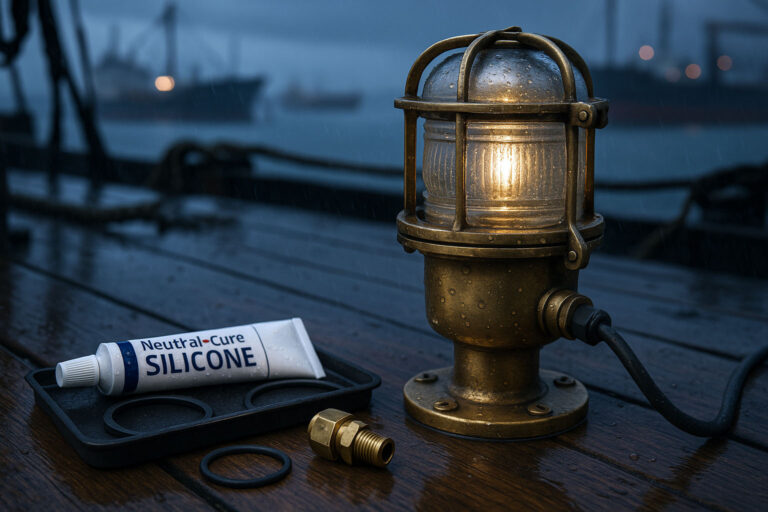
IP66 means dust tight and protected against powerful water jets. It does not mean the fixture survives being submerged. A gasket that sat in an engine room for 30 years no longer holds its original rating either. Treat any salvage piece as unrated until it gets fresh seals, which is the honest answer to how much water these fixtures keep out.
For a US home, the rating you need is a UL location listing. Damp rated covers a sheltered porch, a soffit, or a steamy bathroom. Wet rated covers anywhere rain reaches the fixture.
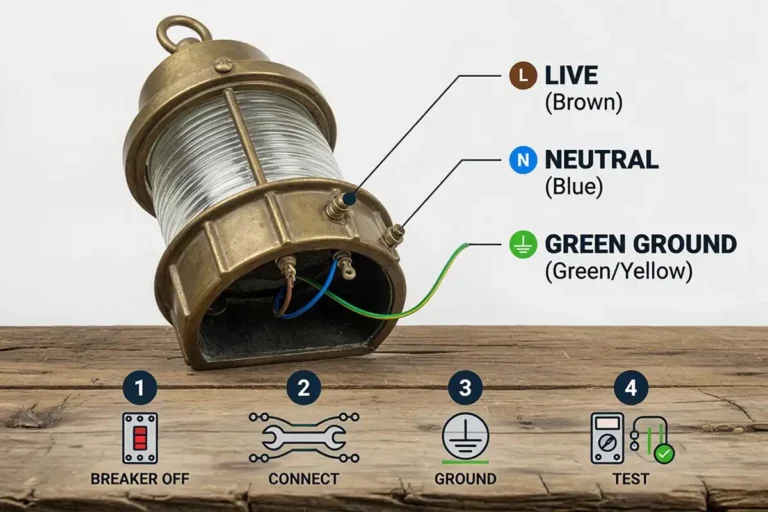
The National Electrical Code expects installed fixtures to be listed and labeled. Salvage almost never carries that label. Have the fixture rewired with UL listed wire and a new socket, ground the metal body, and confirm the ceiling box carries the weight. Wiring a shipboard fixture for house current takes a licensed electrician about an hour. Pay for that hour.
Where They Work in a Home
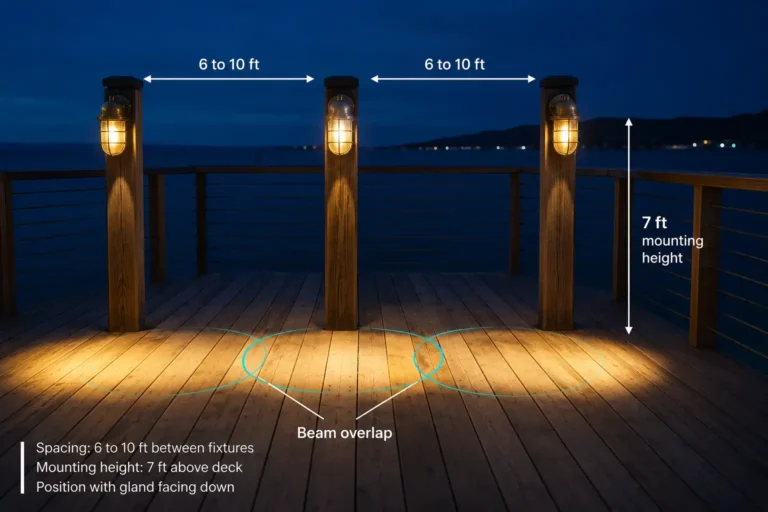
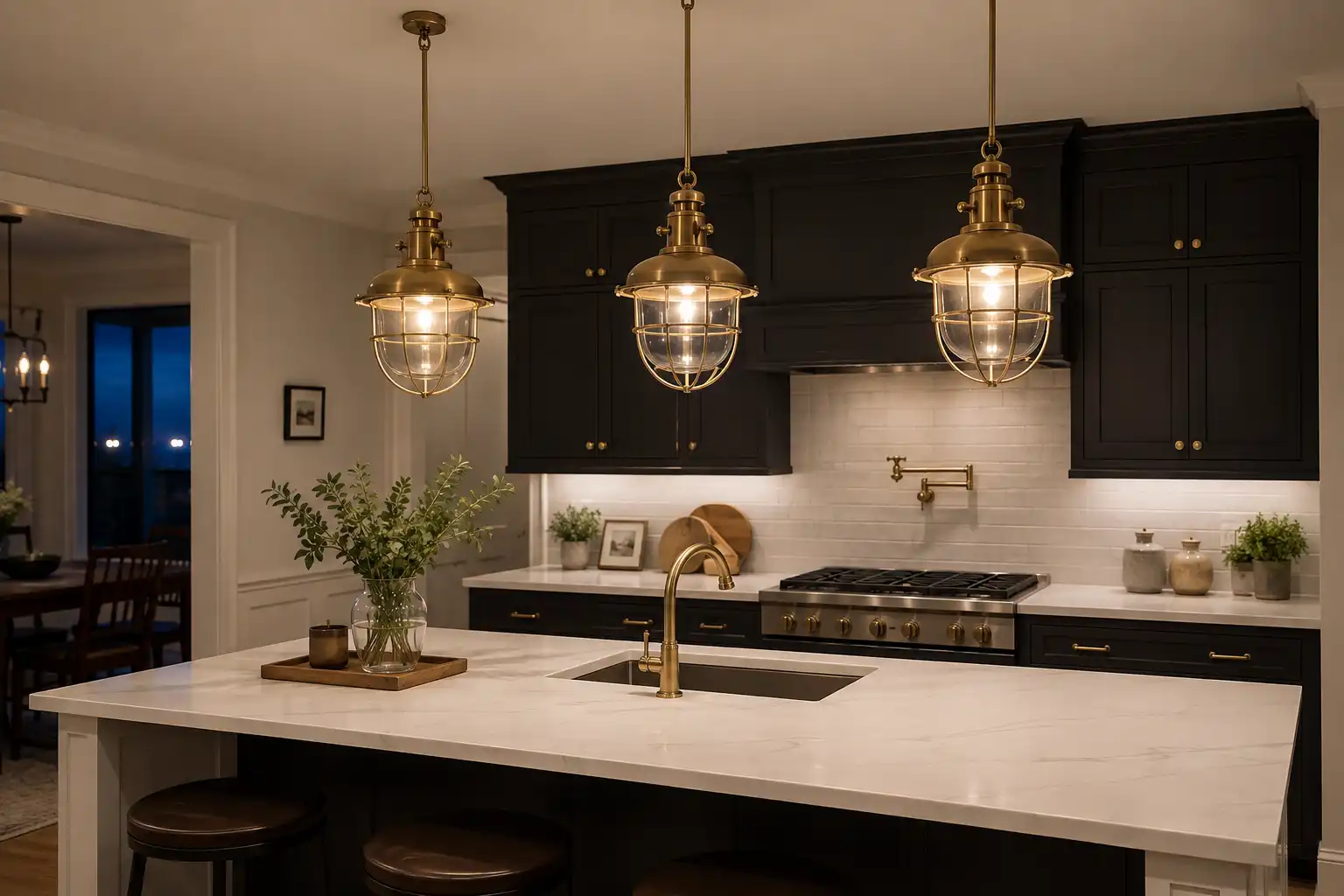
Over a kitchen island, hang the bottom of the fixture 30 to 36 inches above the countertop. Space multiple pendants about 30 inches apart, center to center. Over a hallway or walkway, leave at least 7 feet of floor clearance.
Stairwells, entryways, bar counters, and covered porches all suit these fixtures. The heavy ones need a solid anchor, so plan the mounting before you fall in love with a piece. Some buyers get stuck between a cage light and a smooth dome. Choosing an industrial hanging fixture without regret comes down to where the light hangs and how much glare you accept.
Final Thoughts
A nautical pendant light is a working tool that got a second life indoors. That is the whole appeal. The salt stains and the tool marks came from somewhere real, and no factory finish copies them.
Buy for the metal, the glass, and the gasket. Style follows on its own. If you want to see what came off the ships this month, the hanging ship fixtures on my shelves change fast.
Good luck with your project.
— Mokter