What Are the Types of Bulkhead Lights? Shape, Material, and Cage
Bulkhead lights come in several types, not just one. At our yard in Bangladesh, I pull them from broken ships in a dozen shapes, metals, and sizes. Round ones, oval ones, some wrapped in heavy cages. Buyers often think a bulkhead light is one fixed thing. It isn’t. The main types of bulkhead lights fall into a few clear groups. Before you shop, it helps to know what a bulkhead light really is, then match the type to your space.
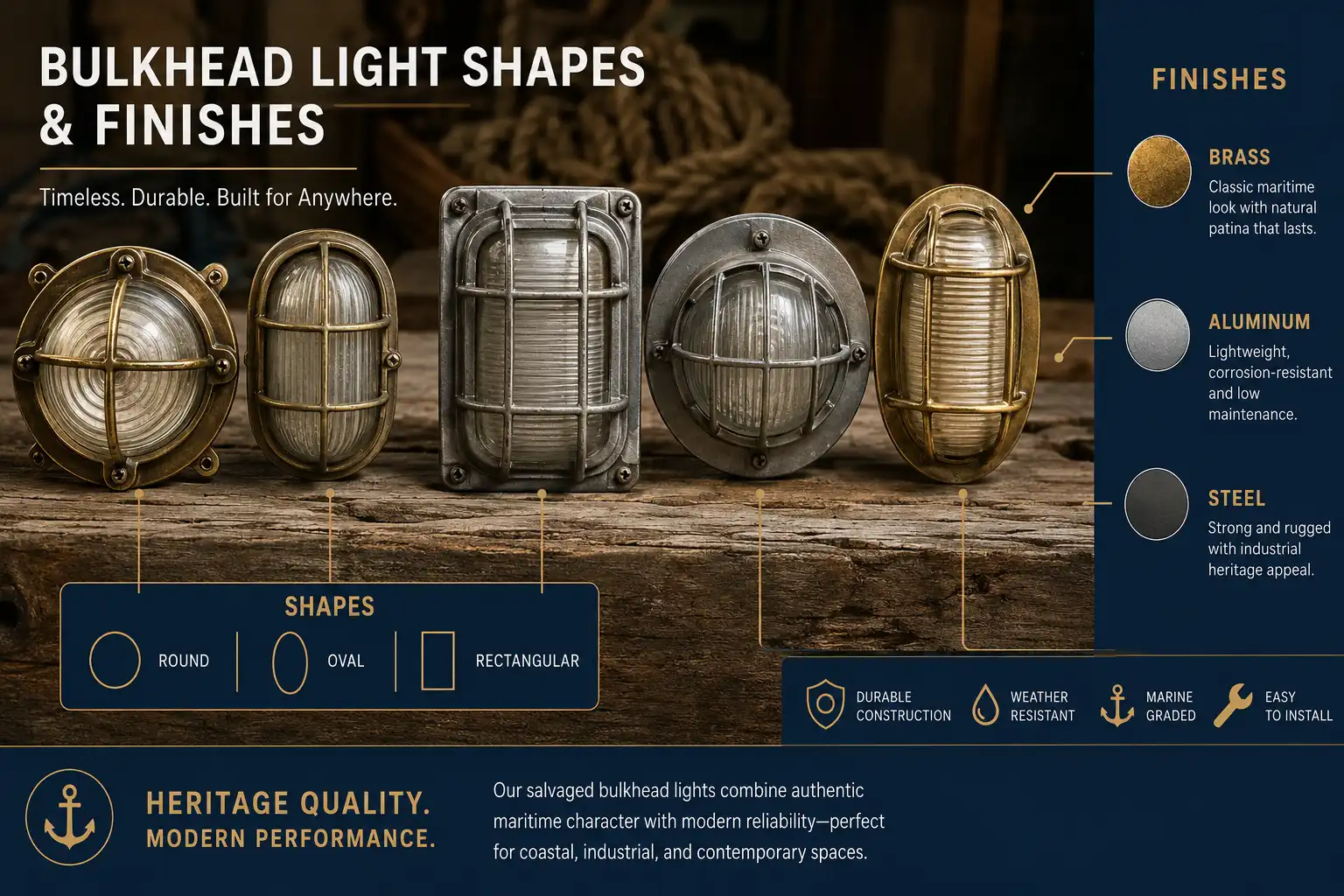
Bulkhead lights split into a few clear groups. By shape they are round, oval, or rectangular; by material, brass, aluminum, or galvanized steel. They also divide into caged or open-face and indoor or outdoor models.
Types of Bulkhead Lights by Shape
Shape is the first thing you notice. It changes how the light spreads and where the fixture fits.
Round bulkhead lights
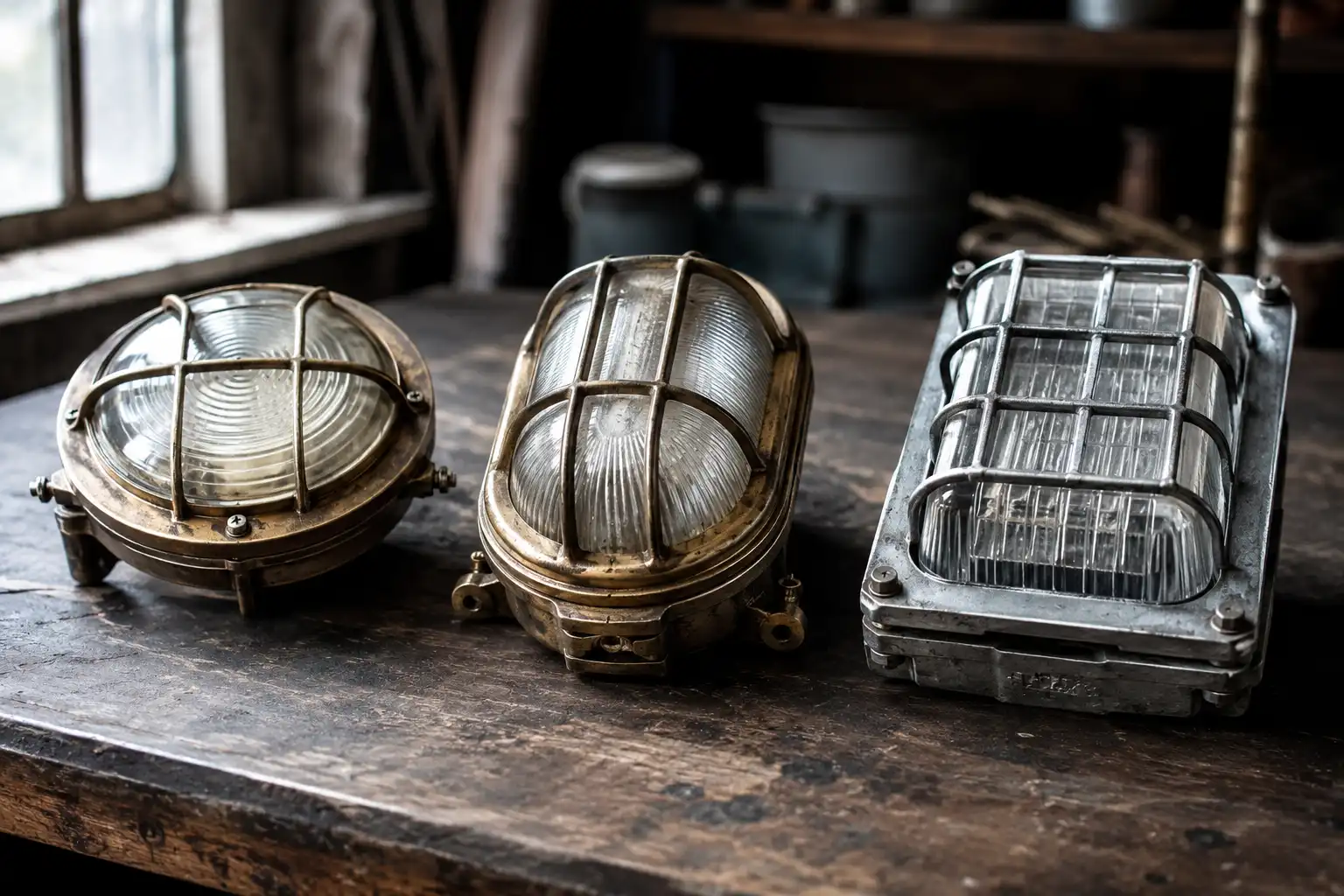
Round is the most common shape. The circle pushes light out evenly in tight spots. You see them in engine rooms and stairwells.
Oval bulkhead lights
Oval lights are wider than they are tall. Sailors call them turtle or clamshell lights. The shape throws light along corridors and passageways.
Rectangular and square bulkhead lights
These have flat, boxy backplates. They sit close against the wall and suit modern rooms. Older ships used them near hatches and doorways.
Types of Bulkhead Lights by Material
Material decides how long a light lasts, especially near salt water.
Brass bulkhead lights
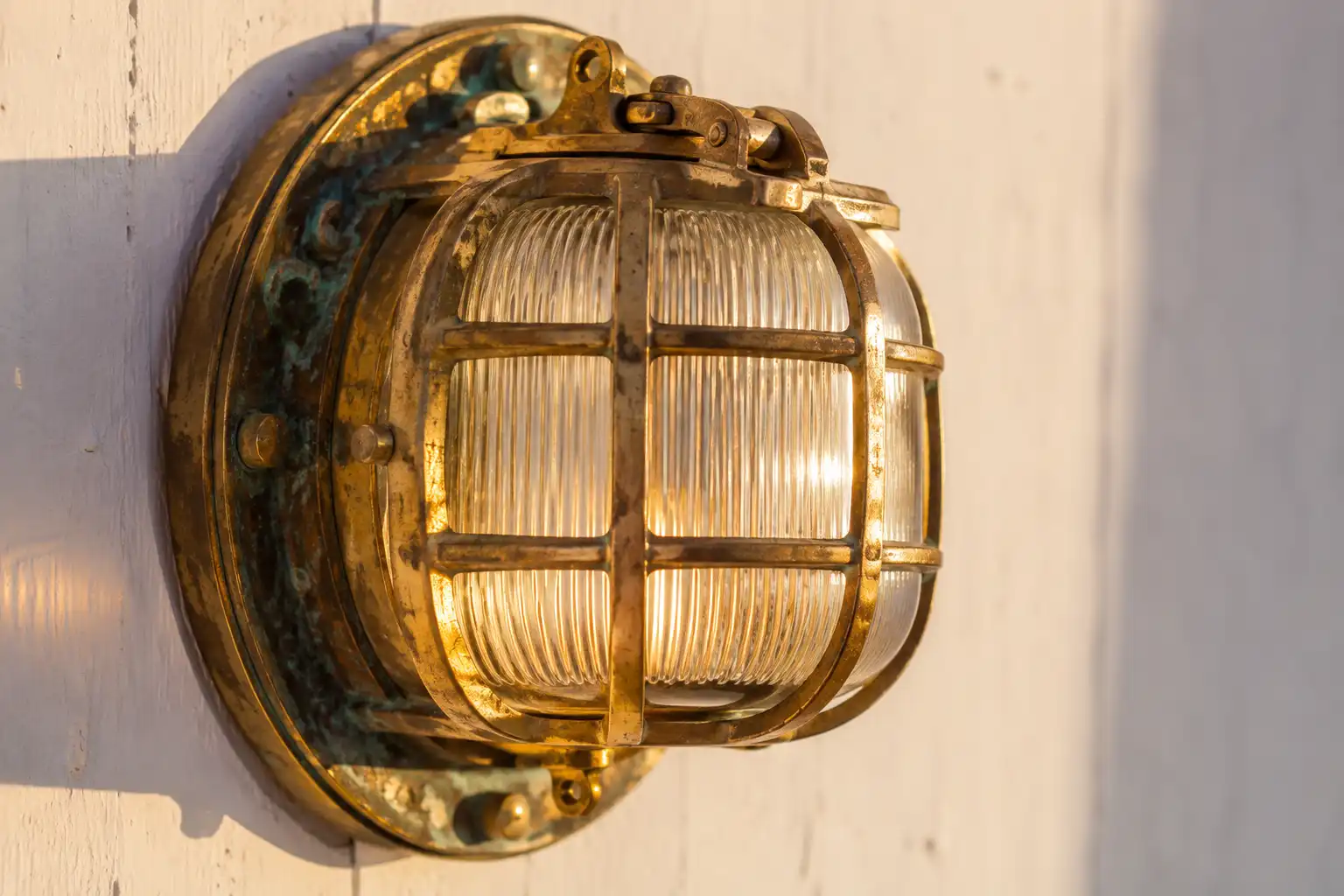
Brass is the classic marine metal. It resists corrosion and ages into a warm patina. Solid brass fixtures last for decades.
Aluminum bulkhead lights
Cast aluminum is lighter and cheaper. Shipyards fit it on decks and in workshops. It handles knocks well but pits faster in salt air.
Galvanized and steel bulkhead lights
Galvanized steel carries a zinc coating that fights rust. These are heavy, rugged, and built for hard use. If you are unsure which metal lasts best in coastal air, start there.
Caged vs Open-Face Bulkhead Lights
This is a simple split. A caged light has a metal grille over the glass. An open-face light does not.
Cages guard the glass from impact. You want them near stairs, decks, and busy walkways. Open-face lights look cleaner and work in calm indoor spots.
Indoor vs Outdoor Bulkhead Lights
The real difference is the seal. Outdoor lights use thick gaskets and higher IP ratings to block water and dust. Indoor lights skip the heavy sealing.
Original ship fixtures were made for spray and washdowns. So most salvaged pieces handle outdoor use well. Still, choosing between indoor and outdoor models comes down to checking that gasket first.
Glass and Light Source Types
Two smaller features shape the type too. The glass is usually clear or prismatic. Prismatic, or ribbed, glass scatters light and cuts glare.
The light source also varies. Older units use E27 or E26 lamp holders. Most buyers now fit an LED bulb, which runs cooler and lasts far longer.
Which Type Should You Pick?
The types of bulkhead lights suit different spots, so match the light to the job. For a wet deck or a coastal garden, pick sealed brass with a cage. For a dry hallway, an open-face fixture is plenty.
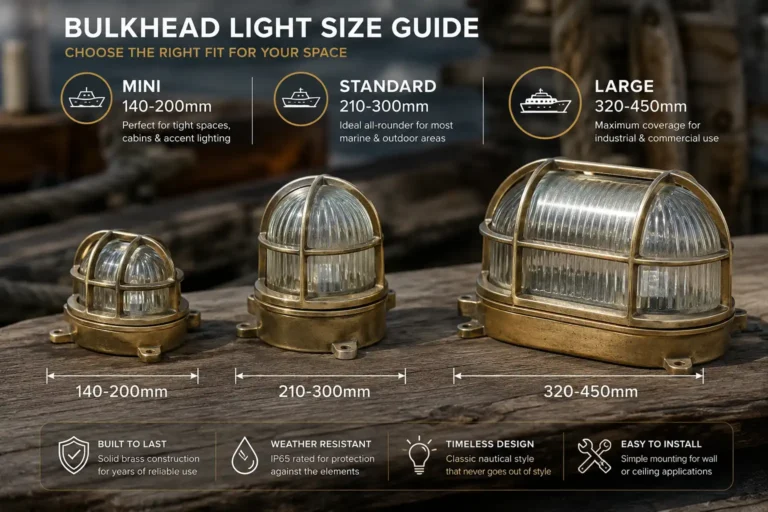
Size matters as much as type, so getting the backplate size right saves headaches. And for a boat, spend a minute on the correct fixture for a working vessel.
Final Thought
There is no single type of bulkhead light. There are shapes, metals, cages, and seals, and the right mix depends on your space. Pick the metal for the weather, the cage for the risk, and the size for the wall. Once you decide, wiring one onto a wall is easier than it looks.
Good luck with the hunt.