What Is a Companionway Light? A Ship Stair Fixture Explained
A ship’s stairs are the worst place on board to lose your footing. That is why the stairway between decks gets its own dedicated fixture. I pull them out of hulls here in Chattogram most weeks. Last month a crew handed me four off a Japanese bulk carrier. Same casting, same ribbed glass, same brass gland. All four still lit after decades in salt air.
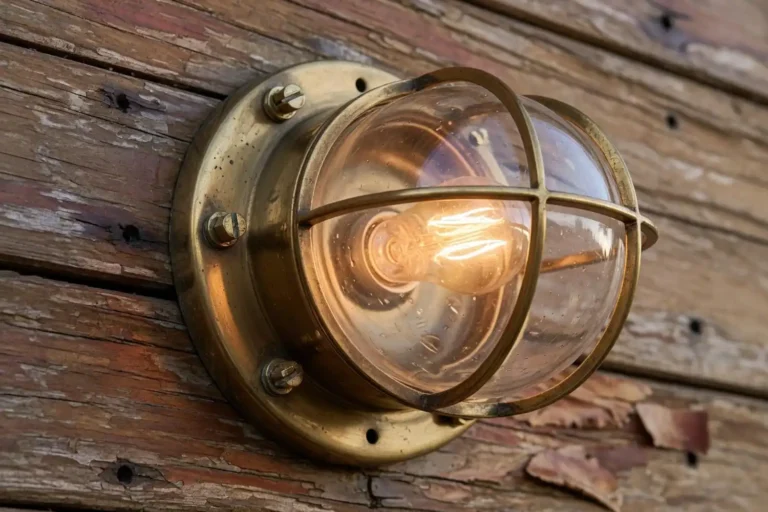
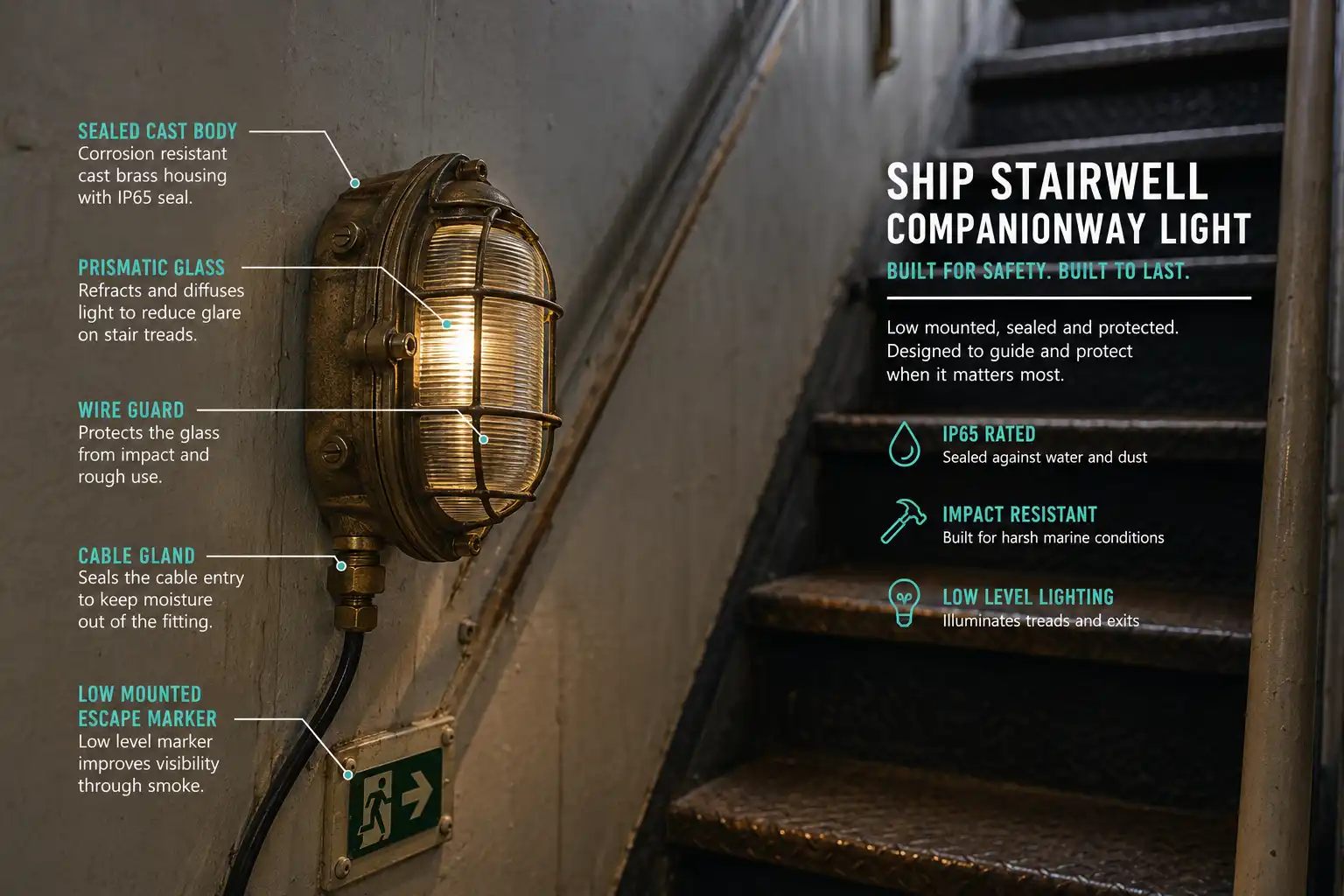
A companionway light is a sealed fixture that lights the stairway or ladder running between a ship’s decks. On commercial vessels it is usually a small cast brass or aluminum wall unit with thick glass and a wire guard. On sailboats and yachts, the same name covers low voltage LED step lights.
Where the Companionway Sits on a Ship
A companionway is the stair or ladder connecting one deck to another. On a sailboat it is the hooded hatch leading from the cockpit down into the cabin. Hatch boards or a small door usually seal it against water.
On a cargo ship the term stretches to cover almost any interior stair trunk between decks. The space is steep, narrow, and often wet from boots and washdown. Crew climb it at every watch change, in the dark, with the hull rolling under them.
That is the whole design brief for the fixture. Light the treads, survive the conditions, never come loose.
Read next: How to Space Deck Lights Without Dark Gaps
What the Fixture Actually Looks Like
Most shipboard ones I handle are small. Backplates typically run 150 mm to 210 mm across, which is noticeably tighter than a deck light.
The build is consistent across makers:
- Cast brass, bronze, or marine grade aluminum body
- Thick prismatic or clear glass, ribbed inside to spread the beam
- A rubber gasket seated in a machined groove
- E27 or E26 lamp holder, usually rated 40 W to 60 W
- Brass compression gland for the cable entry
- A wire cage or hood on units near traffic
Protection ratings sit around IP54 to IP56 for interior stair trunks. Anything at the weather deck opening goes higher. The internal build is close to a standard marine wall unit. It helps to know how a shipboard wall fixture is put together before you shop.
Two Different Products Share the Name
Search the term and you get two answers. Both are correct.
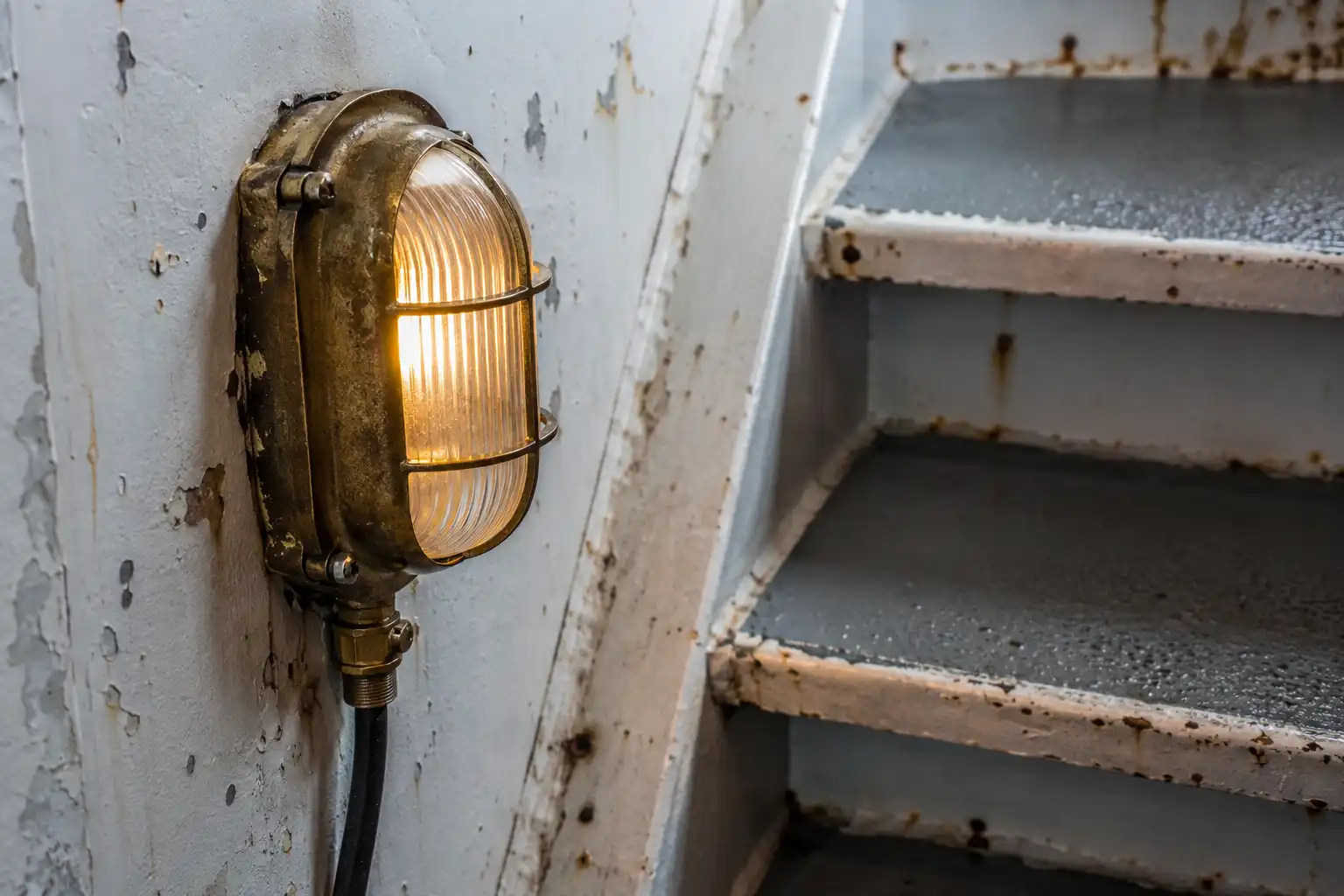
The first is the commercial fixture described above. Mains voltage, heavy castings, mounted on the bulkhead beside the treads.
The second is the recreational boating version. Small 12 volt LED courtesy lights, often recessed into a 41 mm hole, rated IP65 or better. Chandlers often shelve them next to courtesy strips, and I break down where these part ways with corridor fixtures in a separate piece. They mark step edges rather than fill the space with light.
Knowing which one a seller means saves you a wasted order. Weight is the quick tell. A salvaged ship unit feels like a hand weight. A courtesy light fits in your palm.
Why Stairway Lighting Follows Its Own Rules
Stairways count as means of escape, so regulators treat them separately from ordinary cabin space. Under SOLAS Regulation II-1/43, emergency lighting must be supplied for 18 hours in service and accommodation alleyways, stairways, exits, and lift cars. SOLAS Regulation II-2/13.3.2.5 adds marking for escape routes, stairways and exits included. Lighting or photoluminescent strips must sit no more than 300 mm above the deck.
So a real companionway carries two layers. Working fixtures overhead, and low mounted markers at ankle height for smoke conditions. On passenger ships carrying more than 36 passengers, those low location systems run continuously along corridors, stairways, and exits toward the muster stations.
That is why the fixtures I salvage are built the way they are. They were safety equipment, not decoration.
How to Tell a Salvaged One From a Reproduction
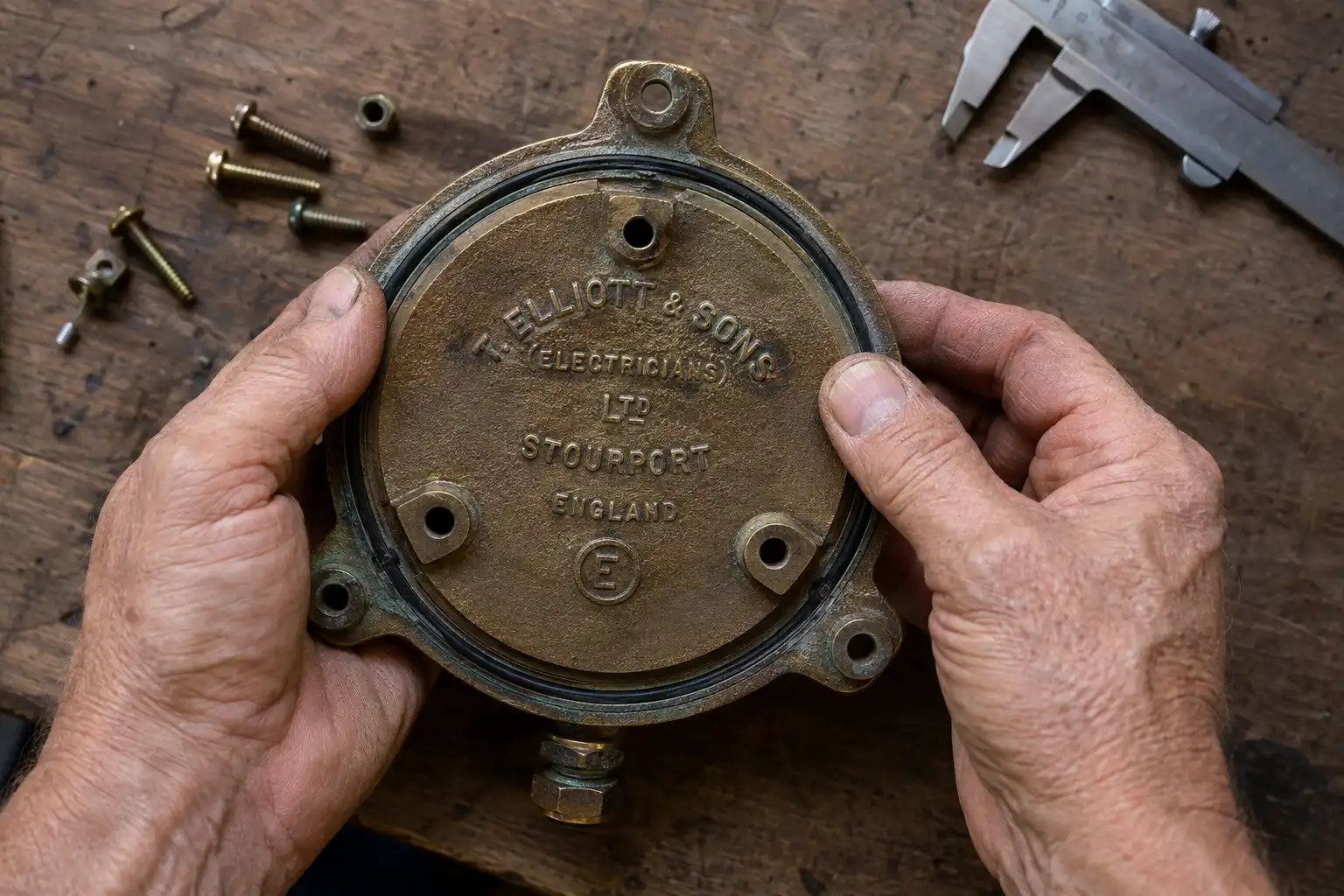
Turn it over first. Original castings carry maker names like Wiska, Daeyang, Shengan, Oceanic, or Kokosha, plus a voltage stamp and often a type number.
Then look for honest wear. Layered paint in the gasket groove. Slight verdigris in the threads. Tool marks around the gland. Reproductions come out too clean and too light, and the glass sits in a pressed groove instead of a machined one. I walk through more of these checks in my guide to spotting a genuine salvaged fixture.
Also check the mounting holes. Yard fixtures follow the same backplate patterns and hole spacing as other shipboard wall units, so measure before you drill.
Using One in a House
These work beautifully on a home stairwell, which is the same job they did on board. Entry halls, basement steps, and covered porches all suit them.
Three things before you hang it. Fit a fresh silicone gasket, since the original rubber is usually hard as bone. Rewire it completely, because old marine cable and house circuits do not mix. My walkthrough on rewiring salvaged marine fixtures covers the terminal details. Then pick a warm LED lamp around 400 to 600 lumens, which is plenty for treads without glare.
One note on finish. Brass, bronze, and aluminum weather at very different rates once they leave the ship. Match the metal to where you plan to mount it.
Final Thoughts
A companionway light is a small fixture with a serious history. It kept crews upright on wet steel stairs for thirty or forty years before it reached my yard.
Buy one that shows its age. That wear is the proof it did the job. Enjoy it.