How Old Are Nautical Lanterns? Dating Real Ship Salvage
A buyer from Oregon stood in my yard last winter holding a copper anchor lantern. He wanted one thing from me. A year. He told me he would pay double if I said 1890. I could not say it. The lampholder was factory electric, and the maker plate pointed to the 1960s. He bought the lantern anyway and paid a fair price for what it actually was. How old are nautical lanterns, really? It is the first thing buyers ask me.
Most nautical lanterns for sale today are 30 to 80 years old, built roughly between 1945 and 1995. The lantern style itself is much older and traces back to the 1840s. Lanterns over 100 years old do exist, but they are a thin slice of the market.
Two Questions Hide Inside One
How old are nautical lanterns? That depends on which question you are really asking. Buyers ask me two separate things at once. One is how old the design is. The other is how old the metal object in their hands is.
The design is close to two centuries old. The object is almost always far younger. Mixing the two is how buyers end up paying antique money for a 1970s fixture.
A Short Timeline Behind the Shapes
Ships carried lanterns long before any rule existed. Regulation is what froze the shapes we still recognize today.
In 1848 the British Admiralty ordered steam vessels to show red and green sidelights plus a white masthead light. Oil-burning copper and brass lanterns did that job for decades. That rule also set the reason port and starboard glass carry those two colors.
Electric light went to sea in 1880, when Edison’s system was fitted aboard the SS Columbia. Electric power was normal on merchant ships by about 1930. Oil lanterns stayed aboard as backup well past that point. I cover the early years of lights on ships in more depth elsewhere.
COLREGs took effect on 15 July 1977 and set the rules still used now.
How Old Are Nautical Lanterns You Can Actually Buy?
Usually the same age as the ship they came off. Merchant vessels run 25 to 30 years before the breakers get them, and the 2025 average was right around 30 years. A ship beached here in Chattogram this year was often launched in the 1990s. Its fixtures are that old and no older.
Older stock reaches the market three ways. Ships scrapped in the 1970s and 1980s left brass fixtures that have circulated through dealers ever since. Naval and government vessels kept older gear in service longer. Private collections release pre-war pieces now and then.
Rough brackets I use:
- 5 to 30 years: recent scrap, mostly steel and aluminum, often carrying modern approval marks.
- 30 to 70 years: the bulk of good salvaged brass and copper.
- 70 to 100 years: scarce, usually oil burners or early electric conversions.
- Over 100 years: rare, and the asking price says so.
Five Clues I Use to Date a Lantern
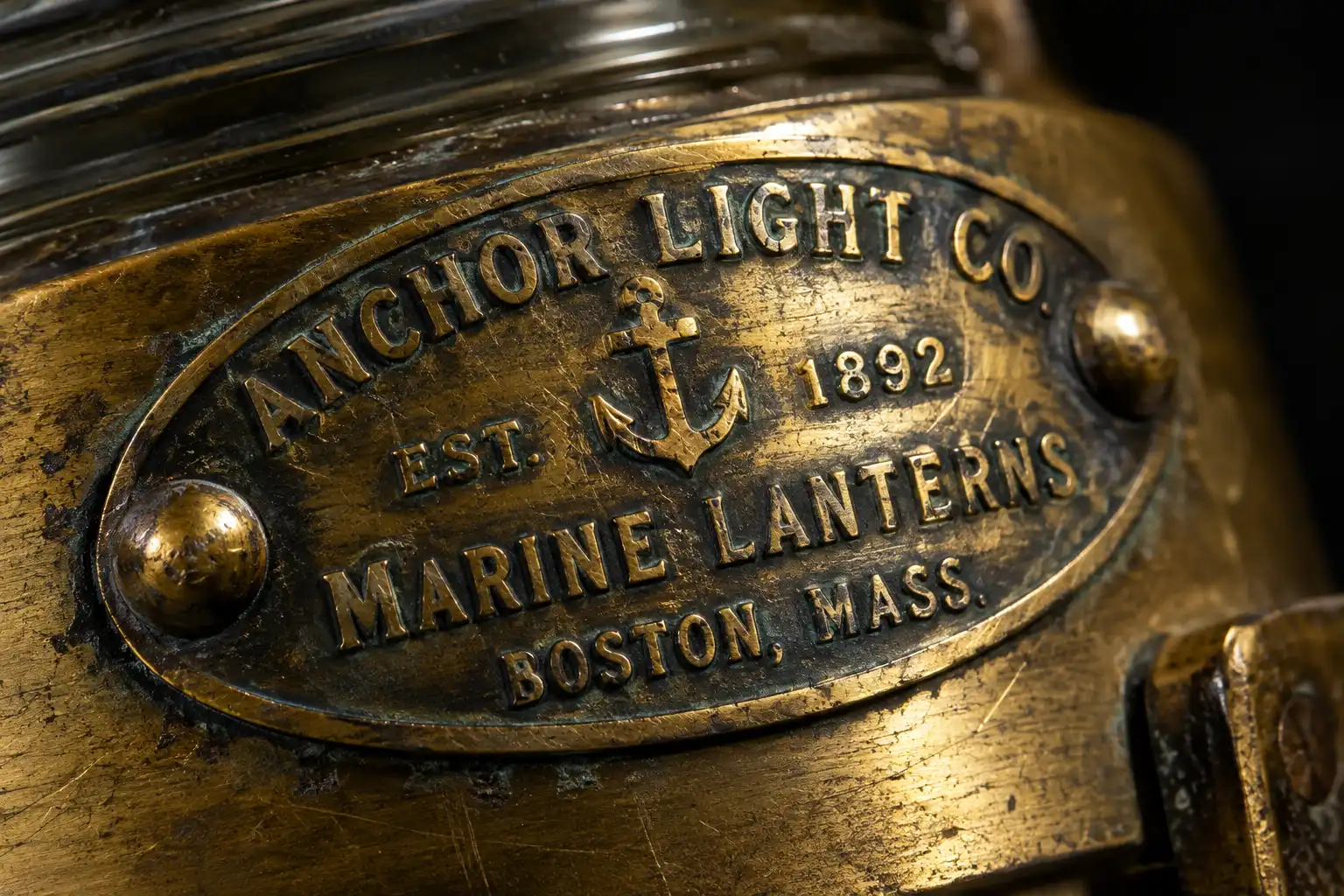
Maker marks. The PERKO trademark was instituted in 1922, so anything stamped with it came later. WISKA adopted that name in 1933. A name puts a floor under the date.
Country stamps. “Made in Occupied Japan” pins a piece between February 1947 and April 1952. That is one of the tightest windows in this trade.
Approval marks. The EU wheelmark became mandatory for equipment fitted to EU-flag ships from January 2001. A wheelmark tells you the fixture is modern, full stop.
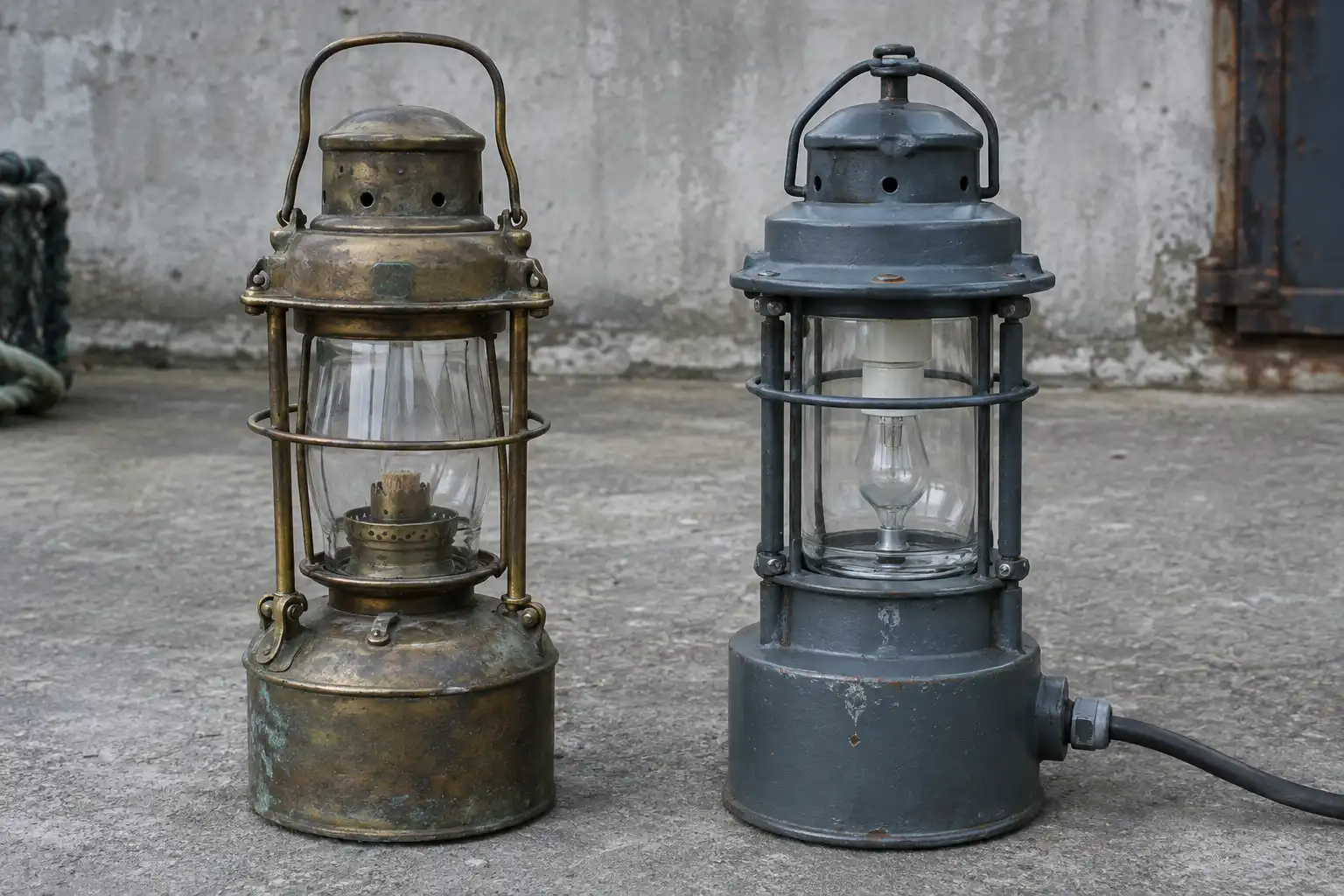
Fuel and wiring. An oil font, wick, and chimney point to pre-electric service or a backup unit. Factory lampholders and cable glands point to production after about 1930.
Workmanship. Hand-soldered seams, slotted screws, and slightly uneven castings read older. Crisp machine work and cross-head screws read newer.
Antique or Vintage? The Line Sits at 1926 Right Now
Vintage, in almost every case. Customs sets this line, not sellers. Under heading 9706 of the Harmonized Tariff Schedule, goods must be over 100 years old to enter the US as antiques. The test rolls forward every January. In 2026 the line sits at 1926.
Everything newer is vintage, whatever the listing says. The label affects paperwork and duty, not craftsmanship. Some of the best fixtures I handle are 50 years old.
What Does Not Prove Age
Patina proves nothing. Green and brown surfaces build in a few salt-air years, and chemicals produce the same look in an afternoon. Dents, rust, and thick paint say just as little.
Metal type is a quality signal, not a date stamp. Yards used brass, bronze, copper, and aluminum side by side for a century. Which metals last in salt air matters more for your porch than for dating. If you want to run the full check, my notes on spotting a genuine salvaged ship lantern go clue by clue.
One more warning. Heavy polishing erases shallow maker stamps forever, so read the metal before you touch it with anything. My method for bringing back tired brass safely keeps those marks intact.
Final Thought
Ask the seller for the vessel name or the yard the piece came from. Serious dealers keep that record. I keep mine, because a lantern with a known ship behind it beats a guess about 1890 every time.
Buy the age you can verify. Want to see what is on my floor right now? The lanterns pulled from local breaking yards come listed with what I know about each one. Enjoy the hunt.