What Is a Bulkhead Light? Everything I Know From Salvage
The first time I pulled a bulkhead light off a scrapped cargo ship in Chattogram, I thought it was just a heavy chunk of brass. Then I cleaned it up at my workshop. The thing glowed warm and golden under a single bulb. I sold it to a café owner in Dhaka that same week.
Since then, I’ve handled thousands of them. People ask me what they actually are almost every day. So here’s the honest answer.
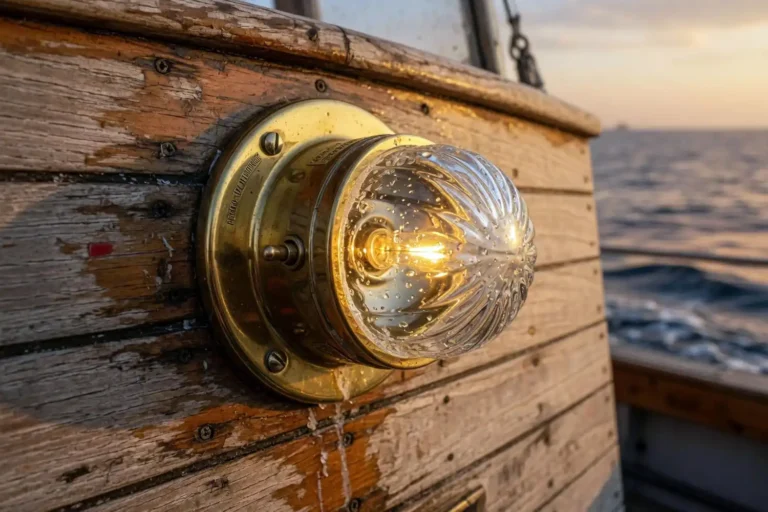
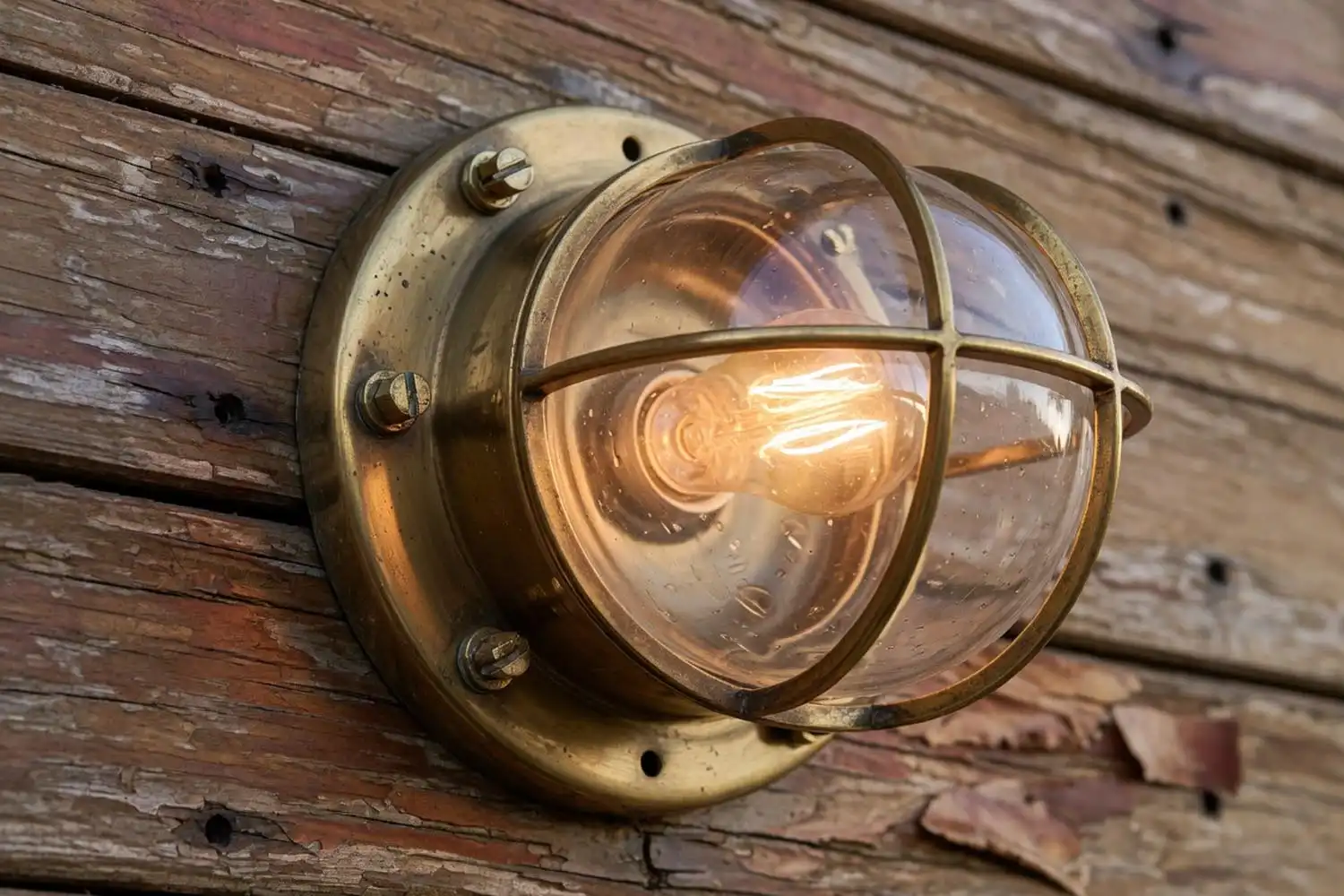
A bulkhead light is a small, sealed wall lamp originally built for ships. It mounts on a vertical wall (called a bulkhead in marine terms) and has a protective cage or guard around a thick glass globe. The whole fixture resists water, salt, and rough handling at sea.
Why They’re Called Bulkhead Lights
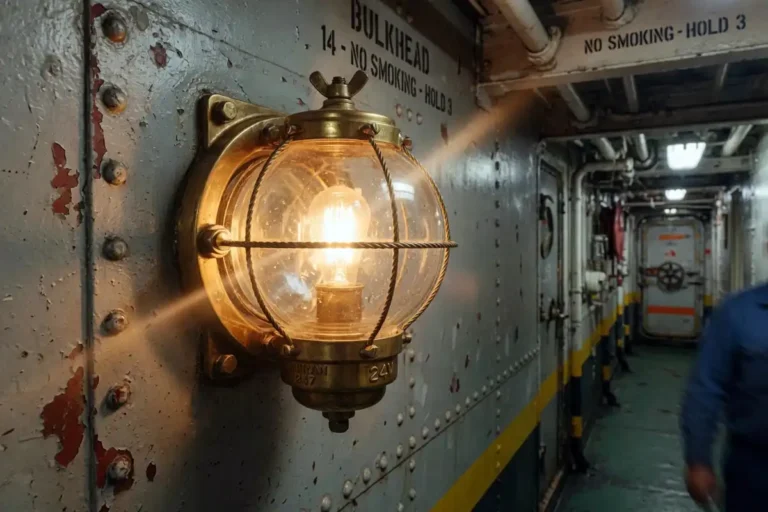
A bulkhead is the wall that divides sections of a ship. Crew members needed safe lighting along these walls, in corridors, stairways, and engine rooms. The fixture had to survive splashing water, vibration, and the occasional bump from a heavy boot.
Shipbuilders started calling these wall-mounted fixtures “bulkhead lights.” The name stuck for over a century.
How a Bulkhead Light Is Built
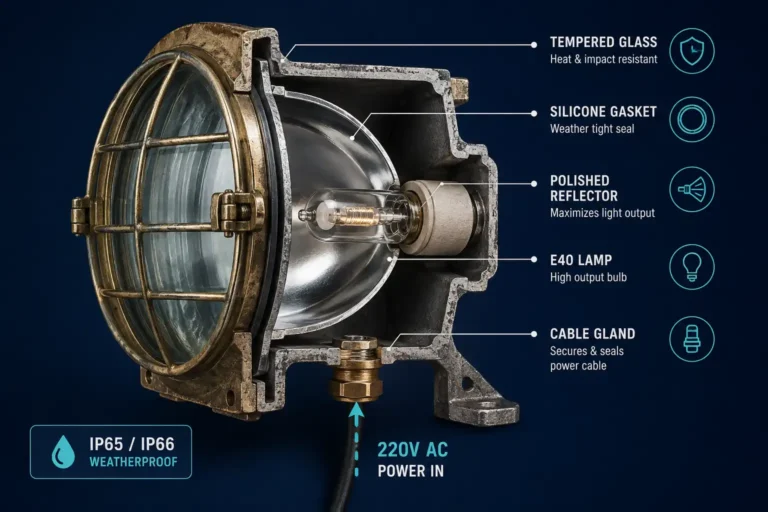
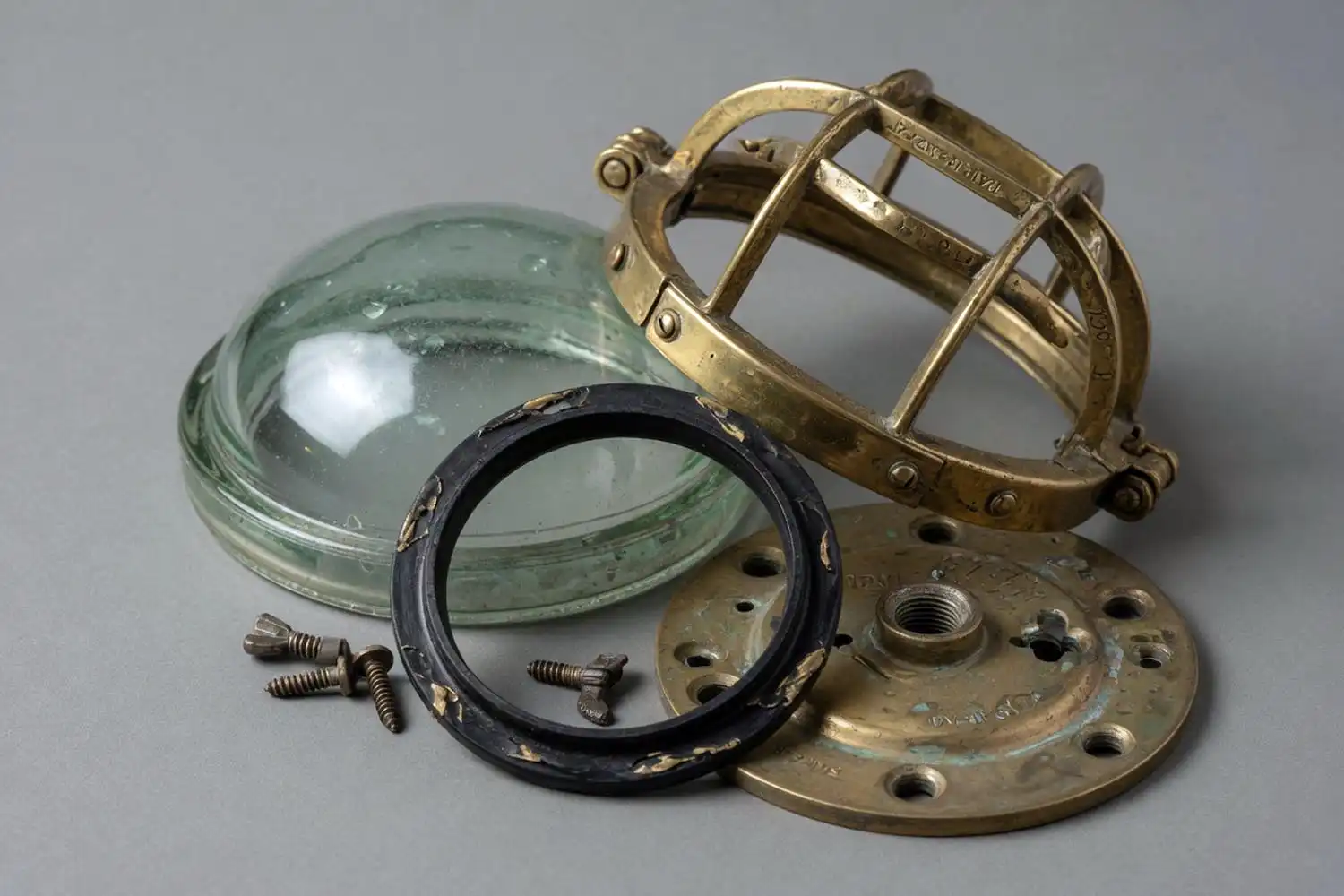
Every authentic bulkhead light has a few core parts. The backplate fixes to the wall. A thick glass globe protects the bulb. A metal cage or guard wraps around the glass to stop impact damage. A rubber gasket seals the whole thing against water.
The fitting is usually held together with bolts or threaded rings. Nothing fancy. Just simple engineering that lasts decades.
Where You’ll Find Them on a Ship
Bulkhead lights live in some pretty tough spots. Engine rooms get the most extreme heat. Passageways and stairwells need steady wall lighting. Outdoor decks get sea spray every day. Some sit near lifeboat stations or above watertight doors.
If you’ve walked a working ship, you’ve seen dozens of them. Most crews never give them a second thought. They just work.
Common Materials
Brass is the classic choice. It looks beautiful, ages well, and stands up to salt air. Bronze costs more but resists corrosion even better. Aluminum is lighter and cheaper, used on more modern vessels.
I cover the trade-offs in my piece on choosing between brass and aluminum nautical fixtures. Pick brass if you want warmth and patina. Pick aluminum if weight or budget matters more.
Why People Want Them at Home
Honest answer? They look incredible.
A real bulkhead light brings character no modern reproduction can match. The brass shows tiny dings from years at sea. The glass might have a slight imperfection from 1950s manufacturing. The cage carries paint marks from being repainted on deck six times.
My customers put them in kitchens, bathrooms, hallways, garden walls, and porches. They work indoors and out. One client in California fitted twelve along his beach house balcony. Another runs a seafood restaurant in Singapore with two dozen in the dining room.
If you’re styling a coastal home, my guide on creating a statement kitchen space with authentic ship lighting gives more ideas on placement.
Bulkhead Light vs Passageway Light
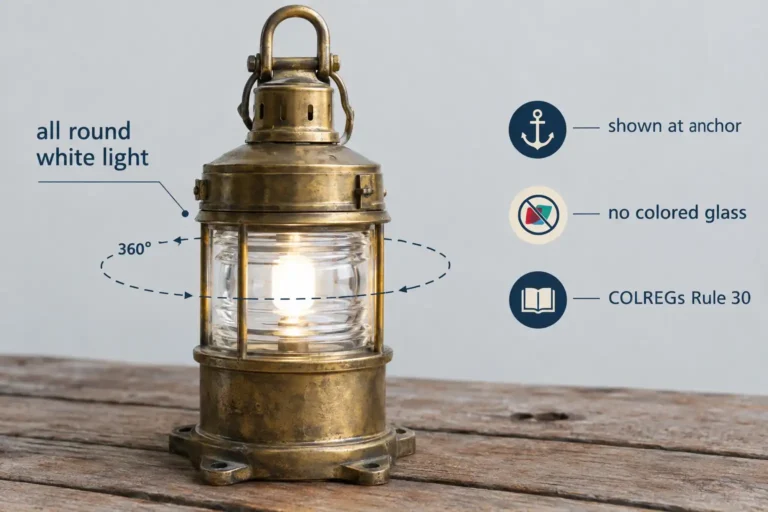
People mix these two up constantly. A passageway light usually has a deeper, more bulb shaped body and often hangs slightly off the wall. A bulkhead light sits flatter and rounder against the surface. The difference matters when you’re matching fixtures across a room.
I wrote a side by side breakdown in my comparison of passageway and bulkhead fittings. Worth a read if you’re shopping.
What to Check Before You Buy
A few quick things I tell every customer.
Look at the gasket. If it’s cracked or missing, water will get in. Check the glass for hairline cracks. Hold the cage; it should feel solid, not loose. Look inside the backplate for the original wiring channel. Older fixtures need rewiring before use, which any electrician can do in under an hour.
If you want technical specs, my breakdown of common bulkhead sizes and mounting patterns lists the standard backplate dimensions you’ll encounter.
Are They Safe Indoors?
Yes, once they’re rewired to modern standards. The original wiring was made for ship voltage and isn’t safe for home use. A qualified electrician fits new internal wiring, a proper bulb holder, and a grounded cable. After that, they pass any home inspection.
I always recommend asking a local electrician to check before mounting one in a wet area like a bathroom.
Final Thought
A bulkhead light isn’t just a lamp. It’s a small piece of working ship history that still does its job a hundred years later. If you pick the right one, treat it with a little care, and rewire it properly, it’ll outlast almost anything else in your home.
Good luck with your search.