What Are Nautical Lights? Types, Colors, and Uses
A customer emailed me last month with a simple question. He had bought an old brass light from me. Then his wife asked, “So what actually is this thing?” He froze. He liked the light. He just had no words for it. I get that question a lot. People fall for these lights before they know what they are. So let me clear it up, the way I explain it to friends who visit my yard in Bangladesh.
Nautical lights are lights built for ships and boats. Some are safety lights, like the red and green navigation lights that show a vessel’s direction at night. Others lit the decks, cabins, and passageways, and many now get a second life as fixtures in homes.
What Nautical Lights Really Mean
The term covers two things. First, the working lights found on any ship. Second, the salvaged versions people now collect and hang at home.
On a ship, every light has a job. Some warn other vessels. Some help the crew move around in the dark. None sit there for looks. They are built tough, sealed against water, and made to last decades at sea.
The Main Types of Ship Lights
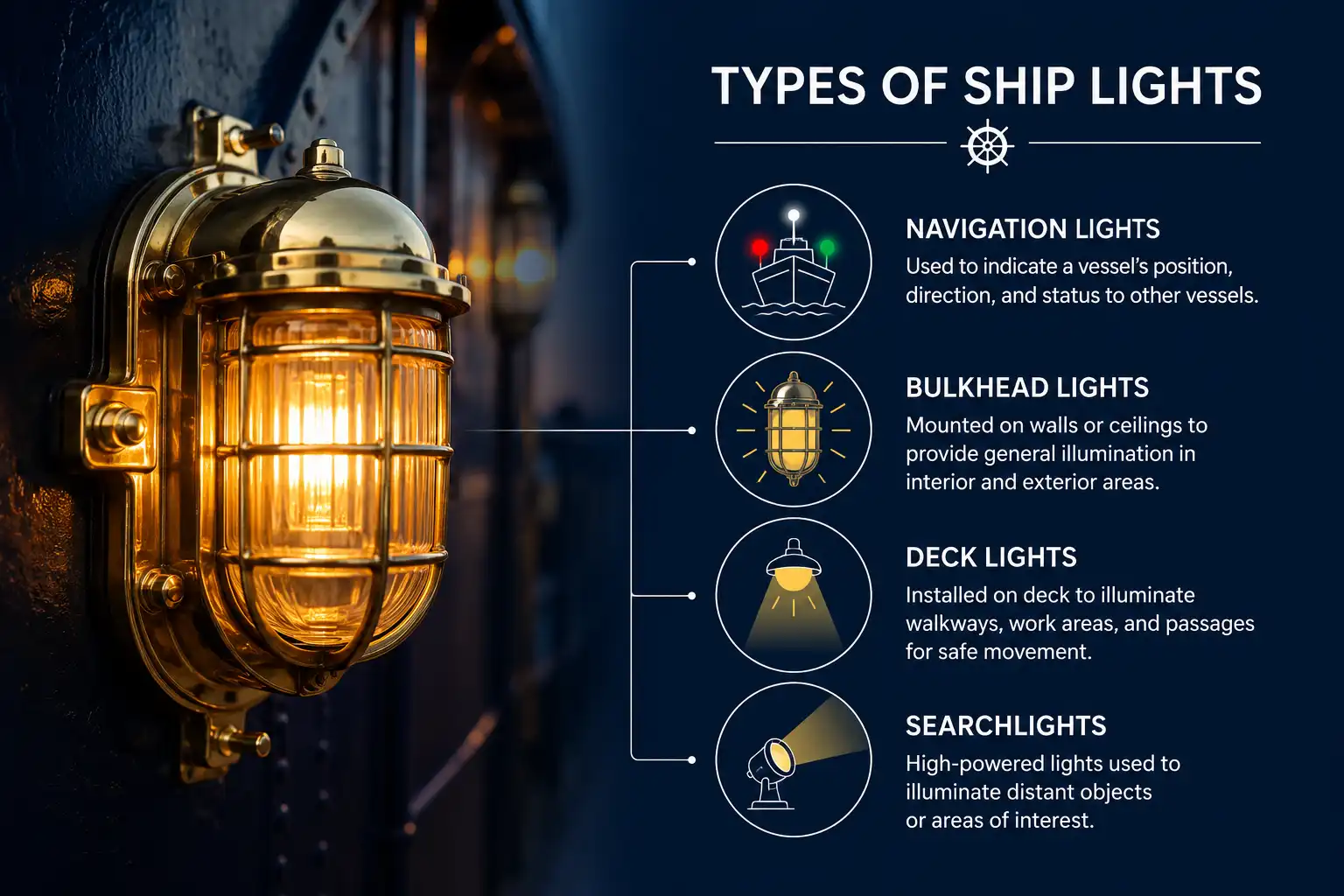
Ships carry more kinds of lights than most people expect. Here are the ones you will run into most.
Navigation lights
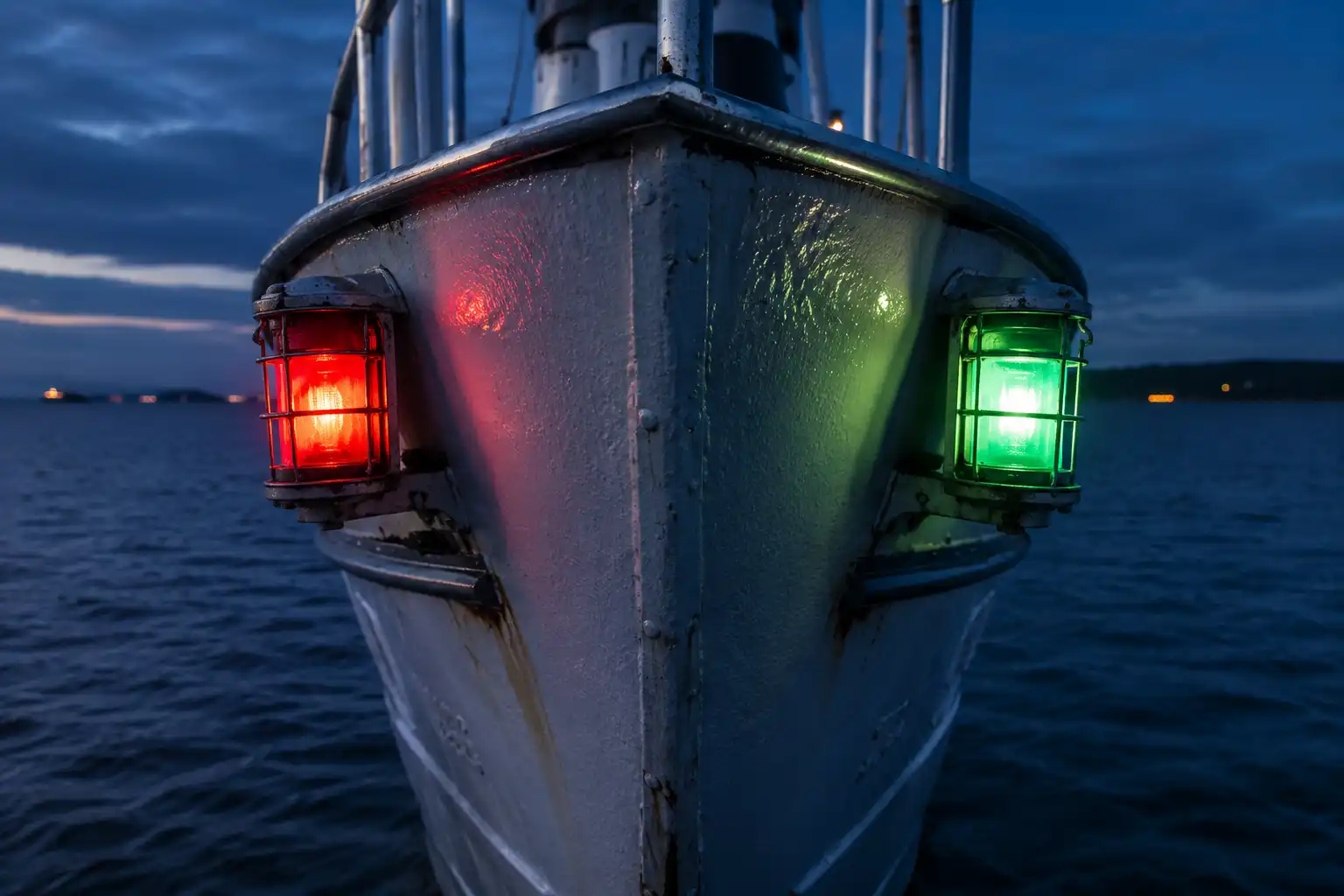
These are the safety lights. A ship shows a red light on its port (left) side and a green light on its starboard (right) side. A white stern light shines from the back. A white masthead light points forward. Together, they tell other crews where a vessel is heading in the dark.
Bulkhead lights
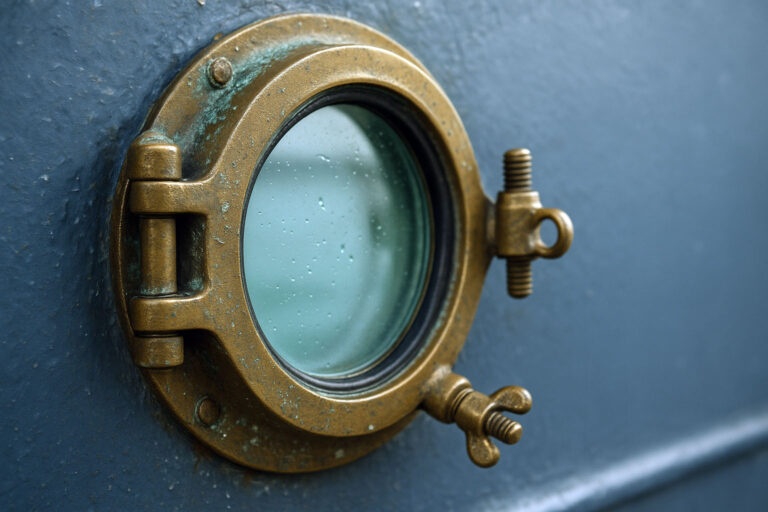
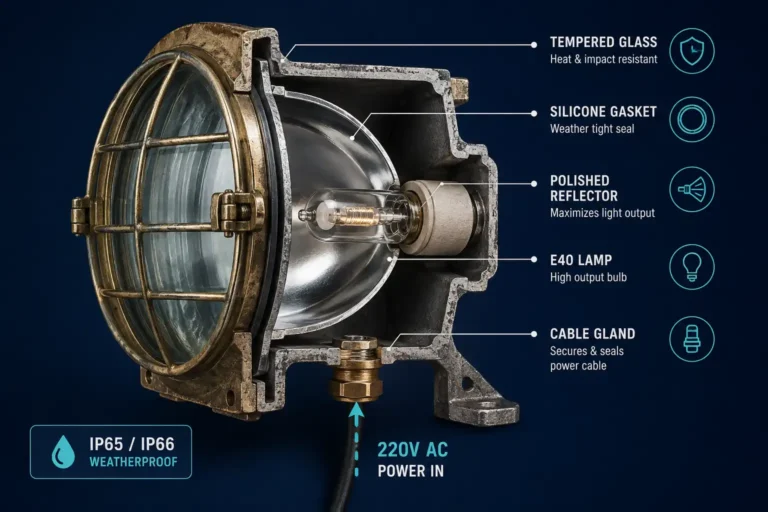
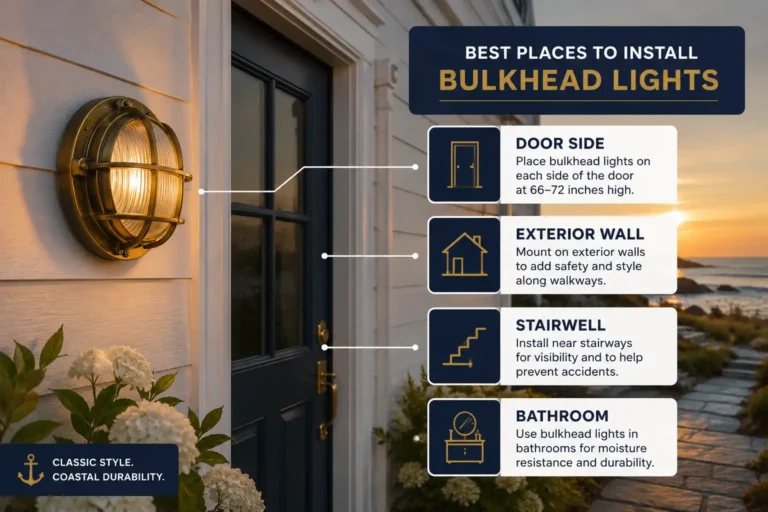
Bulkhead lights bolt flat against a wall. They are round and small, with a metal cage that guards the glass. You find them on engine rooms and outer walls, anywhere a knock could break a bulb. If you want more, here is a closer look at the humble bulkhead light.
Deck and passageway lights
Deck lights faced outward and flooded the working decks with light. Passageway lights lit the narrow corridors inside a ship. Both took a beating from salt and weather, so builders made them heavy. You can still see the rugged deck lights that lit cargo areas at night.
Searchlights
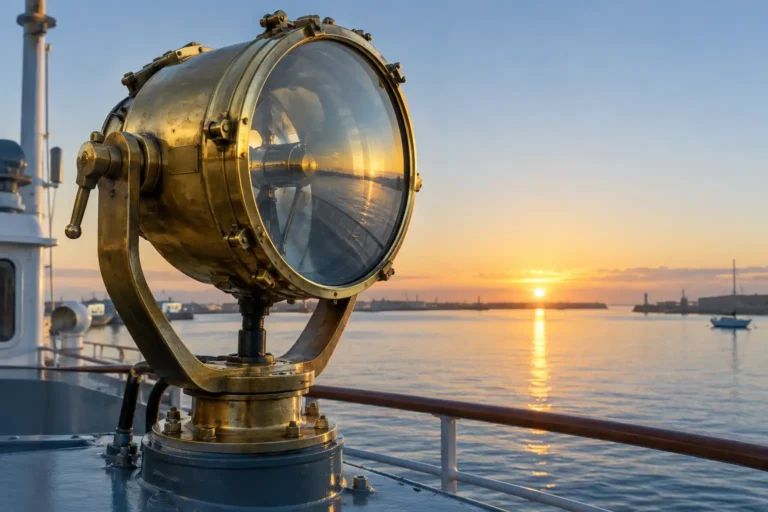
Searchlights are the big ones. Crews used them to scan the water, spot other boats, and signal across long gaps. They throw a strong, focused beam. The heavy searchlights crews swept across the sea still turn heads today.
You will also see oil lanterns, cargo lights, and hanging cabin lights on many vessels.
How Do Navigation Lights Work?
Navigation lights work by color and position. Red marks the port side. Green marks the starboard side. White covers the stern and the masthead.
These colors are not random. They follow a global rulebook called COLREGs, short for the International Regulations for Preventing Collisions at Sea. Every commercial ship follows them. For the details, see the navigation light rules cargo ships must follow.
What Are Nautical Lights Made Of?
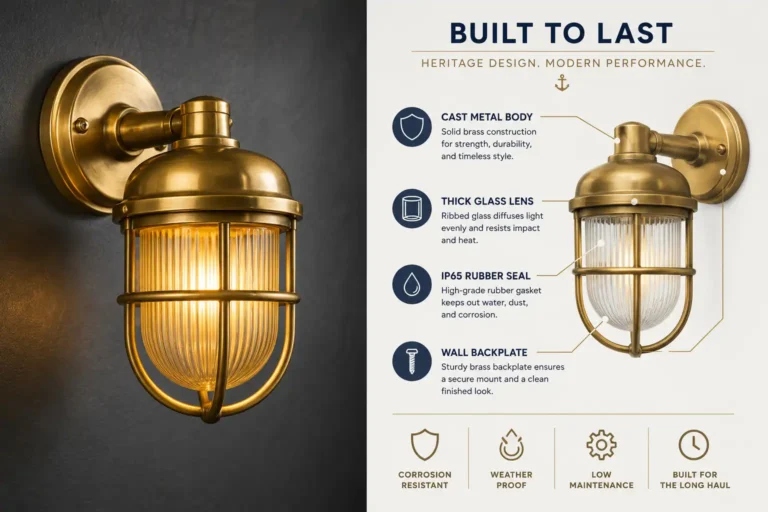
Most nautical lights are made of brass, bronze, copper, or aluminum. Brass and bronze fight off rust, so they ruled ships for years. Aluminum came later because it is light and cheap.
The glass matters too. Many lights use thick prismatic lenses that spread the beam wide. If you are choosing metals for a coastal home, here is which materials hold up best near salt air.
Why People Love Ship Lights at Home
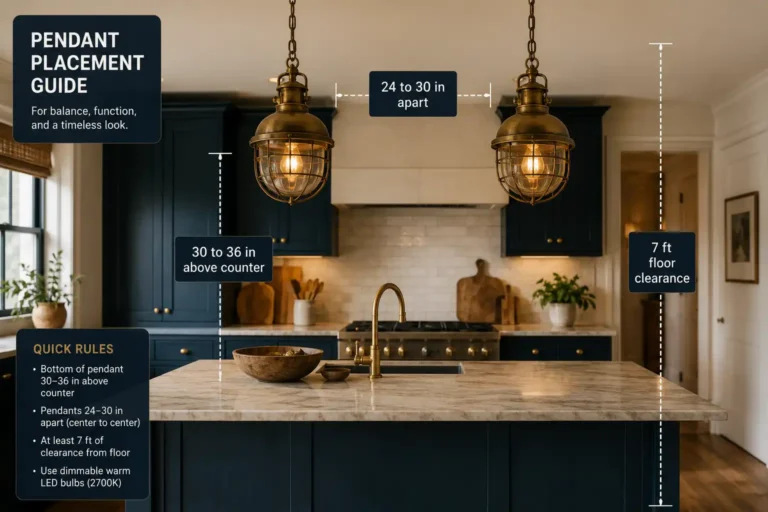
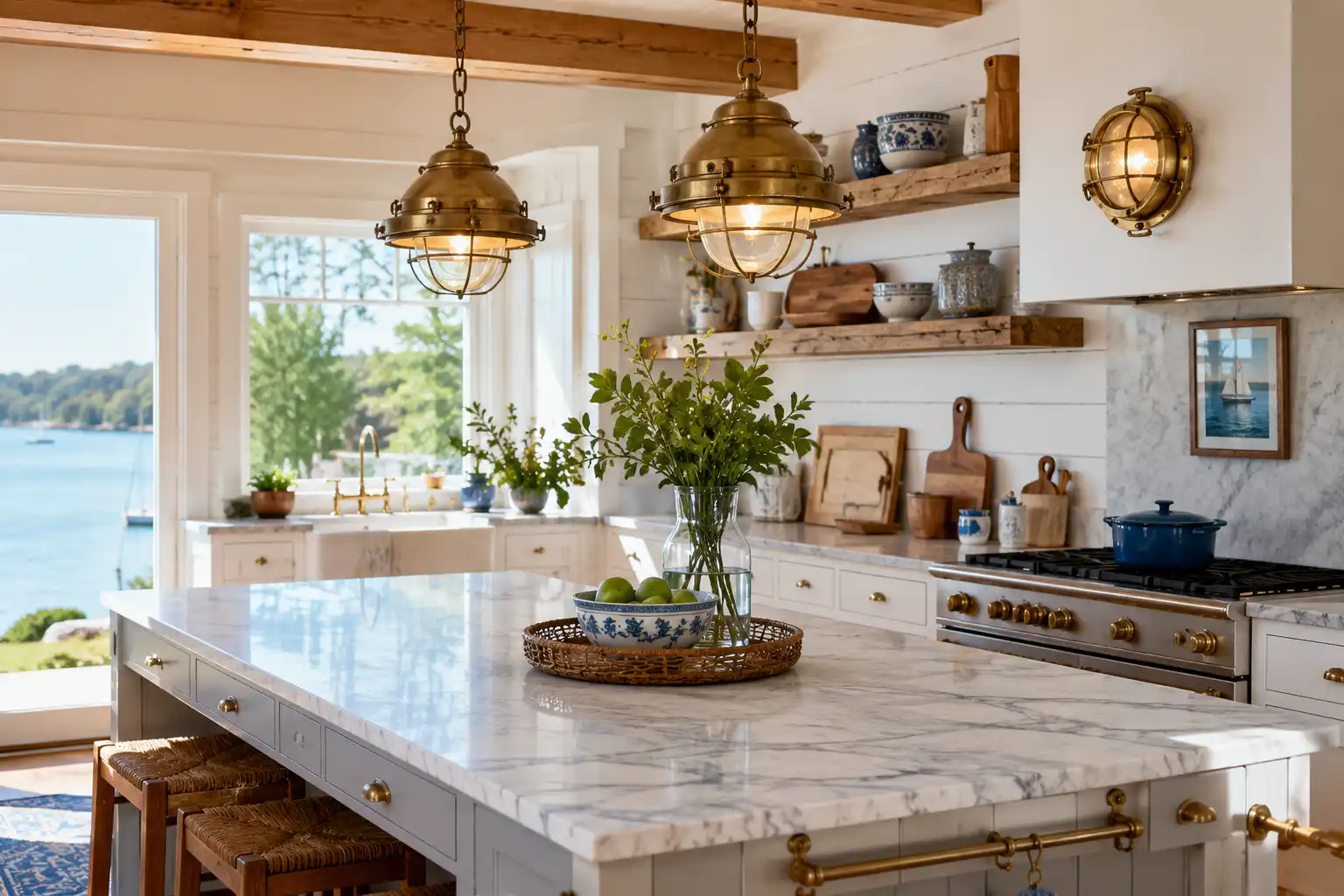
People love these lights because they are real. A salvaged ship light carries history you can feel. It survived years at sea. Now it hangs over a kitchen island or a front porch.
They also last. A fixture built for a cargo ship laughs at your hallway. And they wear a look no factory copy can fake. If you want the real thing, browse the authentic ship lighting we have pulled from retired vessels.
Final Thoughts
So that is the whole picture. Nautical lights began as tools on ships, split into safety lights and work lights, and many now brighten homes with real history behind them.
If one catches your eye, trust that pull. You are not buying a plain lamp. You are buying a piece of a ship’s life. Enjoy the hunt.
— Mokter