How Do Bulkhead Lights Work? A Look Inside the Design
The first bulkhead light I ever pulled off a ship came from a rusting cargo vessel here in Chattogram. I turned it over in my hands and wondered how something so plain kept shining after decades at sea. These fixtures are simple. But the way they lock out water, salt, and rough handling is smart engineering hiding behind a plain metal shell.
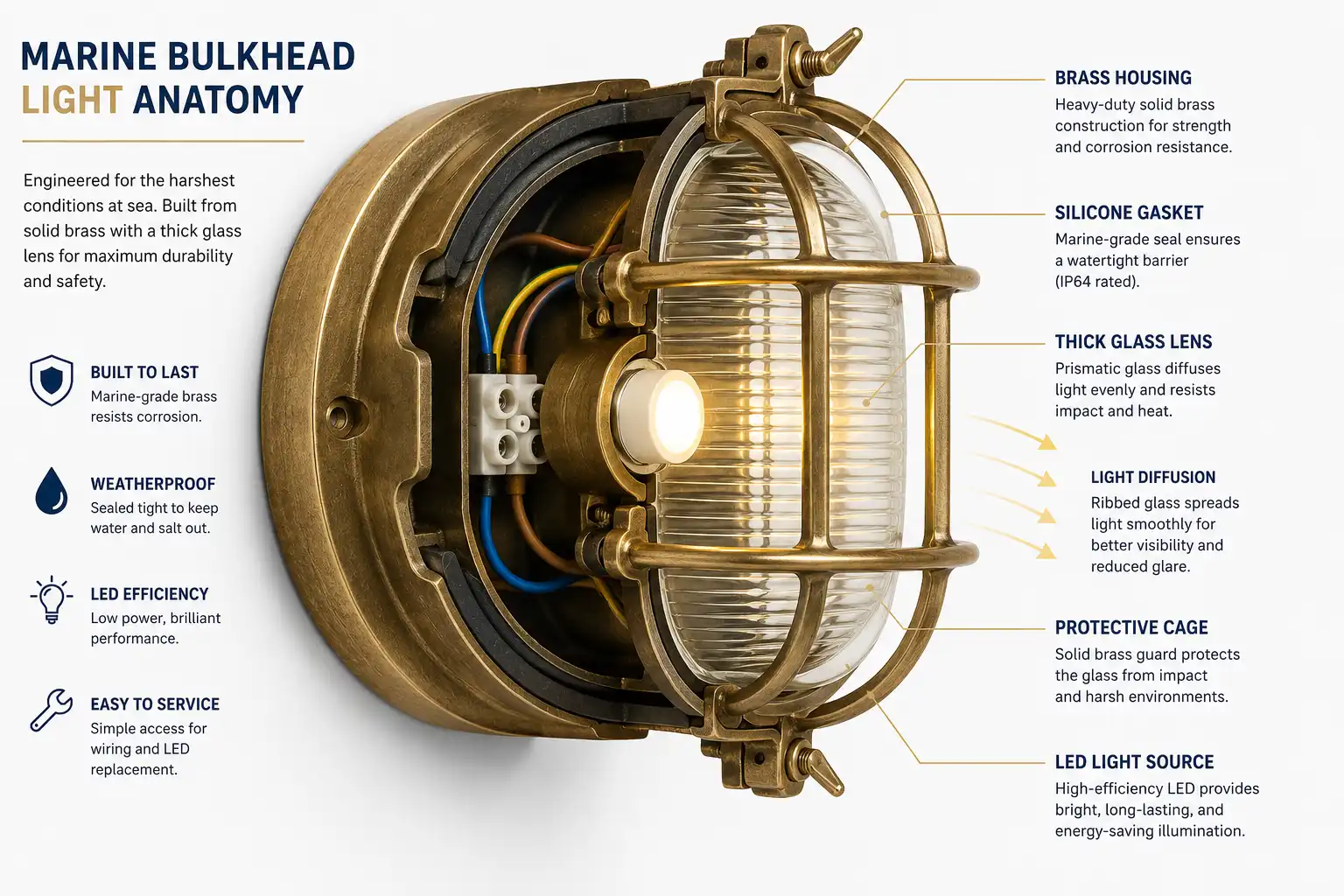
A bulkhead light works by sealing a bulb or LED inside a tough housing that blocks water, dust, and impact. A rubber gasket presses against the lens to form a watertight seal. A metal cage guards the glass, and sealed wiring feeds power to the light inside.
Also know: What Is a Bulkhead Light Used For? Ship and Home Uses
What a Bulkhead Light Actually Is
On a ship, a bulkhead is a wall or partition that divides the hull. The light bolted to it borrowed the name. If you want the full backstory, I wrote a separate piece on what a bulkhead light actually is and where it came from.
The design was built for one job. Light a tight space while surviving salt spray, vibration, and slamming steel doors. That single purpose shapes every part.
The Parts That Make It Work
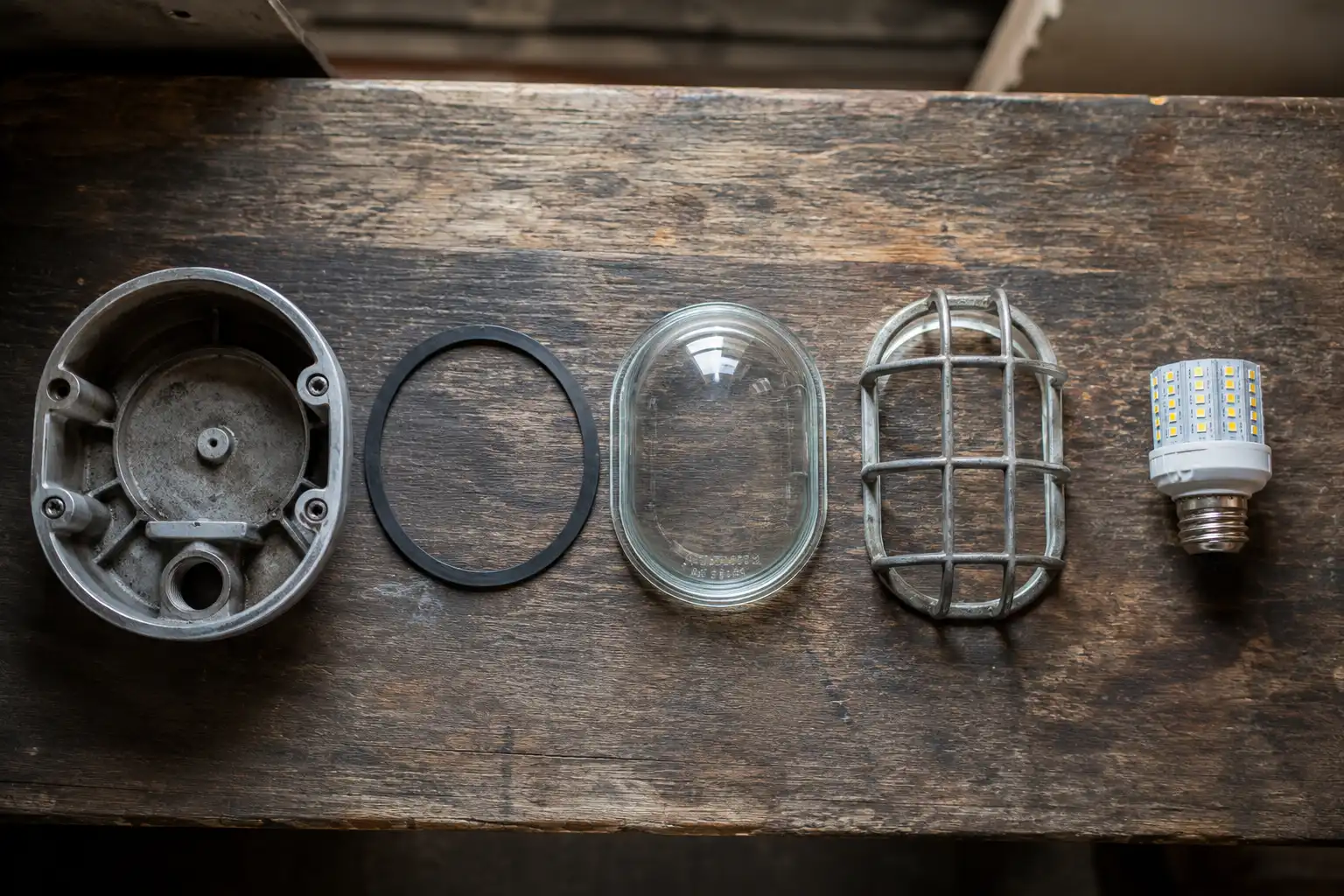
Take one apart and you find the same core pieces, whether it is a 1960s ship fitting or a brand-new LED unit. Once you see the pieces, how bulkhead lights work stops feeling like a mystery.
The Housing and Backplate
The housing is the body. It holds everything and bolts flat to the wall. Older marine ones use cast brass or bronze. Modern units lean on die-cast aluminum or steel. The metal fights corrosion, so the choice matters near the coast. I compared which metal survives salt air best in another guide.
The Lens and the Gasket
This pair does the waterproofing. The lens is a thick glass or polycarbonate cover that lets the light out. Behind it sits a rubber gasket, usually silicone. When you tighten the cover, the gasket squeezes flat against the housing. That even pressure closes every gap. No gap means no water.
The Protective Cage
The cage is the metal grille over the glass. It is where these lights get their name and their look. On a ship, it stops a swinging tool or a heavy boot from cracking the lens. Not every model has one, but the classic style always does.
The Bulb or the Driver
Inside sits the light source. Old fixtures used an incandescent bulb on a bayonet or screw base. Almost every unit today runs an LED. An LED needs a small driver to steady the current. It draws less power, runs cooler, and lasts far longer.
How the Waterproof Seal Actually Holds
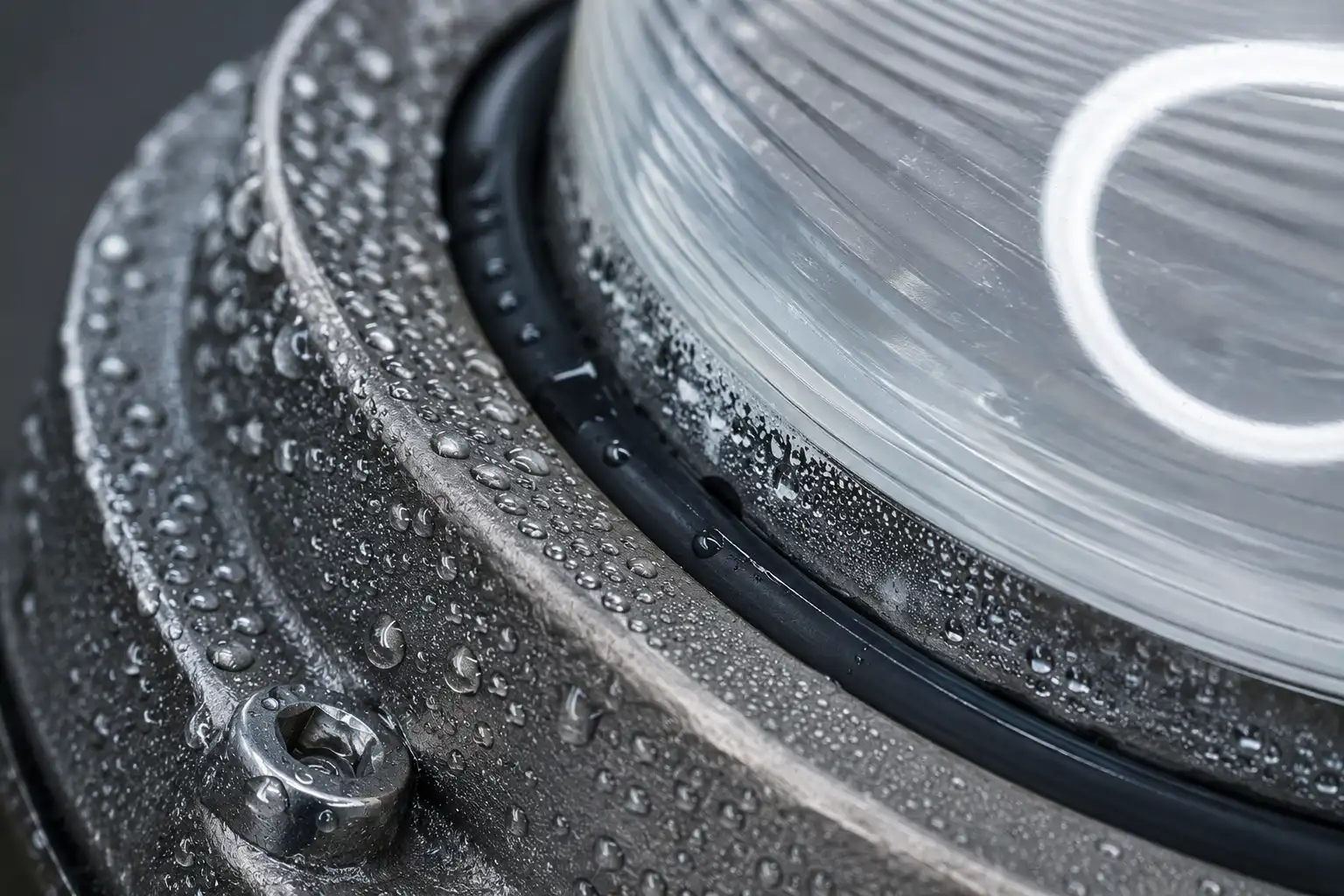
The seal is the whole trick. Makers rate it with an IP number. IP65 means fully dust-tight and safe against water jets from any angle. IP66 stands up to stronger, high-pressure spray. For a coastal wall or a boat deck, aim for IP66 or higher.
Three things keep that rating honest. A gasket in good shape, screws tightened evenly, and a sealed cable entry. Fail any one and water finds a way in. If an old fixture fogs up or drips inside, that seal has given out. I walk through fixing that in my notes on tracking down leaks in older lamps.
How the Wiring Connects
Power reaches the light through a sealed entry called a cable gland. The gland grips the cable and blocks moisture where it passes through. Inside, the wires meet at a small terminal.
Many marine fixtures ran on the ship’s low-voltage DC power, often 24 volts. Some used AC circuits instead. A unit rewired for a home runs on standard household current. Mounting is easy surface work, though getting the backplate size and hole pattern right keeps the fit clean and secure. If you buy a salvaged piece, check the wiring before you power it up.
Original Marine Fittings vs Modern Units
Both work the same way. The differences are age and material. A genuine salvaged fitting carries heavy cast brass, thick glass, and real sea history. A modern unit gives you a fresh gasket, LED efficiency, and quick install. I keep a rotating stock of salvaged bulkhead fixtures for buyers who want the real thing, and there is more variety than most people expect. I covered the main styles you can choose from in a separate post.
Final Thought
A bulkhead light is proof that simple can be tough. A sealed housing, a squeezed gasket, and a guarded lens are all it takes to beat the sea. That is why the design has barely changed in a hundred years. If you are eyeing one for your home or your boat, check the gasket and the IP rating first. Good luck with it.