What Are Bulkhead Lights: History, Materials, and Uses
The first bulkhead light I pulled off a scrapped cargo ship weighed more than my toolbox. Cast brass, thick glass, a heavy cage bolted across the front. It had spent thirty-odd years fixed to a passageway wall at sea. I cleaned it up that weekend and I’ve been hooked ever since.
Bulkhead lights are rugged, enclosed wall or ceiling fixtures first built for ships. They take their name from the bulkhead, the partition wall that divides a vessel into sealed compartments. A thick glass lens and a protective metal cage make them tough enough for harsh conditions at sea and, these days, on land.
Where the Name Comes From
The name comes straight off the ship. A bulkhead is the upright wall that splits one section of a vessel from another. Crews bolted these lights flat against those walls.
Sitting low and tight, the fixture stayed out of the way in cramped spaces. That low profile still matters. It’s why these lights fit so neatly in narrow hallways and small bathrooms today.
Read more: Why Are Nautical Lights Red and Green? A Simple Guide
What Makes a Bulkhead Light Different
A few features separate one from an ordinary wall light.
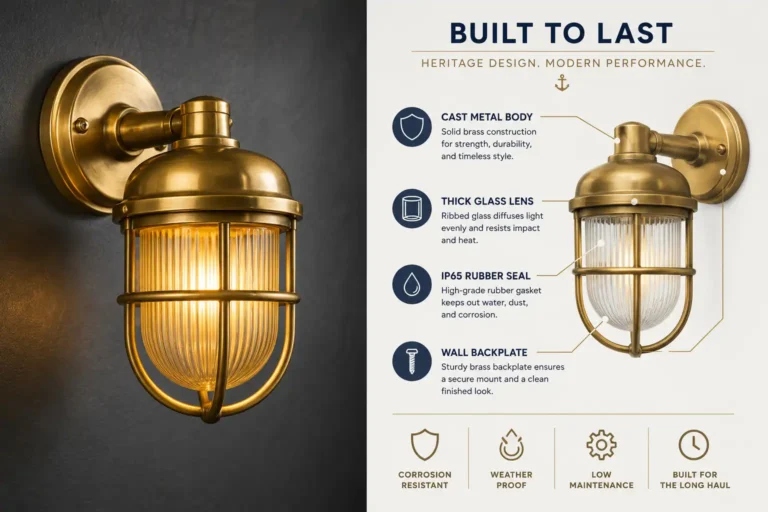
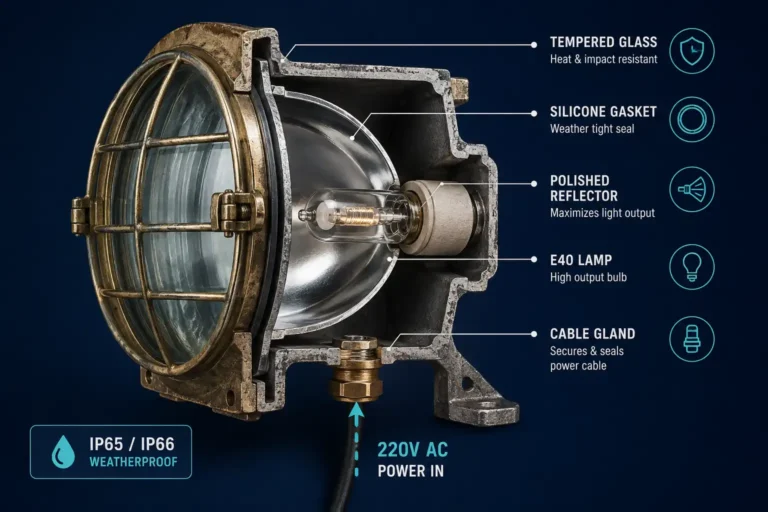
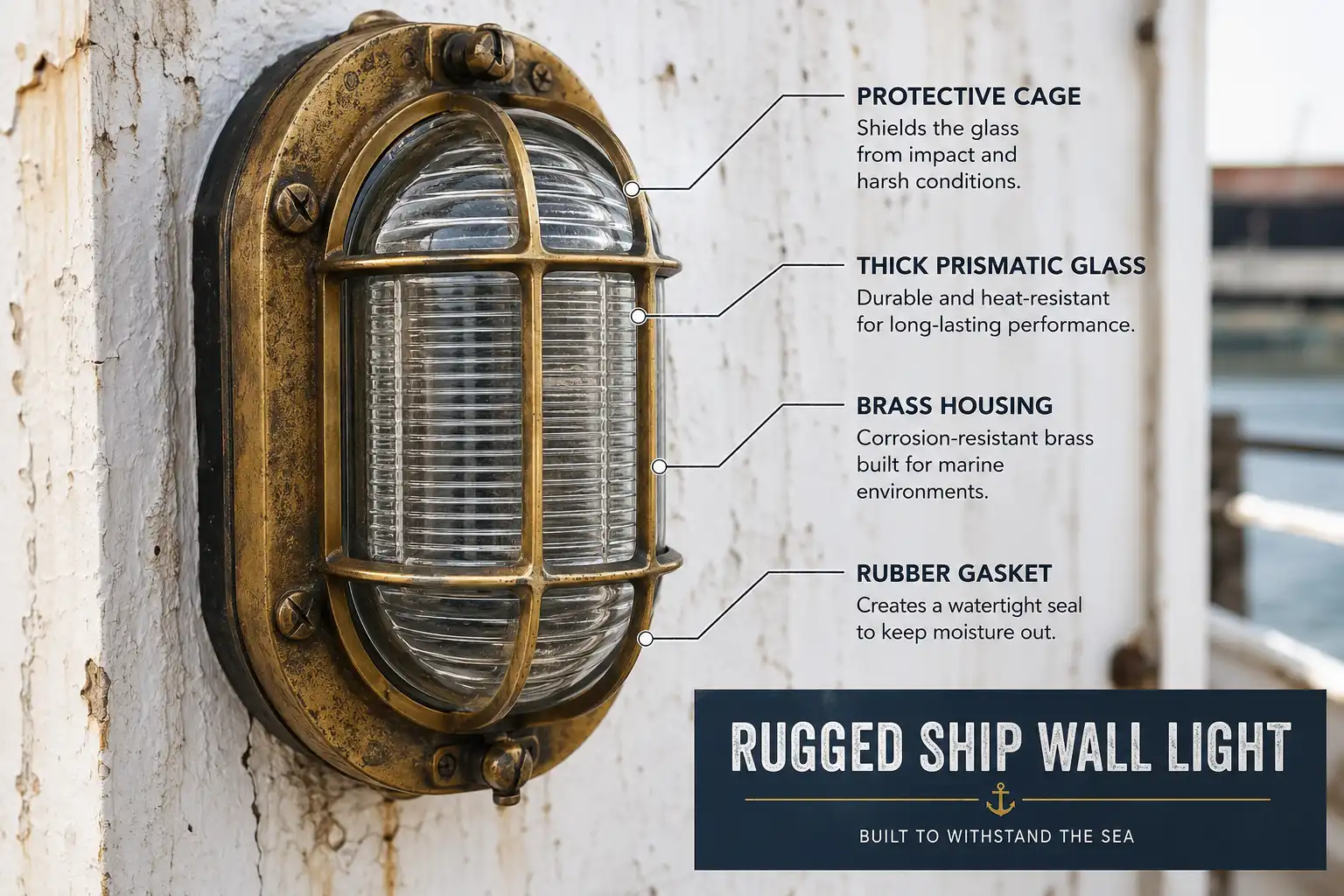
The housing is heavy metal, built to shrug off salt, damp, and knocks. The glass is thick, often prismatic or frosted. A metal cage guards that glass. A rubber gasket seals water out.
The cage is the signature look. On a ship it kept the glass from shattering in rough seas or from a careless boot. Round, oval, and rectangular versions all turn up, and I walk through the common shapes and styles in a separate guide.
What Bulkhead Lights Are Made Of
Most use one of a handful of metals.
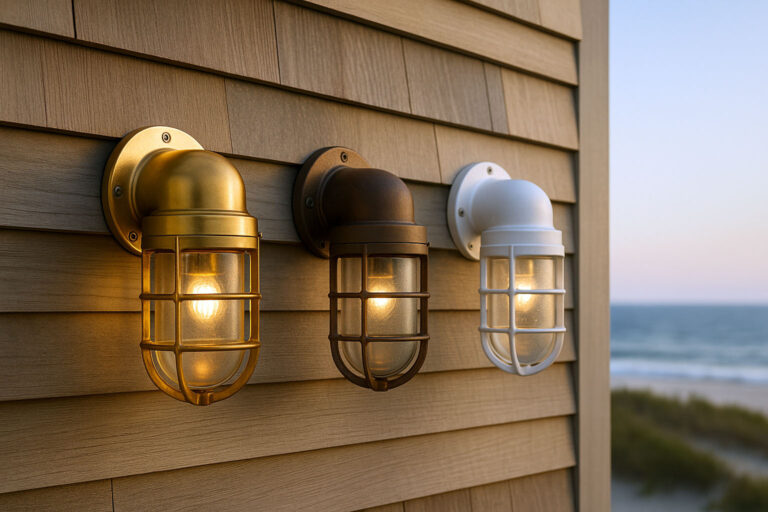
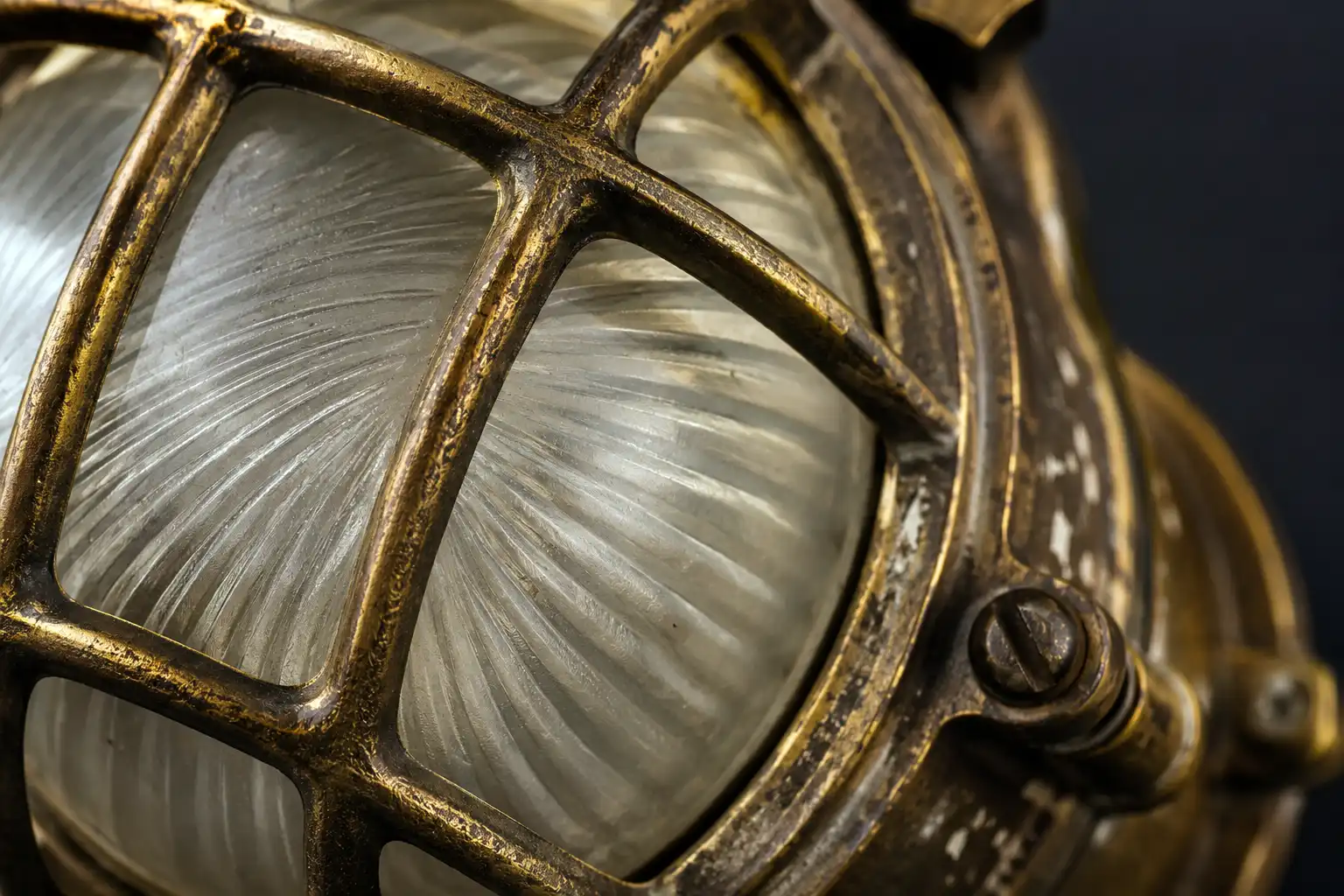
Brass is the classic. It resists corrosion and ages into a warm patina. Some owners love that aged look; others prefer to keep the brass polished and bright. Bronze is similar and very tough. Aluminum is lighter and cheaper. Galvanized steel and cast iron show up too, mostly on heavy deck fixtures.
The metal drives the price, the weight, and how it wears. I lay out how brass holds up against aluminum in more detail if you want the full picture.
Where They Were Used on Ships
These lights were everywhere on a working vessel.
You found them lining passageways, bolted inside engine rooms, fixed to exterior decks, and lighting stairwells and cabins. Anywhere the crew needed dependable light that could take a beating.
They sit close to passageway fixtures, though the two aren’t identical. I cover how these differ from passageway lights if you’re trying to tell them apart.
How People Use Bulkhead Lights Today
Most of my customers now are decorating a home, not fitting out a ship.
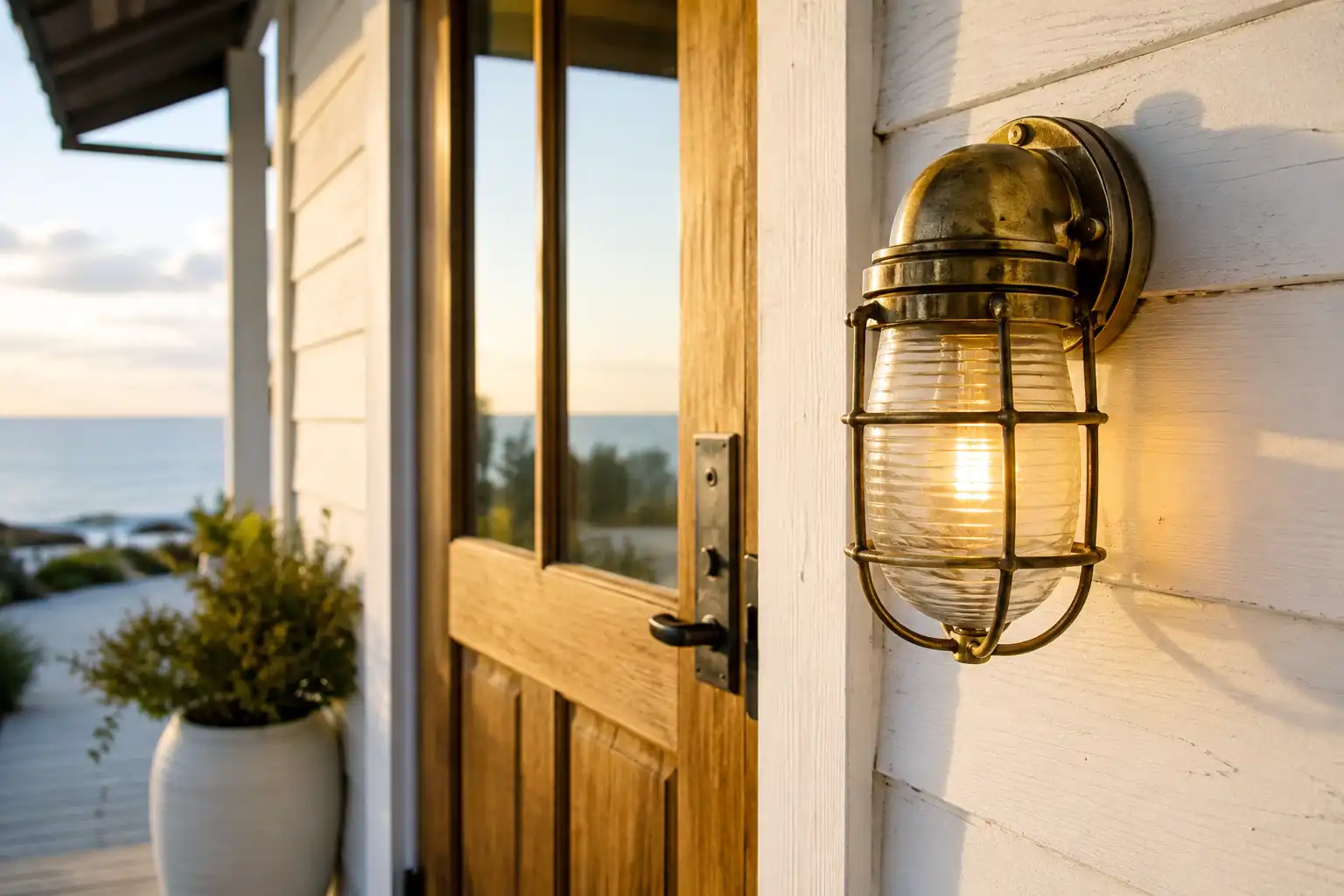
They mount them in kitchens, hallways, bathrooms, and by front doors. Outside, they light porches, patios, and garden walls. The look suits coastal homes. The bare metal and cage suit industrial and farmhouse rooms just as well.
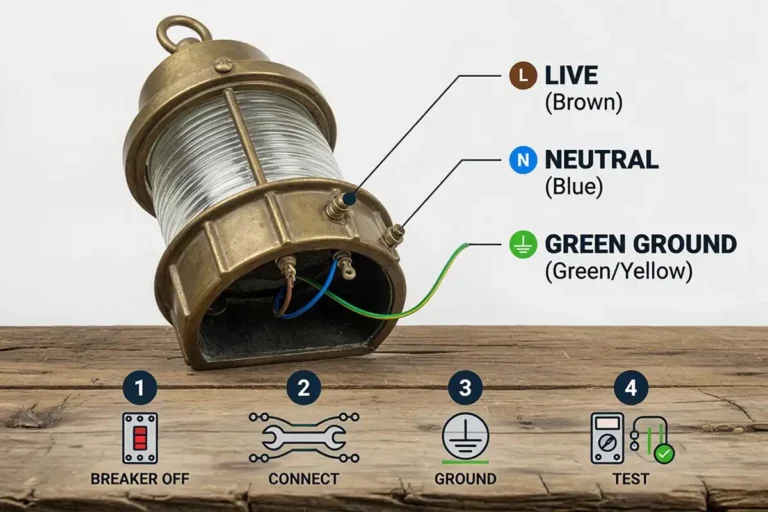
Old fixtures get rewired for safe modern use. Plenty of people drop in an LED bulb and leave the vintage housing untouched. If you want a sealed piece meant for outdoors, I stock weatherproof units built to sit outside in all weather.
Authentic Salvage vs. Reproduction
There are two kinds on the market, and it pays to know which you’re buying.
Authentic ones come off real ships, usually during scrapping. They carry genuine wear, maker’s marks, and history, and the brass comes back to life with the right cleaning routine. Reproductions are new but styled to look old. They cost less and arrive in matching sets.
Neither choice is wrong. I sell salvaged pieces because I love the story in every scratch. If you want spotless and uniform, a reproduction fits you better.
What to Check Before You Buy
A few quick checks save you grief.
Confirm the metal and the size. Ask whether it’s rated for damp or outdoor spots if that matters. Check that the wiring is safe or needs updating. Look at the backplate and mounting so it sits flush on your wall.
Final Thoughts
Bulkhead lights began as hard-working ship gear and ended up as some of the most loved fixtures in modern homes. That blend of function and character is exactly why I keep pulling them off old vessels. Grab one with a little history when you get the chance. You won’t regret it.
Enjoy the hunt. — Mokter