How to Install Deck Lights So They Stay Dry
A buyer in Oregon sent me a photo last spring. He had bolted one of our old Wiska deck lights above his garage door. The cable gland pointed straight up at the sky. Three weeks of rain later, the glass held two inches of water. Nothing was wrong with that fixture. I pulled it off a bulk carrier here in Chattogram, tested it, and packed it myself. The install was wrong, and that photo covers most of what goes wrong with these lights.
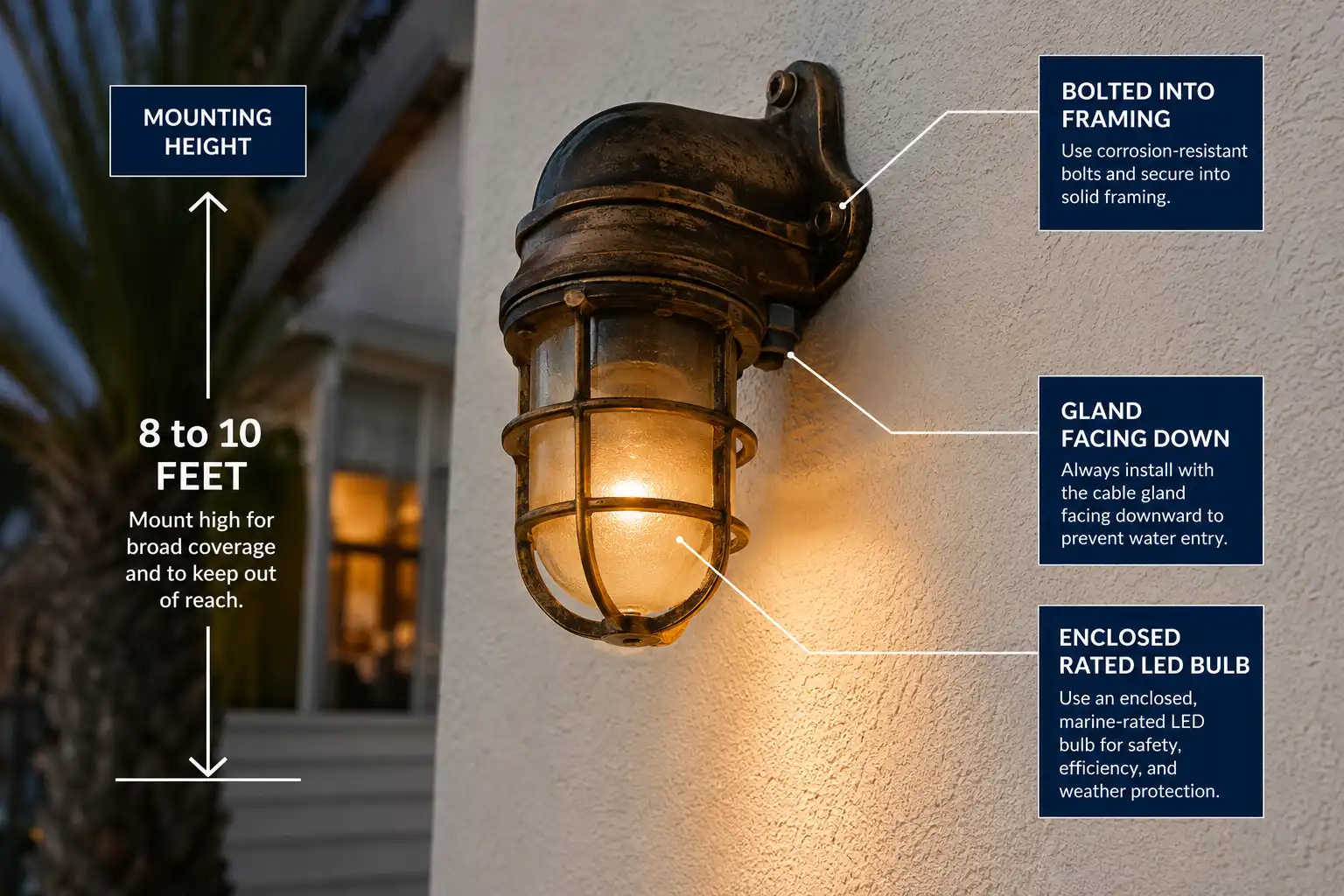
Mount the light high, aim the beam down, and keep the cable gland facing the ground. Bolt the bracket into solid framing or masonry, since a cast bronze deck light will rip out hollow wall anchors. Then fit a fresh gasket, wire into a wet location rated box, and use an LED bulb marked for enclosed fixtures.
What to Sort Out Before You Drill
Sort your parts first. My short list:
- Stainless lag bolts or machine screws, not plated mild steel
- A weatherproof junction box with a gasketed cover
- A cable gland sized to your cable outer diameter
- A new EPDM or silicone gasket for the glass
- An enclosed fixture rated LED bulb in the right base
- Drill, masonry or metal bits, and a level
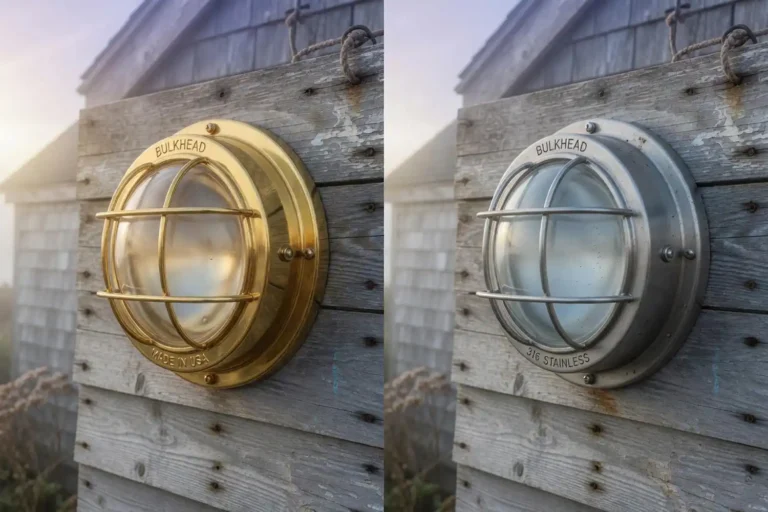
Most fixtures I ship are bronze or brass with a heavy wire guard, and brass, bronze, and aluminum age differently in salt air.
How to Install Deck Lights Step by Step
Set the height and the aim
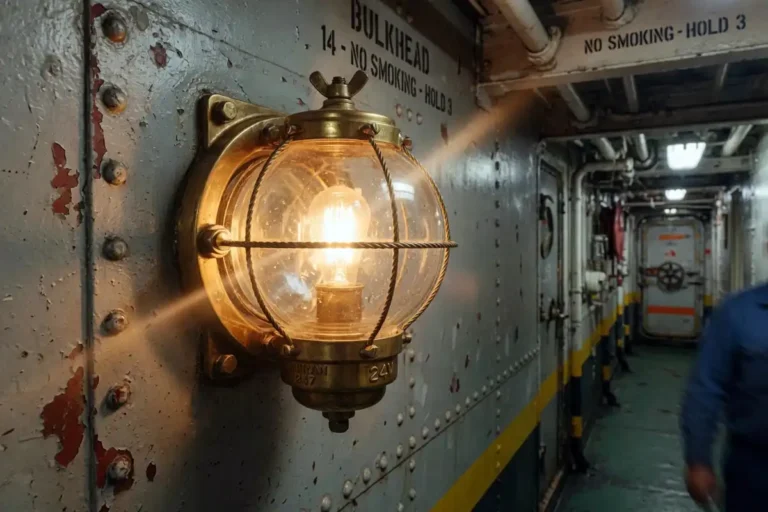
Deck lights were work lights. On board they sat high and threw light down across the cargo deck. That is what these fixtures did on a working ship, so copy it at home. Eight to ten feet puts the glass above eye level and keeps glare out of your face. Aim it at the surface you want lit, not out toward your neighbor.
Match the mount to the weight
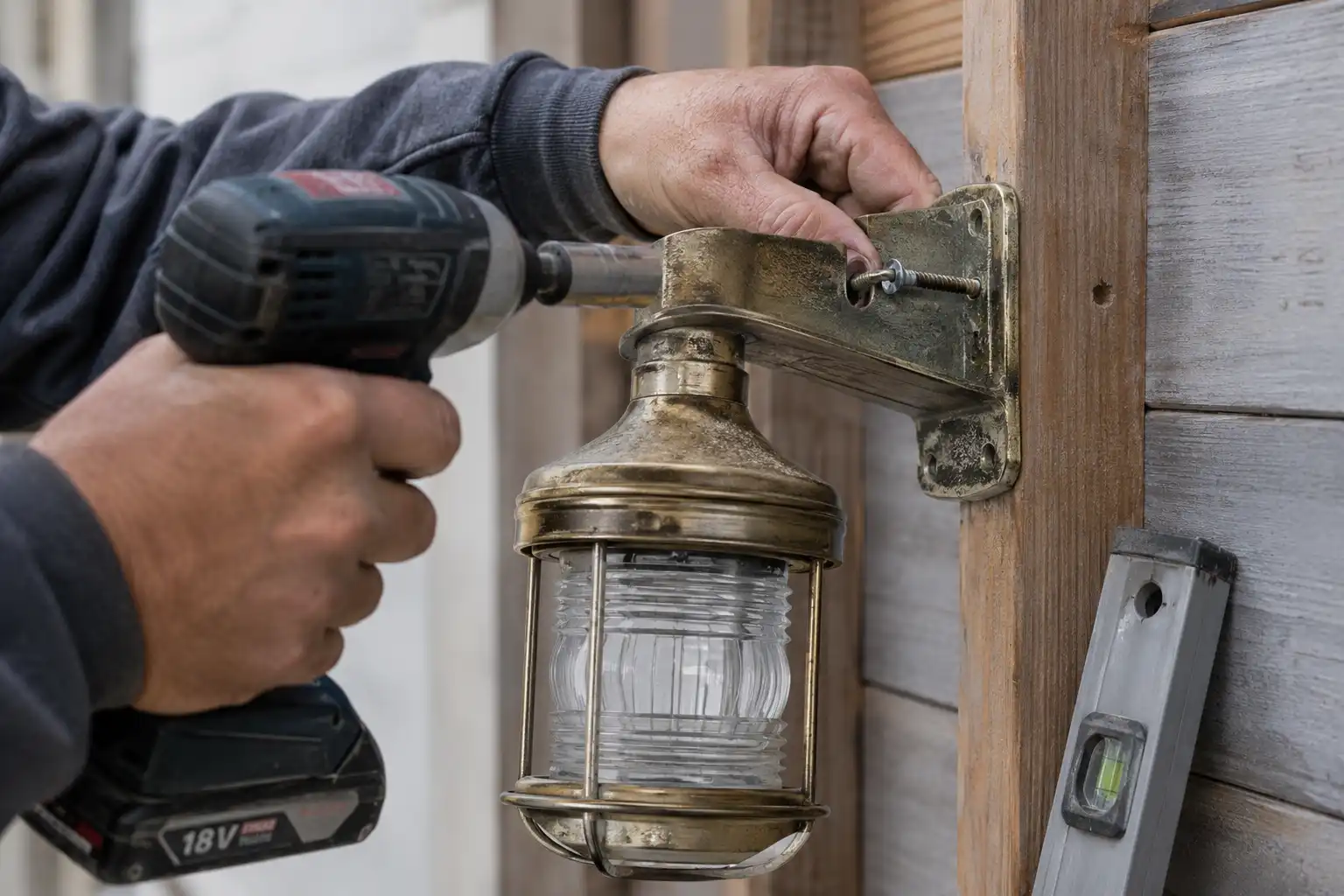
A cast bronze deck light with glass and guard runs 8 to 25 pounds. Searchlight style units go heavier. The NEC lets a purpose built outlet box carry a luminaire up to 50 pounds (23 kg). Past that, the fixture needs its own support. Treat the number as a ceiling, not a target. Find a stud, add blocking, or use proper masonry anchors. Two stainless lags into framing beat four screws in hollow board.
Wire into a weatherproof box
Kill the breaker and test the wires before you touch them. NEC 410.10(A) requires outdoor fixtures to be marked “Suitable for Wet Locations”. Salvaged ship lights carry no such mark. They also arrive with brittle rubber leads and no ground path. So I begin by rewiring an old ship fixture for house current, then bond the metal body to ground. Hardwired lighting outlets are normally exempt from the outdoor GFCI rule, but inspectors vary. Ask yours first.
Point the gland down and leave a drip loop
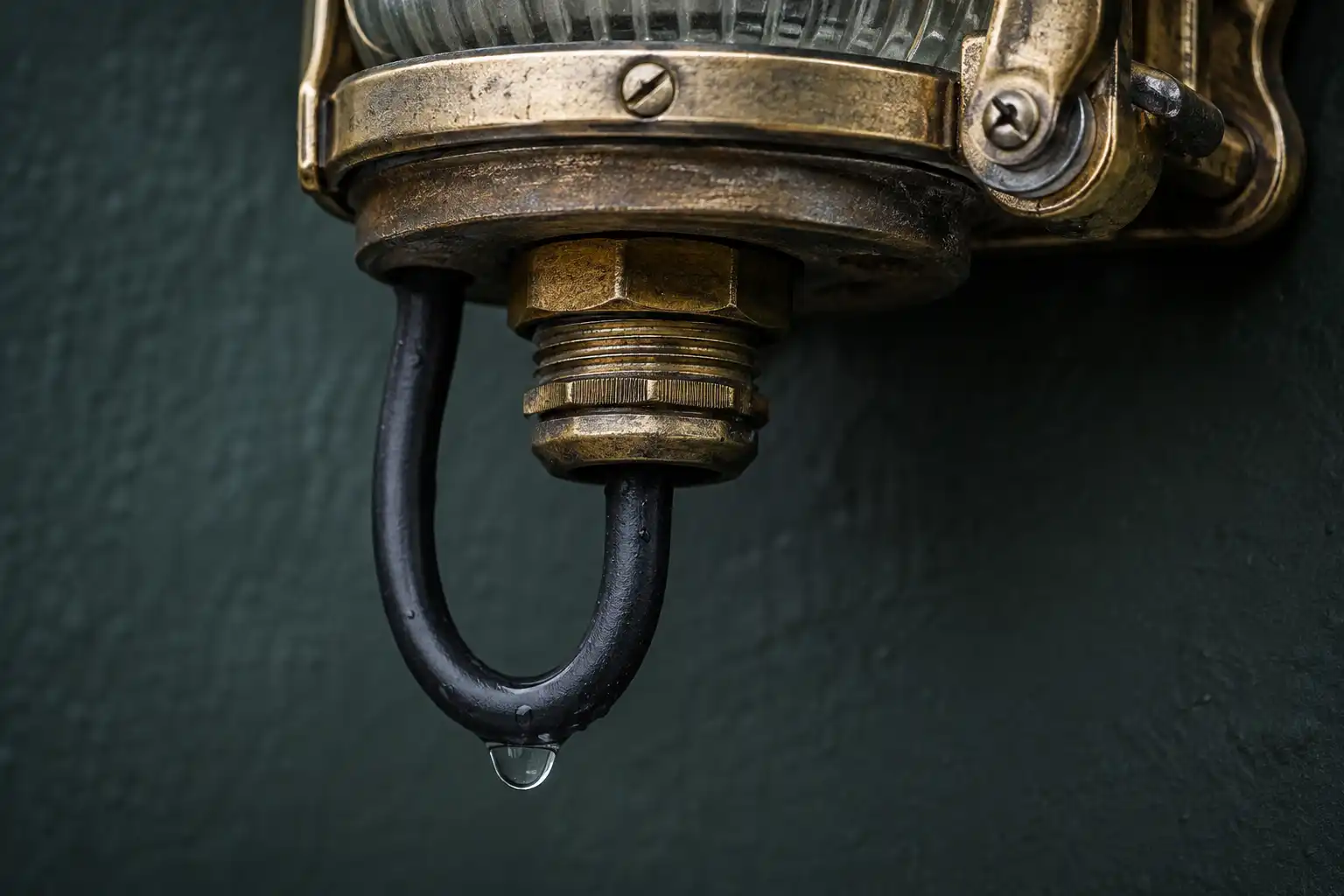
This is the step my Oregon buyer missed. Water follows the cable. A gland facing down, plus a small loop of cable below the entry, sends water to the ground instead of into the housing. Size the gland to the cable and plug any unused entry. Never drill a fresh hole in a sealed body, because that undoes how much water these old housings really keep out.
Seal the glass properly
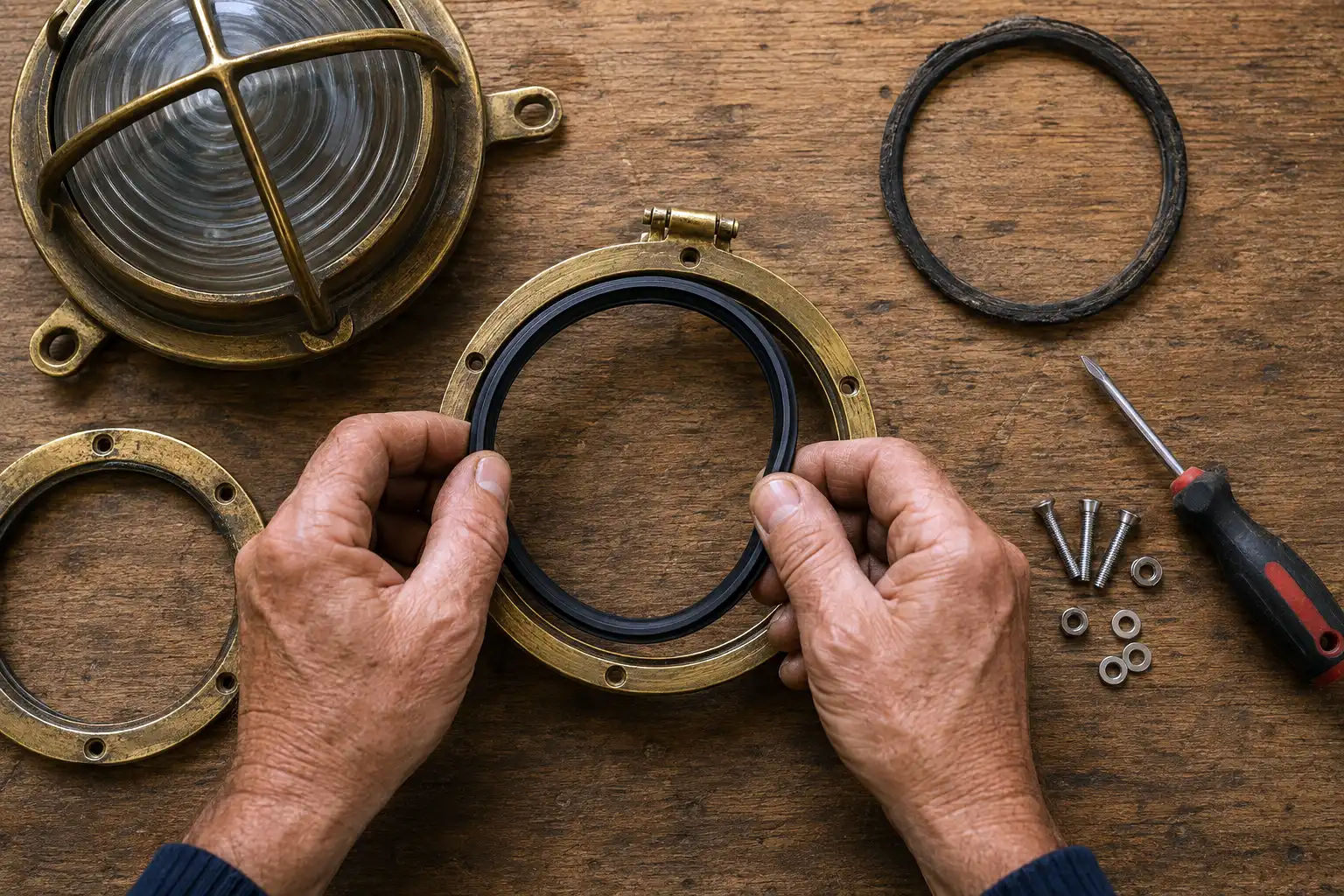
Original gaskets are 30 to 50 years old and usually hard as plastic. Fit new EPDM or silicone, seat it on a clean face, and tighten the bolts evenly in a cross pattern. Snug, not crushed. A flattened gasket leaks about as fast as a missing one. Cold rain on a warm housing also draws moisture through a tired seal. That is how most people end up chasing a leak in a vintage deck lamp.
Pick the bulb last
A deck light is a sealed glass box, so heat has nowhere to go. Use an LED rated for enclosed fixtures and stay under the wattage on the fixture label. Warm white near 2700K looks right behind old glass. A standard bulb cooks itself in a sealed housing within months.
Good Spots for One at Home
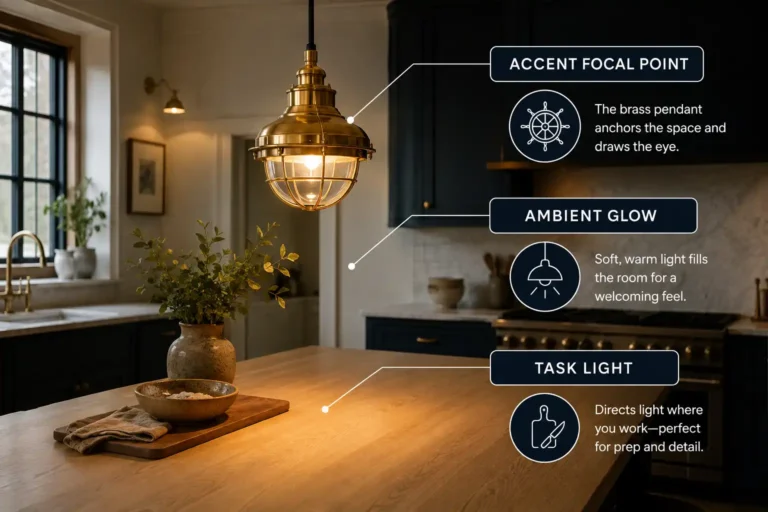
Over a garage door, above a workbench, at the top of exterior stairs, or under a deep eave. Anywhere you want a hard pool of light on a surface. Most of the salvaged deck lights we pull off ships end up in spots like those.
Mistakes I See Most
- Fixture mounted upside down, gland facing the sky
- Silicone smeared over the joint in place of a real gasket
- A 20 pound bronze light hanging on plastic wall anchors
Final Thoughts
A deck light is simple hardware. Get the height, the support, and the gland direction right, and it will run another 40 years without a drop inside. Take your time on the seal, and enjoy the light.