What Oil Is Used in Nautical Lanterns? Kerosene and the Rest
A buyer in Maine called me last winter about an anchor lantern I had shipped him. He had filled it with olive oil from his kitchen. The wick charred black within ten minutes. His globe turned gray with soot. He was not careless. Nobody hands you a fuel guide when you buy an old ship lantern. I have cleaned and refilled hundreds of them here in Chattogram, so here is what actually belongs in the font.
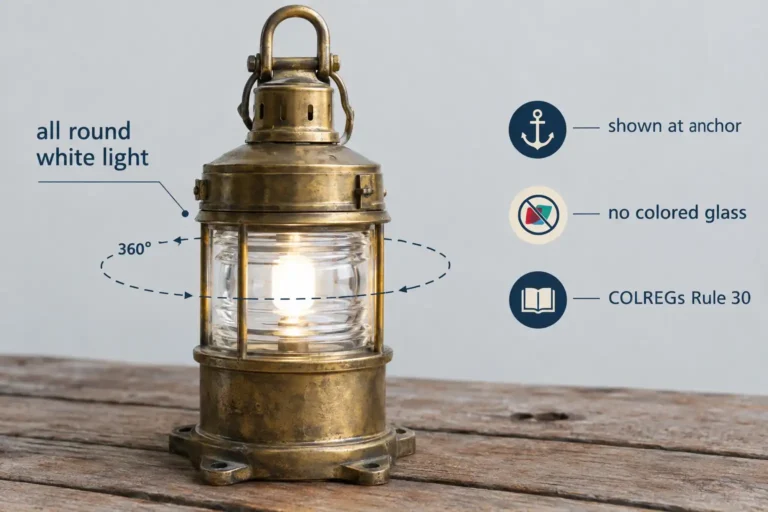
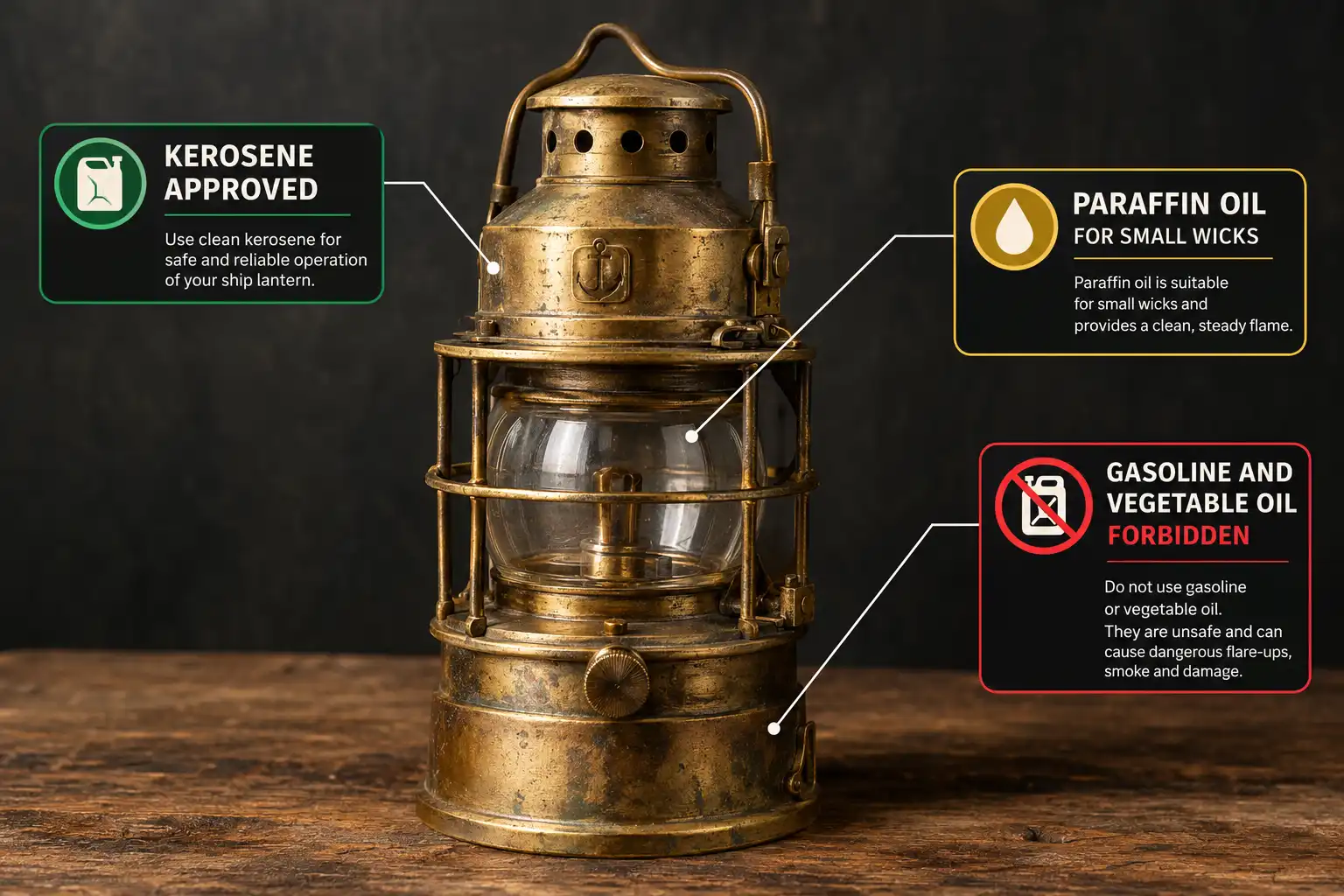
Nautical lanterns burn kerosene, sold in the US as K-1 or lamp grade kerosene. Liquid paraffin lamp oil also works, but only in lanterns with wicks 5/8 inch or smaller. Ship lanterns built before the 1860s burned whale oil, rapeseed oil, or lard oil.
Kerosene Is the Fuel These Lanterns Were Built For
Kerosene is the right answer for almost every ship lantern I handle. Lamp grade kerosene has a flash point around 150°F. It stays thin, so a cotton wick pulls it upward fast enough to feed the flame.
That thinness matters more than anything else. The wick works by capillary action. If fuel reaches the top slower than the flame burns it, the cotton itself starts burning.
Kerosene does not light easily as a cold liquid. The wick vaporizes it first, and the vapor is what burns. Purified kerosene costs a little more and smells far less. I use the clear, low odor grade indoors and keep the cheaper stuff for outdoor burning.
Liquid Paraffin Lamp Oil and Where It Falls Short
Paraffin lamp oil is the clear, nearly odorless fuel sold in hardware stores. In the US it is a refined petroleum wax product, not kerosene. Confusingly, British sellers call kerosene itself paraffin.
Its flash point sits above 200°F and it is noticeably thicker. On a narrow wick that thickness is fine. On a wide flat wick it starves the flame. You get half the brightness, sputtering, a charred wick, and soot.
Soot is the warning sign. A flame burning cotton instead of fuel also throws more carbon monoxide into the room. Once a wick has soaked up paraffin oil, swap it for a fresh one.
Match the Oil to Your Wick Size
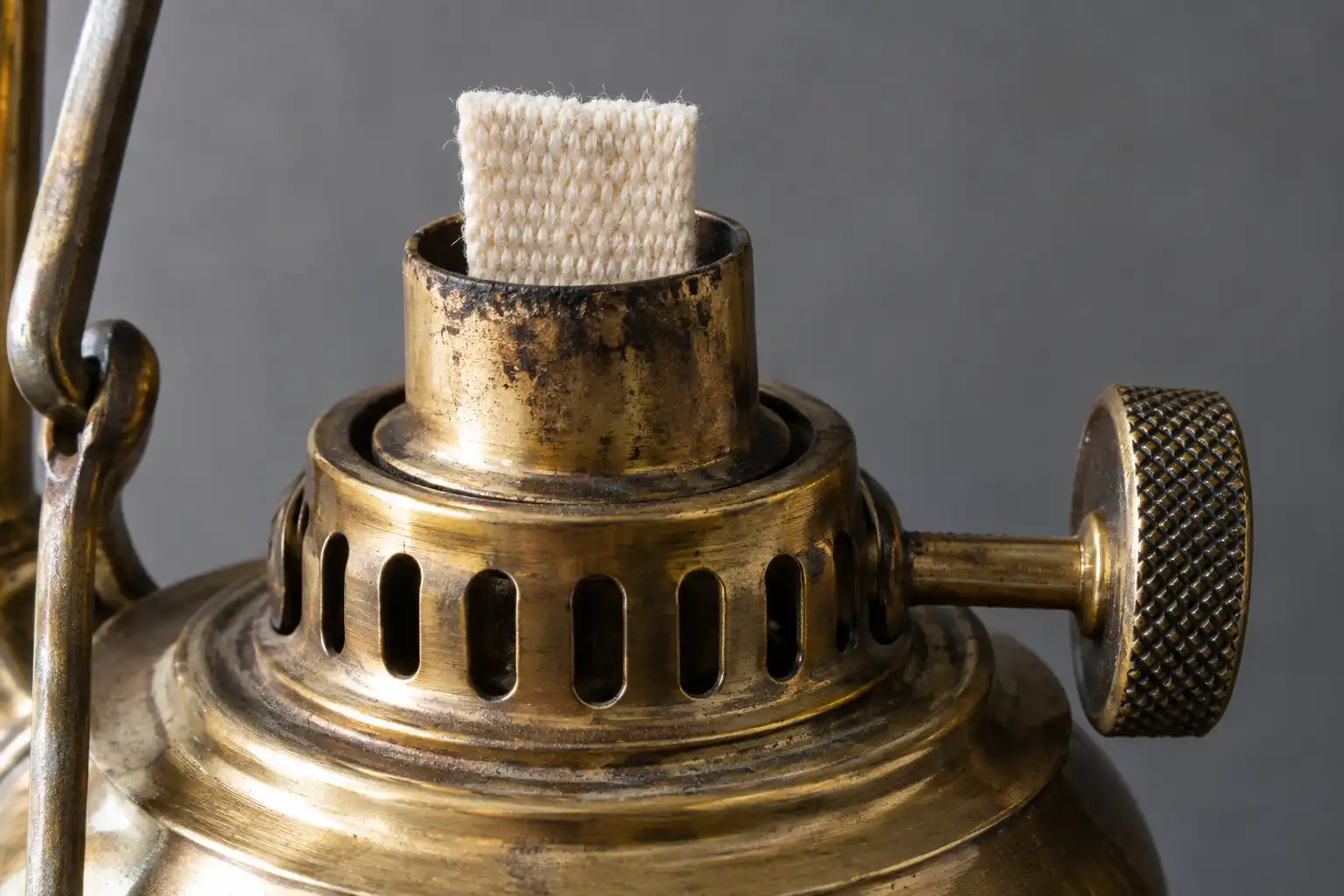
Wick width decides the fuel. Measure the flat wick before you buy a can.
- 7/8 inch and wider: kerosene only
- 3/4 inch: kerosene preferred
- 5/8 inch and smaller: paraffin lamp oil burns fine
- Round wicks under 1/4 inch: paraffin lamp oil or candle oil
Most ship anchor, masthead, and cabin lanterns use wide flat wicks. That puts nearly all of them in the kerosene column.
What Sailors Burned Before Kerosene
Whale oil came first. Sperm oil, taken from the head of the sperm whale, burned longer and brighter than blubber oil, and navies paid the premium for it. Merchant crews made do with cheaper grades.
Rapeseed oil and lard oil filled plenty of lamps in the early 1800s too. Abraham Gesner patented his refined fuel in 1854 and named it kerosene. By 1860 it had pushed the others aside, and whale oil lanterns became history.
Knowing this helps with dating. Say you are working out whether you own a genuine old ship lantern or a reproduction. Burner style and font shape point straight to the era it served. Nobody burns whale oil now, and you would not want the smell.
Oils That Will Ruin a Lantern
Some fuels do more than burn badly. These stay out of the font:
- Gasoline, white gas, and camp fuel: their vapor ignites at room temperature and a wick lantern cannot contain it
- Diesel and motor oil: heavy soot, thick smoke, and a smell that clings to the brass
- Olive, canola, and vegetable oil: far too thick for a lantern wick to lift
- Citronella oil: outdoors only, and thin it 50-50 with kerosene first
- Mixed leftovers from two different cans
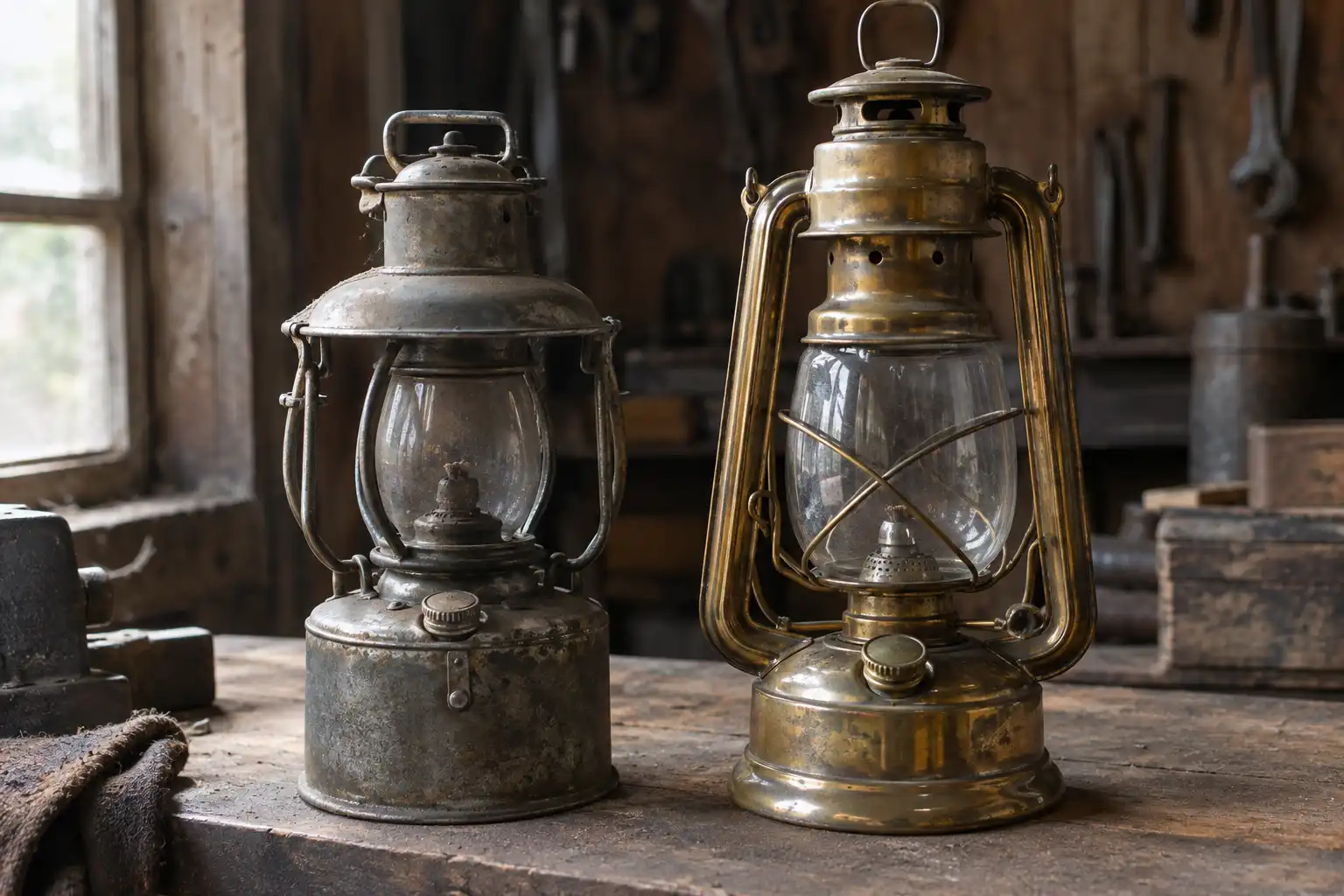
I have bought lanterns off yard crews with diesel still sitting in the font. Flushing that out and scrubbing decades of soot off old brass takes longer than the restoration itself.
Filling and Burning a Salvaged Lantern
Old fonts are the weak point. Solder seams crack and cap gaskets harden, so check both before adding fuel.
Fill to about 80 percent. Fuel expands as it warms, and a full font leaks. Let a new wick soak for 10 to 15 minutes before the first light.
Trim the flat wick straight across for an even flame. Never refuel a hot lantern, and never refill one while it is burning. Store spare fuel in a sealed metal can away from sunlight. Burn indoors only with a window cracked.
Oil or Electric? What Most Buyers Choose
Most of my customers wire theirs instead of burning them. That is usually a practical call, not a matter of taste. An antique oil lantern is not a certified navigation light.
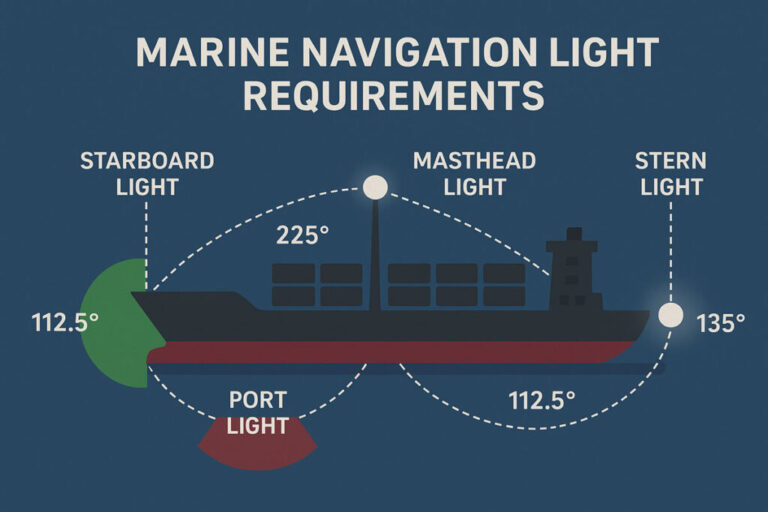
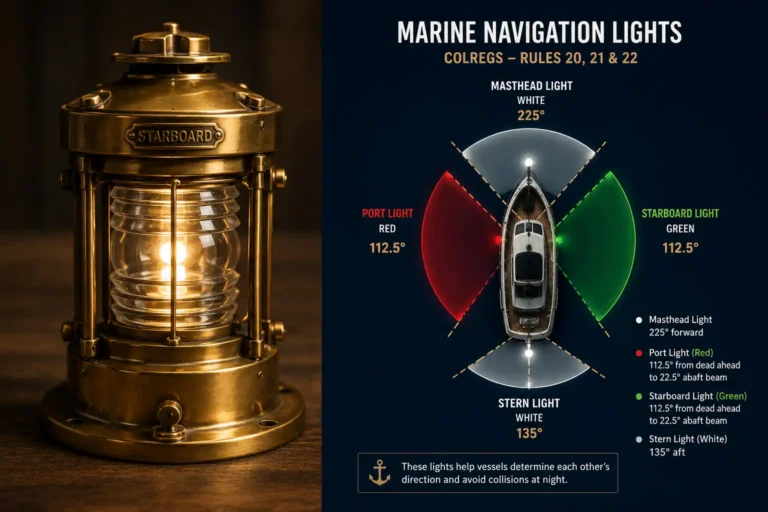
The US Coast Guard requires approved fixtures that meet the chromaticity, intensity, and cut-off angles set out in Annex I of the collision rules. A century-old oil burner meets none of that. The lighting rules commercial cargo ships follow at sea are stricter still.
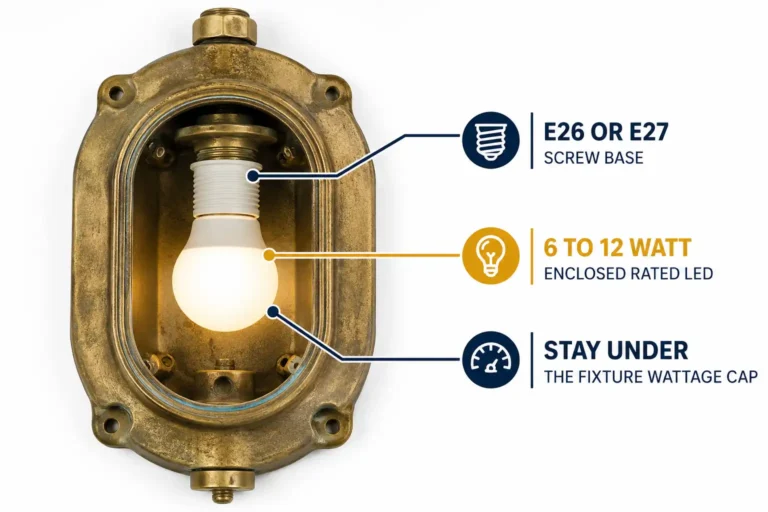
So burn oil for the atmosphere, or for backup light at anchor. If the lantern is going on a wall at home, converting an old fixture to household current keeps the patina and loses the soot.
Final Thought
Buy a gallon of clear K-1 kerosene, measure your wick, and skip everything else on the shelf. That covers 95 percent of the lanterns I pull out of the breaking yards.
If your lantern still sputters after that, the wick is usually the culprit, not the fuel. Good luck with yours, and enjoy the light.