What Were Nautical Lanterns Used For on Working Ships
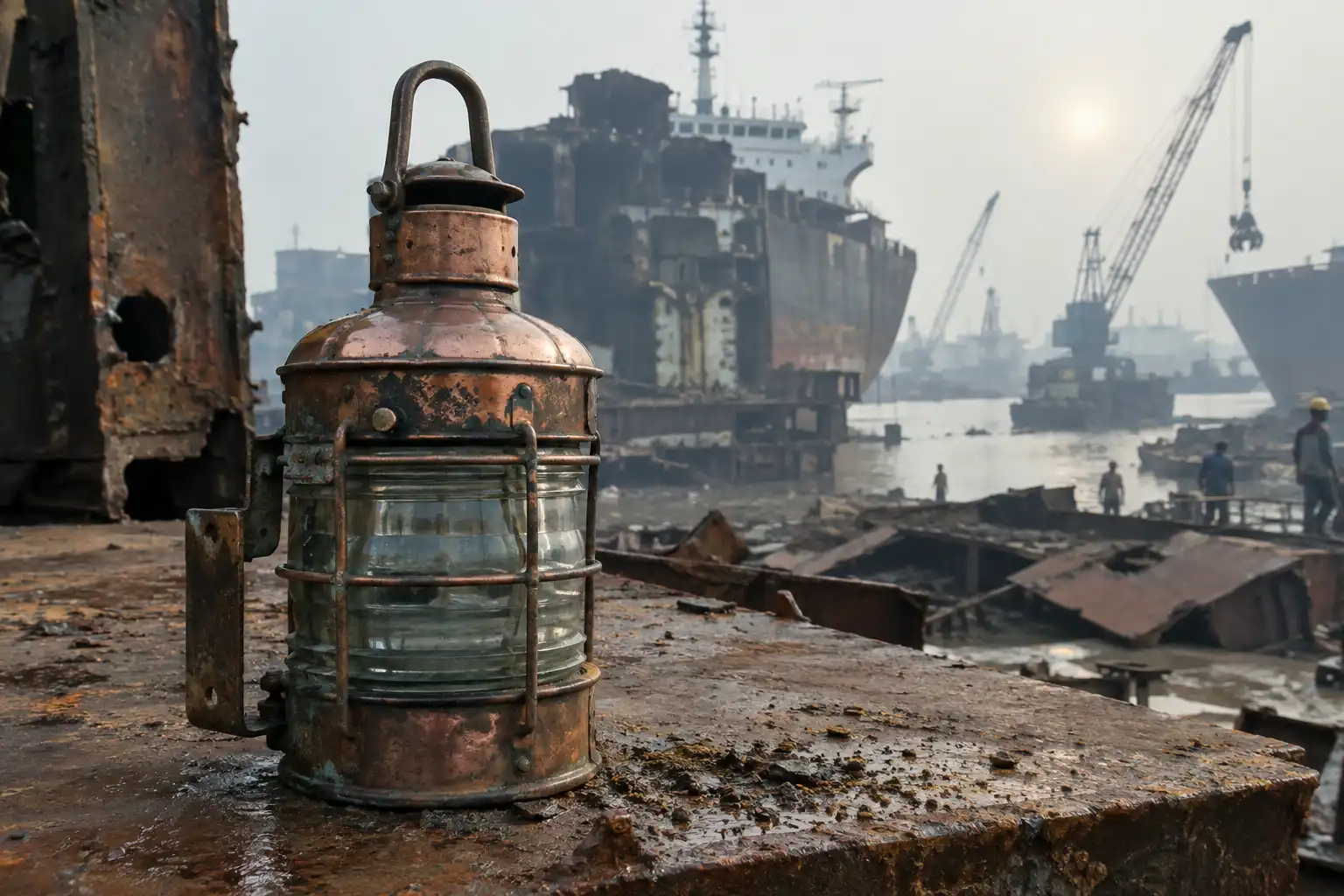
A crew brought me a copper anchor lamp last month, cut off a Japanese bulker beached at Sitakunda. The glass was long gone. Inside the burner well sat a hard ring of dried kerosene, thick as old candle wax. That black ring told me more than any auction catalog could. The lamp burned oil for decades before anybody wired it. It had a job, and the job mattered to every soul aboard.
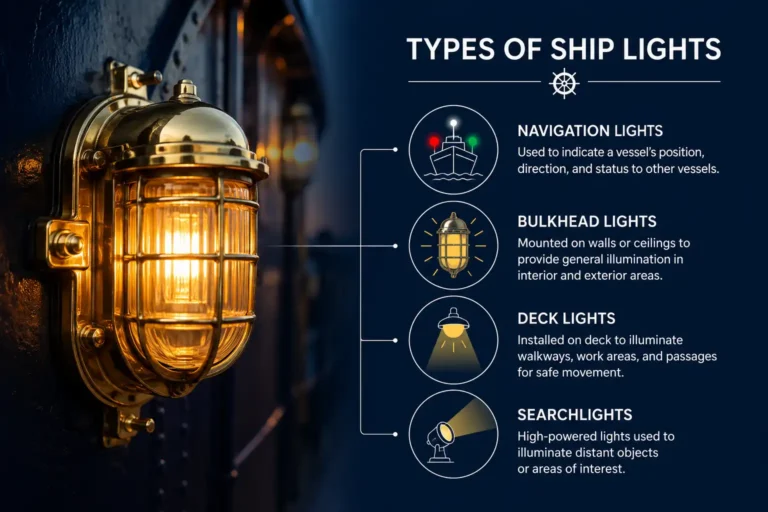
Nautical lanterns were used to show a ship’s position, heading and status after dark. They worked as sidelights, masthead lights, stern lights and anchor lights. Crews also used them to signal other vessels, light cargo holds and engine spaces, and equip lifeboats.
Showing Position and Heading After Dark
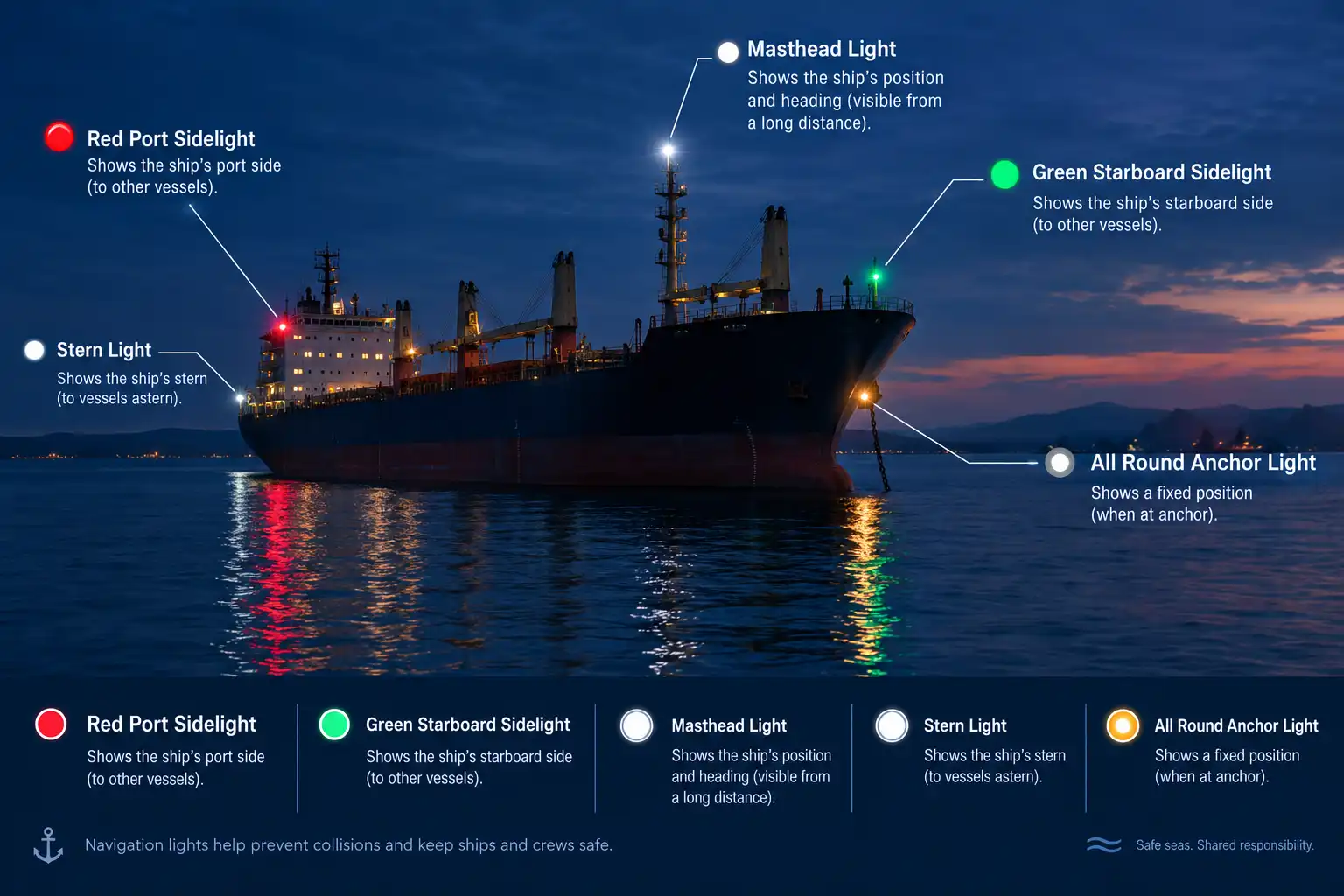
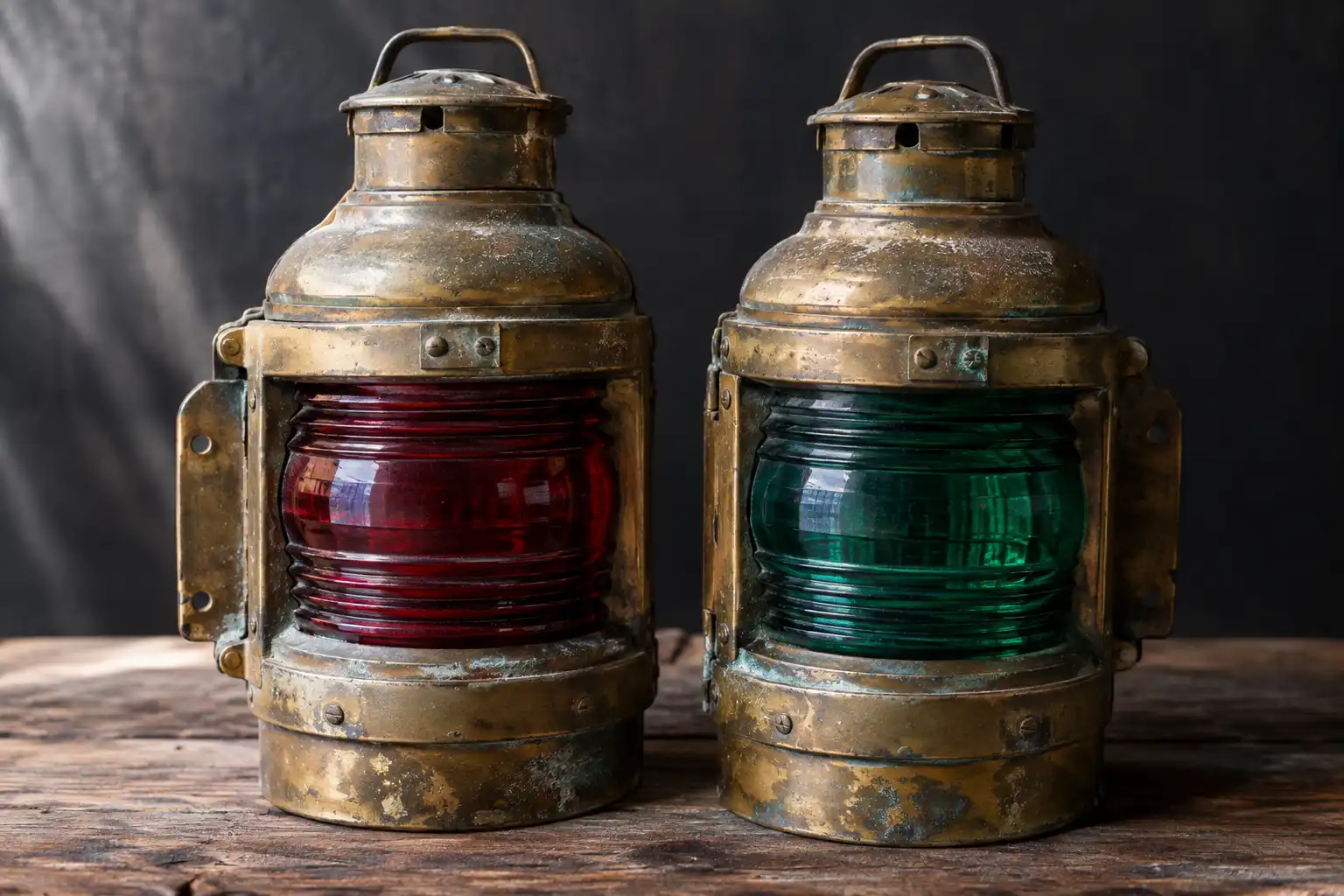
The main job was collision avoidance. A red lamp burned on the port side. A green one burned to starboard. A white lamp sat high on the foremast.
Each lamp covered a fixed arc, and that arc carried the meaning. Sidelights show across 112.5 degrees. The masthead light covers 225 degrees ahead. The stern light covers the remaining 135 degrees astern.
Put together, those arcs form a full circle. An officer on watch could read another vessel’s heading from color alone. Green with white above meant a ship crossing from his right. Red by itself meant her port side faced him.
That code came out of the 1840s, and why port and starboard carry opposite colors has a longer answer than most people expect.
Marking a Vessel at Anchor
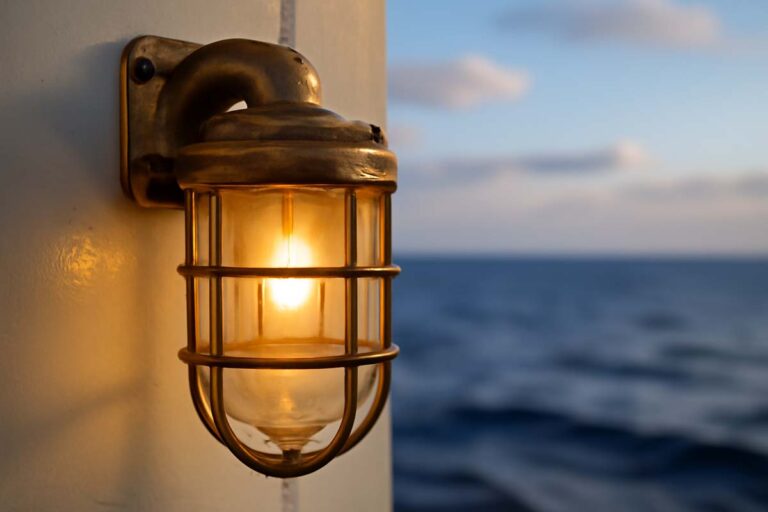
An anchor lantern said one thing: this ship is stopped and swinging on her chain. Clear glass threw white light through a full 360 degrees. Crews hoisted it on the forestay so deck gear did not block the beam.
The practice became law and never left. Under COLREGs Rule 30, a vessel at anchor shows an all round white light in the fore part. Ships of 50 meters and over add a second white light near the stern, mounted lower than the first. Vessels of 100 meters and over must also light their decks.
Anchor lamps are the ones I pull most often in Chattogram. Their round glass and heavy top vent make them easy to pick out of a scrap pile.
Signaling Between Ships
Lanterns carried messages long before radio reached small vessels. Captain Philip Colomb of the Royal Navy put flashing light signals into practice in 1867. Morse code followed soon after.
The handheld signal lamp, usually called an Aldis lamp, became the standard tool. A trigger worked the shutter. Dots and dashes crossed open water for miles.
None of this is dead history. SOLAS Chapter V still requires ships of 150 gross tons and above on international voyages to carry a daylight signalling lamp. That lamp cannot depend only on the ship’s main power supply.
Lanterns also announced trouble. Two red all round lights in a vertical line mean a vessel is not under command. COLREGs Rule 27 still sets that signal.
Lighting Work Areas Below and On Deck
Plenty of lanterns faced inward instead of out to sea. Gimballed oil lamps hung in cabins and chartrooms. The gimbal ring held the flame upright while the hull rolled.
Cargo lamps lit holds during night loading. Engine room inspection lamps went into spaces full of fuel vapor, so builders caged the glass and sealed every joint. Those sealed housings are the ancestors of the flameproof fittings I still recover today.
Lifeboats carried lamps of their own. A boat adrift needed light for the compass, the flares and the faces of the people aboard.
What Nautical Lanterns Burned
Early ship lamps burned whale oil. Sperm oil burned cleaner and longer, so navies bought it while most merchant owners settled for cheaper blubber oil.
Colza oil, pressed from rapeseed, filled the gap across Europe. Kerosene took over from the 1850s onward. It was cheap, bright and simple to store in bulk.
Every fuel had a price in labor. Wicks charred. Glass fogged with soot. Big ships carried a lamp trimmer whose entire watch went into cleaning chimneys, trimming wicks and topping up reservoirs.
Electric power ended that job. The housings barely changed, because the shapes already worked. If you want the mechanics, how these old fixtures actually throw light covers the optics.
How Custom Turned Into Law
Lights only work when every crew reads them the same way. That took legislation.
The United States passed an act in 1838 requiring steamboats running at night to carry signal lights. Color and position were left open, so captains guessed.
Britain closed the gap in July 1848. The Admiralty ordered steam vessels to show a white masthead light, green to starboard and red to port. Congress extended light rules to American sailing vessels in 1849.
The first International Maritime Conference met in Washington in 1889, and its rules took effect internationally in 1897. The IMO maintains COLREGs today, and the light rules cargo ships follow now descend straight from those decisions. For the longer timeline, see the early years of lighting at sea.
What They Are Used For Now
Most surviving lamps light kitchens and porches instead of sea lanes. Buyers want the brass, the thick glass and the proof of hard service.
Age alone proves nothing, though. Reproductions flood the market, so telling a genuine salvaged lamp from a copy is worth learning before you spend real money. The restored oil lamps pulled from our breaking yards still carry their yard marks and maker plates.
Final Thought
Every lantern I handle was once part of a system. Red meant one thing, green meant another, and a white light forward meant a ship was holding still in the dark.
Knowing that history changes how the lamp reads on your wall. It stops being decoration and becomes a record of somebody’s night watch. Enjoy the hunt.