What Size Bulkhead Light Do I Need? A Easy Sizing Guide
A buyer from Oregon called me last spring and asked for a “medium” bulkhead light. I sent him photos of three. He picked the middle one. When it landed, it swallowed the wall beside his back door, and he was not happy. That was my fault. Medium means nothing in this trade. Since then I measure every fixture in my Chattogram yard and I ask buyers one question first: how wide is the wall it goes on?
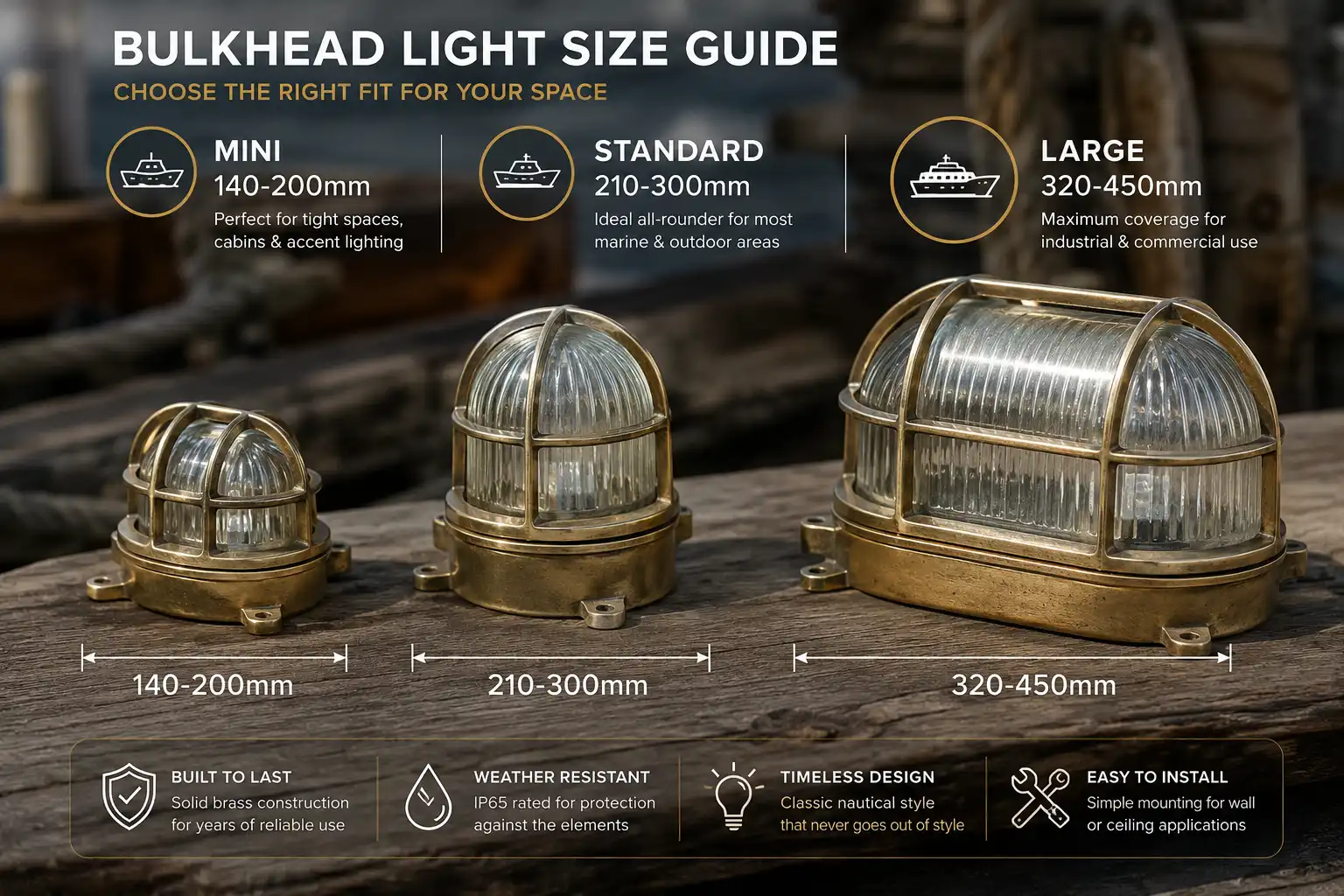
Most homes need a bulkhead light between 210 mm and 300 mm (8 to 12 inches) across. Go smaller, around 140 mm to 200 mm, for tight spots like a bathroom, stairwell, or bunk wall. Go 320 mm or larger only for garages, barns, and wide exterior walls.
Start With The Wall, Not The Light
Measure the clear wall space around your mounting point. Then keep the fixture at roughly one third of that width.
A 30 inch wall panel beside a door takes a 10 inch light comfortably. A narrow 16 inch strip of brick does not. That one ratio prevents most sizing mistakes I see.
Doors have their own rule. Beside an entry door, the fixture should sit near one quarter of the door height. On a standard 80 inch door, that puts you at 8 to 10 inches tall.
Read next: Wire Nautical Lights
The Three Size Brackets I Sort By
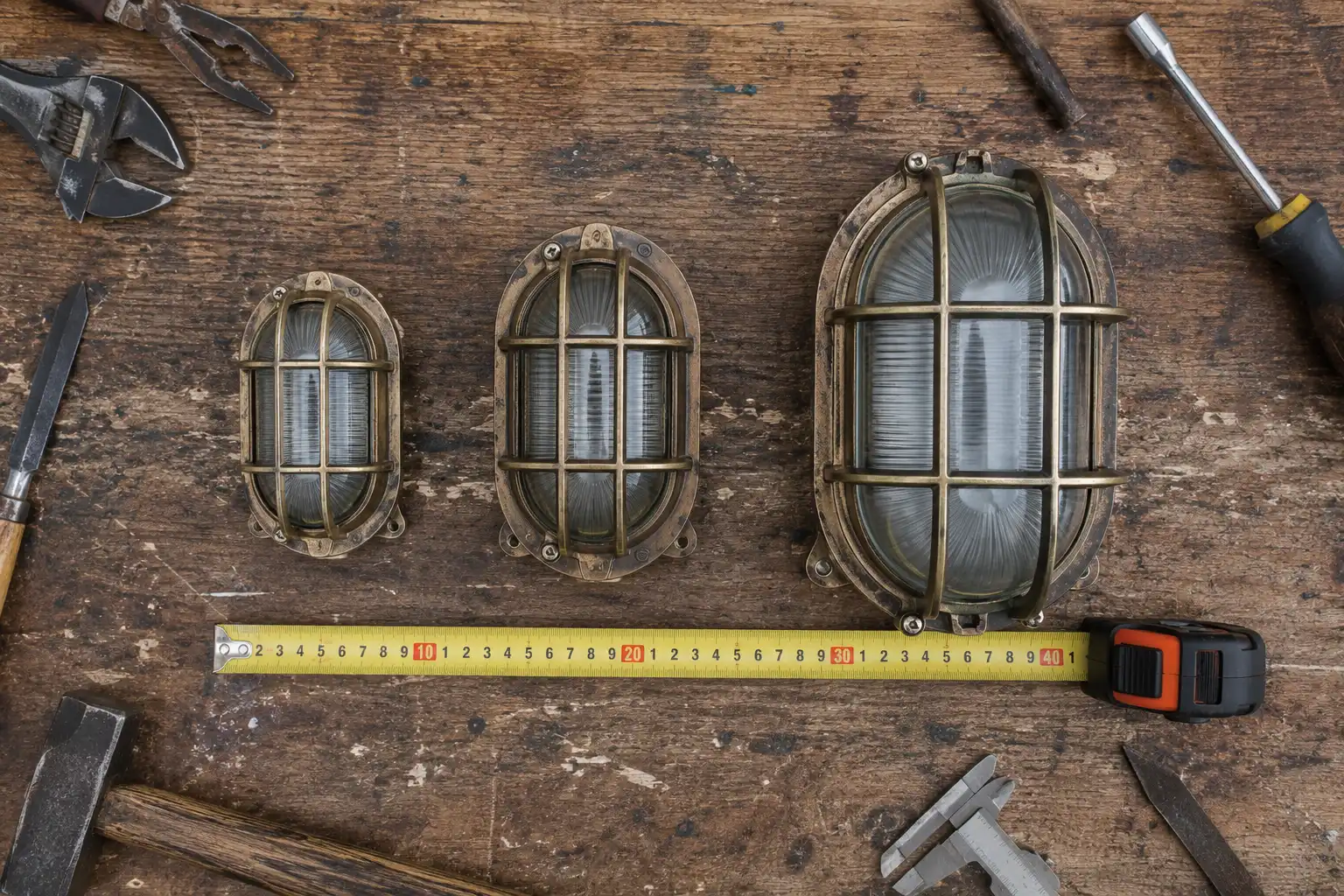
Every salvaged fixture I pull from a ship falls into one of three brackets. Knowing them makes the choice quick.
Mini: 140 mm to 200 mm (5.5 to 8 inches)
These came off cabins, heads, and companionway walls. They suit bathrooms, hallways, stair landings, and headboard walls.
They put out modest light. Use them in pairs if the room is longer than about 10 feet.
Standard: 210 mm to 300 mm (8.3 to 12 inches)
This is the bracket most people actually want. Daeyang and Wiska units in this range covered passageways and deck houses.
They work beside front doors, over kitchen counters, along porches, and in covered entryways. If you are unsure, buy in this range.
Large: 320 mm to 450 mm (12.6 to 17.7 inches)
These lit engine rooms, cargo decks, and open working areas. They belong on garages, workshops, barn walls, and long exterior runs.
They are heavy. A cast brass unit at this size can pass 8 kg, so the wall behind it has to be solid.
What Size Bulkhead Light Do I Need For Each Room?
Here is how I answer it, space by space.
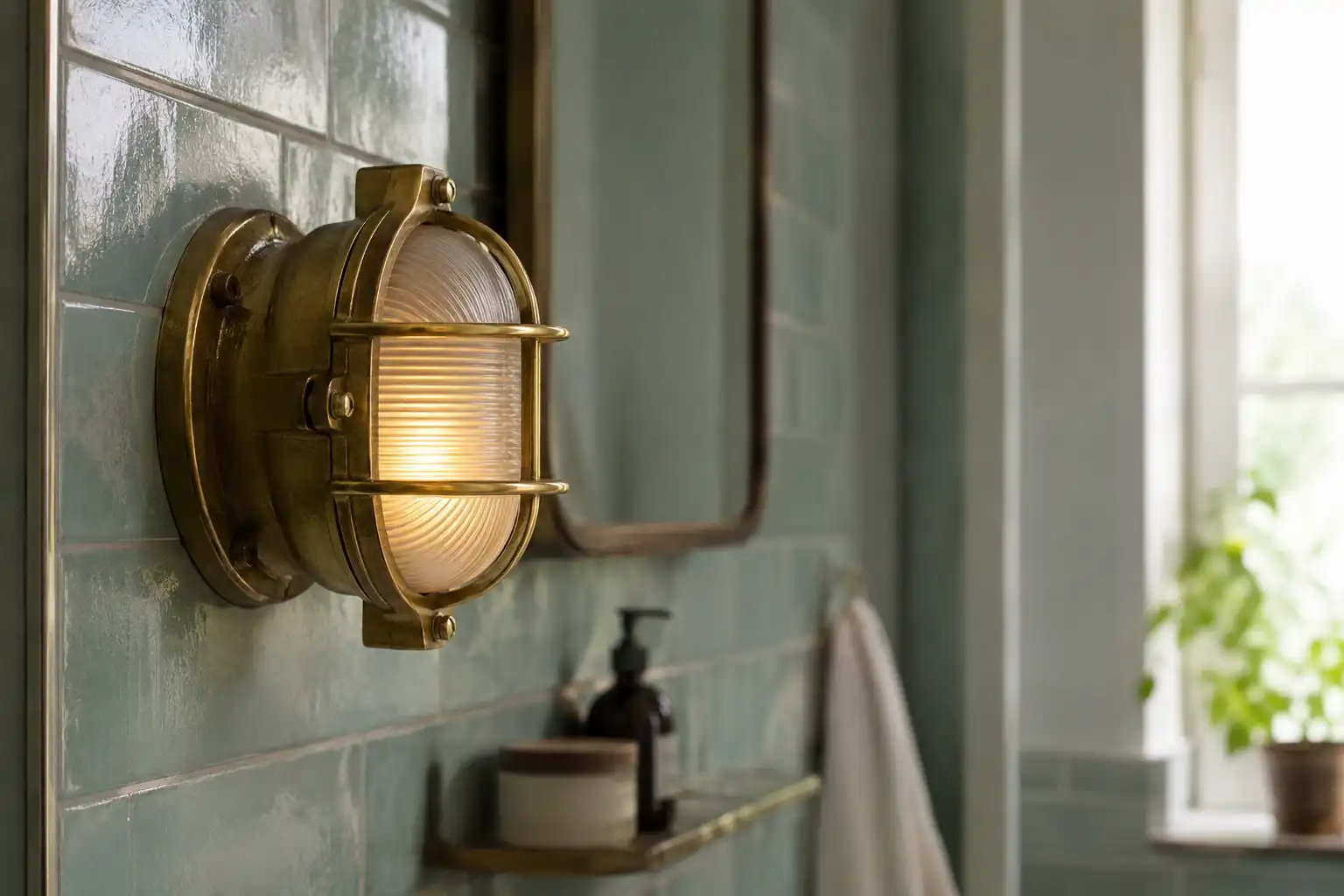
Bathroom or small hallway: 140 mm to 200 mm, mounted at eye level.
Front door or porch: 250 mm to 300 mm, one on each side if the door is wide.
Kitchen or living room accent: 200 mm to 250 mm, since these read as decorative rather than functional.
Garage or workshop: 320 mm and up, or two standard units spaced about 8 feet apart.
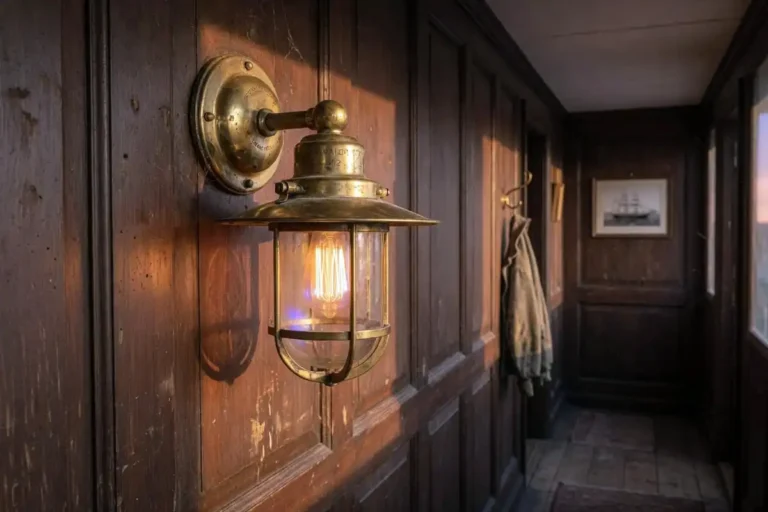
Covered walkway: standard size, repeated every 8 to 10 feet. That spacing keeps the pools of light overlapping. It also matches how these fixtures ran on the vessels they came from, and it helps to know where these fixtures belong in a room before you commit to a size.
Match The Brightness To The Size
Size and output are two different things. A big housing with a weak bulb still looks dim.
For a bathroom or hallway, 300 to 500 lumens is plenty. Entry doors and porches want 800 to 1,200 lumens per fixture. Garages and driveways sit around 1,200 to 2,000 lumens.
Warm 2700K to 3000K light suits brass and living spaces. For a workshop, 4000K reads cleaner.
Most salvaged units take a standard E26 or E27 socket, so a modest LED bulb covers all of this.
Check The Backplate, Not Just The Diameter
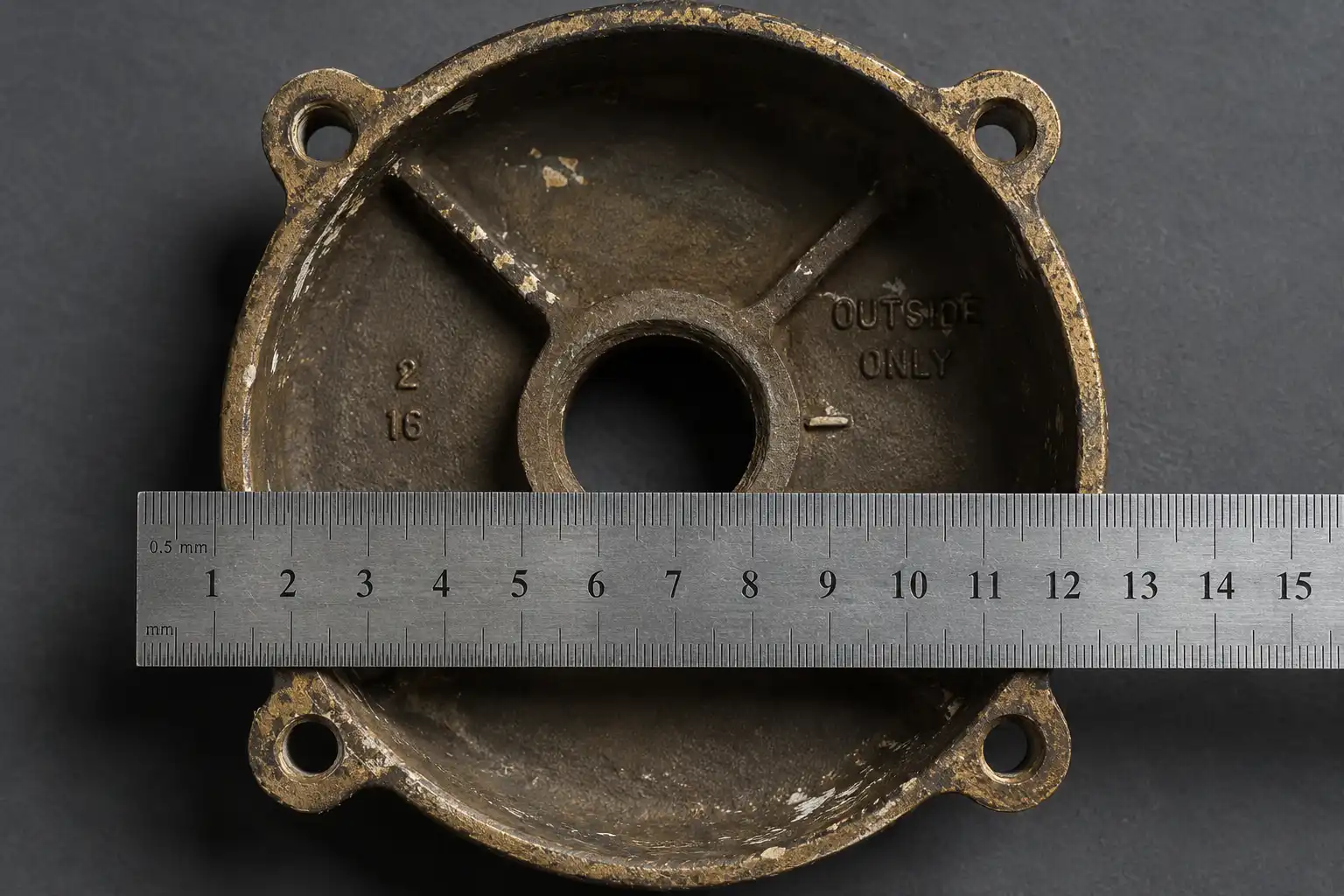
The glass diameter is what people notice. The backplate is what decides whether the light actually mounts.
Old marine fixtures used two, three, or four fixing holes on their own spacing. Very few line up with a US junction box without an adapter plate. I keep a chart of common backplate hole patterns in mm and inches so buyers can check before they commit.
Ask for backplate width and hole spacing on any fixture you buy. Photos hide this every time.
Do Not Forget Projection
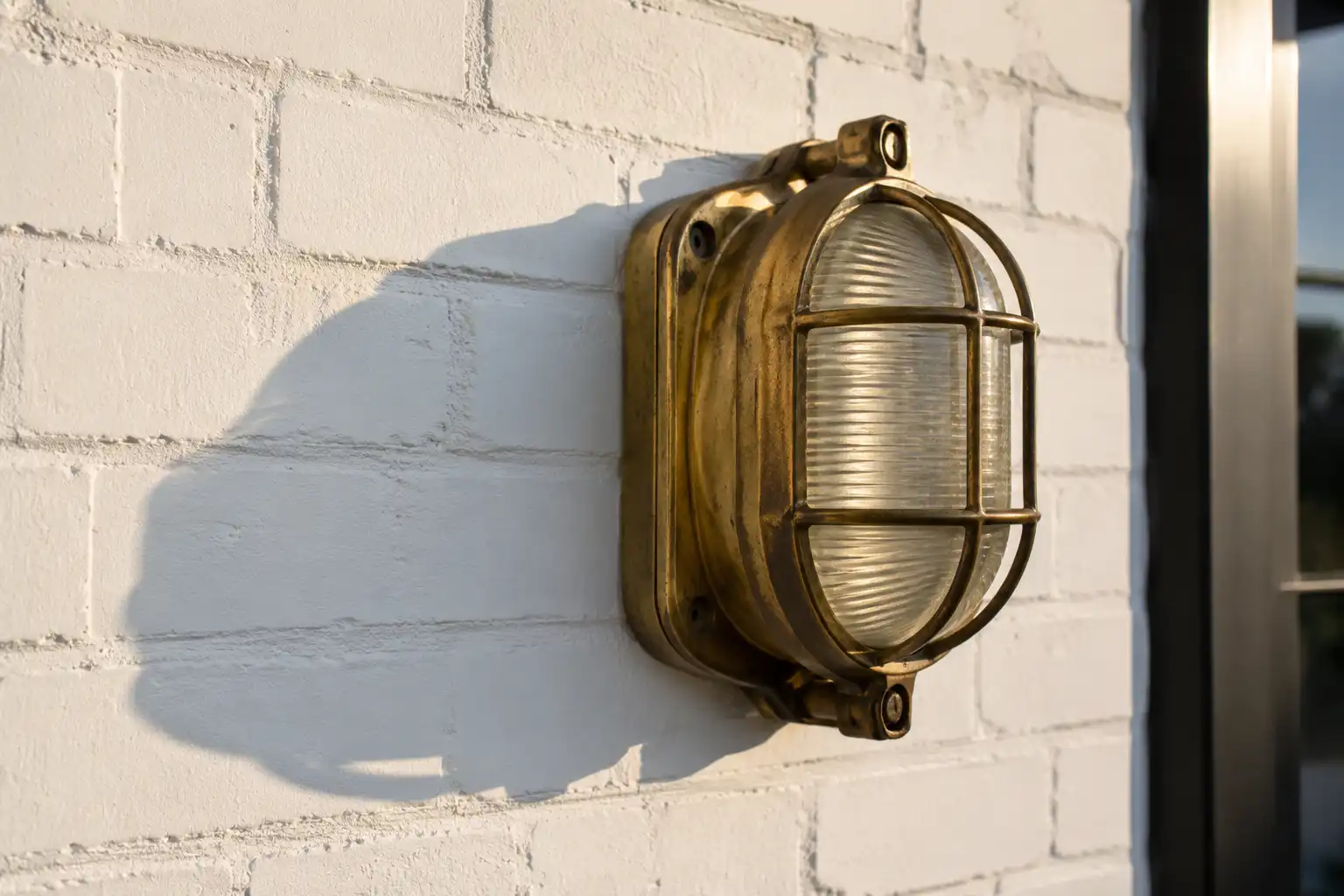
Diameter is only half the measurement. Projection is how far the light sticks out from the wall.
Standard bulkheads project 100 mm to 150 mm. Caged versions add another 30 mm or so. In a narrow corridor or beside a swinging door, that matters more than the width.
Also weigh the fixture in your head. Cast brass runs heavier than the aluminium alternatives, so if you are wall mounting into plasterboard, the material choice affects your anchors.
A Few Sizing Mistakes I See
Buying one large light where two standard ones belong. Two smaller fixtures light a wall more evenly.
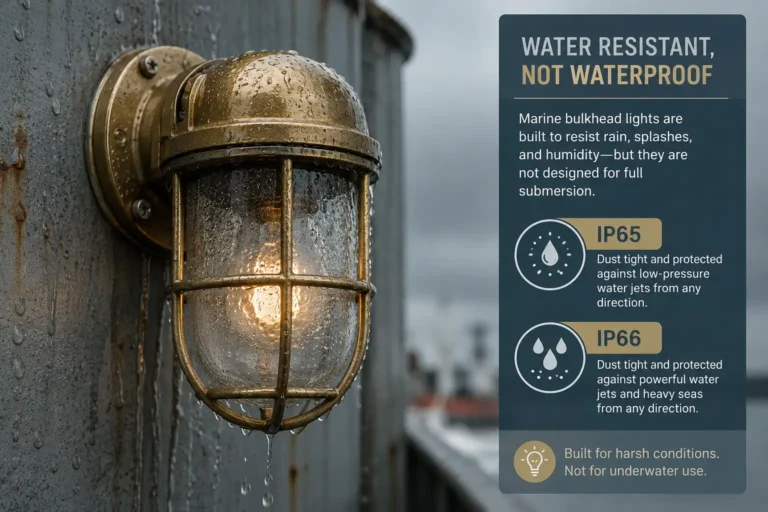
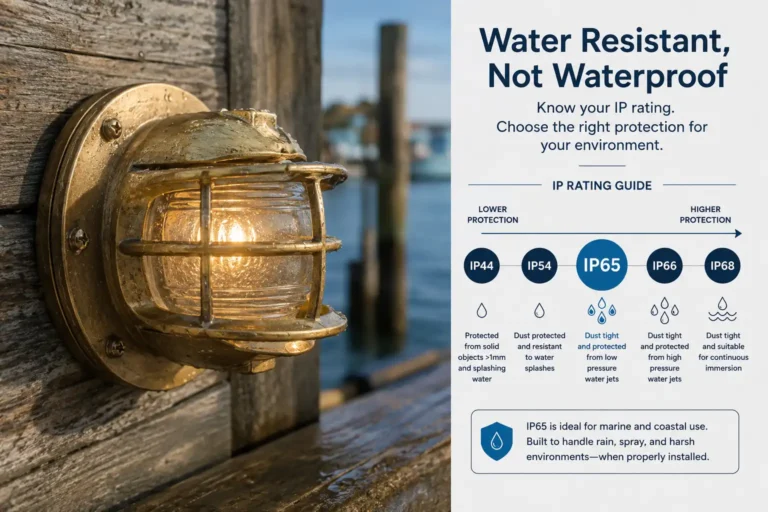
Ignoring the sealed rating. An IP54 unit is fine under cover. Exposed walls want IP65 or IP66, and the indoor and outdoor versions differ in gasket quality.
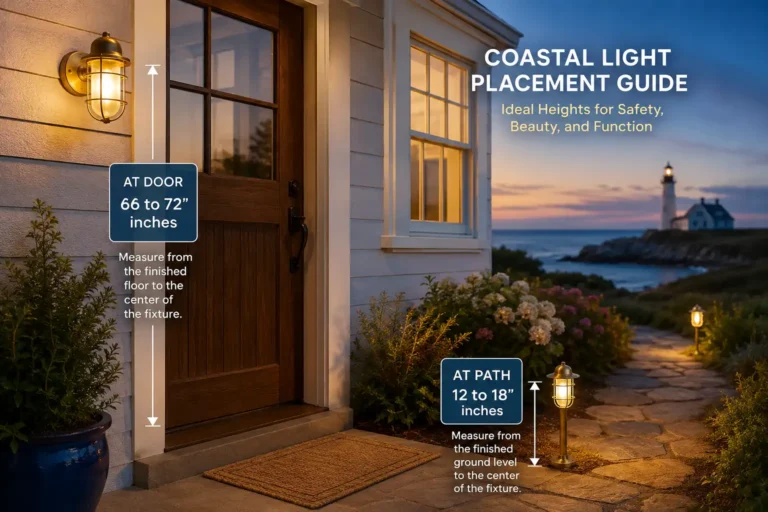
Forgetting the mounting height. A perfectly sized fixture placed too high still fails, and getting the mounting height right takes about a minute to work out.
Choosing shape before size. Round, oval, and caged styles all come in the same brackets, so pick your measurement first.
Final Thought
Take a tape measure to the wall before you shop. Write down the width, the clear height, and how far the light can stick out. Those three numbers answer the size question faster than any photo will.
Send me your measurements and I will tell you honestly which bracket fits. Good luck with it.