How to Light a Nautical Lantern Without Smoke or Soot
A customer in Maine called me last spring, pretty annoyed. He had bought an anchor lamp from us, filled it with fuel off his garage shelf, and struck a match. Ten minutes later the globe was black inside. The lantern was fine. The fuel and the wick height were the problem. I light these constantly in the yards here in Chattogram, mostly to check whether a burner still draws before a piece goes up for sale.
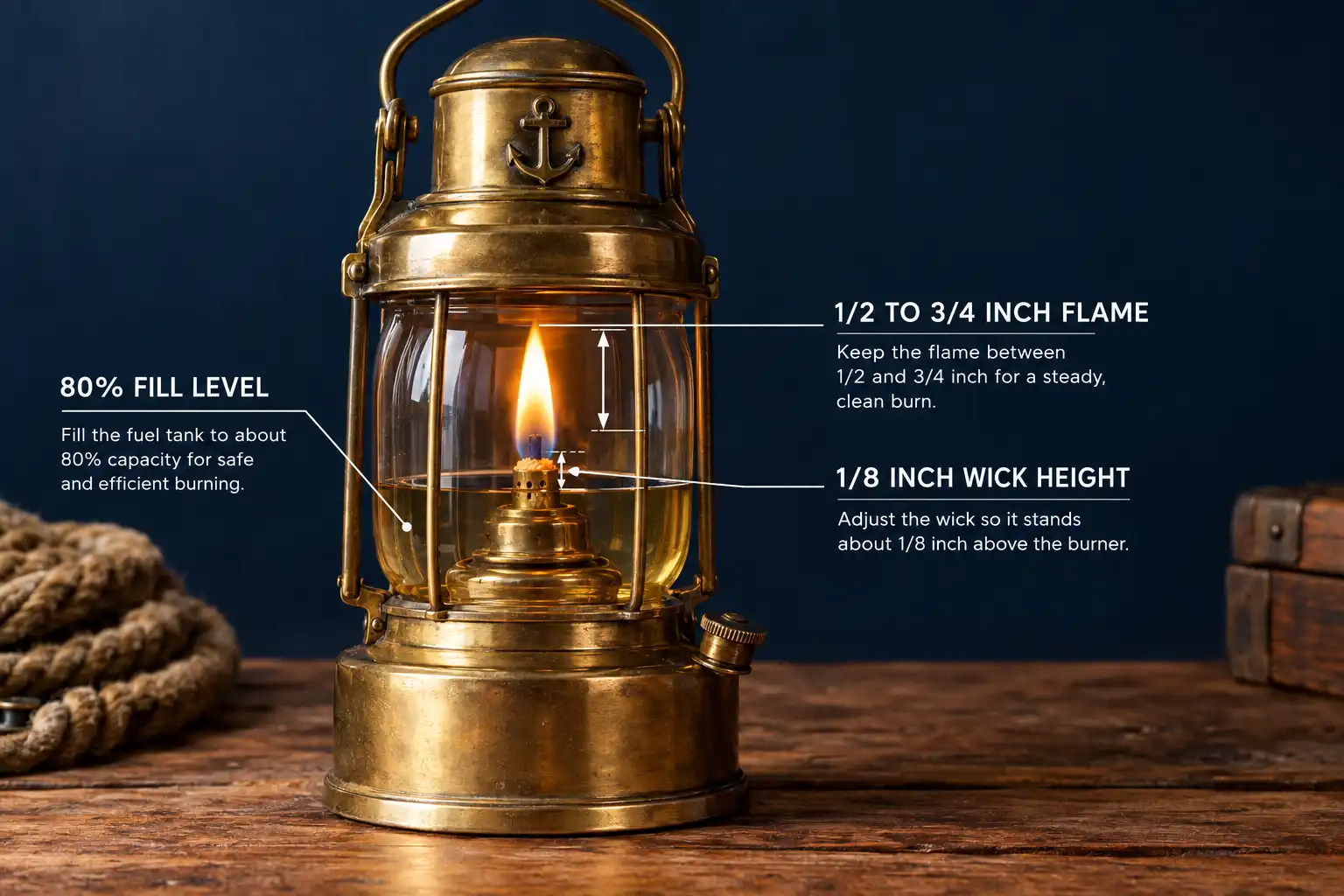
Fill the fount about 80 percent full with clean lamp oil or K-1 kerosene, then let the wick soak for 15 to 30 minutes. Raise the globe, expose roughly 1/8 inch of wick, and touch a match to one corner. Lower the globe, wait a minute for the draft, then trim the flame to between 1/2 and 3/4 inch.
Check the Lantern Before Any Fuel Goes In
Salvaged pieces sit outdoors for years. I check four things first.
Shine a flashlight inside the fount and look for rust scale or pinholes. Confirm the wick tube is clear and the raiser knob turns without grinding. Check the globe for hairline cracks, because heat finishes those fast. Last, check the filler cap gasket for rot.
Old wicks go brittle and hold varnish from decades of dried fuel. I replace them.
If the brass is crusted, handle that while the lantern is cold and empty. Getting green corrosion off old marine brass is far easier before the first burn bakes soot into the patina. Not sure what you own yet? Spotting a genuine ship lantern against a reproduction changes how careful you need to be.
Pick a Fuel That Matches the Burner
Fuel choice ruins more globes than anything else. Flash point is the number that matters.
Lamp kerosene should sit between 124°F and 150°F. Above that, tubular lanterns can develop a runaway flame.
Use clean lamp oil indoors. It is purified paraffin, close to odorless, and far kinder to indoor air. Use K-1 kerosene outdoors when you want a brighter flame and can accept some smell. Never burn red-dyed kerosene inside, because that dye is meant for industrial equipment.
Never use gasoline, alcohol, diesel, mineral spirits, or tiki torch fuel. Not once, not diluted.
One more trap. The thick liquid paraffin sold in small decorative bottles is really candle oil. It suits wicks under 1/2 inch flat. In a bigger marine burner it starves the flame and chars the wick.
Fill, Soak, and Trim
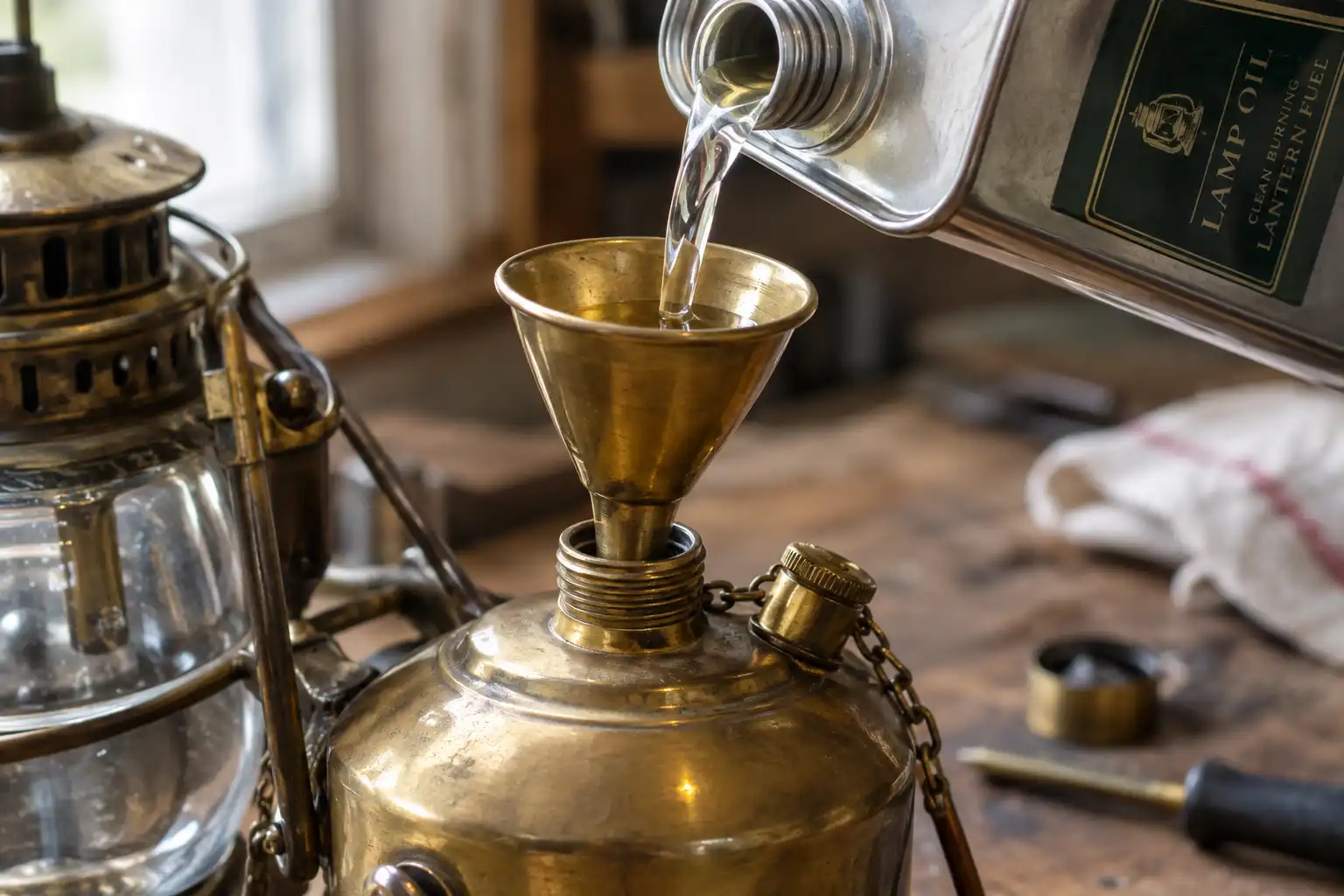
Fill to roughly 80 percent. Fuel expands as it warms, and tubular models leak out the side arms when overfilled. Wipe every drop off the outside before you strike anything.
Let a new wick soak at least 15 minutes. An hour is better for a first burn. A dry wick burns itself instead of the fuel, and that is where soot comes from.
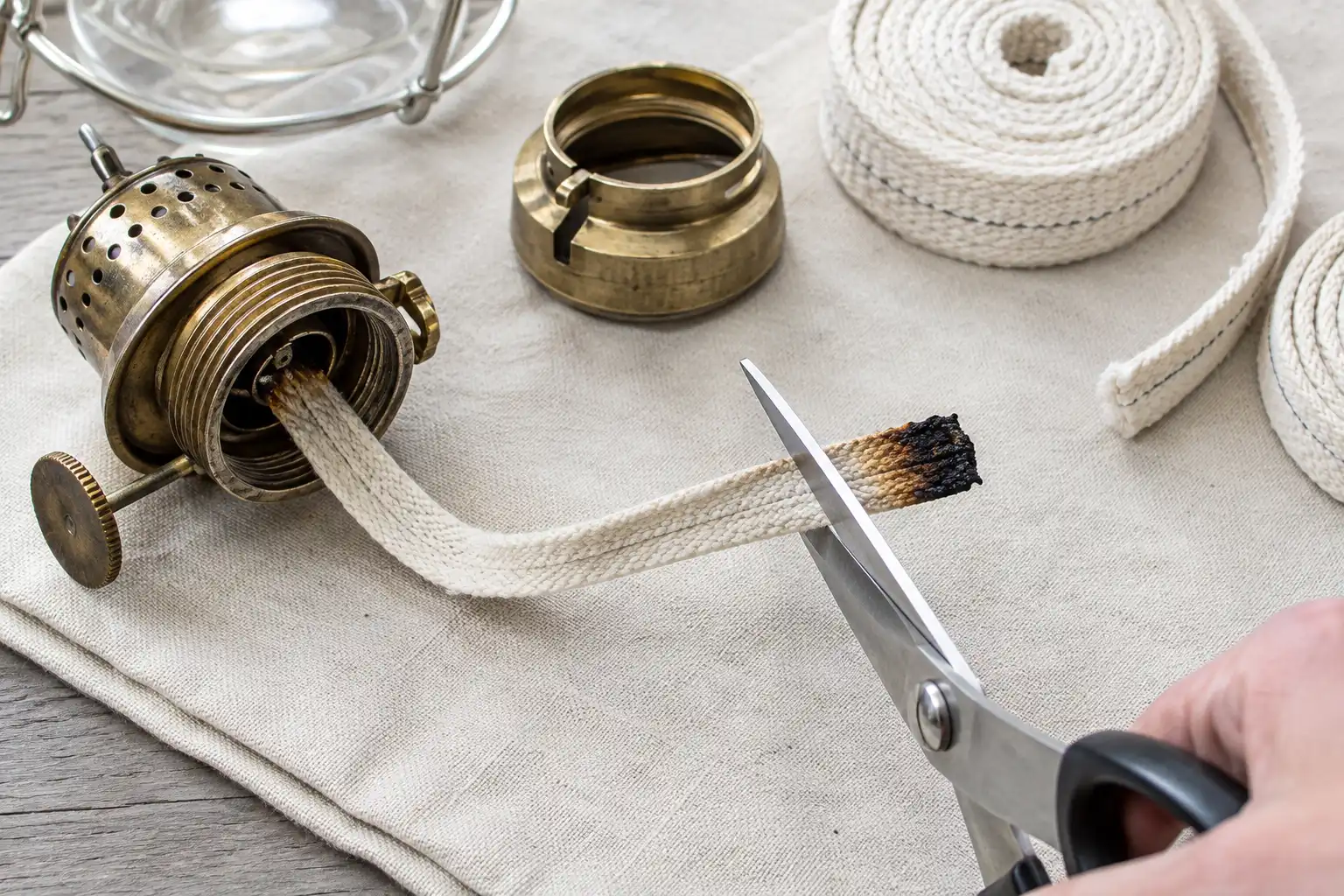
Trim the wick dry, before it goes in. Cut straight across with sharp scissors, or follow the curve of the burner dome. Pick off loose threads.
Lighting It Step by Step
- Raise the globe with the side lever, or lift the chimney off.
- Turn the wick up until about 1/8 inch shows above the tube.
- Touch a long match to one corner and let the flame spread across the full width.
- Lower the globe back onto its seat.
- Wait a minute while the chimney warms and the draft builds.
- Turn the wick down until the flame sits at 1/2 to 3/4 inch.
Draft does the real work. Hot air rising up the chimney pulls fresh air across both faces of the wick. Cold blast models send that air back down through the side tubes. With the globe off its seat, none of it happens.
Read the Flame
Smoke means the wick is too high. Turn it down until the smoke stops.
An uneven flame with a tall horn on one side means the wick wants trimming. A flame that gutters blue is low on fuel or drawing badly.
A runaway flame climbing the globe gets smothered, never blown. Drop a bucket over the lantern or shovel sand on it. Water spreads burning fuel.
Putting It Out
Lower the wick until it drops into the channel and the flame dies on its own. That is the clean method. A blown-out flame leaves unburned vapor behind.
If it hangs on, raise the globe and blow across the top of the chimney, not down into it. Let it cool fully before you move it or top it up.
Any open wick burning indoors eats oxygen and produces carbon monoxide. Crack a window. Never leave one unattended, and keep it level and away from curtains.
Do Not Use an Antique as a Running Light
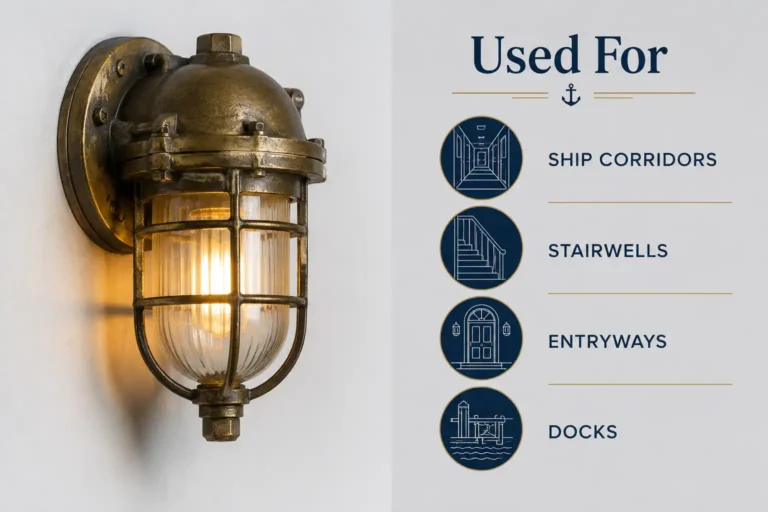
Old port and starboard lamps are decorative now. Under 33 CFR 183.810, navigation lights must be certified to ABYC A-16 and marked “USCG” with a visibility range. COLREGs Rules 20 through 22 and Annex I cover the technical side.
A 1960s freighter lantern meets none of that. Mount it on a wall, not a pulpit. What modern cargo vessels are required to display follows a separate rulebook, and open flame is not in it.
The Electric Route
Plenty of buyers never light a wick at all. A conversion kit swaps the burner for a socket, and an LED filament bulb gives that warm flicker without fuel, heat, or fumes.
Keep wattage low. LED barely warms the brass, so the fount stays clean. Wiring an old marine fixture for household current takes about an hour with a decent kit.
Final Thought
Most of this comes down to patience. Right fuel, a soaked wick, 1/8 inch showing before the match. After that you are just watching the flame and nudging the knob. There is a reason ships carried open flame lighting for so long, and a well-tuned burner still beats most candles.