What Are Pendant Lights Used For? Rooms, Heights, and Ratings
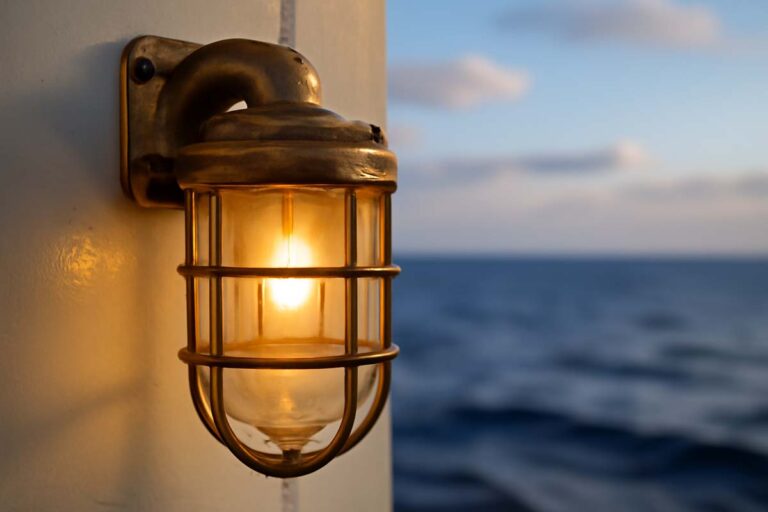
Last month I pulled a brass ceiling pendant off a Korean bulk carrier at the Sitakunda yard. The cage was bent flat on one side. The glass wore forty years of diesel film. That fixture spent its working life lighting a stairwell in the accommodation block. It now hangs over a kitchen sink in Oregon. The job changed. The fixture did not.
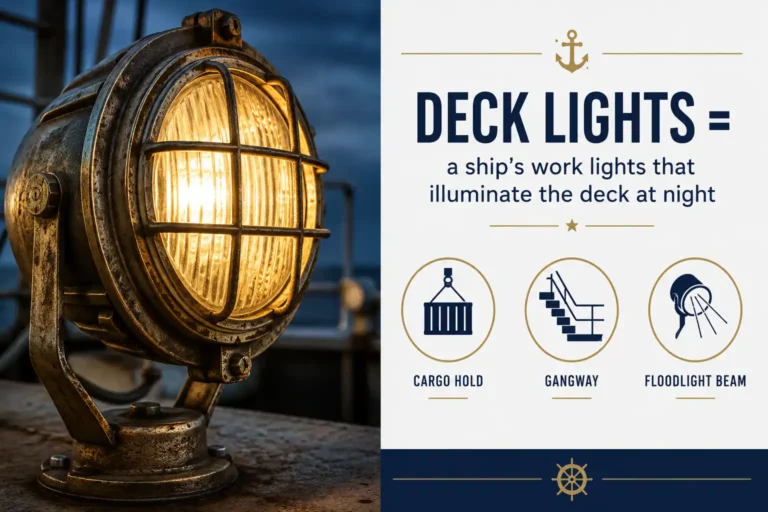
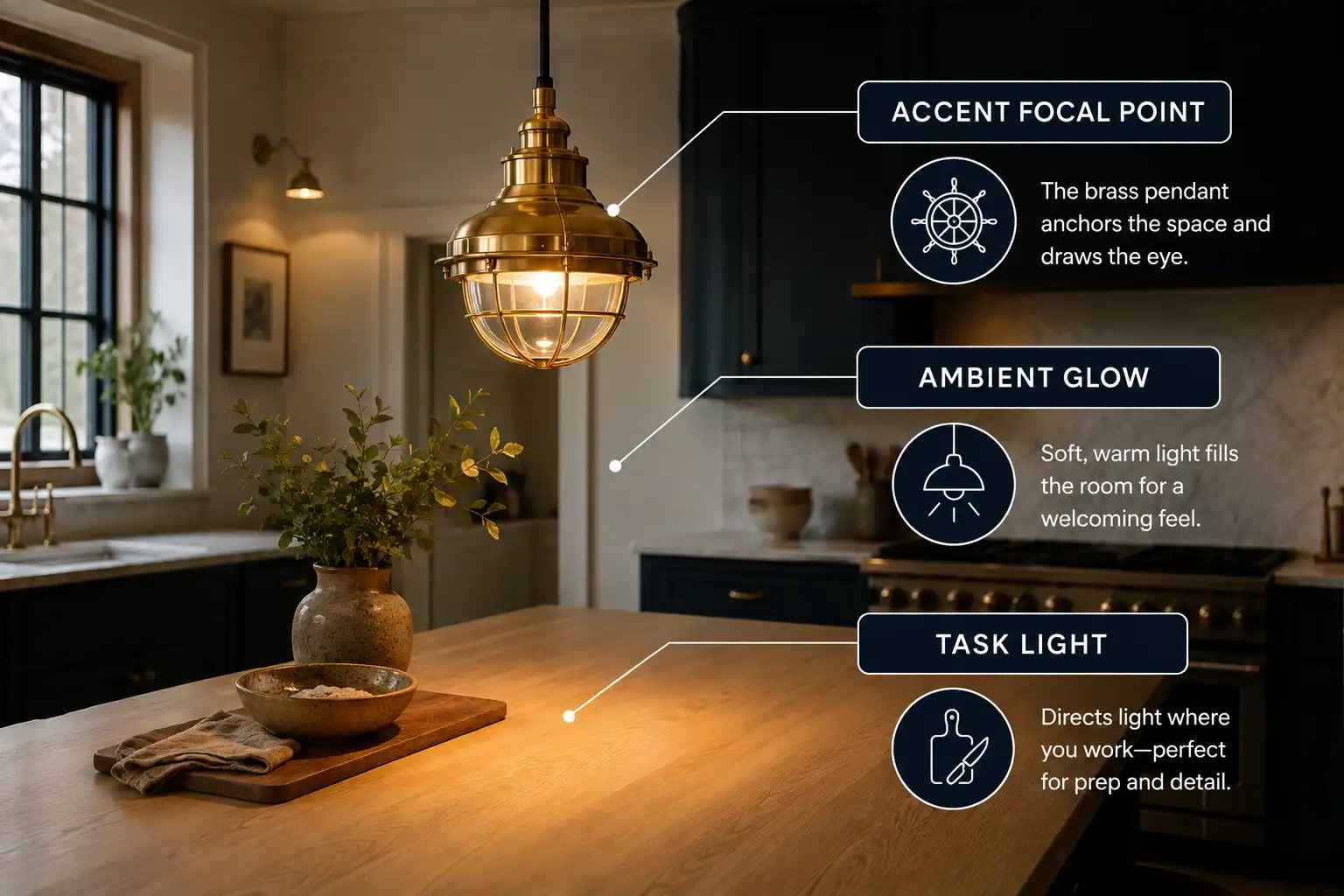
Pendant lights are used for three jobs: task lighting over a work surface, soft ambient light, and a visual anchor for the room. Homes hang them over kitchen islands, dining tables, bars, entryways, and bedsides. On ships they lit engine rooms, galleys, and stairwells.
The Three Jobs a Pendant Does
Task lighting comes first. The fixture hangs close to the surface, so light lands where your hands are. Chopping vegetables, reading a recipe, working at a desk.
Ambient light is the second job. Hang three down a hallway and the whole corridor gets even coverage. Fit a frosted or opal shade and the fixture glows instead of spotlighting.
The third job is pure focus. One sculptural piece over a console table does no real work. It tells your eye where to look. Nothing wrong with that.
Where People Hang Them
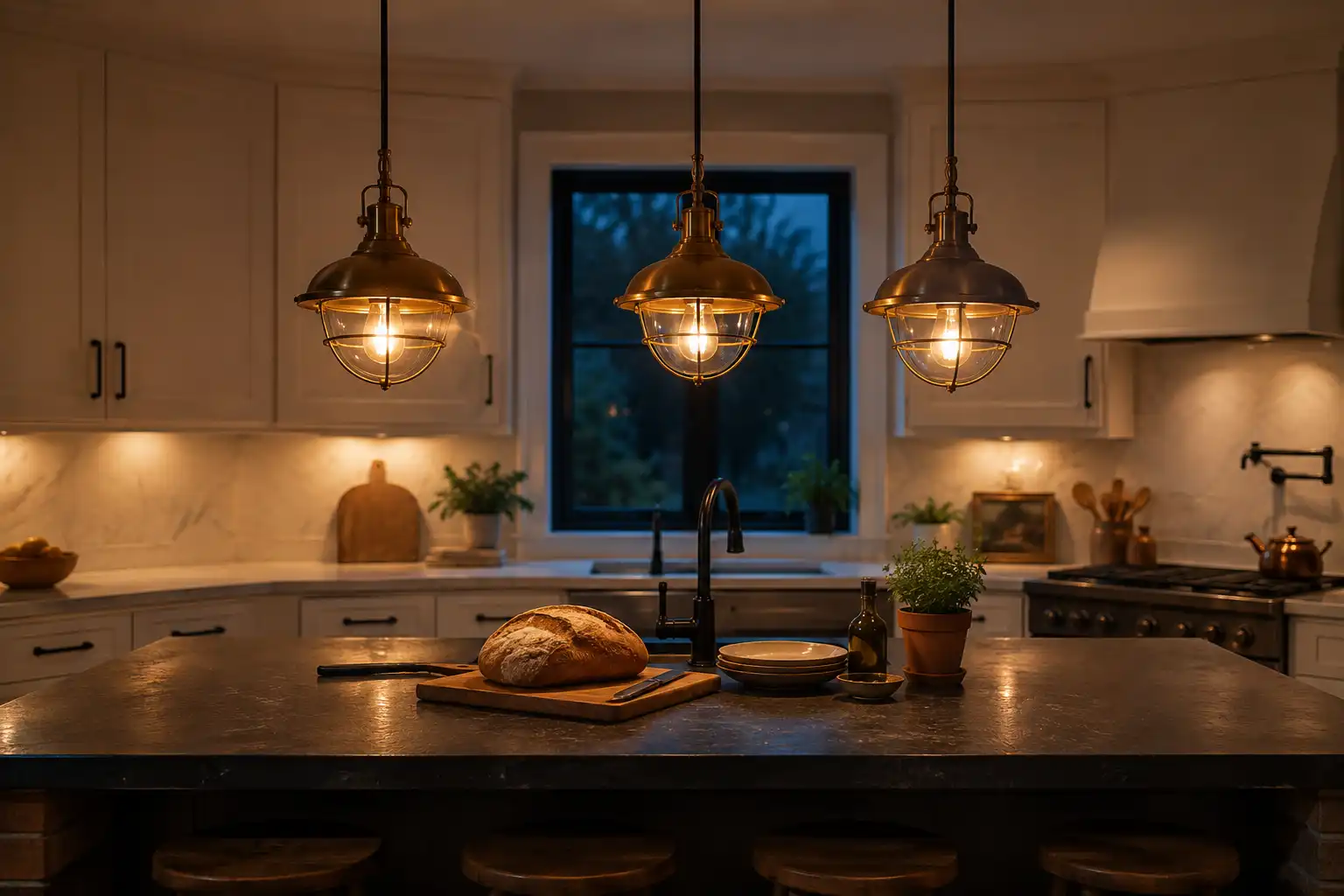
Kitchen islands are the most common spot by far. Dining tables come next. After that: breakfast bars, entryways, stairwell voids, home offices, and bedsides in place of a table lamp.
If you want the island to carry the whole room, my notes on building a statement kitchen around authentic ship lighting go deeper on that.
Commercial buyers order the most. Bars like pendants because the light stays low and the room stays dark. Restaurants use them to mark each table. Retail shops hang them over display counters. Most of the reclaimed ceiling fixtures we pull from the yards end up in exactly those rooms.
What Pendant Lights Were Used For at Sea
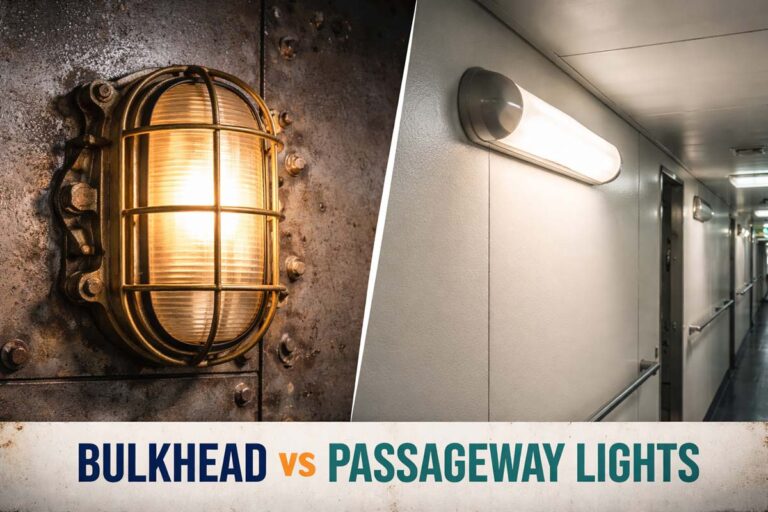
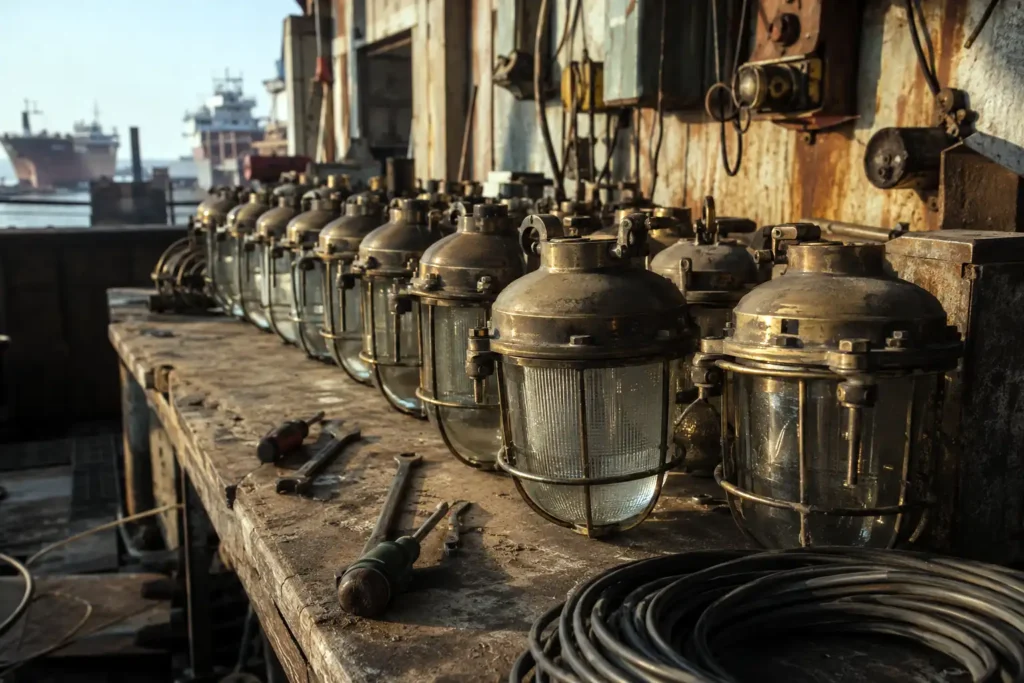
Shipboard pendants did unglamorous work. They hung from the deckhead on a threaded stem or a short chain. They lit engine rooms, machinery spaces, galleys, mess rooms, workshops, and cargo holds.
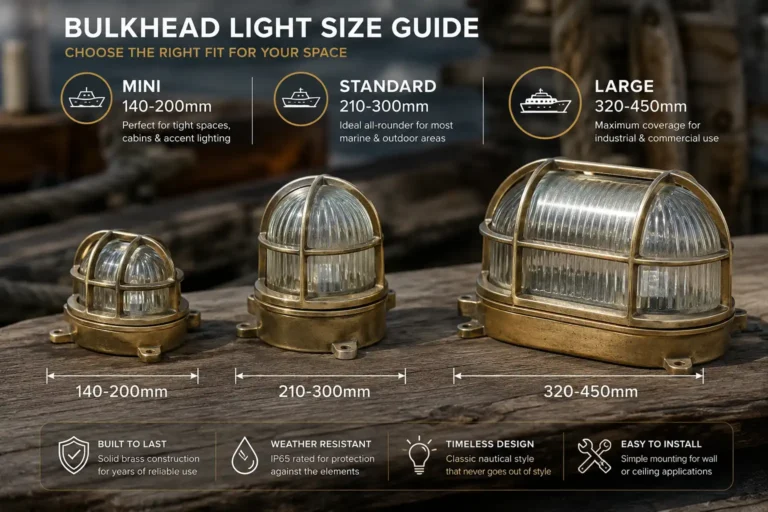
Marine versions were built harder than anything sold for houses. Thick cast brass or aluminum bodies. Heat-resistant glass globes. Wire guards so a swinging spanner did not shatter the glass. Gaskets against steam and salt air.
Many carried an IP rating under IEC 60529, and machinery-space fixtures were often flameproof. That construction is why a fifty-year-old ship pendant still works on a covered porch in Maine. Nobody designed it to be delicate.
If you are choosing between a heavy industrial body and something lighter, my guide to picking an industrial pendant you won’t regret covers the trade-offs.
Hanging Heights That Work
Height decides whether a pendant does its job or annoys everyone in the room.
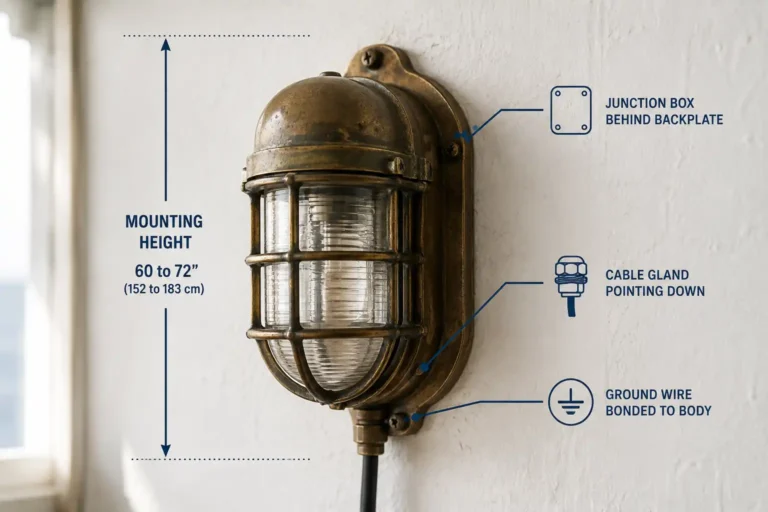
Over a kitchen island, hang the bottom of the fixture 30 to 36 inches above the countertop. Over a dining table, 28 to 34 inches suits most rooms, since people sit lower there. In hallways and entryways, keep the bottom at least 7 feet off the floor.
Ceilings taller than 8 feet change the math. Add roughly 3 inches of hanging height for every extra foot of ceiling.
Spacing matters too. Leave 24 to 32 inches between fixture centers, and keep the outer two at least 6 inches inside the island edges. Two pendants suit a 5 or 6 foot island. Three suit anything longer.
Damp Rooms, Porches, and Bathrooms
This is where people fail an inspection or worse.
A damp rated fixture handles humidity and condensation. Think bathrooms outside the shower, covered porches, laundry rooms, and basements. A wet rated fixture handles direct water: open decks, uncovered patios, shower spray.
The National Electrical Code also blocks off a zone. Under NEC 410.10(D), pendants, cord-hung fixtures, and lighting track are barred from a set area. That area runs 3 feet horizontally and 8 feet vertically from the bathtub rim or shower threshold. It includes the space straight above the tub.
Salvaged marine fixtures usually have the gasketing for damp spots. The seals are decades old, though, so I cover how well old marine fixtures hold back water separately.
Before You Hang One
Weight comes first. A cast brass pendant with a glass globe runs 4 to 9 pounds. A standard plastic ceiling box is not rated for that load. Use a listed fixture box or fan box anchored to a joist.
Old fixtures need new wire. Rubber insulation from the 1970s crumbles in your fingers, so rewiring a salvaged marine fixture for house current is not optional. Same goes for mounting an old ship light the right way.
Put it on a dimmer. Full output while you prep dinner, half output while you eat it.
Final Thoughts
A pendant is a simple thing. It hangs, it aims light down, and it sets the mood of whatever sits under it.
Sort the height first, the moisture rating second, and the looks third. Do it in that order and you will not be drilling fresh holes in six months. Good luck with yours.