How to Hang Deck Lights So They Stay Put
A buyer in Sarasota sent me a photo last spring. His 11 pound Wiska deck light was face down on the boards. Glass cracked, wires torn out of a plastic ceiling box. Nothing was wrong with the fixture. The mounting was wrong. I pull these lamps off ships in Chattogram most weeks of the year, and the same thing catches people out. They weigh far more than they look.
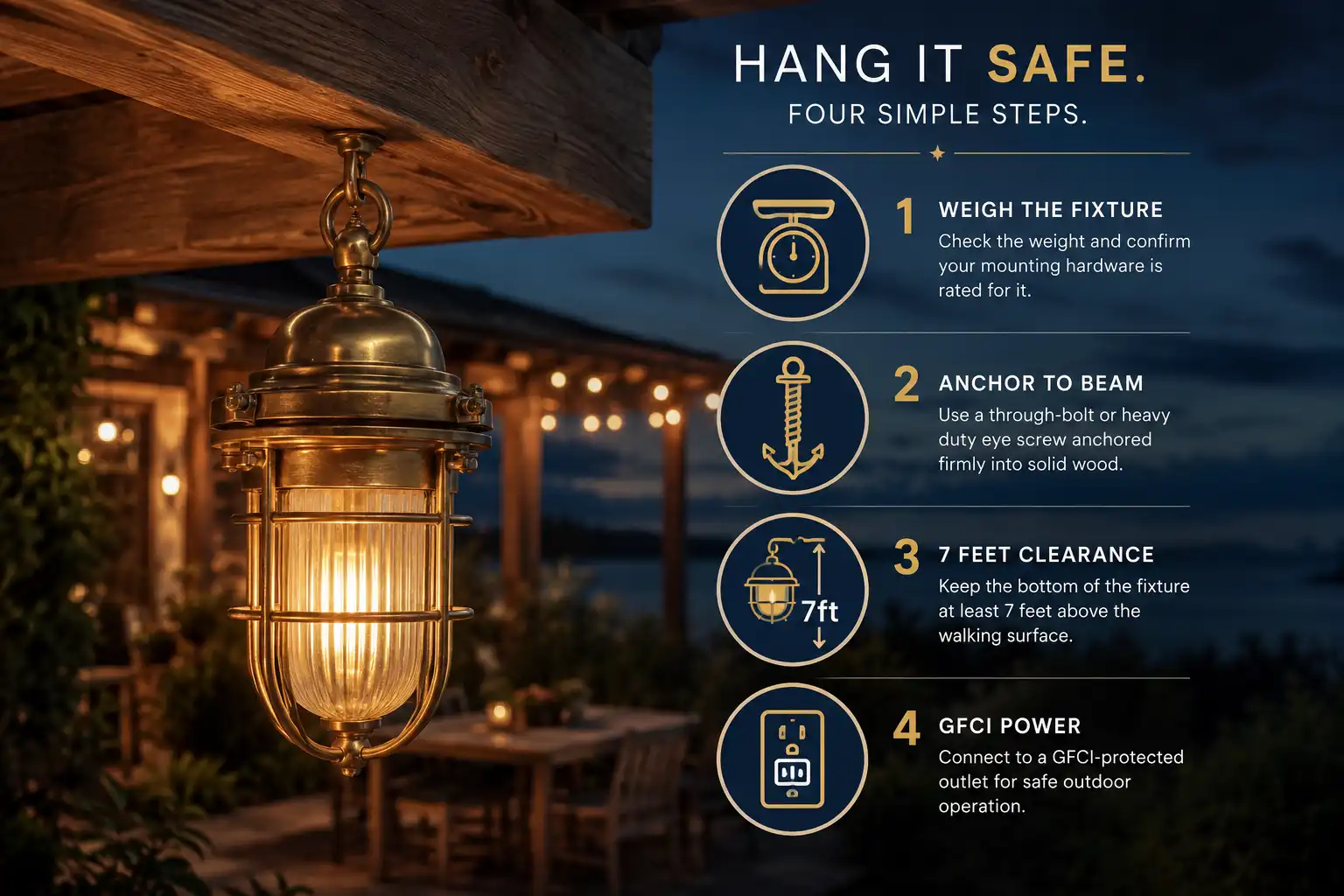
Hang deck lights from real structure, never from a light duty ceiling box or the fixture’s own cord. Use a fixture rated outlet box, or a stainless lag eye bolt driven into a beam, joist, or post. Keep the fixture base at least 7 feet above the deck floor and power it through a GFCI outlet.
Weigh the Fixture Before You Plan Anything
Put it on a bathroom scale. A cast brass or aluminum housing with thick prismatic glass usually lands between 4 and 20 pounds. A reproduction from a big box store weighs two.
That number decides everything else. The National Electrical Code requires a ceiling outlet box to support at least 50 pounds before it can carry a fixture on its own. Most plastic nail in boxes carry no weight marking at all. If yours has no rating stamped on it, treat it as a wiring point and put the load somewhere else. It helps to know what these old ship floodlights were built to do before you choose a spot.
Find Structure, Not Just Boards
Fascia trim, lattice, and thin ceiling panels will not hold a cast fixture. Look for a pergola beam, a rafter, a rim joist, or a 4×4 post.
Drill a pilot hole so the wood does not split. Turn in a lag eye bolt by hand until the full shank is buried. Within a mile of salt water, buy 316 marine grade stainless hardware. Salt air pits ordinary 304 stainless within a few seasons and chews through zinc plating faster still. The same logic applies to the fixture, since brass, bronze, and aluminum age differently on a coast.

Three Ways to Hang a Deck Light
Hardwired from a beam
The clean method for a covered deck with power already run. Fit a wet location rated box, hang the fixture on chain, then slide the canopy up to hide the hardware. Let the chain carry the weight and leave the supply cable slack. I covered running house current into a reclaimed fixture separately.
Chain and swag hook
No electrician needed. A swag hook takes the load and the cord runs to a weatherproof GFCI receptacle. I suggest this to renters, and to anyone who wants to live with a spot for a week before drilling.
Guide wire run
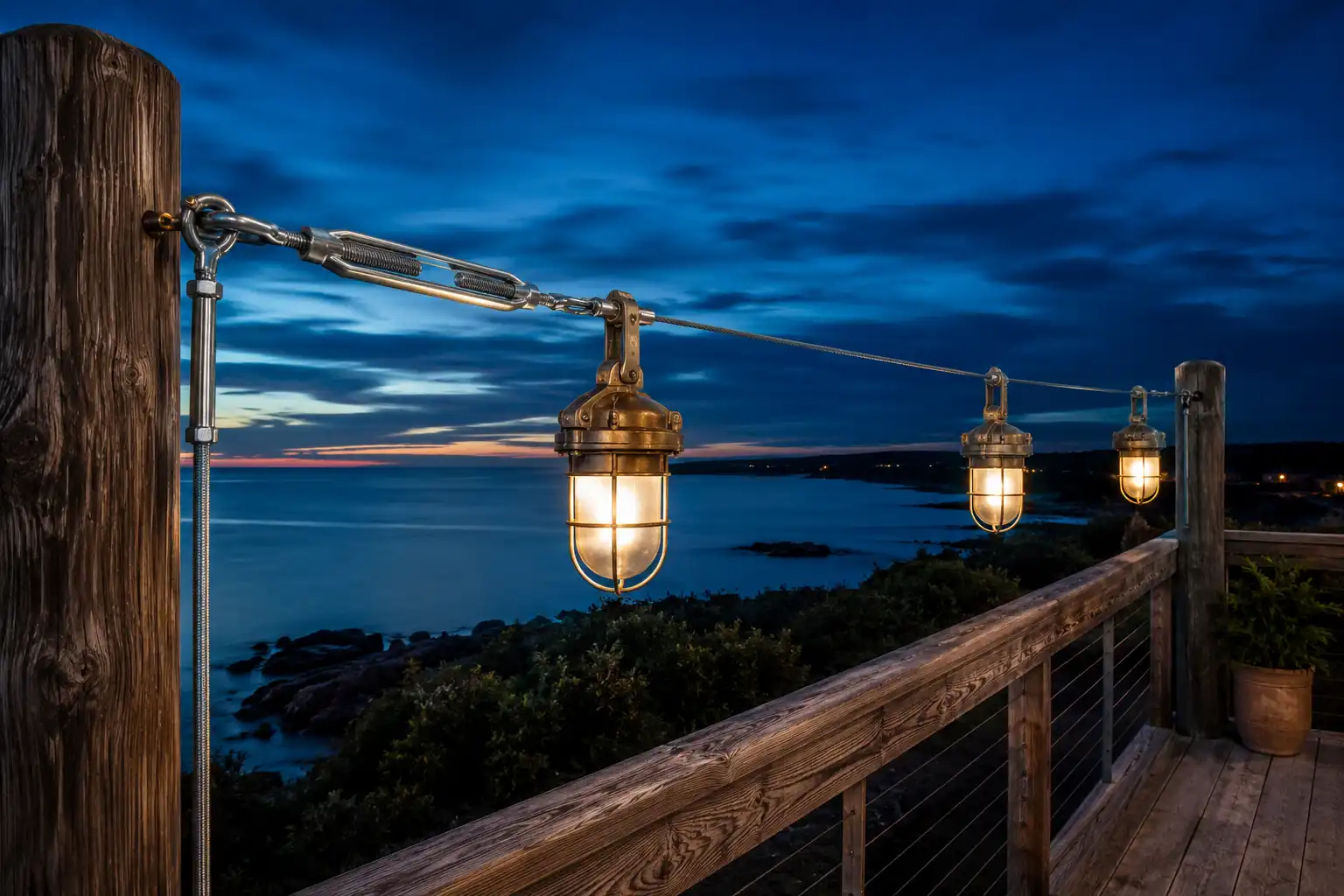
For two or more fixtures across an open deck, stretch 1/8 inch vinyl coated aircraft cable between two solid posts. Tension it with a turnbuckle until the sag is gone. Clip the lights and cord to the cable with UV stable zip ties every 12 to 18 inches. Any span over roughly 15 feet needs that cable, because a lamp cord stretches under weight and wind.
Hanging Height and Spacing
Leave 7 feet of clearance under the fixture anywhere people walk. Over an outdoor dining table, 30 to 36 inches above the tabletop lights faces without blocking the view across.
Along a beam or rail, space fixtures 8 to 10 feet apart. Closer than that and the pools of light merge into glare. One good fixture per seating zone beats four scattered evenly.

Keep the Water Out
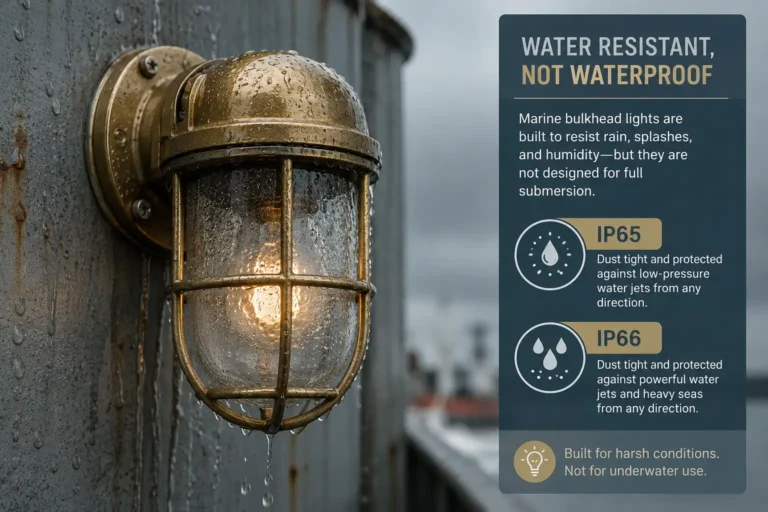
An uncovered spot needs a wet rated fixture. Damp rated is fine under a solid roof. Old ship lamps were built for green water over the bow, but decades of service take a toll on the seals.
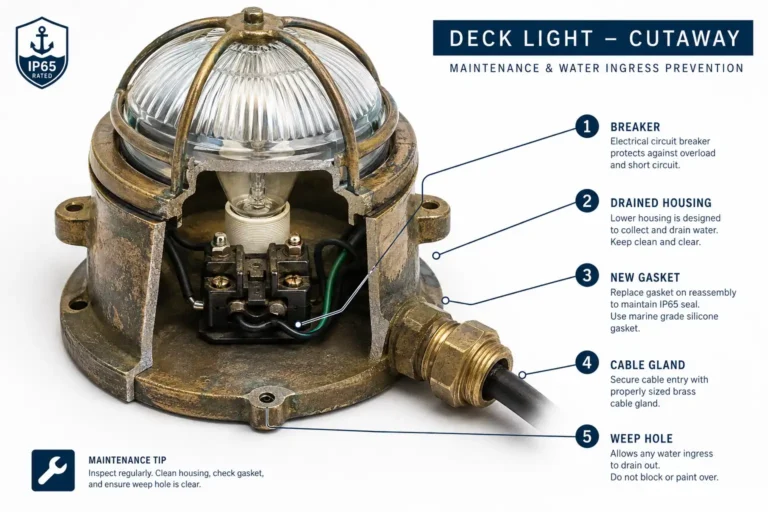
Replace the gasket before you hang anything. Check that the glass seats flat and the dogs clamp evenly. Fit a drip loop so rain runs off the cable instead of down into the housing. Skip that and you learn firsthand how moisture gets past a tired seal.
Before the Ladder Comes Down
Hang your full weight off the anchor point before the fixture goes up. If it flexes, it fails later. Check the fixture sits level, test the GFCI button, then run the lights an hour and feel for heat at the canopy.
Final Thought
The fixture is the easy part. The anchor point decides whether it is still hanging in five years. Weigh it, find framing, buy stainless, and keep your 7 feet of headroom.
Most of the reclaimed ship lamps I ship out spent 30 years bolted to a steel deck in the open ocean. Give one a solid beam and it will outlast the deck it hangs over. Enjoy the light.