What Are Passageway Lights Used For? Ship Duty and Home Uses
Last month I pulled eleven passageway lights off a Korean-built bulk carrier at the Bhatiari yard. Every cage had scuff marks on it. Crew shoulders, toolboxes, and elbows had been hitting those cages for forty years. That tells you what the fixture was made for. It lights a tight space where people keep bumping into things. Buyers ask me what else they can do with one, so here is the full picture.
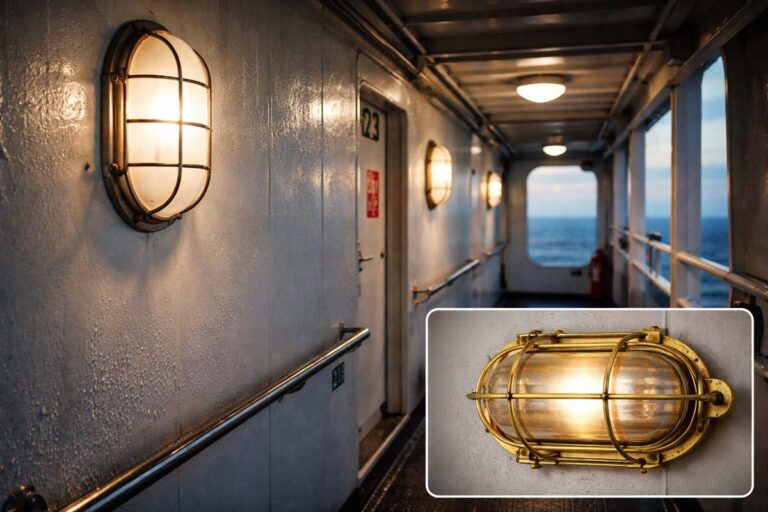
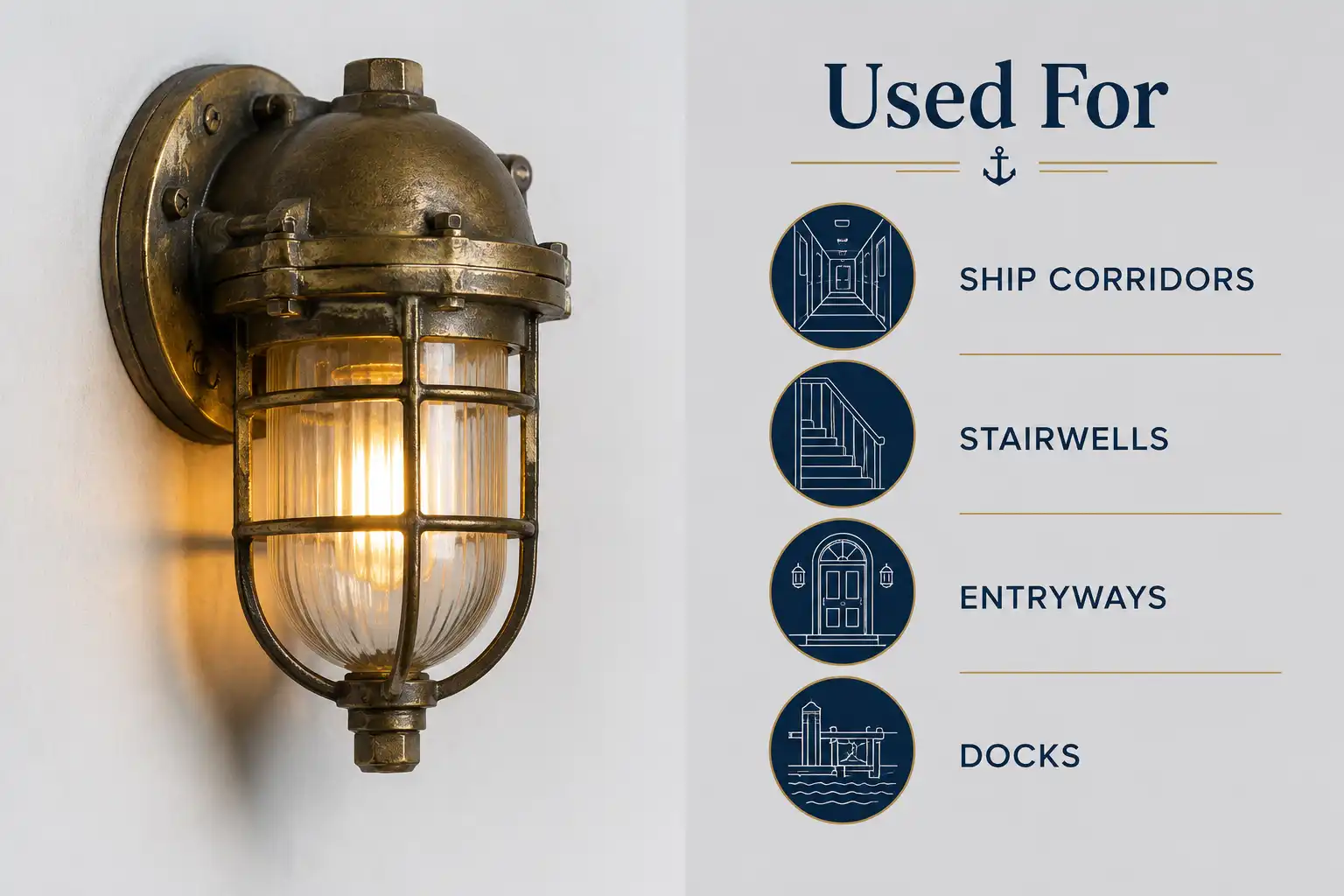
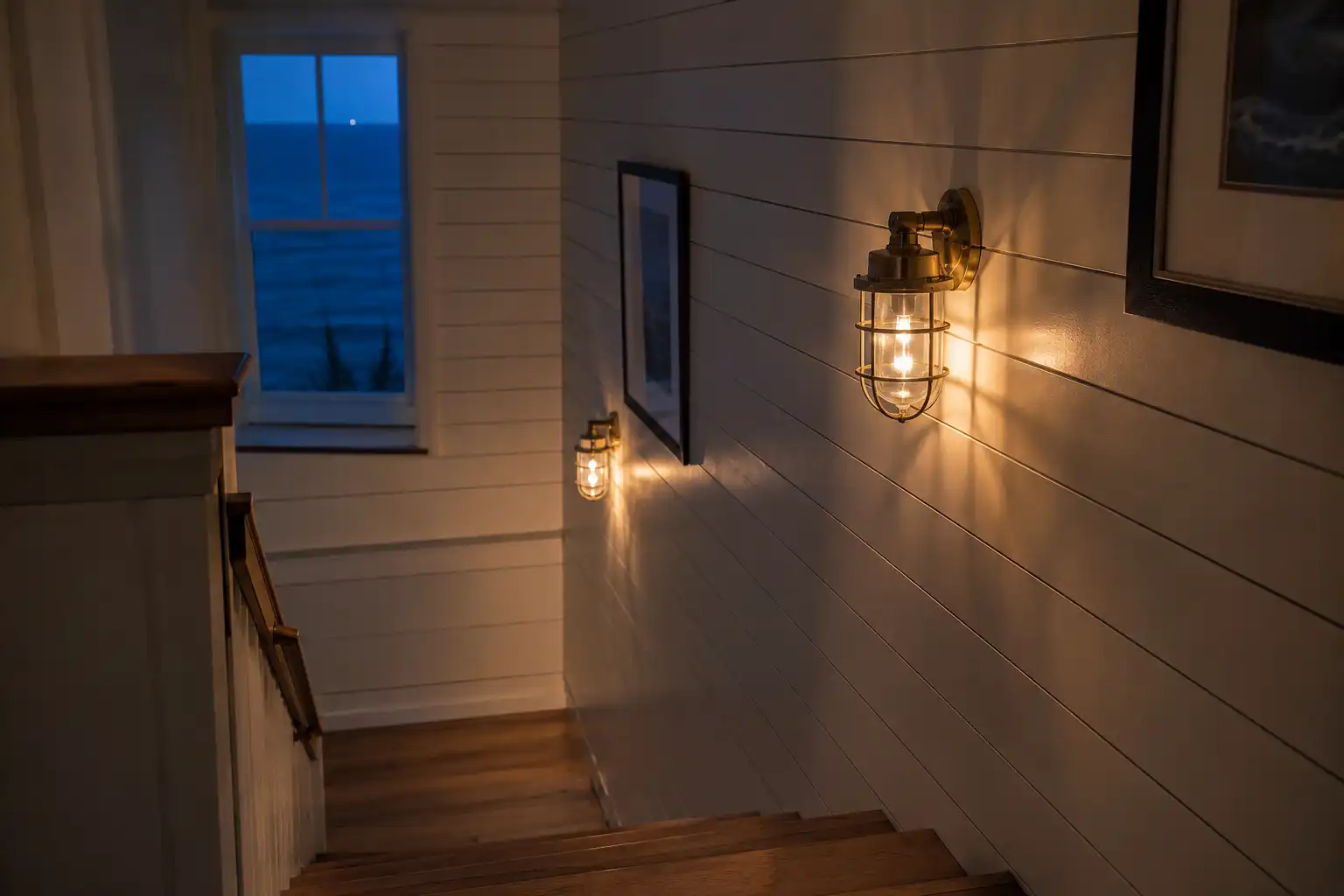
Passageway lights are used to light narrow interior corridors, stairwells, and crew walkways on ships. They give steady, low-glare light in tight steel spaces without sticking out into the walking path. Today people also use them as hallway sconces, stairwell lights, entry lights, and covered porch fixtures.
Learn more: How to Install Passageway Lights Without Ruining the Fixture
What Passageway Lights Are Used For on a Ship
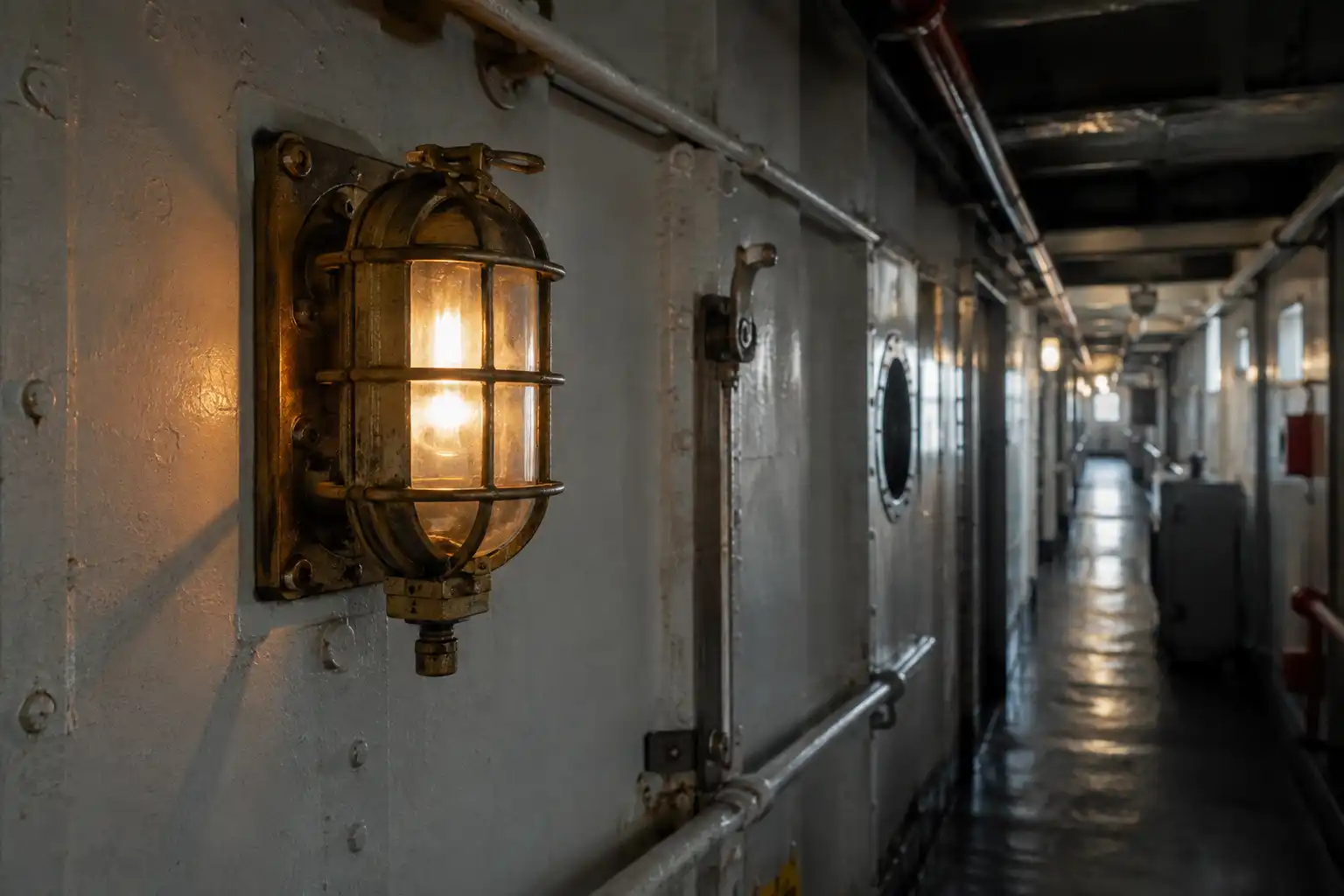
The main job is safe footing below deck. A cargo ship has no daylight in its interior corridors. Those corridors connect the cabins, the mess, the engine room, and the storage compartments.
Shipboard lighting design usually targets 50 to 100 lux in passageways and on ladders. That is enough to walk safely with a coffee mug and a wrench. It is not bright working light, and it was never meant to be.
The flush body matters as much as the light. A deep fixture in a 900 mm wide corridor becomes a head injury. That is why the housing sits close to the bulkhead and the glass hides inside a cage. If you want the shipboard side in detail, I covered how crews on commercial vessels rely on these fixtures in a separate piece.
Escape Route and Emergency Duty
Those same corridors are escape routes, so the lighting carries a safety role too. Under SOLAS rules, emergency lighting at muster stations and boarding points must keep running for three hours after main power fails.
Escape routes also get marked separately. Regulations call for lighting or photoluminescent strips no more than 300 mm above the deck, at every angle and intersection of the route. That is low location lighting, and it works when smoke fills the upper half of a corridor.
So a standard corridor fixture is the everyday layer. The emergency circuit and the low strips are the backup layer. Both exist because a dark passageway on a burning ship kills people.
What People Use Passageway Lights For Today
Most fixtures I ship out now go into houses, not vessels. These are the uses that actually work.
Hallways and stairwells. This is the closest match to the original job. Space them 6 to 10 feet apart, same as on the ship.
Bedside and bunk reading. The cage throws a nice shadow pattern, and the light stays out of your partner’s eyes.
Bathrooms and laundry rooms. The gasket and sealed glass handle steam better than a fabric shade ever will.
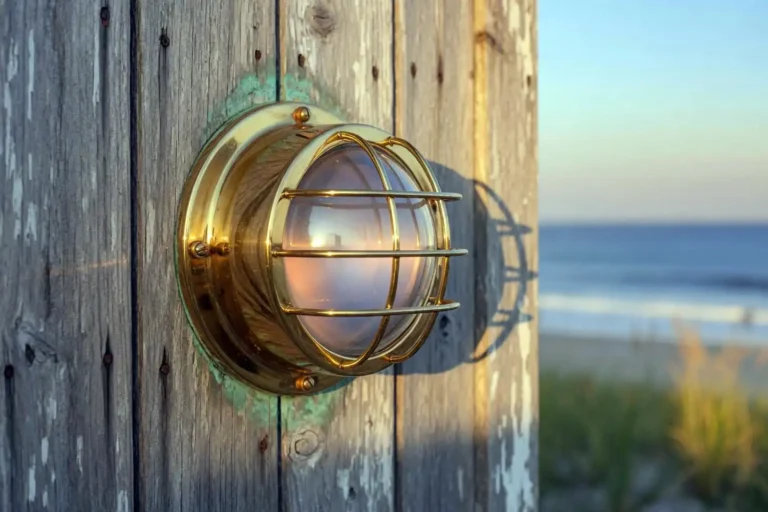
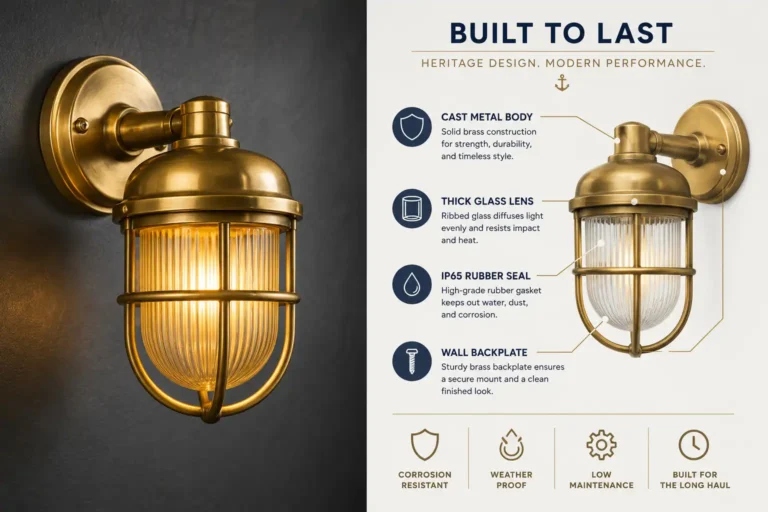
Entryways and covered porches. A cast brass body survives coastal air for decades. It develops patina instead of rust.
Docks, sheds, and workshops. Bump-proof by design. The cage was built for exactly this abuse.
Boats still in service. Plenty of my buyers own working trawlers and yachts. The fixture goes back to doing its old job.
Before you pick a spot, it helps to know the parts inside a ship corridor fixture and which ones need replacing.
Jobs These Lights Do Not Do
A passageway light is not a room light. It holds one bulb behind thick glass and a metal cage. Both soften the output.
Many restored brass fixtures with pressed glass globes cap out around 25 watts of incandescent heat. A hot bulb in a sealed globe cooks the socket and cracks the glass. LED lamps solve that, since a bright LED runs cool at low wattage.
So use them in pairs or in a row. One fixture will not light a living room. If you want more spread from a single point, a wider bulkhead style fixture suits that better.
Match the Use to the Rating
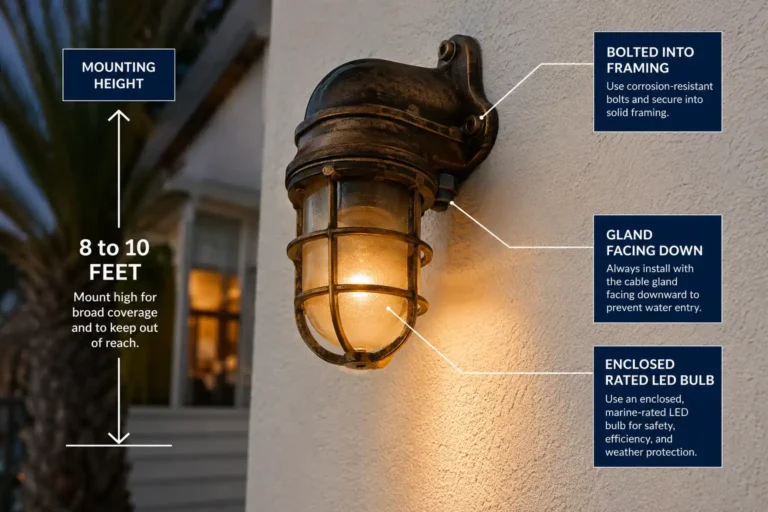
This part decides whether the fixture lasts. Marine passageway fixtures commonly sit around IP54 in original form. That handles splash and humidity, not a jet of water.
For US and Canadian installs, the label matters more than the IP number. Damp location listing covers sheltered spots like a covered porch, a bathroom away from the spray, or a basement. Wet location listing covers direct rain on an open wall or post. When in doubt, go wet rated.
Old salvage arrives with dried gaskets and brittle cloth wire. Nothing I pull from a scrapped hull is ready for a wall as is. Test how waterproof these old marine fixtures really are before you trust one outside. Then get a salvaged fixture rewired the safe way, with a new socket and a fresh gland seal.
Final Thoughts
A passageway light was built to do one small job very well. Light a narrow space, take a beating, and keep working for decades. That is why it fits a home hallway so naturally.
If you are hunting for one, look at the cage and the backplate first. Those tell you how hard the fixture worked. Most of the salvaged corridor lights in my stock still carry those marks, and I think that is the best part.