What Are Ship Deck Lights Used For on a Working Vessel
Last month I pulled eleven floodlights off a bulk carrier being cut up at a yard near Chattogram. Every one was bolted facing down and slightly outboard. Not a single one aimed at the horizon. That angle answers the question before you read a spec plate. A deck light exists to put light on the deck you are standing on. Everything else about the way these fixtures are built follows from that one job.
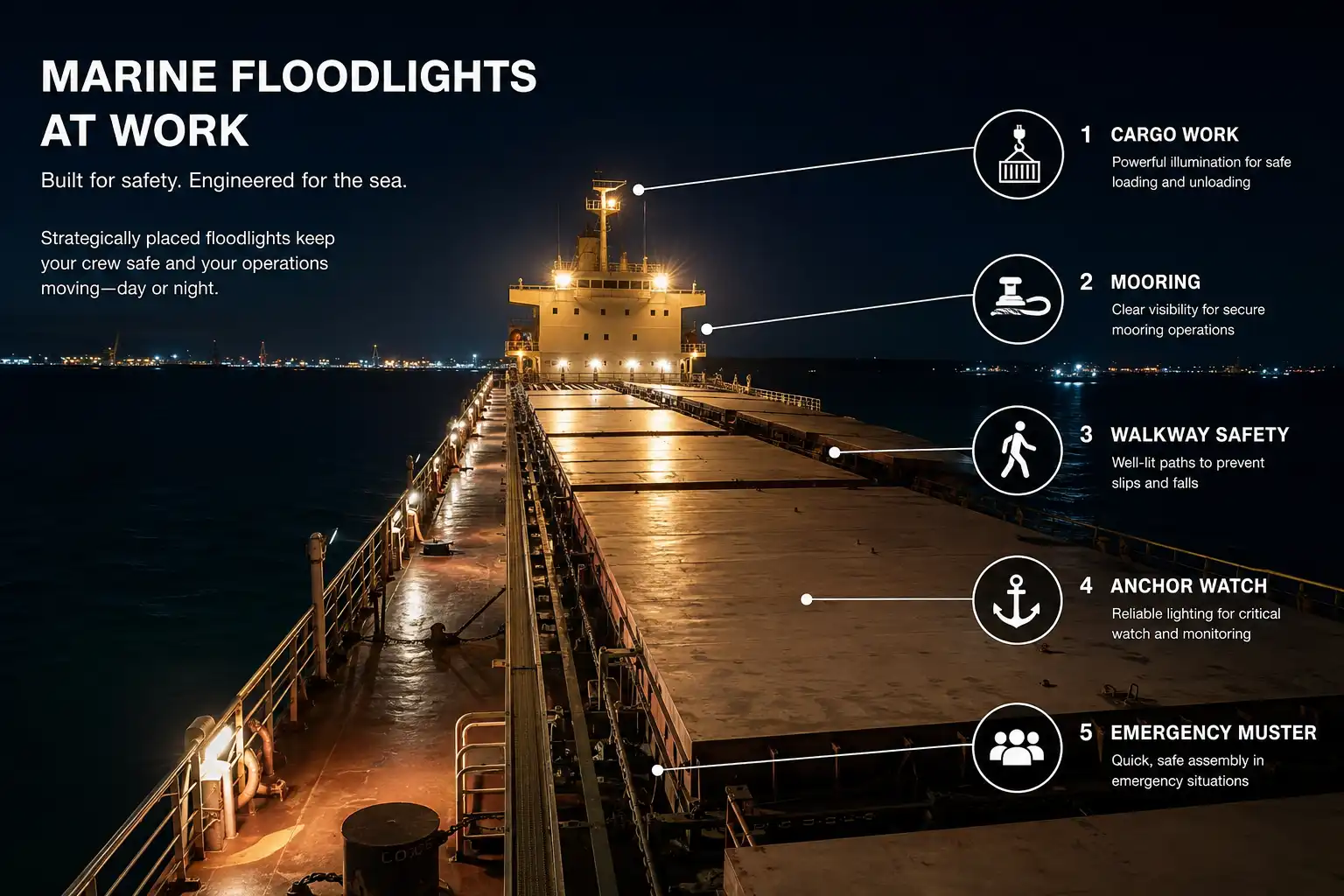
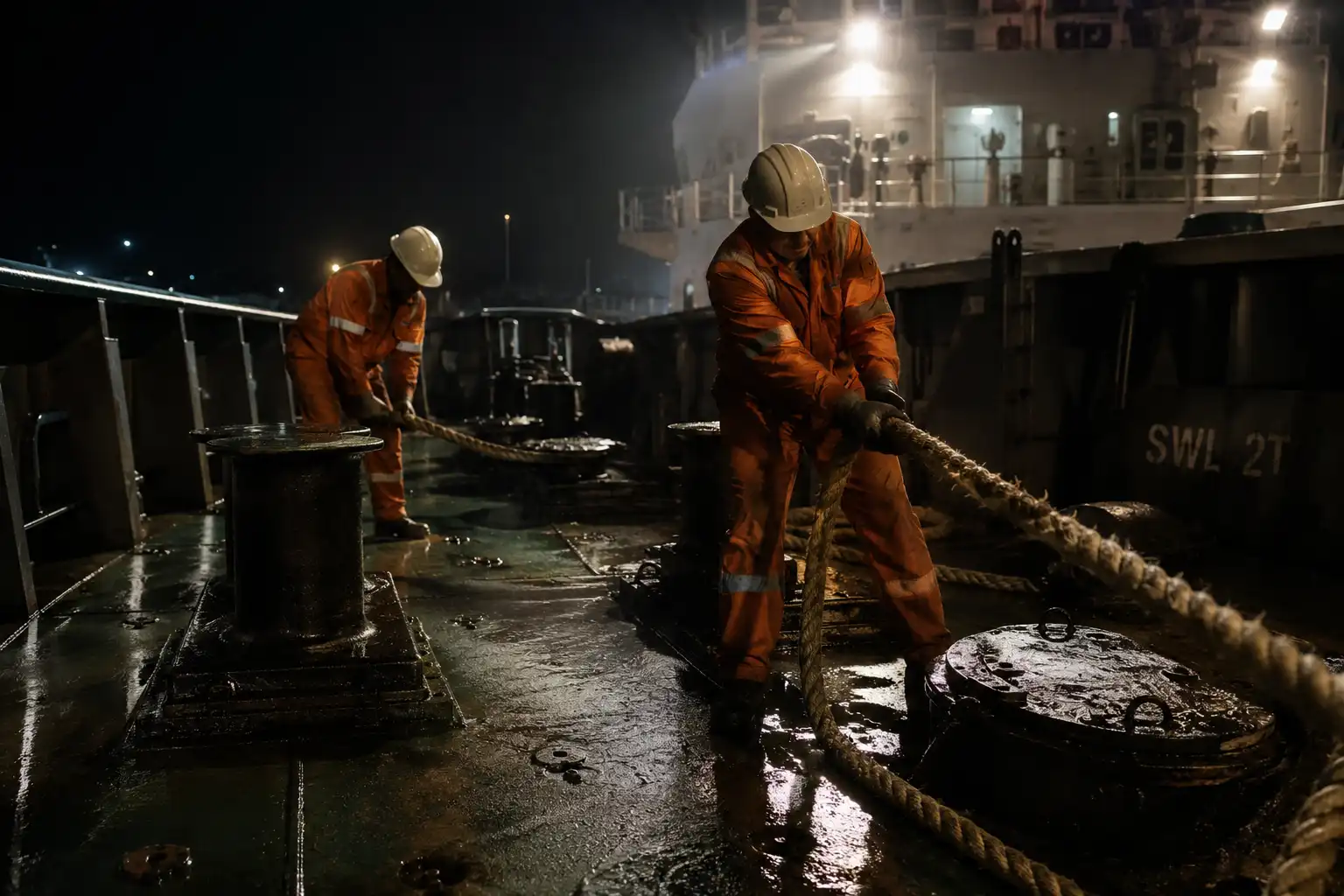
Ship deck lights are work lights for open deck areas. Crews use them to handle cargo, tie up mooring lines, move safely across the deck, and make repairs after dark. They also light muster stations in an emergency, and they carry no signaling role at all.
Cargo Handling Is the Main Job
Cargo work is why most of these fixtures get fitted. Hatch covers open at night. Cranes swing. Hoses connect and disconnect. All of it needs light landing on the working surface, not a general glow overhead.
The levels are written into regulation. US dock safety rules ask for at least five foot candles, roughly 54 lux, at cargo transfer points. Tanker rules go further, setting one foot candle for work areas and five at transfer connections, measured three feet above the deck.
Aim matters as much as output. The same rules say lights must not shine into the eyes of winch drivers, crane operators or hatch tenders. That is why brackets on salvaged units are so often bent down at an odd angle. Somebody adjusted them on a live ship for a reason.
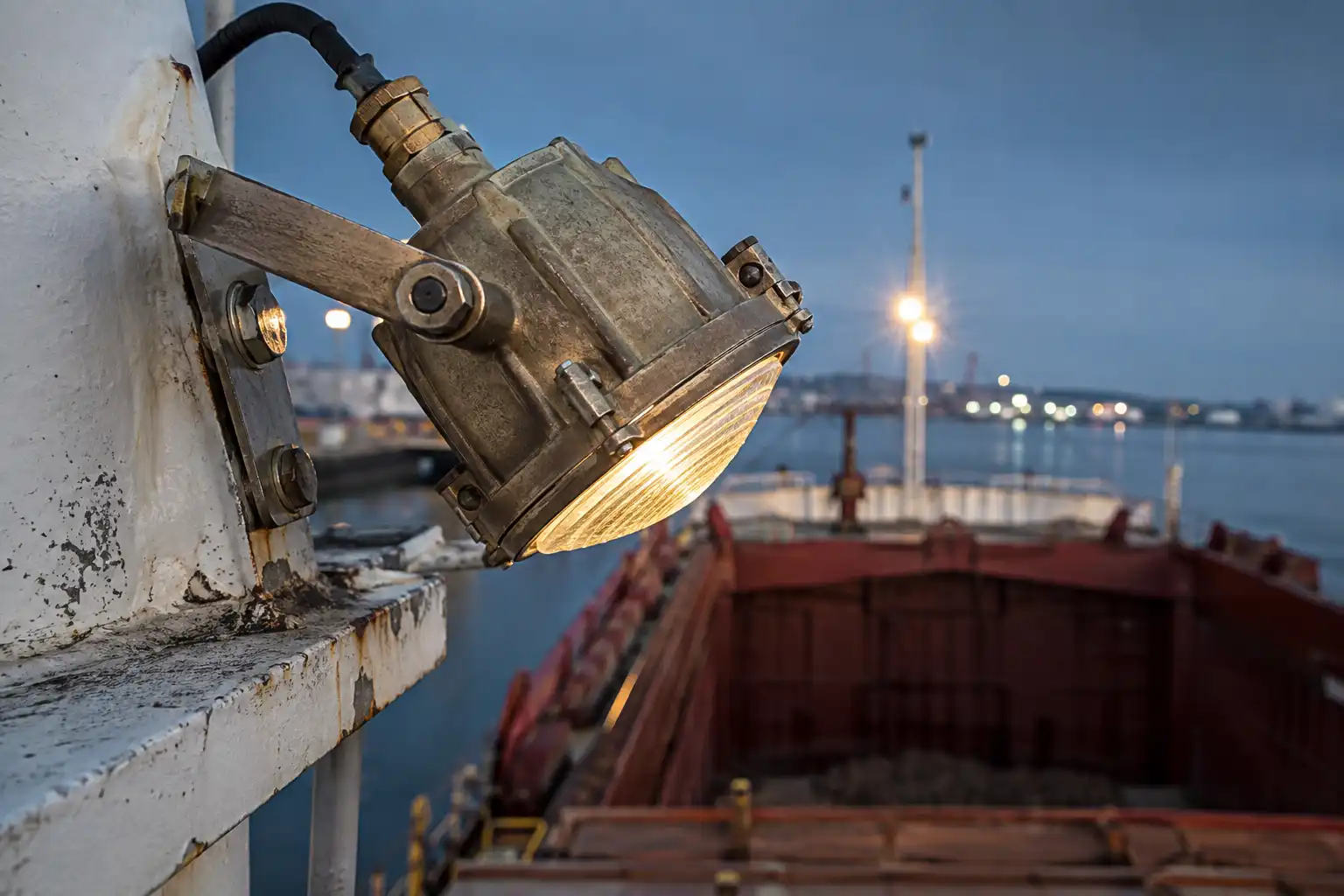
Learn more: How Do Ship Deck Lights Work? A Salvage Dealer Explains
Mooring Stations and Anchor Work
The forecastle and the after mooring deck get their own lights. Ropes under tension are dangerous in the dark. A crew needs to see the bight of a line, the drum of a winch, and the tug’s heaving line coming aboard.
Anchoring adds a hard rule. Under COLREGs Rule 30, a vessel at anchor may use her working lights to illuminate her decks, and a vessel of 100 meters or more has to do it. On bigger ships, deck lighting at anchor is not a choice. It sits alongside the navigation light rules cargo ships have to meet.
Safe Movement Across the Deck
Plenty of deck lights do nothing more dramatic than keep people from falling. Walkways, ladder tops, hatch coamings and mooring bitts all sit inside somebody’s beam.
Marine lighting guidance puts an average of about 50 lux on an open deck in normal operation, with a color rendering index above 80. That second number surprises people. Good color rendering lets a crew tell a red valve handle from a green one, and catch an oil sheen before it spreads.
Repairs and Maintenance After Dark
Ship work does not stop at sunset. Chipping, painting, greasing wires and changing a valve gland all happen under fixed deck lights and portable ones plugged into deck sockets. On tankers and gas carriers, any fixture in a hazardous zone needs IECEx or ATEX certification, with class societies like DNV, ABS and Lloyd’s Register signing off.
Emergency and Abandon Ship Duty
This is the use people rarely think about. SOLAS requires emergency lighting at every muster and embarkation station, and over the ship’s sides, running for three hours on emergency power. When a lifeboat is prepared and launched, the boat, the davit and the water below it all have to be lit.
So some deck lights are life saving equipment in every practical sense. They were wired to a separate emergency board, sited above the uppermost continuous deck.
One Thing Deck Lights Are Never Used For
Signaling. A deck floodlight says nothing about the ship’s course, size or condition. COLREGs Rule 20 is blunt: from sunset to sunrise no other lights may be shown if they could be mistaken for the prescribed lights, dim them, or interfere with keeping a proper lookout.
So deck floods get switched off at sea. A floodlit deck ruins the bridge team’s night vision and can hide the ship’s own sidelights from another vessel. Long distance searching belongs to the narrow beam searchlights fitted on bridge wings instead.
What They Are Used For Ashore
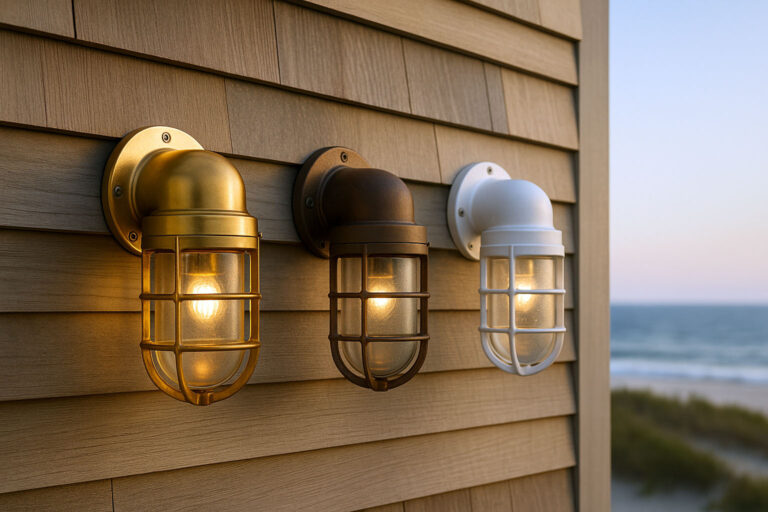
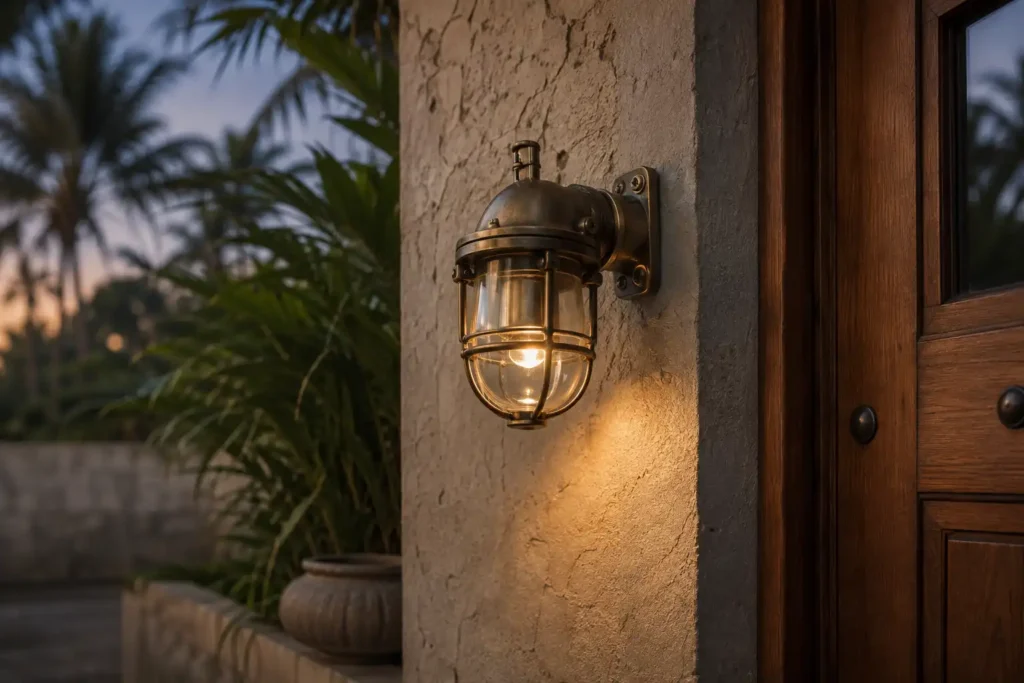
Once a light comes off the ship, its old job becomes its best feature. Cast bronze or aluminum body, thick glass, gasketed cover, built to shrug off a decade of salt spray. That makes the reclaimed deck lighting we recover here a strong outdoor choice for a porch, a driveway or a garden wall.
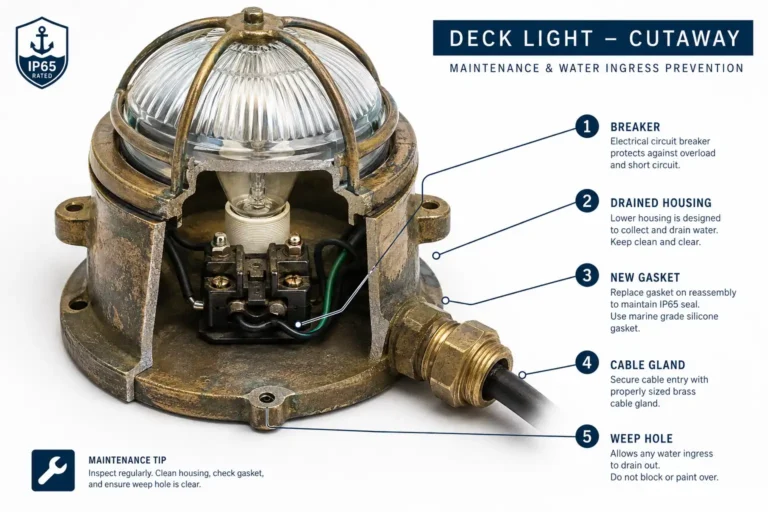
Two checks before you fit one. Confirm the housing still seals, because how well an old marine fixture keeps water out comes down to the gasket and the gland. Then rewire it to modern standards. If moisture shows up inside the glass later, tracking down a leak in an old deck lamp is usually a one afternoon fix.
Final Thoughts
Deck lights had the least glamorous job on the ship and one of the most useful. They let people work safely. Fit one over your own door and you are using it for exactly what it was built to do. Enjoy it.