Are Bulkhead Lights Waterproof, or Just Very Good in Rain?
A buyer in Florida sent me a photo last month. Half an inch of standing water sitting inside the glass of a brass fixture I had shipped him. The light was sound. The gasket inside it was original, and that rubber went hard sometime in the late 1980s. Water gets into old ship lights for dull reasons. A flat gasket, a loose dog, a cable entry nobody tightened. The cast housing is almost never the problem.
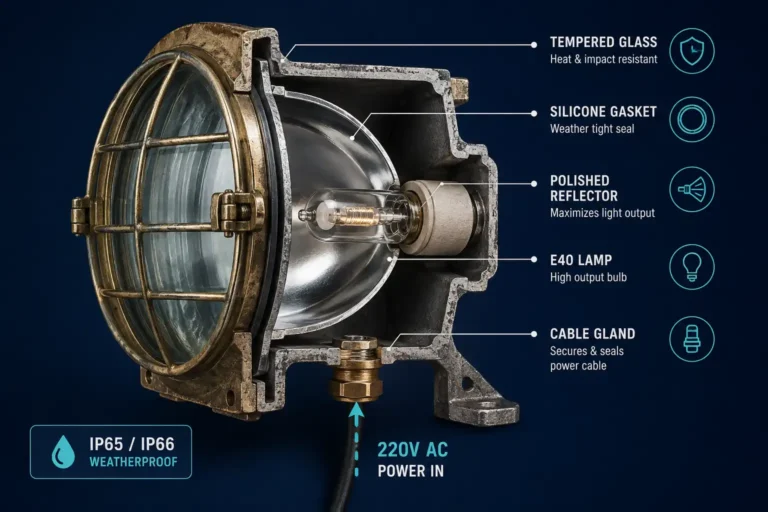
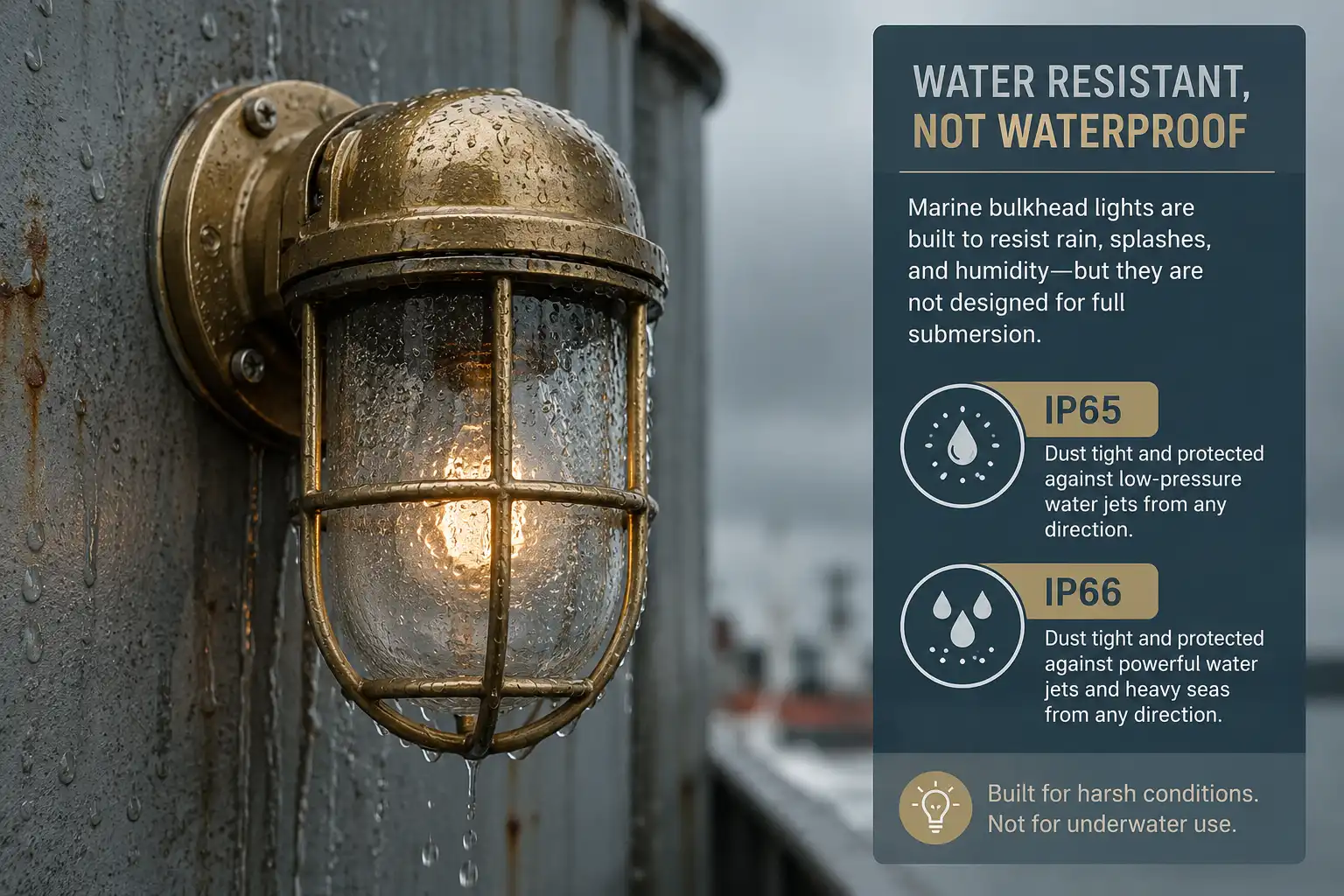
Most bulkhead lights are water resistant, not fully waterproof. Marine grade units are typically sealed to IP65 or IP66, which handles driving rain, salt spray, and deck washdown, but not submersion. A salvaged fixture only holds that level of protection if its gasket, glass, and cable gland are still in good shape.
Waterproof and Weatherproof Do Not Mean the Same Thing
Weatherproof means water gets thrown at the fixture and runs off. Waterproof means the fixture can sit under water and survive.
Ship bulkhead lights were built for the first job. They live on weather decks, in passageways, and near engine room doors. They take rain, spray, and a pressure hose during washdown. Nobody designed them to be dunked.
That is why understanding how these sealed ship fixtures do their job matters more than any marketing word on a box.
What the IP Number Actually Tells You
IP stands for Ingress Protection. It comes from IEC 60529, and it replaces vague words with a lab test. The first digit covers solids from 0 to 6. The second covers liquids from 0 to 9.
- IP65: dust tight, protected against low pressure water jets
- IP66: dust tight, protected against powerful jets and wind driven rain
- IP67: protected during temporary immersion, 1 meter for 30 minutes
- IP68: protected during continuous immersion at the depth the maker states
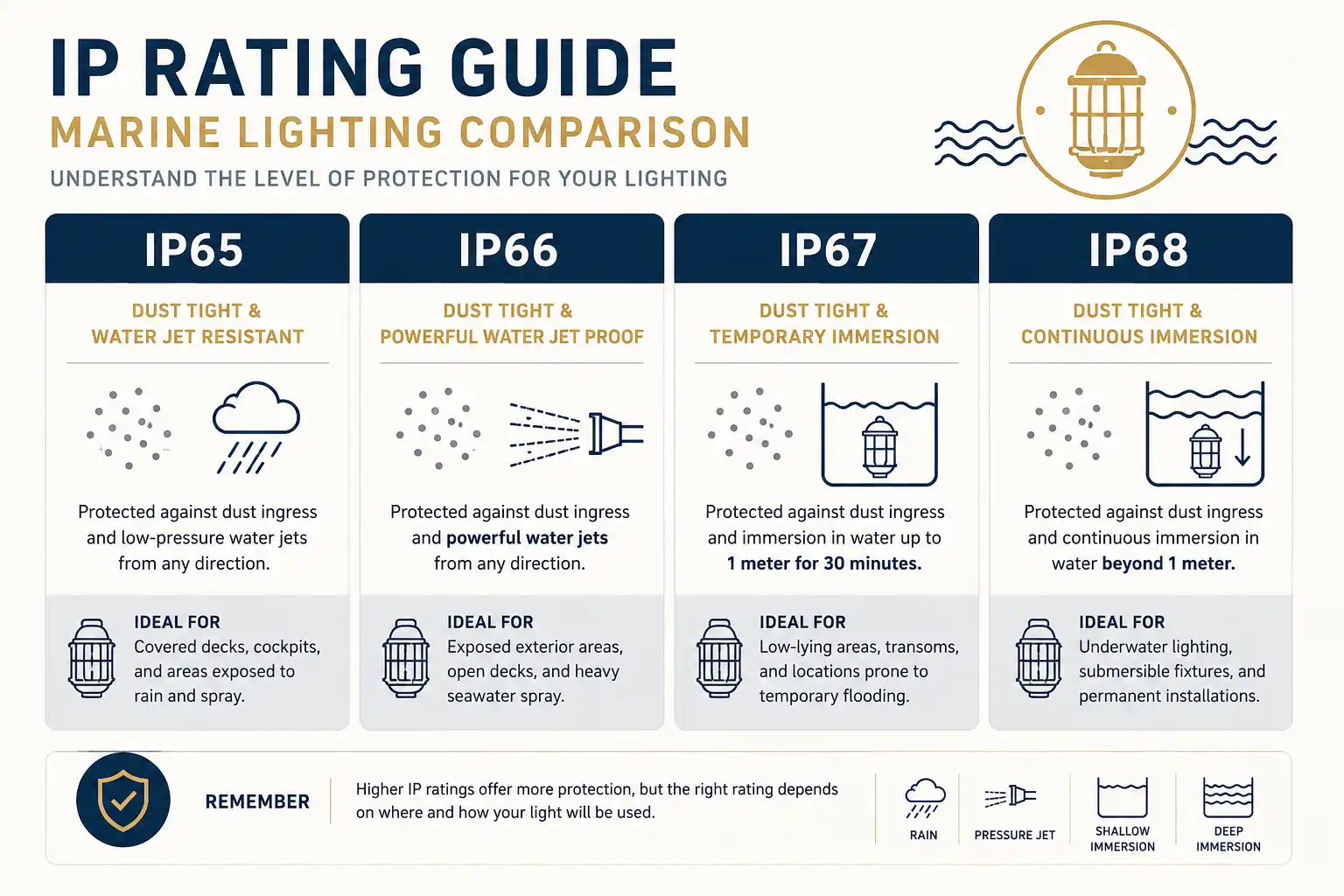
One point people miss. The digits are not cumulative. IP67 is tested in still water, so it certifies nothing about a pressure hose. IP65 covers the jet and not the dunk. A fixture built for both carries two ratings, such as IP66 and IP68.
What Rating Do Real Ship Bulkhead Lights Carry?
Working shipboard fixtures usually sit at IP56 on older stock and IP66 on anything modern. IEC 60092-306 covers luminaire installation on ships, and it expects outdoor housings to be metal rather than plastic.
That is why the Daeyang, Wiska, and Shengan castings I pull from the yards in Chattogram are bronze, brass, or marine aluminum. Cast metal, thick glass, and a compression seal. The watertight and weatherproof shipboard styles all share that same basic construction.
Why a Salvaged Fixture Loses Its Rating
A light that held IP66 on a cargo ship in 1979 will not hold it today. Four things fail.
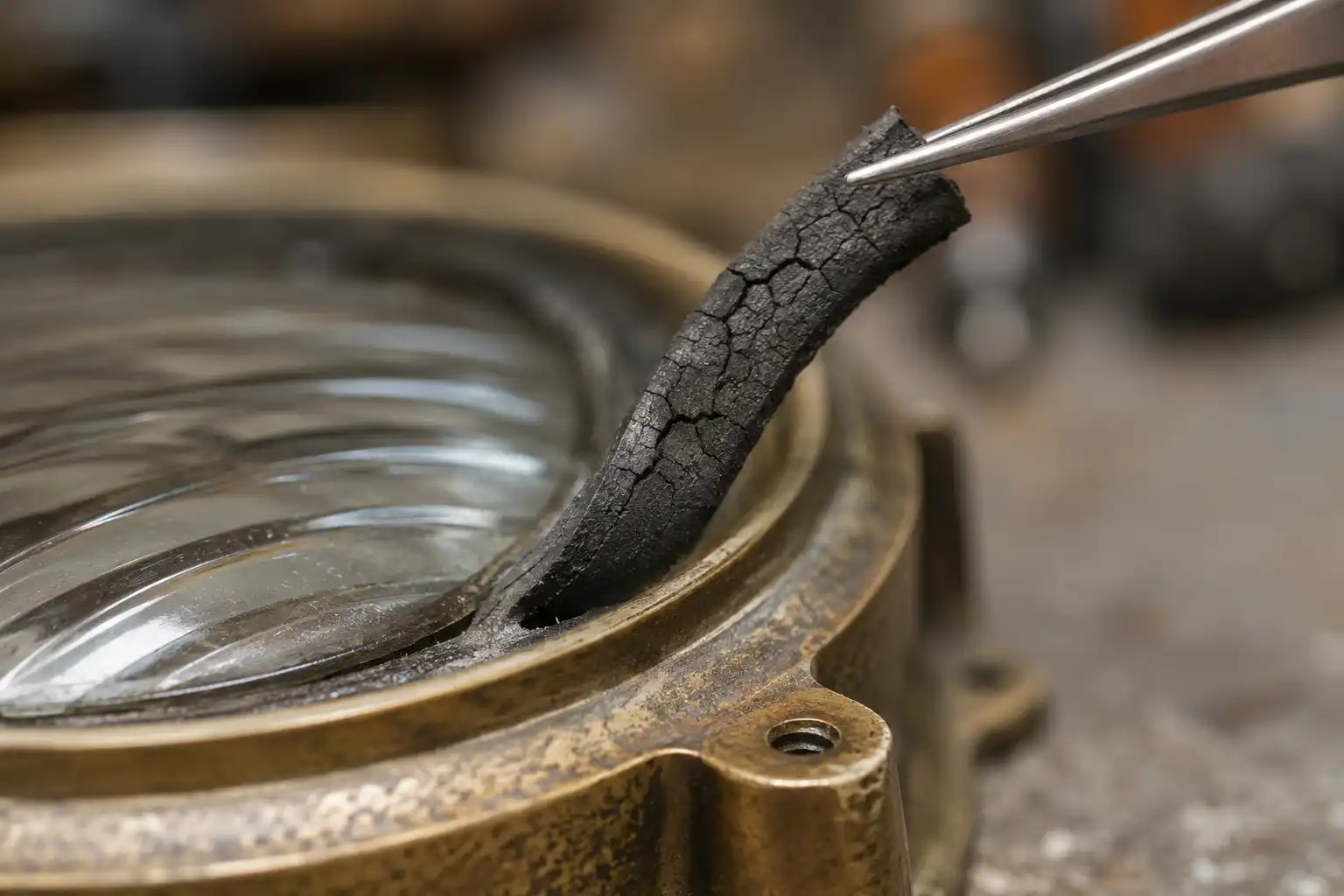
The gasket. Rubber shrinks, hardens, and cracks. This is the cause about eight times out of ten.
The glass. A chipped rim or a hairline crack breaks the seal even when the glass looks fine from three feet away.
The dogs and bolts. Corroded threads mean you cannot pull the cover down evenly, so the gasket never compresses.
The cable entry. Original glands go brittle. Plenty of fixtures reach me with the gland missing entirely.
How I Check a Light Before It Ships
I press a thumbnail into the gasket. If it does not spring back, it goes in the bin. I run a finger around the glass rim feeling for chips, then close the cover and check the gap is even the whole way around.
Then I put a hose on it. Not a jet, just a steady spray from every angle. Water inside means the seal has failed. Crude test, but it works.
Getting the Seal Back
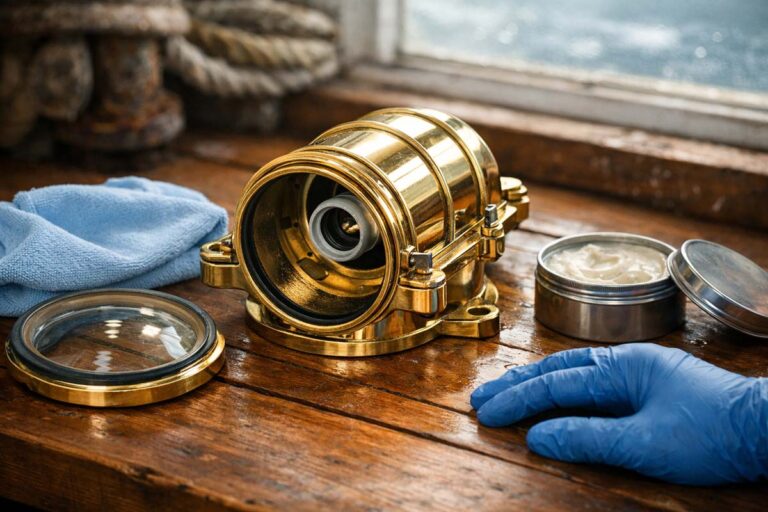
Replacing the gasket restores most of the protection. Silicone gasket cord holds up far better than original rubber in coastal heat. Fit a new marine grade cable gland at the same time.
Do not smear sealant around the rim and call it done. That traps moisture and makes the next service miserable. If you already have water inside a fixture, my notes on tracing leaks in old deck lamps walk through the usual suspects.

Where You Can Safely Mount One
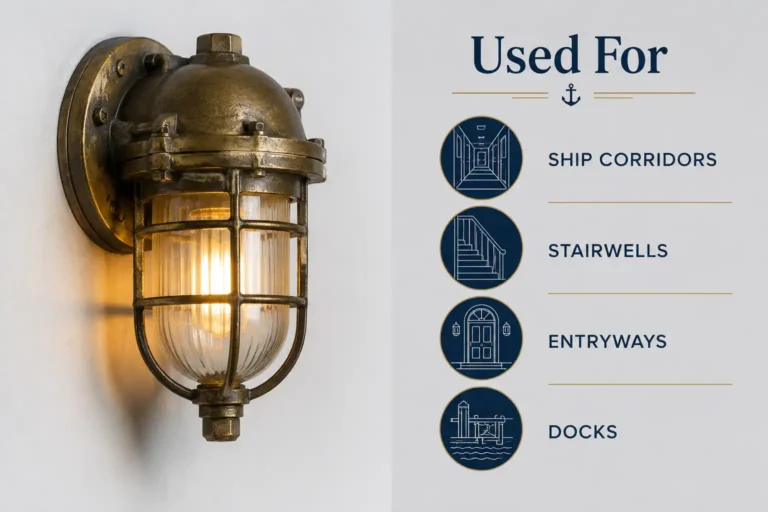
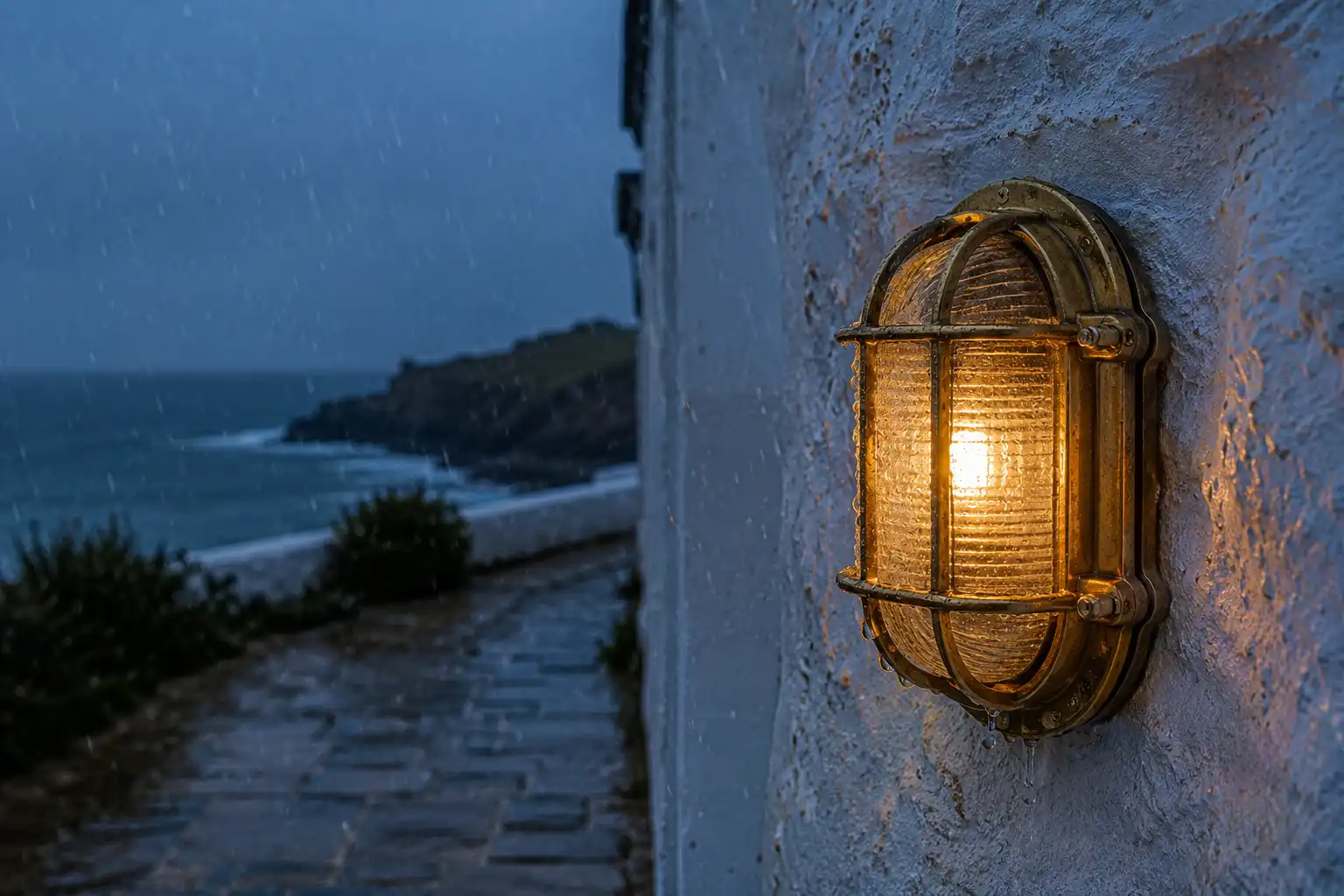
A resealed bulkhead light is fine on an exposed exterior wall, under a soffit, in a bathroom, or beside a garden gate. Rain and spray are not a threat.
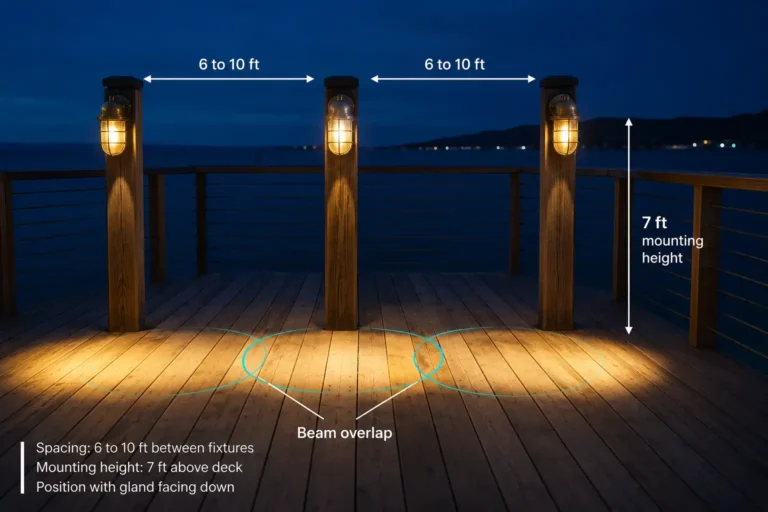
Do not put one under water. No pond, no pool floor, no fountain. Vertical mounting helps too, since a downward facing lens sheds water instead of holding it. Deciding between interior and exterior placement is worth thinking about before you drill.
Salt air also chews through cheap alloys, so the case for brass against stainless housings is worth weighing if you live near the coast.
Final Thought
Treat a bulkhead light as rainproof, not submersible, and you will get decades out of it. Change the gasket, fit a proper gland, and stop worrying about the weather.
Good luck with yours.