What Are Nautical Lanterns? Parts, Types, and Uses
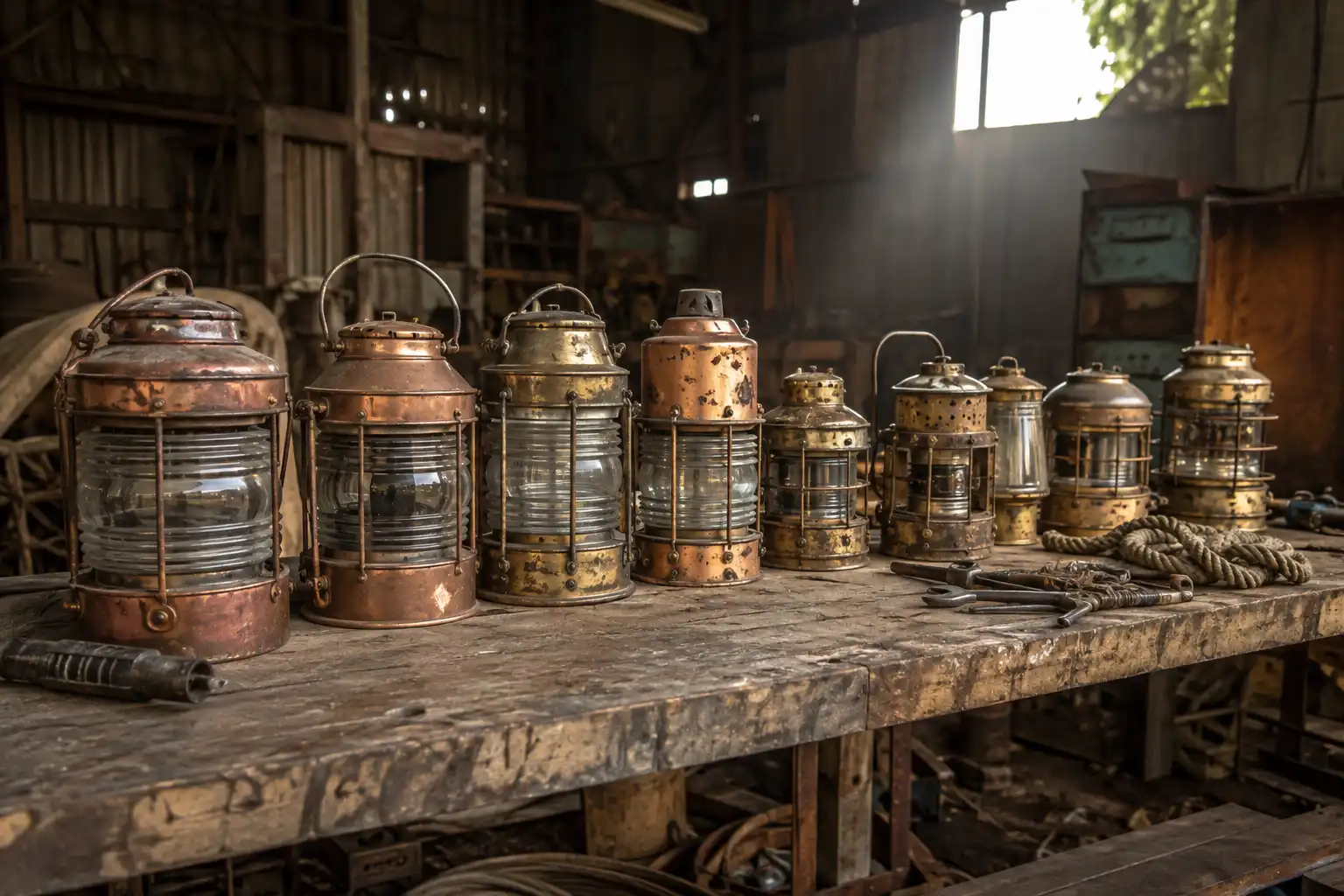
A crew dropped eight copper lanterns on my bench in Chattogram last month, cut loose from a Japanese bulk carrier. The wicks were still in them, stiff with old kerosene. One had a date scratched into the fuel font by hand. Lanterns are the oldest thing I trade in. They are also the item buyers understand least. So here is the straight version.
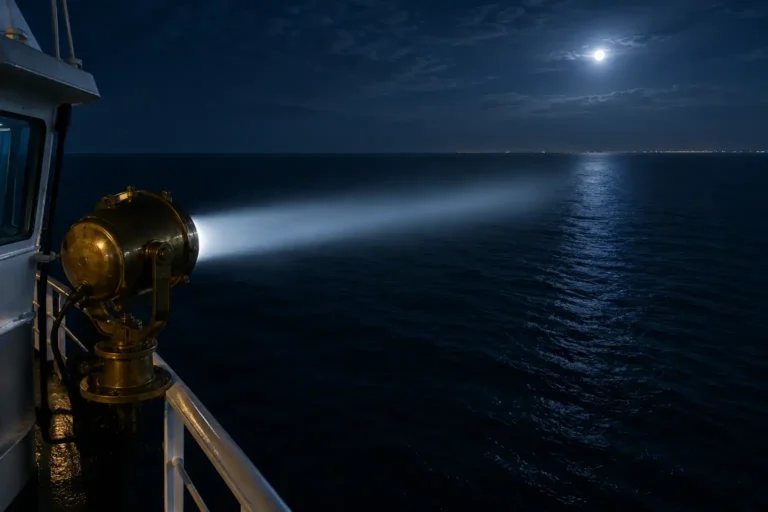
Nautical lanterns are enclosed shipboard lamps that shield a flame or bulb behind glass and throw light where the crew needs it. The originals burned oil or kerosene through a wick, behind a thick ribbed lens that stretched the flame’s reach. Ships used them for anchoring, signaling, cargo work, and night rounds on deck.
What Turns a Lamp Into a Lantern
A lantern is built to keep burning when the weather is against it. That is the entire design brief.
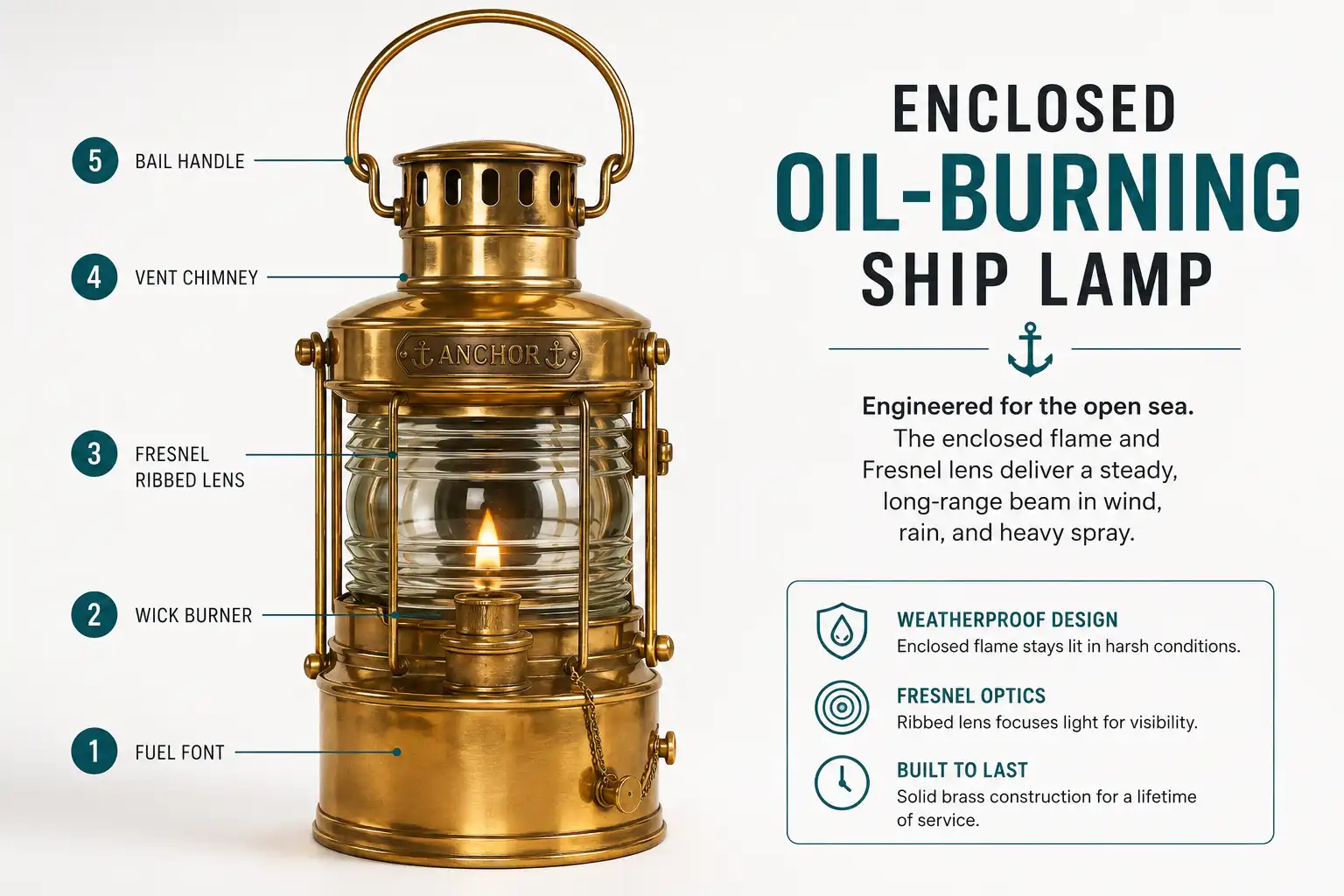
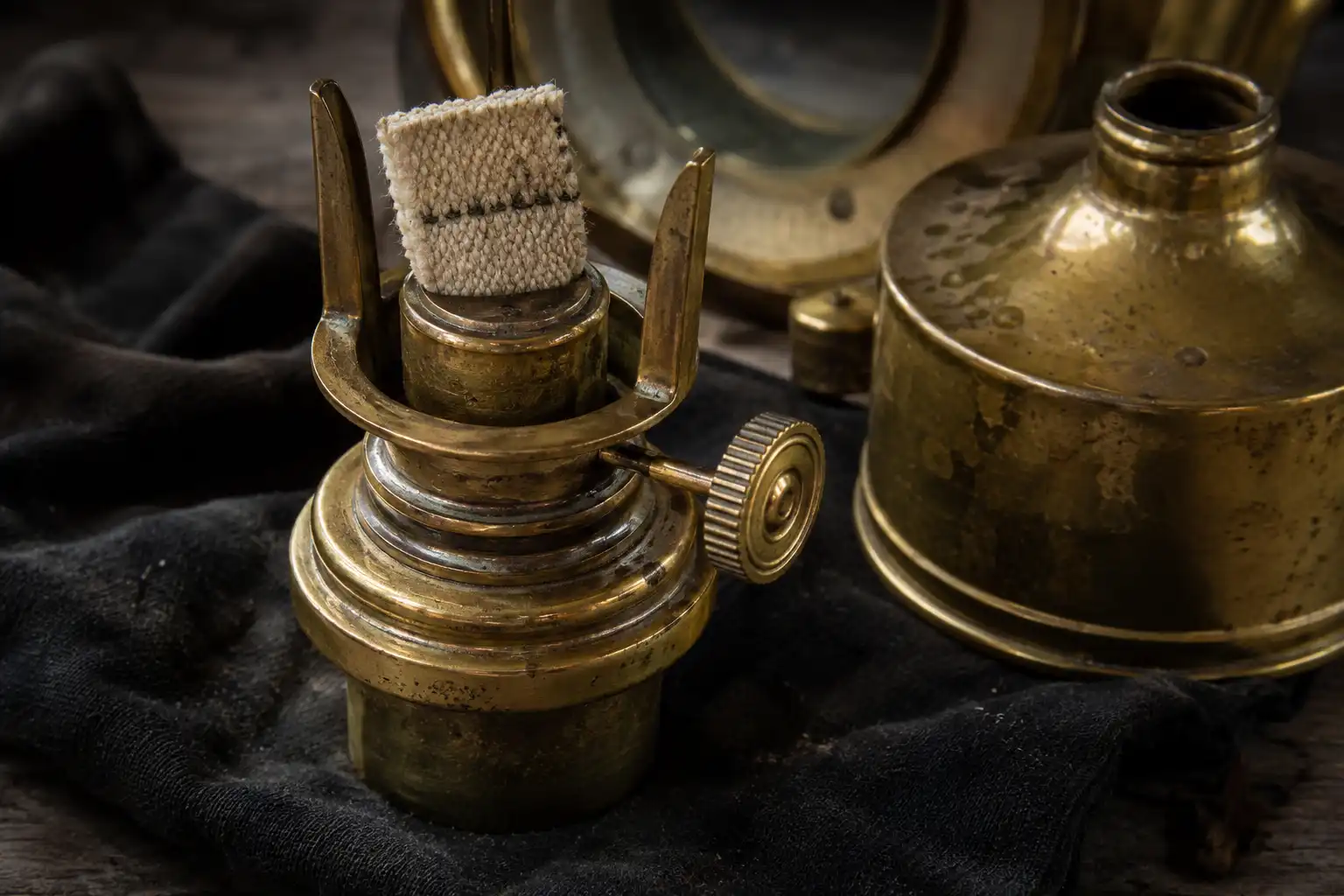
Strip one down and you find the same parts nearly every time:
- A fuel font, the reservoir holding the oil
- A burner with a flat wick and a small wheel to raise or lower the flame
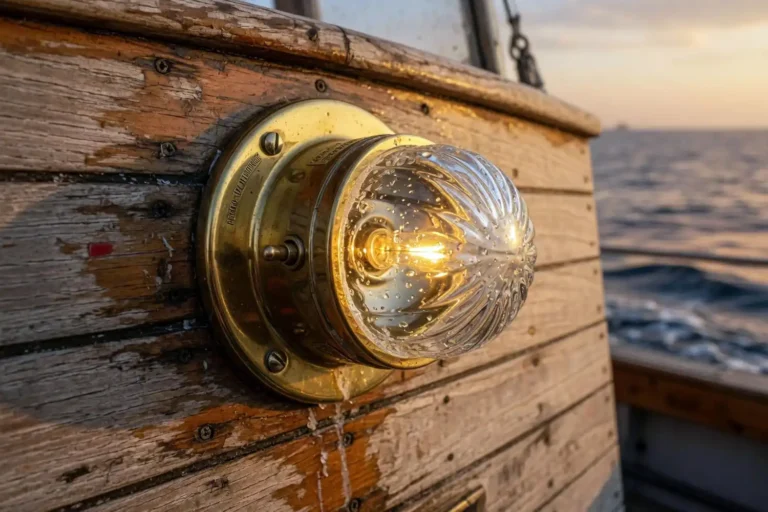
- A glass globe or lens, usually ribbed in the pattern of a Fresnel lens
- A vented top or chimney for hot gas to escape
- A hinged door or lift-off lid for filling and lighting
- A bail handle, plus loops for lashing the lantern down
The ribbed glass matters more than people expect. It gathers a small flame into a tighter beam, so the lantern reads far stronger at a distance. The chimney narrows toward the top. That pulls fresh air in at the base and holds the flame steady in wind.
The Main Types of Nautical Lanterns
Different jobs produced different builds. These come through my yard most.
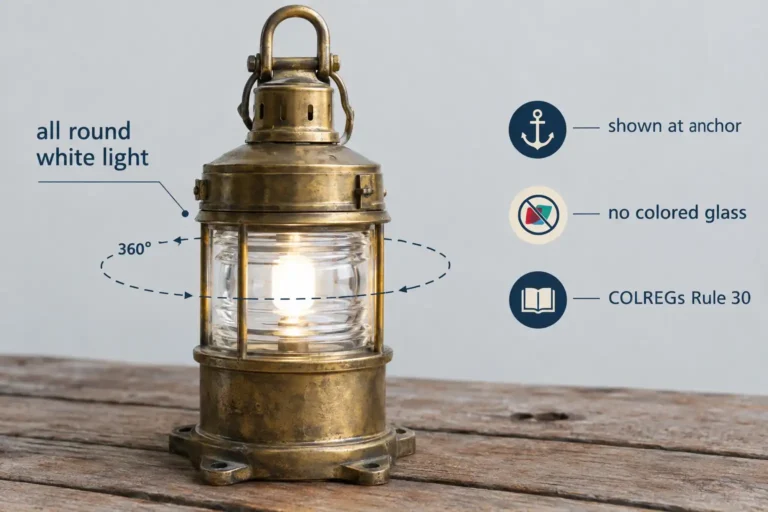
Anchor lanterns. Hung forward when a ship sat at anchor, throwing white light through a full circle. Rule 30 of the COLREGs still applies today. A vessel at anchor shows an all-round white light in the fore part, plus a lower one near the stern. Under 50 meters, one all-round white light will do.
Sidelight lanterns. Red on the port side, green on starboard, each with an internal screen so the color only shows across its own arc. That color pairing is old and fixed, and I wrote separately on why port carries red and starboard carries green.
Masthead and stern lanterns. White units, mounted high or aft, telling other crews which way a ship is heading.
Cargo lanterns. Square bodies with four glass panes. Loops at the top and bottom let a crew lash them against rolling seas or lower them into a hold.
Hand and inspection lanterns. Smaller, carried by the mate on night rounds, often with a wire cage protecting the glass.
Nautical Lanterns Compared to Nautical Lights
A lantern is a specific object. A nautical light is the whole category.
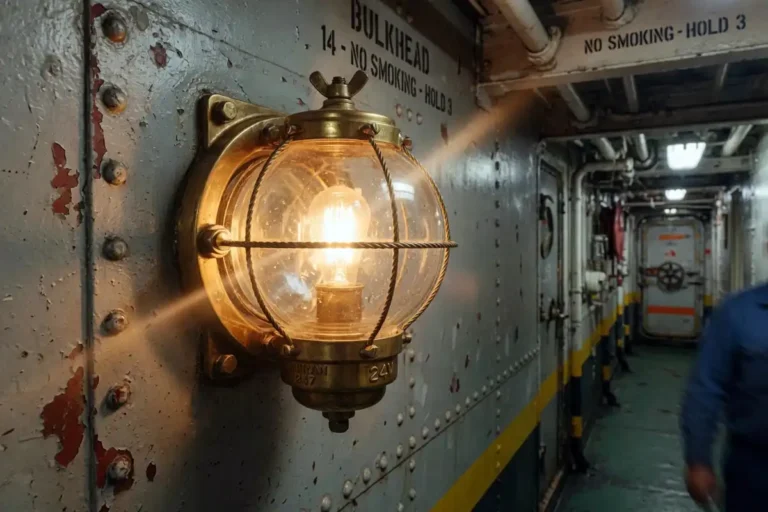
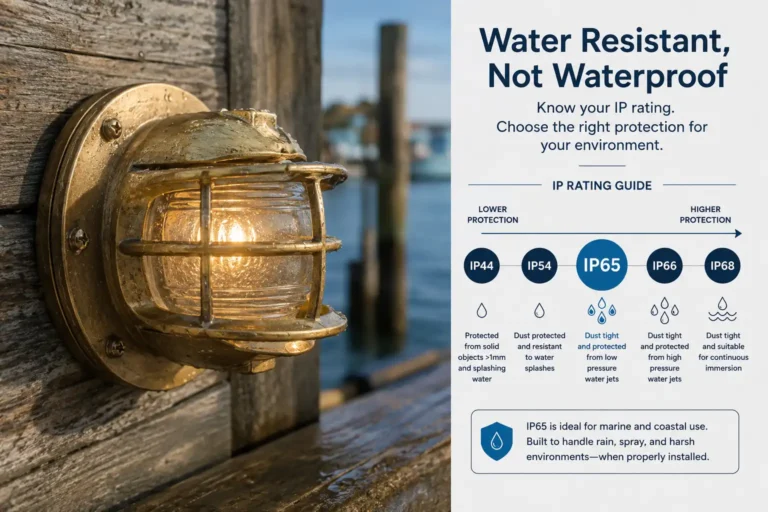
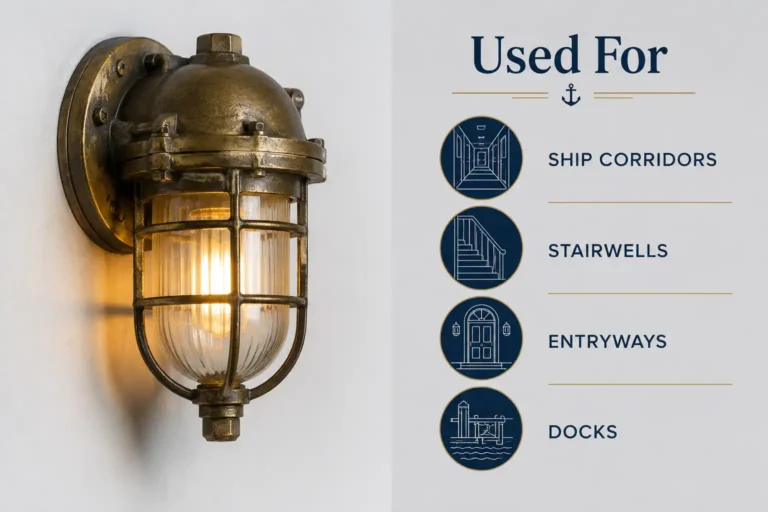
Anything fitted to a ship for light counts as a nautical light, sealed modern bulkhead and deck fixtures included. A lantern is the older, self-contained kind, built around a flame and a lens.
The word stuck around anyway. Shipyards and surveyors still call a navigation light housing a lantern, even with an LED sitting inside it. If you want the regulatory side, look at the lighting rules cargo ships work under.
What They Are Made From
Copper and brass dominate the older stock. Both survive salt air, and both grow a patina instead of rusting through. Galvanized sheet steel turns up on working cargo and cabin lanterns, because it was cheap and easy to fold. Aluminum came later, mostly on postwar fixtures.
The glass tells you plenty too. Clear cast lenses for white lights, ruby and green for sidelights, all thick enough to take a knock. If you are choosing a piece for a coastal house, how brass, bronze, and aluminum hold up outdoors is worth reading first.
Are Nautical Lanterns Still Used at Sea?
Yes, though rarely as the primary light. Electricity took that job generations ago.
The flame era is not ancient history. In 1848 the British Admiralty ordered steam vessels to carry red and green sidelights and a white masthead light underway. A single white light marked a ship at anchor. Every one of those was a burning wick.
The rules never fully closed the door. Annex I of the COLREGs states that non-electric lights should meet the same minimum intensities as far as practicable. Approval rests with each country’s maritime authority, so oil lanterns still appear on small traditional craft in some waters. On the ships I break, a spare set usually sits in a locker as backup.
Buying One for a Home
Most of what I ship now goes onto porches, kitchen walls, and restaurant ceilings.
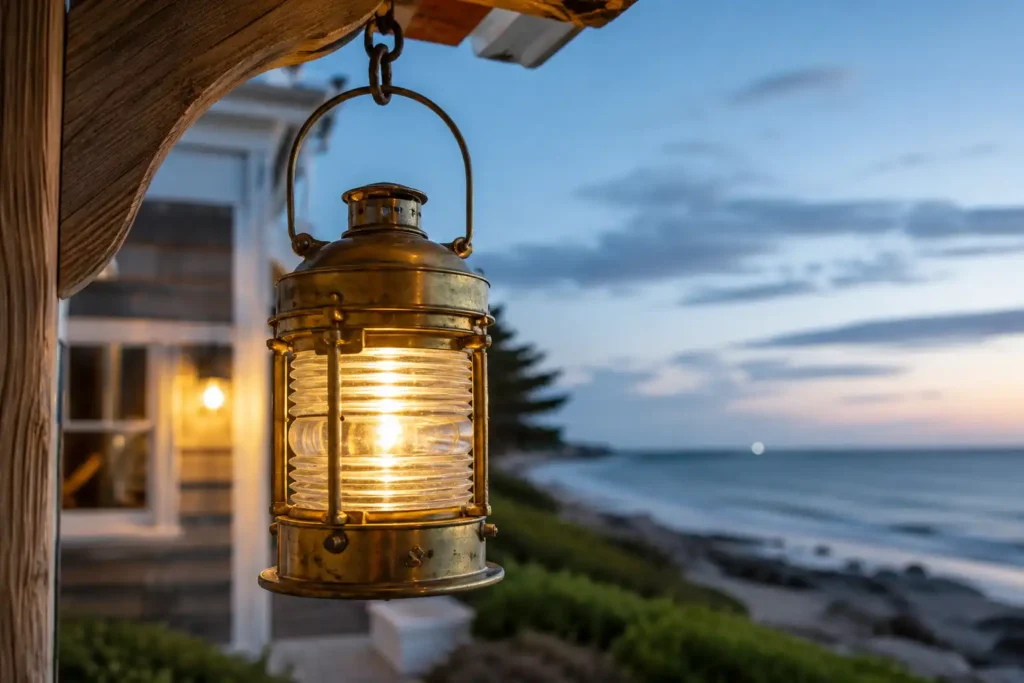
Check authenticity first. Yard wear, maker’s plates, and cast lens quality tell you plenty, and spotting a genuine ship lantern from a reproduction covers the tells in detail.
Then decide on flame or wiring. Converting to electric is simple work for an electrician and safer indoors. Keep the burner in a box either way.
Go easy on cleaning. Patina is value, not dirt. My notes on taking tarnish off an old brass housing explain how far to take it before you strip the character out.
Final Thoughts
A lantern is a simple machine that solved a hard problem. That is why the shape barely changed for a century. Buy one for that, not for the shine.
If you want to see the condition real yard stock arrives in, look through the reclaimed lanterns I keep in stock. Enjoy the hunt.