
Where to Place Bulkhead Lights, Inside and Out
Last month a buyer sent me a photo of a brass bulkhead light he mounted over his kitchen sink. It looked sharp. But the switch sat on the far wall. And steam kept fogging the glass. Great fixture, wrong spot. Placement makes or breaks these lights. I have pulled hundreds of reclaimed bulkhead fixtures off old ships, and the ones people love are always placed with thought. So below, I will show you where to place bulkhead lights, indoors and out.
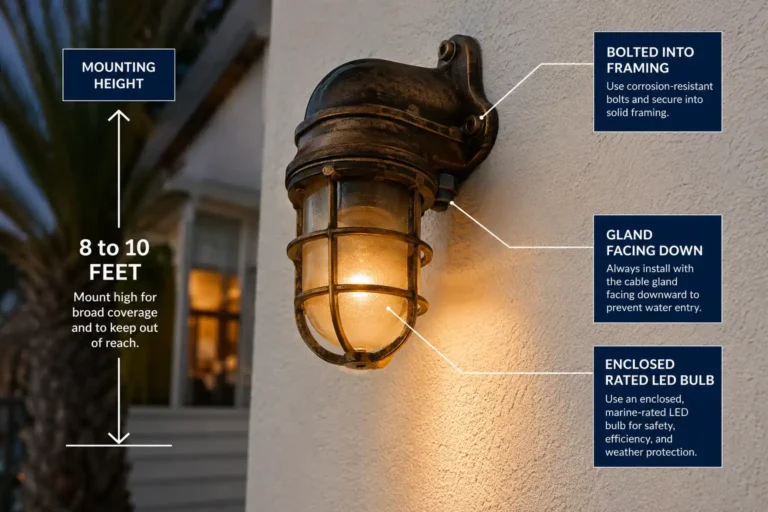
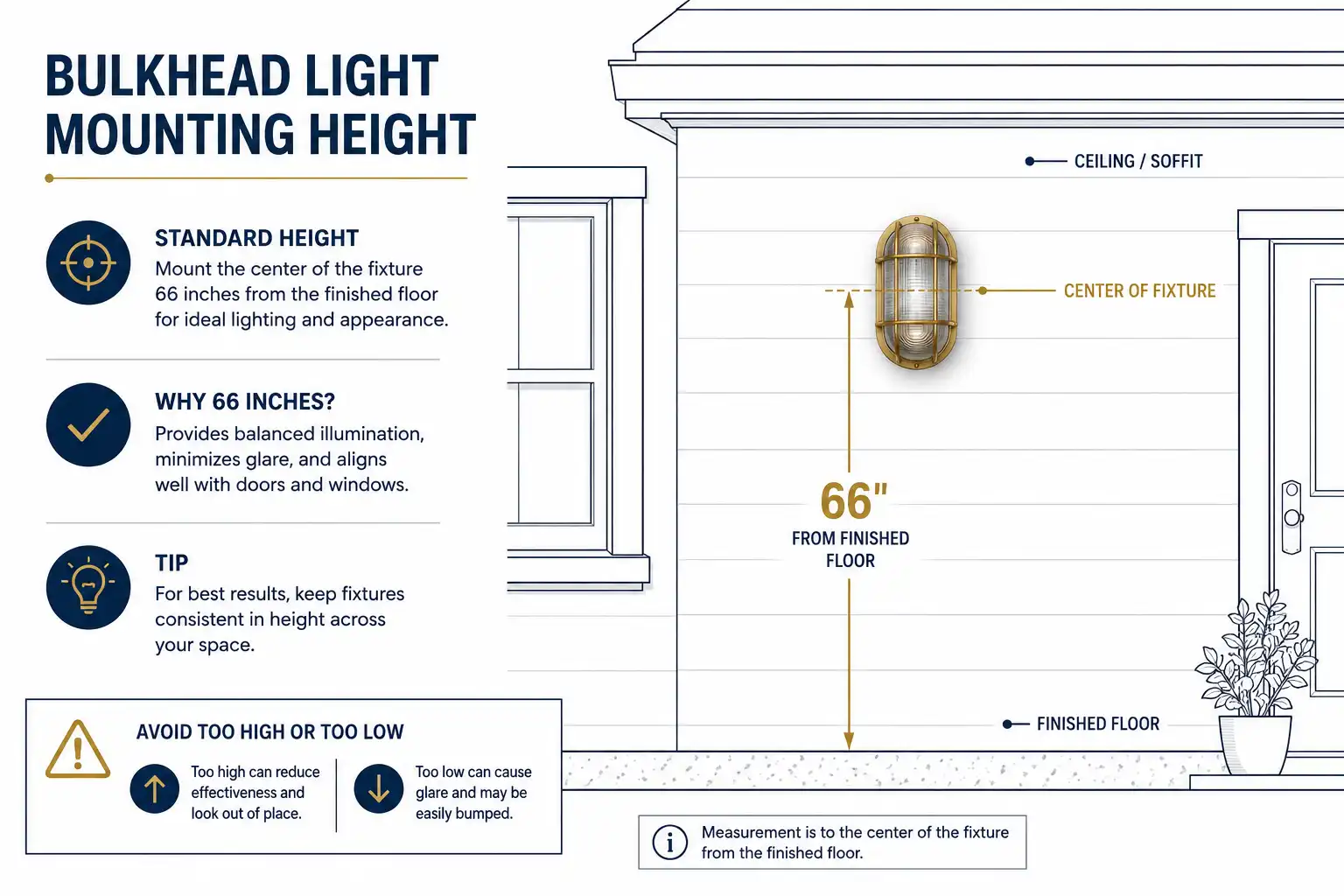
Put bulkhead lights beside doors, along exterior walls, in stairwells, bathrooms, and hallways. For door-side fixtures, keep the center about 66 inches off the ground. Outdoors, space them 8 to 10 feet apart and choose a weatherproof one for wet, exposed spots.
Best Outdoor Spots
Outdoors is where these fixtures shine. Their sealed, rugged build was made for salt spray and wind.
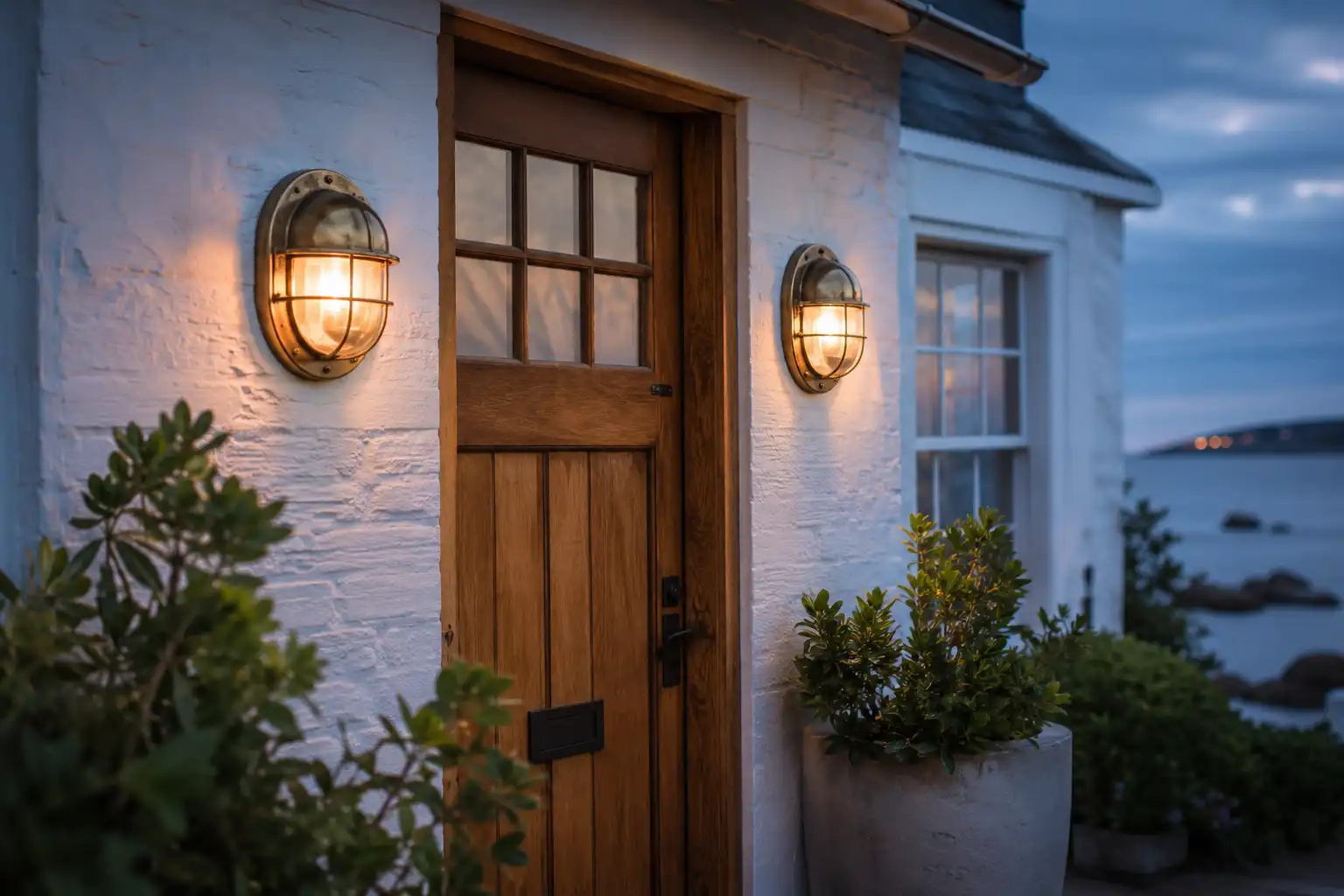
Beside the front door is the classic spot. A matched pair, one on each side, looks balanced and welcoming. A single light works too when the door sits in a corner.
Exterior walls take them well. Think porches, patios, decks, and covered entryways. They give a soft, even glow without harsh glare.
Garages, sheds, and garden walls suit them too. So do outdoor steps, where a low fixture lights the tread safely.
If a spot catches rain or ocean mist, check the fixture is built for it. I cover how weather-rated and interior fixtures differ in a separate guide.
Where to Place Bulkhead Lights Indoors
Where you place bulkhead lights indoors comes down to moisture and traffic. Match the fixture to the room.
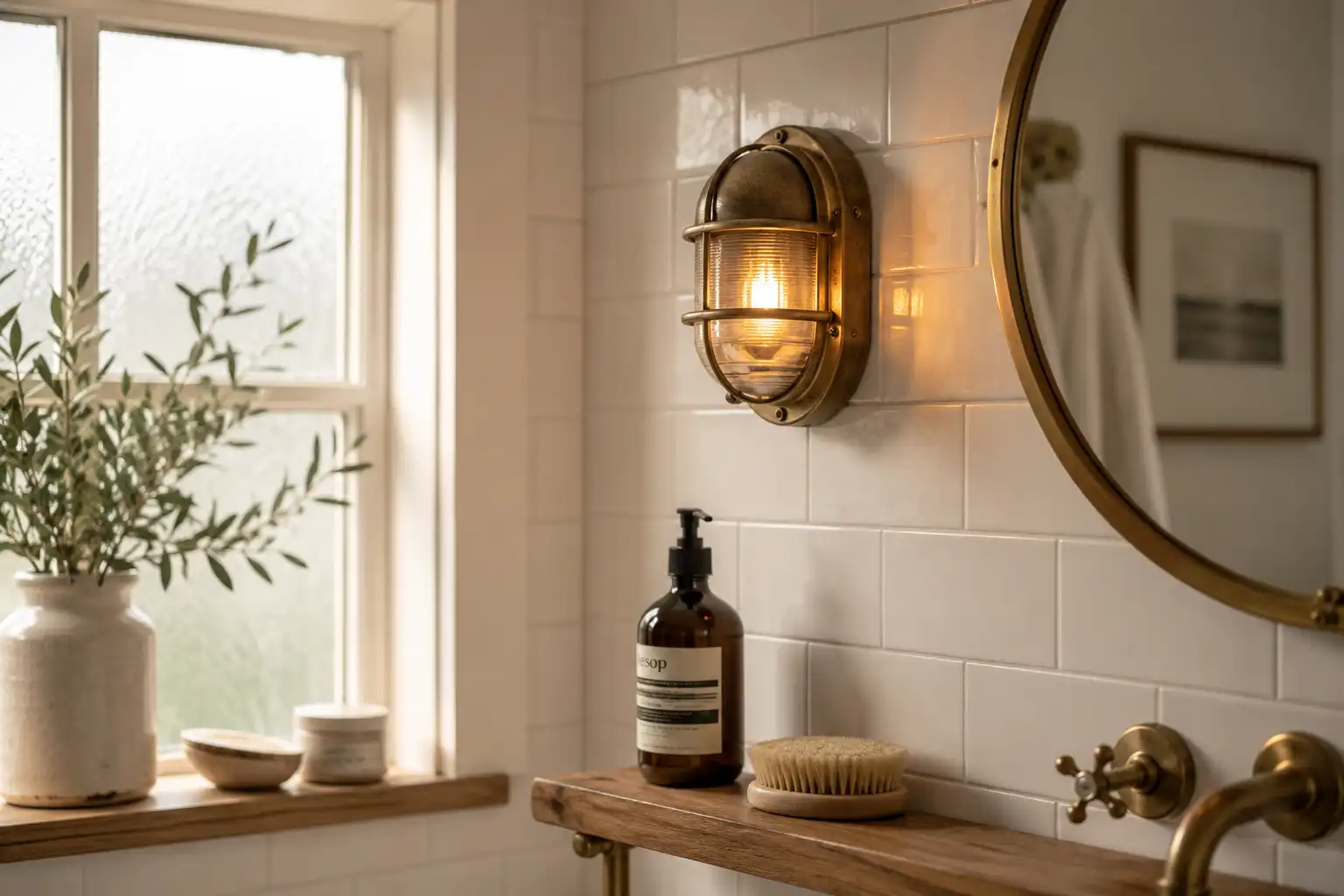
Bathrooms are a favorite. Mount one above the mirror or on a side wall. Keep it clear of direct shower spray, and use a fixture with a proper moisture rating near water.
Kitchens work well too. Place it over a counter or on a feature wall. Skip the spot right above the sink, where steam gathers.
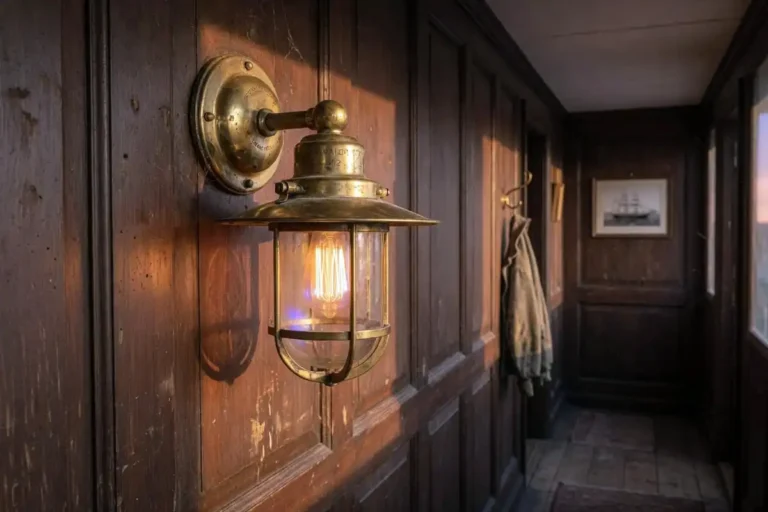
Hallways and stairwells fit them nicely. The compact shape hugs the wall and stays out of the way.
Bedrooms, home bars, and basements are fair game. A single light beside a bed makes a solid reading lamp.
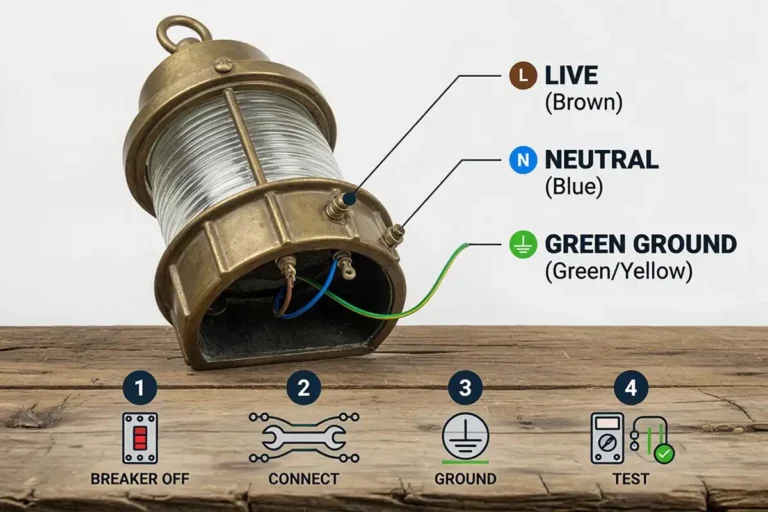
For the actual fitting, my walkthrough on getting them wired and fixed to the wall covers every step.
How High Should You Mount Them?
Mount most bulkhead lights with the center about 66 inches off the ground. That sits near eye level and spreads light evenly.
For door-side fixtures, 60 to 72 inches is the safe range. Go a touch higher for tall doors or a covered porch.
Above outdoor steps, drop lower, near waist height, so the beam hits the treads.
Bathroom and kitchen fixtures follow the same idea. Center them roughly at eye level, adjusted for the mirror or counter.
Size matters too. A large light needs more height so it does not crowd the wall. Hold it up first, then mark and drill.
Spacing and Pairing
Even spacing looks best. Along a long wall or fence, set lights 8 to 10 feet apart.
Pairs create symmetry. Two lights flanking a door, a gate, or a garage feel deliberate and clean.
For a single run down a hallway, match the spacing to the wall length. It should feel balanced, not random.
Line up the height across every fixture in a row. Lights at slightly different levels look off. A laser level or a pencil mark keeps them honest.
Where These Lights Came From on Ships
Bulkhead lights take their name from bulkheads, the upright walls that split a ship’s interior. Crews fixed them there to save space in tight passages.
You found them in corridors, engine rooms, stairwells, and out on deck. That is why they are sealed, caged, and tough.
Most of mine come off decommissioned vessels in our yard here in Bangladesh. Knowing the old job helps you place them right. A light built for a wet engine room handles your patio with ease. You can read more on the history behind these old ship fixtures if that interests you.
Mistakes to Avoid
A few slips come up again and again.
Mounting far from the switch. Plan the wiring path first, or you will fish cable through finished walls.
Ignoring the rating. A dry-rated light in a shower zone fails fast. Match the fixture to the moisture.
Weak surfaces. Fix into solid backing, not hollow cladding, so the light stays put.
Wrong height. Too high blinds you. Too low wastes the spread.
Skipping the metal check. Near salt air, brass and stainless options hold up far better than cheap alloys.
Final Thought
Placement is simple once you slow down. Think about moisture, height, and the switch. Then hold the light up before you drill. Get those right, and a salvaged bulkhead light will look at home for decades.
Good luck with your install.