How High to Hang Pendant Lights Over an Island
A buyer in Portland emailed me a photo last spring. He had hung two brass cargo pendants over his new island. Both sat right at eye level and cut his kitchen window clean in half. He had measured up from the floor. That was the whole problem. Twenty years of pulling lights off ships in Chattogram taught me one thing about pendants. The floor never matters. The counter does.
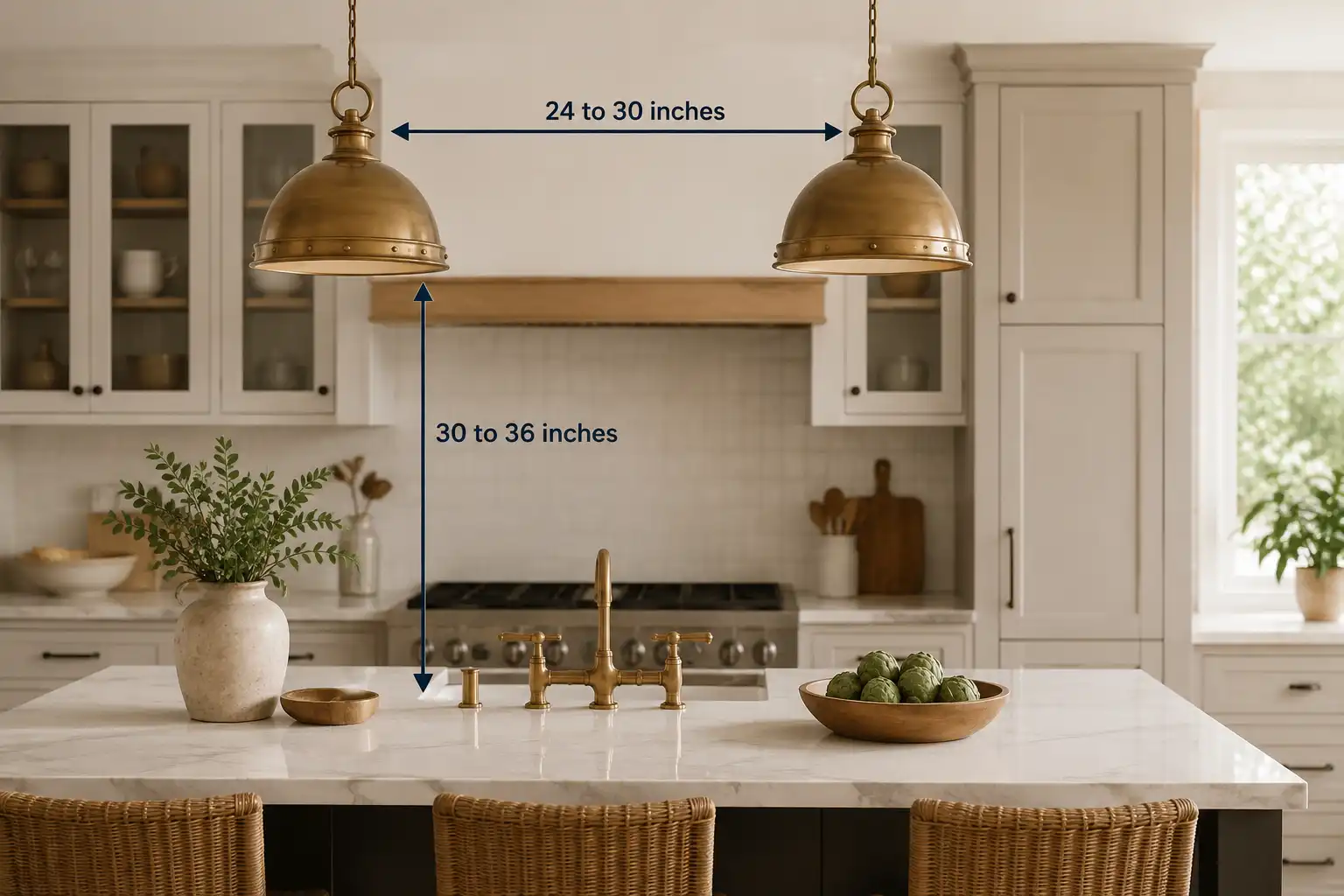
Hang the bottom of each pendant 30 to 36 inches above the island countertop. On a standard 8 foot ceiling, that puts the fixture roughly 66 to 72 inches off the floor. Add 3 inches for every foot of ceiling height above 8 feet.
Measure From the Countertop, Not the Floor
The countertop is your reference point. Every installer I work with uses it.
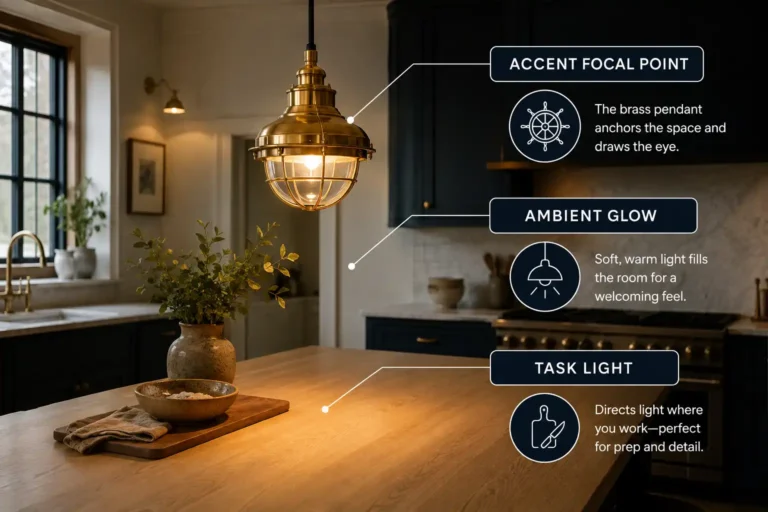
Standard kitchen counters sit 36 inches off the floor. Add a 30 to 36 inch gap above that, and the bottom of your pendant lands between 66 and 72 inches high. That is close to eye level for most adults. It sounds too low until you stand there. At that height the glow drops onto the work surface instead of into your eyes.
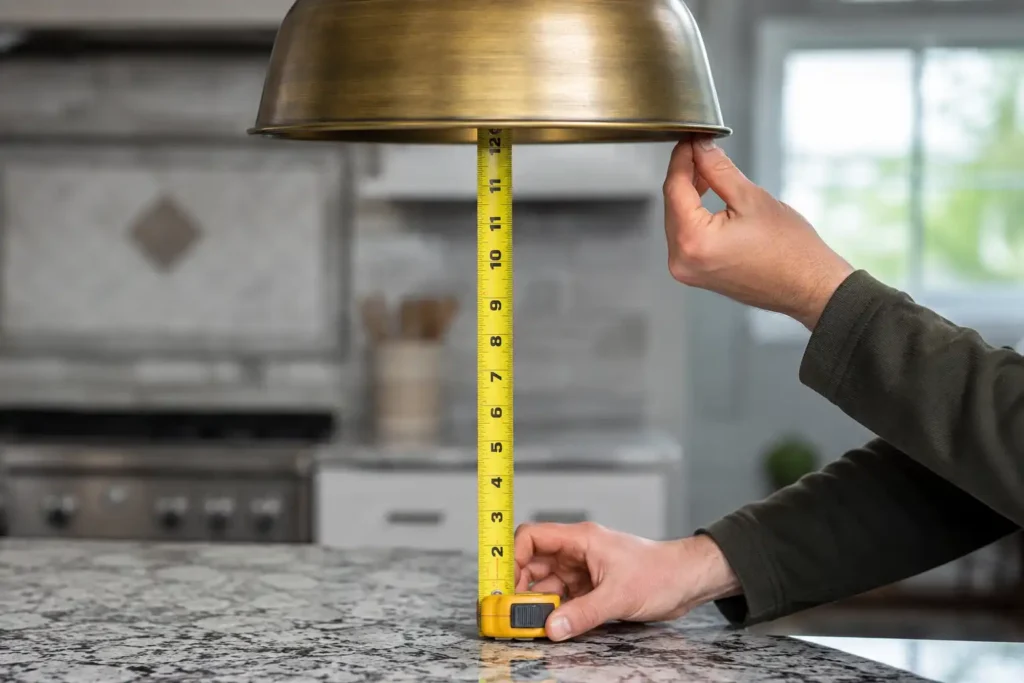
Measure to the lowest point of the fixture. On a salvaged brass pendant, that is the bottom rim of the shade or the glass globe. Not the socket, and not the canopy.
Adjust the Height for Your Ceiling
Ceiling height sets your starting number. The rule adds 3 inches of clearance per extra foot.
- 8 foot ceiling: 30 to 36 inches above the counter
- 9 foot ceiling: 33 to 39 inches
- 10 foot ceiling: 36 to 42 inches
Sloped ceilings need one extra step. Keep the pendant bottoms level with each other even though the rods hang at different lengths. A sloped ceiling adapter keeps each fixture plumb instead of tilted.
Go Lower or Higher? Let the Fixture Decide
The 30 to 36 inch range is wide on purpose. Where you land inside it depends on the light itself.
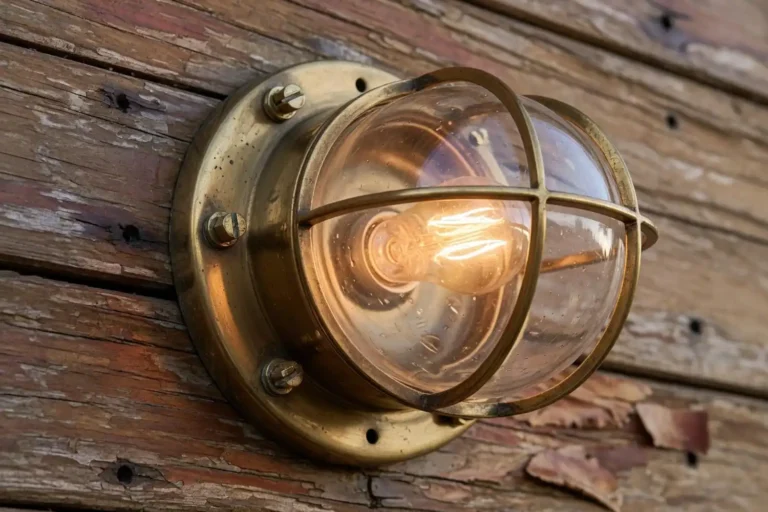
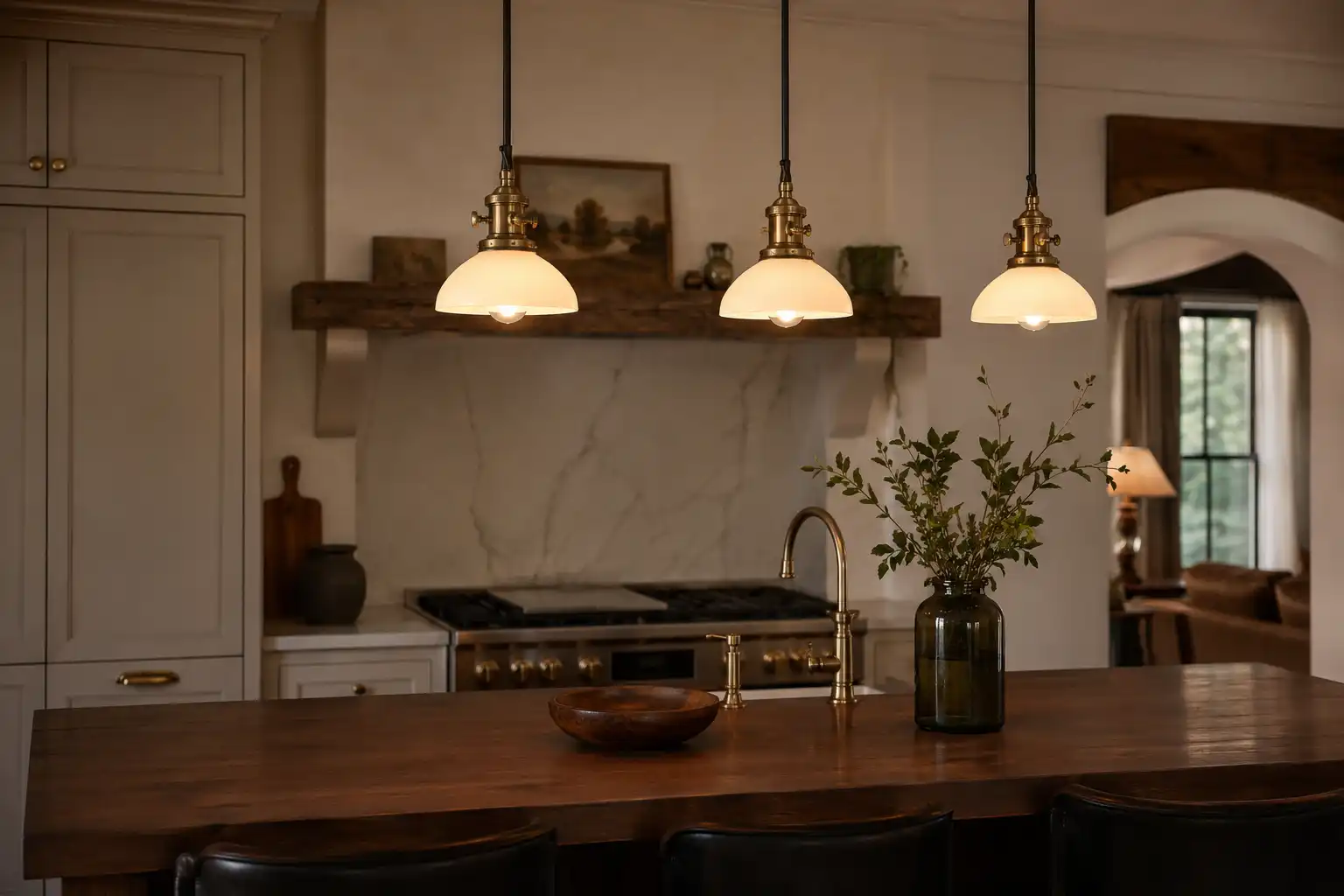
Stay near 30 inches when the shade is solid and opaque. Most reclaimed ship pendants fall here, because the cast brass housing throws light straight down. You get sharp task light on the cutting board. Small fixtures under 10 inches wide also handle the lower end well.
Move toward 36 inches when someone in the house is over six feet tall. Do the same when the island has seating, faces a window, or opens onto a living room. Wide fixtures need the extra room too. Anything past 14 inches across starts to crowd the counter.
Clear glass and bare filaments want the higher end. An exposed bulb at 30 inches sits in your sightline through dinner. Still picking a style? Choosing industrial pendants you will not swap out later covers shade shape and glare.
Spacing and How Many You Need
Height only works when the spacing works with it.
- Space pendants 24 to 30 inches apart, measured center to center. Thirty inches suits most kitchens.
- Leave at least 6 inches between the end of the island and the center of the outer pendant. On long islands, 12 inches looks better.
- Use two pendants on islands under 6 feet. Use three on islands over 6 feet.
- Odd numbers read better than even ones once you pass two fixtures.
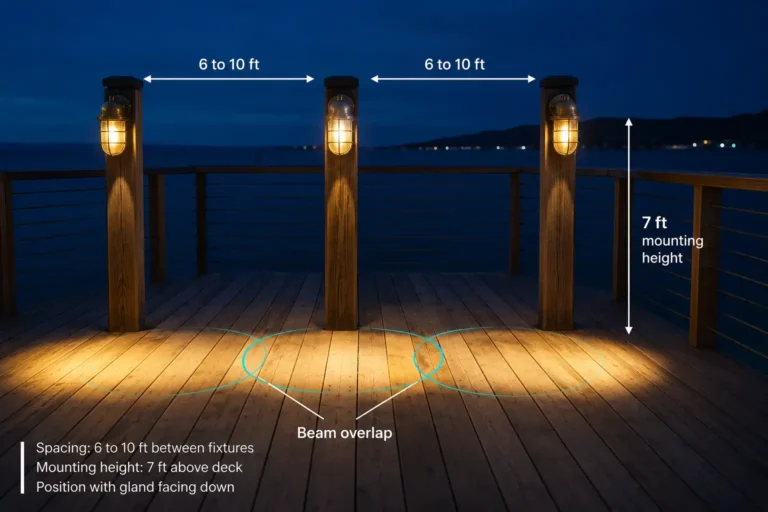
Center everything on the island, not on the ceiling joists. The same balance problem shows up outdoors, where spacing fixtures without dark gaps or glare follows the same logic.
Salvaged Pendants Weigh More Than the Box Expects
Reclaimed fixtures differ from showroom ones in one way that matters. They are heavy.
A cast brass cargo pendant off a bulk carrier runs 12 to 25 pounds. Some of the larger deck fixtures I ship pass 40 pounds with the glass in place.
The National Electrical Code covers this in Article 314.27. A ceiling outlet box has to support at least 50 pounds. Anything heavier needs independent support from a joist or added blocking, unless the box carries a listing for that load.
Plenty of older kitchens still have thin plastic nail-on boxes never rated for fixture support. Check yours before you hang 20 pounds of brass from it. A metal pancake box screwed into a joist handles the weight without complaint.
The same care applies to installing marine fixtures the right way. It matters again when rewiring old fittings for household current, because ship circuits ran on different systems.
Test the Height Before You Drill
Cut a cardboard circle the width of your pendant. Tape it to a string and hold it at 30 inches, then 33, then 36.
Now move around. Stand at the sink. Sit at the island. Walk in from the next room. One of those heights stops bothering you, and that is your number.
Buyers who skip this step are the ones who write me two weeks later asking how to shorten a chain. Ten minutes with cardboard saves that. If you are working out wall fixtures for the same kitchen, the mounting heights I use for wall bulkhead fittings follow different math.
Final Thought
Working out how high to hang pendant lights over an island takes a tape measure and some patience. Start at 34 inches above the counter, live with the cardboard for an afternoon, then commit.
Old ship fixtures reward that patience. They hung in a passageway for thirty years and will hang over your island for another thirty. A lot of my brass ends up in a statement kitchen built around genuine ship lighting.
Good luck with the install.